4 types of Karanji Recipe Filling | Easy Kajjikayalu Recipe
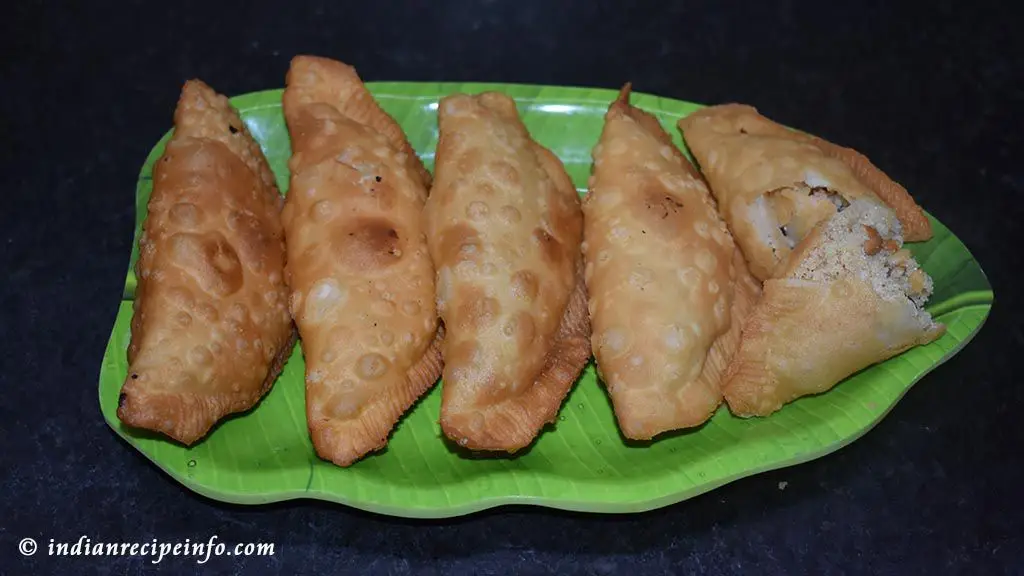
Karanji Recipe or Kajjikayalu is one of the famous Sweet recipes of India. They are deep-fried snack having a crispy shell and sweet filling which can be made in 4 different combinations. Kajjikayalu (Telugu name) is usually made during the festival season of Sankranti, Ganesh Chaturthi, Dussehra, and Diwali. As this recipe is prepared on all major festivals it can be considered as one of the important and must recipes during the festival.
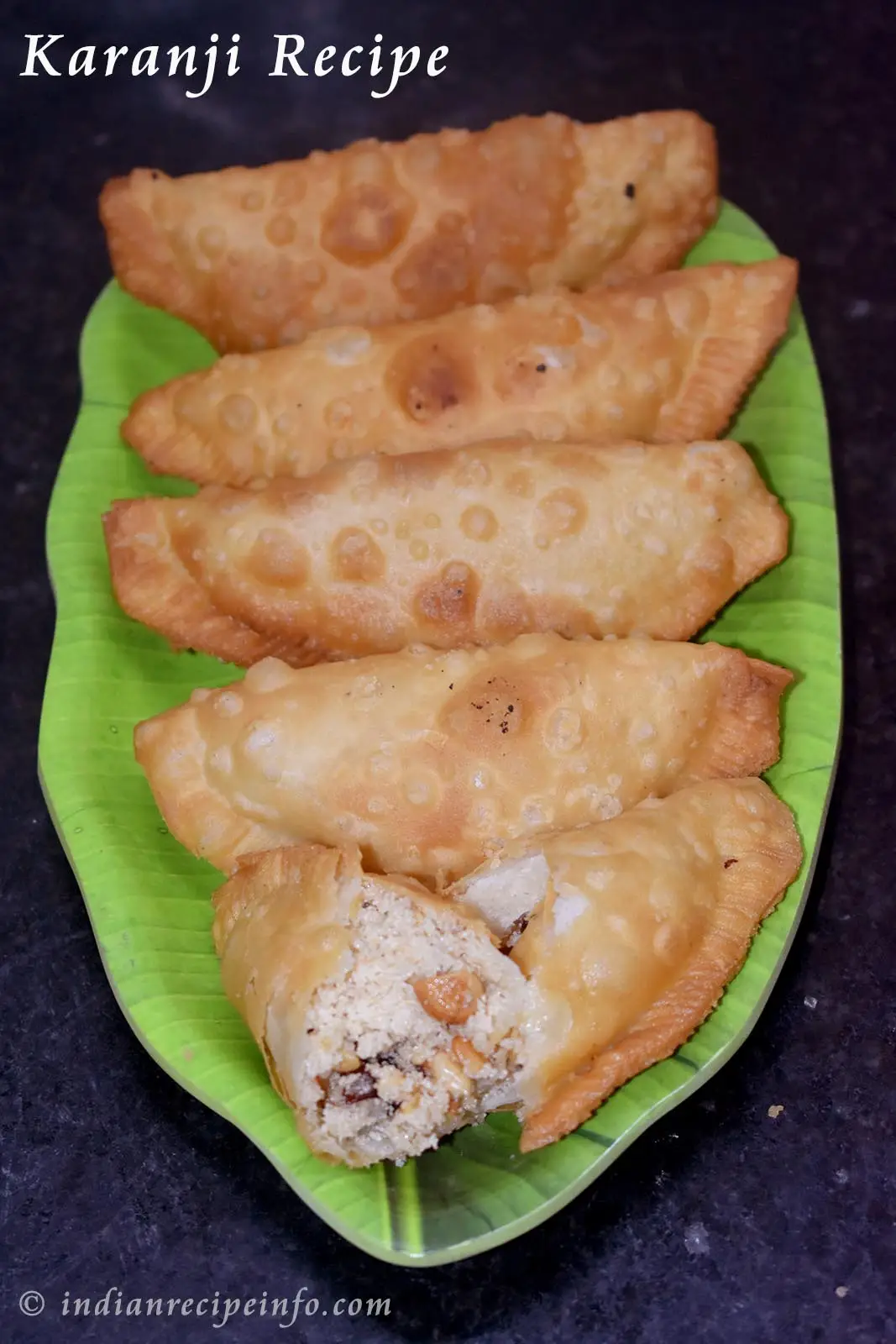
I’ve spent more than two decades in the kitchen, and few recipes have a spot as dear to me as karanji recipe or Kajjikayalu recipe. This is not just a sweet bread; it’s a part of who I am, a memory of my grandmother’s kitchen, a celebration of tradition. The heavenly scent of cardamom and ghee, the crunch of the shell giving way to the sweetness and nuttiness of the filling.
It’s a sensory treat that epitomizes festive times and family reunions. I have spent my heart and soul perfecting this timeless classic, and I’m here to impart all I know to you, not only as a chef, but also as a foodie and a believer in the power of good grub and fond memories. This recipe is formulated from years of experience, great insight into ingredients, and a love for producing something really special.
As said earlier this recipe can be made in different combinations, one is with jaggery and coconut mix, roasted chana dal and jaggery mix, peanut and sesame mix and dry fruits. People in some places like to make use of khova or mava as a filling ingredient but that is called with different name Gujiya.
Our tradition says to live to the ground and make use of natural ingredients for making prasadam or naivedyam recipes. So I have made using jaggery and in one version I used sugar. In one of our recipe combination (Coconut and jaggery mix) I have used dry coconut powder, we can even use fresh coconut but it should be roasted for a while to increase shelf life.
From my previous posts, you may also like Chandrakala sweet, south Indian special sweet ariselu, Diwali sweet shankarpali recipe.
How to make Karanji recipe or Kajjikayalu:
Preparing Soft and Pliable dough:
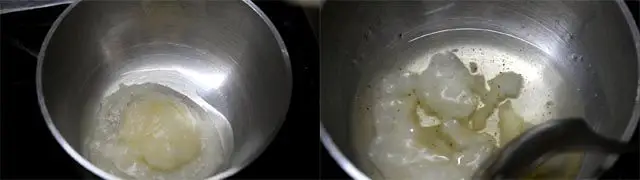
1. Put 2 tbsp. ghee in a pan and melt at low flame.
2. Add all-purpose flour in a bowl and put ½ tbsp. Salt and melted ghee. Mix all ingredients.
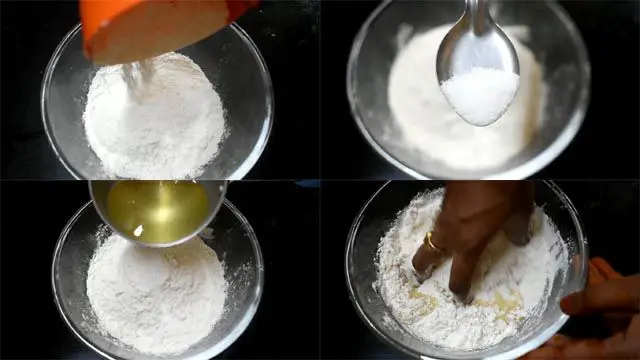
3. In small batches add water and knead well to get a soft pliable dough. Keep aside with lid covered.
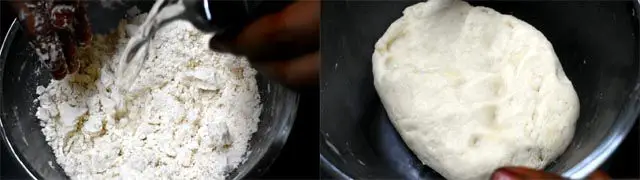
Below is the process of making 4 Different Kinds of Fillings:
1. Karanji with Jaggery Coconut Mix:

1. Put dry coconut grate in a bowl, cardamom powder and jaggery. Mix well.
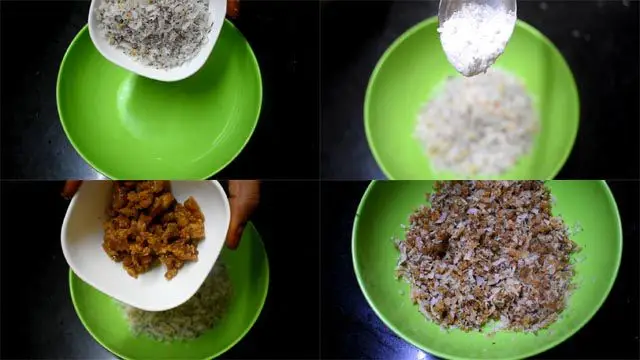
2. Karanji with Roasted chana dal Mix:

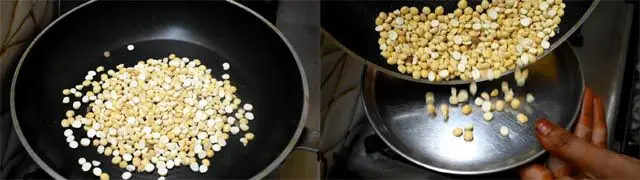
1. Add chana dal in a pan and dry roast them for a while and transfer to a plate.
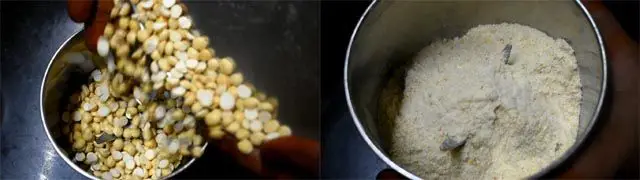
2. Once dal is cooled, transfer to a mixer grinder and grind coarsely.
3. In a bowl, put coarsely grounded roasted chana dal, cardamom powder and jaggery. Mix well.
3. Karanji Recipe with Peanut Mix:
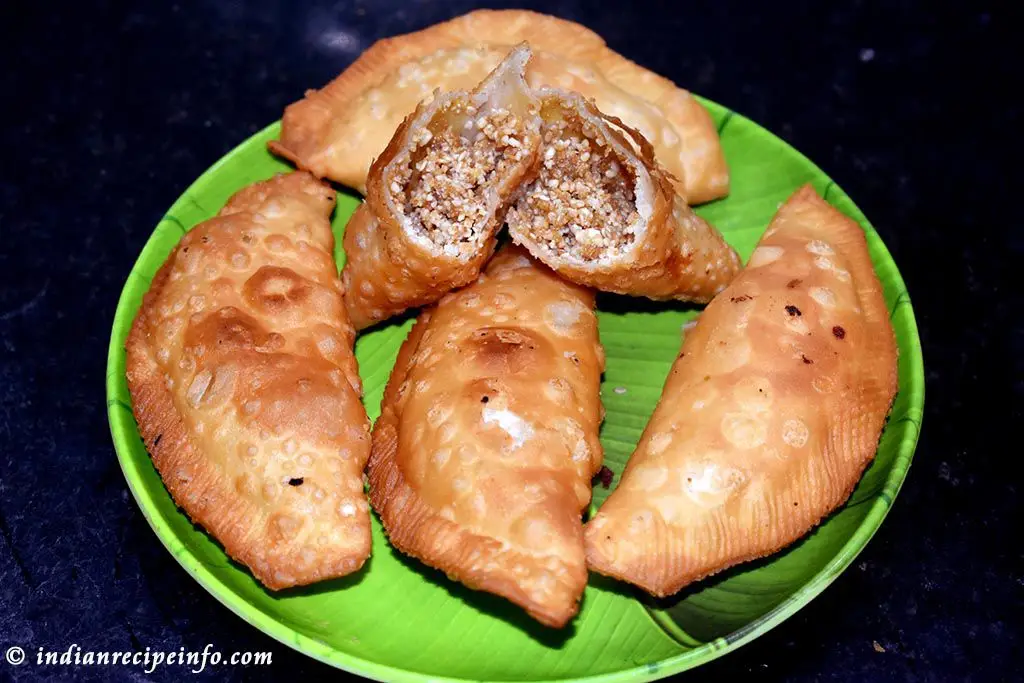
1. Put peanuts on a pan and dry roast till they turn crisp, transfer to plate and let it cool.
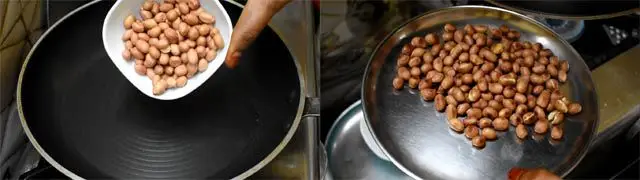
2. Add sesame seeds on the pan and dry roast for a second as it tends to burn fast.
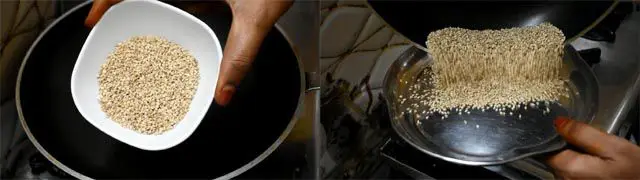
3. Remove the skin of peanuts and transfer to a mixer grinder, add roasted sesame seeds and ground to a coarse powder
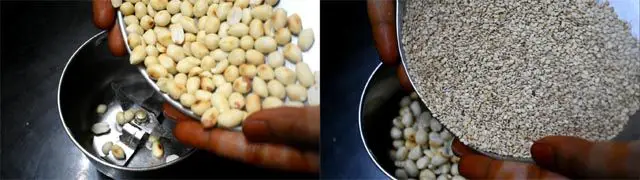
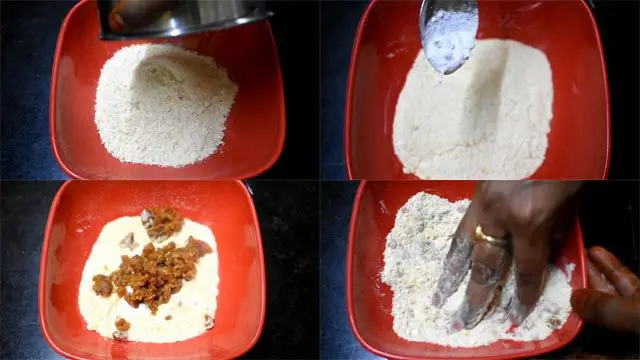
4. Transfer this powder in a bowl, add jaggery, cardamom powder and mix well. Keep aside.
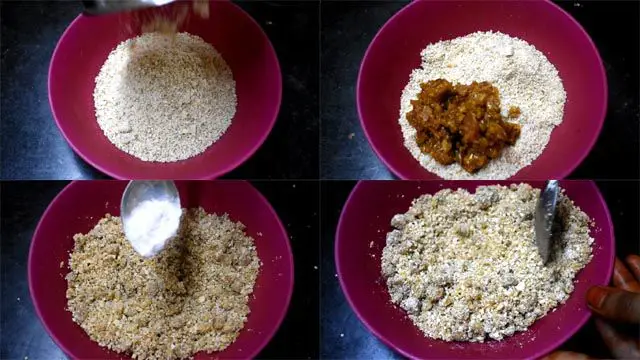
4. Karanji Recipe with Dry fruits:
1. Heat 1 tbsp. ghee on a pan and add mixed dry fruits and roast till raisins swell.
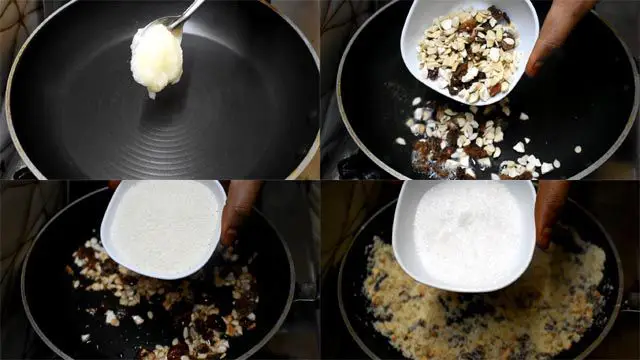
2. Add semolina and saute for a while and transfer to another plate.
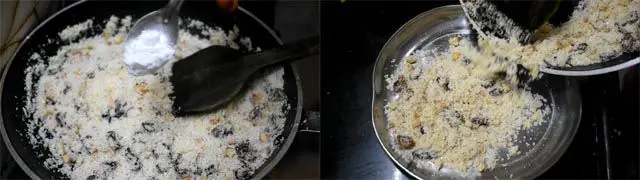
Craft, Stuff and shape Karanji Recipe or Kajjikayalu:
1. Take the dough and shape it into a long cake and cut it into small and equal pieces to roll.
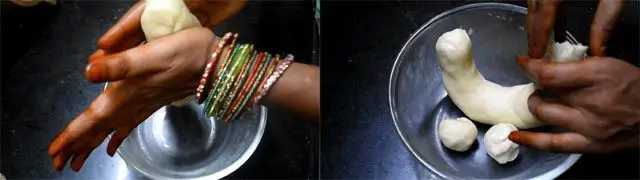
2. On a wooden roti maker, sprinkle a little maida and press a small ball and press on both sides so that it doesn’t stick to the bottom.
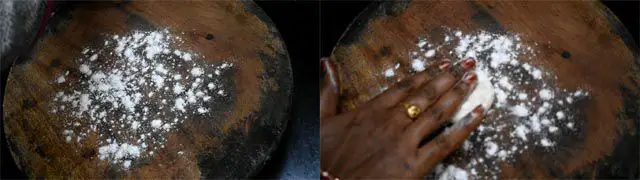
3. Roll the dough into a thin layer and to the size of the Kajjikaya mould.
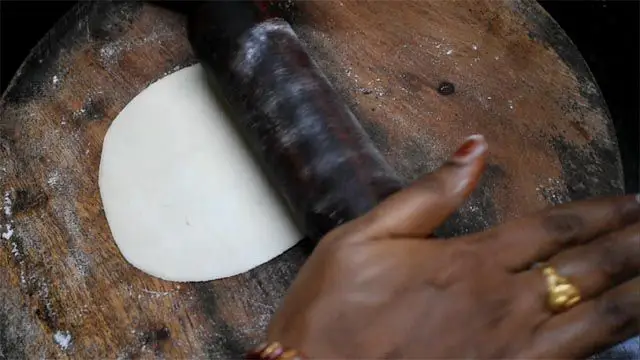
4. Place this chapati roll over the karanji mould and press gently to get hollow shape. fill a spoon of filling and then apply water over the edges of the mould.
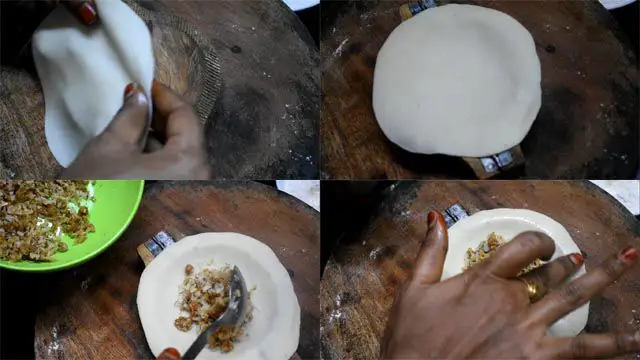
5. Fold the mould and take excess dough using the knife. If needed, remove excess dough on both edges.
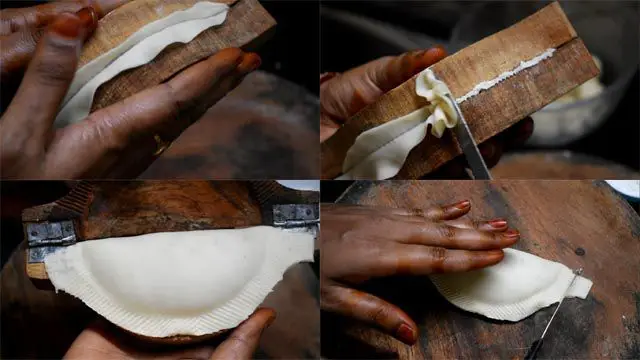
Deep-frying Karanji Recipe or Kajjikayalu:
1. Heat oil in a pan, once oil reaches optimum temperature, add karanji one by one.
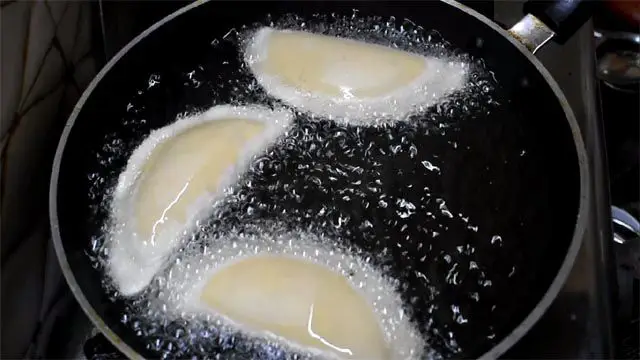
2. After frying for 30 seconds flip to another side so that both sides are cooked evenly.
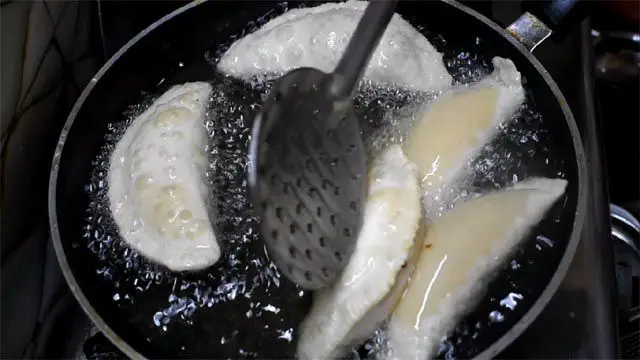
3. Once Karanji Recipe turns to golden brown colour, remove from oil and transfer to stainer.

4. Store Kajjikayalu in an airtight container once cooled.
Learn how to make Kajjikayalu Recipe in this quick video!
Karanji Recipe: Revealing the Favorite Indian Sweet
The karanji recipe, or Kajjikayalu recipe in certain regions of India, is a classic sweet dumpling that adorns celebration platters nationwide. This sweet, with its crunchy, flaky crust and sweet, fragrant stuffing, occupies an honored place on Diwali, Holi, and other festivities. The karanji recipe is not only a delicious sweet but a representation of love, work, and tradition handed down across generations.
My intention here is to provide you with an in-depth knowledge of this traditional dish, from the essential ingredients that make it ideal to the professional tips that will perfect your cooking. This is not merely a recipe; it’s about the art of preparing Karanji and Kajjikayalu.
About the Karanji & Kajjikayalu Recipe
The karanji recipe is a reflection of India’s diverse and rich culinary heritage. It goes by several names – Karanji in Maharashtra, Gujiya in North India, and Kajjikayalu recipe in the Andhra Pradesh and Karnataka states in the South. Whether it is called any of these names, the intention remains the same: a sweet filling inside a deep-fried pastry.
The most conventional filling is a mixture of roasted semolina (sooji), dried coconut, and a combination of dry fruits, all sugar or jaggery sweetened and cardamom spiced. The outer casing, with its optimal proportion of flaky and crisp, is of all-purpose flour (maida) and plenty of ghee, which is the key to its characteristic texture.
The reason the karanji recipe is so popular is because it is versatile and adds warmth to any gathering. I’ve seen numerous families sit around the kitchen table, filling these gorgeous pastries, and swapping stories and jokes. It’s a joint activity that makes cooking itself a unifying experience. The smell that permeates the home when they fry is alluring and beyond description, and the flavor is even better.
Over the years, I’ve tried various fillings and methods, always coming back to the original because its simplicity is what makes it so ideal. The Kajjikayalu recipe is a culinary legend, a dessert that is at once celebratory and profoundly comforting. This guide is a tribute to that tradition, and I hope that it inspires you to create your own beautiful moments in the kitchen.
The provenance of the karanji recipe runs parallel to the history of Indian sweets. It’s said to have been derived from analogous deep-fried pastry found in Central Asia but altered and Indianized over the ages to suit local tastes and available ingredients. The addition of ghee, cardamom, and roasted chana dal to the filling are clearly Indian adaptations.
In a sense, whenever you prepare a karanji recipe, you are engaging in an activity that is nearly two millennia old. The Kajjikayalu recipe follows suit in the south, where local ingredients and taste preferences have influenced the end product. For instance, the use of roasted chana dal and peanuts happens more frequently in the southern version, providing a distinct nutty flavor profile.
This thorough examination of the karanji recipe and Kajjikayalu recipe is meant to provide you with a solid foundation. I am convinced that knowing the why of a recipe is as significant as the how. Why do we use ghee? Why is the dough rested? Why is the filling roasted? These are the kinds of questions that make a good cook become a great cook. What I learned as a chef is that sometimes the smallest things matter the most.
The quality of your ingredients, the heat of your oil, and even how you treat the dough can all play an important role in what it turns out like in the end. I hope this exhaustive guide to the karanji recipe inspires you to make a batch of these wonderful sweets that not only taste extraordinary but also have the love and warmth of an honestly homemade confection. The Kajjikayalu recipe is not just a sweet; it’s a part of our food culture, and it’s my honor to share it with you.
My Personal Connection to the Karanji Recipe
Each chef has a dish that makes him who he is, a recipe that reminds him of home. For me, such a dish is the karanji recipe. I can recall my childhood Diwali celebrations like they happened yesterday. The kitchen would become a factory where sweets were being made. My grandmother, whose hands were wrinkled from decades of cooking, would sit on the floor, covered with bowls of flour, filling, and a huge kadai to fry.
The atmosphere was heavy with the smell of ghee and roasting coconut. She would sing old folk songs to herself as she folded the pastries with deft skill, her hands fluttering with practiced ease that even now I can picture in my mind’s eye. Her Kajjikayalu was special, with a little more heat and a nuttier filling that was her own hallmark.
I was always her diligent apprentice, a little boy given the easy task of pressing the edges down with a fork to close them. I would attempt to copy her, but my pastries were always awkward and lopsided. She would chuckle, touch my head, and tell me, “Don’t worry, my child, practice makes perfect. The love you put into it is what really matters.”
Those are the words that have resonated with me all my life. The first time I was able to achieve a perfect karanji recipe on my own was the first time that I felt a sense of pride that had no comparison. It wasn’t about the food alone; it was about tradition, family heritage. My Kajjikayalu recipe is alive in my memory, a connection to my heritage that I hold dear. I hope you find your own special bond to this lovely dish through this guide.
The Power of Quality Ingredients in Your Karanji Recipe
The key to a karanji recipe being just right isn’t technique but the quality of ingredients. As a chef, I have realized that you can’t make something great out of mediocre ingredients. Every ingredient here in this Kajjikayalu recipe plays a role, and knowing its function is vital to getting that perfect texture and taste.
- Maida/ All purpose flour: This constitutes the base of our pastry shell. It is important to have good quality, finely milled flour in order to have a smooth, workable dough. This enables you to roll out the pastry thin without it breaking, which is necessary for a light, crisp final product.
- Ghee: This is the essence of the karanji recipe. Ghee, or clarified butter, adds a richness and flakiness to the dough that cannot be duplicated by any other fat. It’s what creates the shell’s delicate, melt-in-your-mouth texture. Using premium homemade or quality-brand ghee will pay off.
- Grated dry coconut: The bulk of the filling is composed of roasted, grated coconut, which adds a rich, nutty flavor and a wonderful texture. Roasting brings out its own sweetness and aroma, and the filling becomes highly satisfying.
- Roasted chana dal: This contributes a distinctive nutty flavor and satisfying texture to the filling. Ground, it serves as a binder, but also imparts a gentle earthiness that enhances the other sweet elements.
- Peanuts & Sesame seeds: These provide a great crunch and nutty depth of flavor to the filling. Roasting them enhances their full flavor and aroma, so the filling is interesting and complex. They are a hallmark of the original Kajjikayalu recipe.
- Jaggery & Sugar: Sweetener selection is a personal preference. Jaggery adds a richer, caramel sweetness and darker color, whereas sugar contributes a cleaner, uncomplicated sweetness. The use of both, as with so many classic recipes, gives a well-rounded flavor.
- Cardamom powder: This is the key spice in the karanji recipe. Its warm, floral, and citrusy undertones are necessary to balance the richness of the ghee and jaggery sweetness. It elevates the whole dish, providing it with that traditional, perfumed aroma that characterizes this sweet.
- Mixed dry fruits: Cashews, raisins, dry dates, and melon seeds provide a range of textures and intense bursts of flavor. They enrich the filling and make it richer and more decadent, turning the Kajjikayalu recipe into a real celebratory dish.
- Semolina (Sooji): Roasting semolina is a traditional method in the karanji recipe to produce a light, crumbly texture for the filling. It soaks up some of the moisture and contributes a subtle grainy texture that is extremely desirable.
Karanji Recipe Variations: For Every Palate
One of the wonderful things about a traditional such as the karanji recipe is that it’s very adaptable. You can very easily adjust the traditional Kajjikayalu recipe to accommodate a variety of diet requirements and taste preferences.
Vegan Karanji: The primary ingredient to replace is ghee. Substitute it with a good vegetable shortening, coconut oil, or vegan butter. For the filling, all the other ingredients happen to be naturally vegan. The end result will still be crisp and yummy, great for a vegan-friendly version of the karanji recipe.
Gluten-Free Karanji: This one is a bit trickier, as the pastry is based on the gluten. But you can substitute it with a gluten-free flour mix that is actually meant to be used for baking. Try to find mixes that have a combination of rice flour, tapioca starch, and xanthan gum. The dough may be a tad less flexible, so be very gentle with it. The filling happens to be gluten-free.
Nut-Free Karanji: In case you are allergic to nuts, simply leave out the peanuts and other dry fruits. Use more semolina and dry coconut to ensure the same texture and volume. You could also add more seeds such as roasted melon seeds or sunflower seeds for another type of crunch.
Healthier/Low-Sugar Karanji: To make it healthier, you can cut down on the jaggery or sugar and use more of the natural sweetness of roasted chana dal and dry fruits. You can also bake the karanji rather than deep-frying them. Though the texture would be different (something like a baked cookie), it would still be tasty and a healthier option.
Chef’s Expert Tips for an Ideal Karanji Recipe
Having made this classic for years, I’ve picked up a few important tips that can transform an excellent karanji recipe into one that is truly superior. These tiny details can make all the difference in your Kajjikayalu recipe.
The Ghee is Important: When combining the ghee with the flour for the dough, keep it at a room temperature. Rub the ghee into the flour between your fingertips until the mixture is like breadcrumbs. This is what gives that lovely, flaky texture and is referred to as “moan” in Hindi.
Knead the Dough Properly: The dough must be stiff, not soggy. Knead it so that it becomes elastic and smooth. Wrap it in a damp cloth and let it relax for a minimum of 30 minutes. This relaxes the gluten, and the dough becomes easy to roll thin.
Don’t Over-stuff: Be careful, as this is a common error. Over-stuffing the Karanji may make it burst when frying. Add a moderate filling and seal the edges properly.
Frying Temperature is Important: The frying oil must be at a low to medium heat. When the oil is too hot, the karanji will get browned on the outside but will still be raw inside. A low-to-medium heat helps the pastry cook gradually, giving it a crisp, golden-brown covering.
Seal It Perfectly: After placing the filling, lightly moisten the edges of the pastry with water. This acts as a glue. Press firmly to seal and use a fork or a specialized karanji cutter to create a beautiful, secure edge. This step is vital to prevent the Kajjikayalu recipe from leaking.
Karanji Recipe Notes & Practical Advice
Every recipe has its nuances. Here are a few notes I’ve gathered from my experience with the karanji recipe that will help you.
The Right Consistency for the Dough: A stiff dough is essential. If the dough is too soft, the karanji will absorb too much oil and become greasy. If it’s too hard, it will be difficult to roll and may crack.
Roast the Filling: Avoid skipping roasting the semolina, coconut, and nuts. This is what intensifies the deep flavors. Roast them on low heat until golden brown and fragrant.
Finely Grind the Filling: To achieve a silky texture, grind the roasted chana dal and other nuts to a fine powder. A coarser grind will provide you with another texture, which is equally good, but finer powder is more conventional for this Kajjikayalu recipe.
Humidity Check: If you reside in a humid region, the dough will become sticky. Add some more flour, but do not make it too rigid. Also, place the completed karanji in an airtight container right away to avoid them becoming soggy.
Storing Your Karanji
One of the advantages of a great karanji recipe is that it’s easily stored. After the karanji cool to room temperature, store them in an airtight container. They will remain crisp and flavorful for two weeks. For storage for longer than two weeks, refrigerate them for a month. To serve, allow them to come to room temperature. Do not refrigerate unfried karanji. Fry them as soon as possible after making the dough so it doesn’t become soggy. This is an important detail for an ideal Kajjikayalu recipe.
Pairing Your Karanji
The karanji recipe stands alone as a star, but it also complements certain foods and drinks.
Drinks: A steaming mug of Masala Chai is the ideal accompaniment. The pungent, hot tea balances out the sweetness and heaviness of karanji with a clever contrast. A cold glass of milk is also a good option, particularly for kids.
Other Sweets: On a celebration platter, karanji combines well with other traditional Indian sweets such as Shankarpali, diamond-shaped sweet fried pastry, or Chakli, savory spiral snack. The taste contrast of sweet and savory is excellent.
Frequently Asked Questions (FAQ) about Karanji Recipe
Can I prepare the dough and filling in advance?
Yes. The dough can be prepared a day ahead and refrigerated, covered with plastic wrap. The filling can be prepared and left in an airtight container at room temperature for a week.
Why has my Karanji exploded while frying?
That is typically caused by a few reasons: a) the edges were not sealed tight, b) the filling was too full, or c) the oil was overheated.
Can I bake the Karanji rather than frying them?
Yes, you can do that. Pre-heat your oven to 180°C (350°F). Ghee brush the karanji and bake them for 20-25 minutes or till they turn golden brown. They would be less crispy but delicious nevertheless.
Nutritional Information (Approximate values per serving)
The karanji is a festive sweet and though tasty, should be consumed in moderation. One serving of one karanji will generally have:
- Calories: 150-200 kcal (varies with size and filling)
- Carbohydrates: 20-25g
- Fats: 8-12g
- Protein: 2-3g
The values can vary significantly based on the type of filling and method of cooking (frying vs. baking). The Kajjikayalu recipe may have slightly different values due to the specific ingredients used.
Serving Suggestions
Karanji recipe is commonly used as a festival or special occasion snack or dessert. They make a great complement to a glass of tea or coffee, or as a surprise treat for guests. Present them artfully on a platter with other sweets and savory snacks to make a festive arrangement.
Ingredients & Substitutes
Maida/ All purpose flour: Whole wheat flour can be used in place of it for a healthier option, but the texture will be thicker.
Ghee: Vegetable shortening or vegan butter can be used in place of it for a vegan option.
Dry coconut grated: Fresh grated coconut can be used in place of it, but it should be roasted well to make it free from moisture.
Roasted chana dal: May be replaced with a combination of almond flour and some rice flour to preserve texture.
Jaggery/Sugar: May be replaced with a mixture of both.
Cardamom powder: Pinch of nutmeg can be replaced, but the taste will vary.
Mixed dry fruits: The type of dry fruits is completely your choice. You may also include finely chopped pistachios or walnuts.
The Significance of Special Spices in Karanji Recipe
Spices are the soul of Indian food, and they are responsible for making the karanji recipe stand out. While the filling gives it sweetness and texture, the spices give it the aroma and heat that make it really special.
The show-stopper spice is cardamom powder. Its sweet, warm, slightly citrusy fragrance is the perfect contrast to the richness of the ghee and the sweetness of the jaggery. It provides a depth of flavor that adds to the interest of each bite. The Kajjikayalu recipe depends significantly on this spice.
Cardamom is not only added for flavor; it is also said to help with digestion, which is definitely helpful in the case of a rich, fried sweet. This careful consideration of spices is what gives Indian sweets their individuality and memorability. The delicate use of spices is a signature characteristic of a genuine karanji recipe. The perfect harmony of all these ingredients makes the Kajjikayalu recipe a classic favorite.

Karanji Recipe | Kajjikayalu Recipe | 4 types of Fillings
KaranjiRecipe or Kajjikayalu is one of the famous Sweet recipes of India. They are deep-fried snack having a crispy shell and sweet filling which can be made in 4different combinations.
Ingredients
Common Ingredients:
- Maida/ All purpose flour – ½ Kg.
- Ghee – 2 tbsp.
- Salt – ½ tbsp.
- Water – required to knead
Karanji with Jaggery Coconut Mix:
- Dry coconut grated – 1 cup
- Cardamom powder – ½ tbsp.
- Jaggery –¼ cup
Karanji with Roasted chana dal Mix:
- Roasted chana dal – 1 cup
- Cardamom powder – ½ tbsp.
- Jaggery – 2 tbsp.
Karanji Recipe with Peanut mix:
- Peanuts – ½ cup
- Sesame seeds – 3 tbsp.
- Jaggery – 2 tbsp.
- Cardamom powder – ½ tbsp.
Karanji Recipe with Dryfruits:
- Ghee – 1 tbsp.
- Mixed dry fruits – ½ bowl cashew, raisins, melon seeds, dry dates
- Semolina – 1 cup
- Sugar – 3 tbsp.
Instructions
Preparing Soft and Pliable dough:
- If you are using pure ghee, then we need to melt it down to make it look like normal oil. Keep aside.
- In a bowl, add maida, salt and ghee. Mix well and add water in small quantity and batches till we get a hard dough.
- When we get stiff dough, if you feel the dough is hard, wet your hands and knead to get a soft pliable dough.
1.Karanji with Jaggery Coconut Mix:
- While making the filling, let start with simple and easy version.
- Grate dry coconut and put in a bowl, add jaggery powder and cardamom powder. Mix well
2. Karanji with Roasted chana dal Mix:
- Although we are using roasted chana dal, it might catch moisture so it’s a good idea to roast again.
- Roasting not only increases aroma but brings the crispy flavour of dal.
- In a pan, dry roast roasted chana dal and transfer to another plate to cool.
- Transfer to a mixer grinder and grind to a coarse powder.
- Put the powder in a bowl, add jaggery powder and cardamom powder. Mix well.
3. Karanji Recipe with Peanut mix:
- Dry roast peanuts and sesame seeds individually and put them in a plate.
- Sesame seeds get burnt soon, so it’s a good idea to remove from flame once they turn their colour.
- Once peanuts are cooled, remove the skin and transfer them into a mixer grinder.
- Add sesame seeds and ground them to a coarse powder.
- Put them in a bowl and add jaggery (adjust as per your sweetness) and cardamom powder. Mix well.
4. Karanji Recipe with Dry fruits:
- Dry fruit version is tasty and healthier. We can add your favourite dry fruits and make this recipe.
- Heat ghee in a pan and put dry fruits and roast them for a while.
- Once you find raisins blown and other dry fruits change their colour add semolina rava.
- Roast for a while and transfer in a wide plate and spread to cool. Keep aside.
Deep frying Karanji Recipe or Kajjikayalu:
- Add required oil in a pan to deep fry. Heat oil till optimum temperature.
- To check whether the oil is ready or not we can put a small piece of dough.
- Once the oil is ready gently put karanji recipe in oil and deep fry them for a minute.
- Flip to other side and cook on low to medium flame till they turn a golden brown colour.
- Once they turn crisp, remove from oil and strain excess oil and transfer over kitchen towel.
- Store Karanji Recipe or Kajjikayalu in an airtight container and serve as an evening snack.
Recipe Video
Recipe Notes
- Adding ghee while kneading maida will keep the dough soft.
- While adding water to knead flour, add in small batches so that dough can be kneaded perfectly.
- If dough becomes sticky, sprinkle maida to make it soft and stiff.
- Ghee not only enhances flavour but also makes it cracks free and locks moisture.
- Once the dough is kneaded, put a lid and keep aside so that dough absorbs water.
- While making puri, to make karanji, put a wet cloth over dough.
- Press gently the outer shape of karanji mould to get the shape of the outer circle.
- Apply water on the edges of the mould so that after pressing the mould dough bonds with the dough.
- Do not overstuff the filling or else they may come out while deep fry.
- While frying kajjikayalu do not heat oil to high temperature. Always maintain low to medium flame so that they get fried on a slow pace giving it correct golden colour along with crispy flavour.
- When storing this snack, always store in an air-tight container and only when they are completely cooled.