Soft, Danedar Chickoo Halwa (Sapota Halwa)
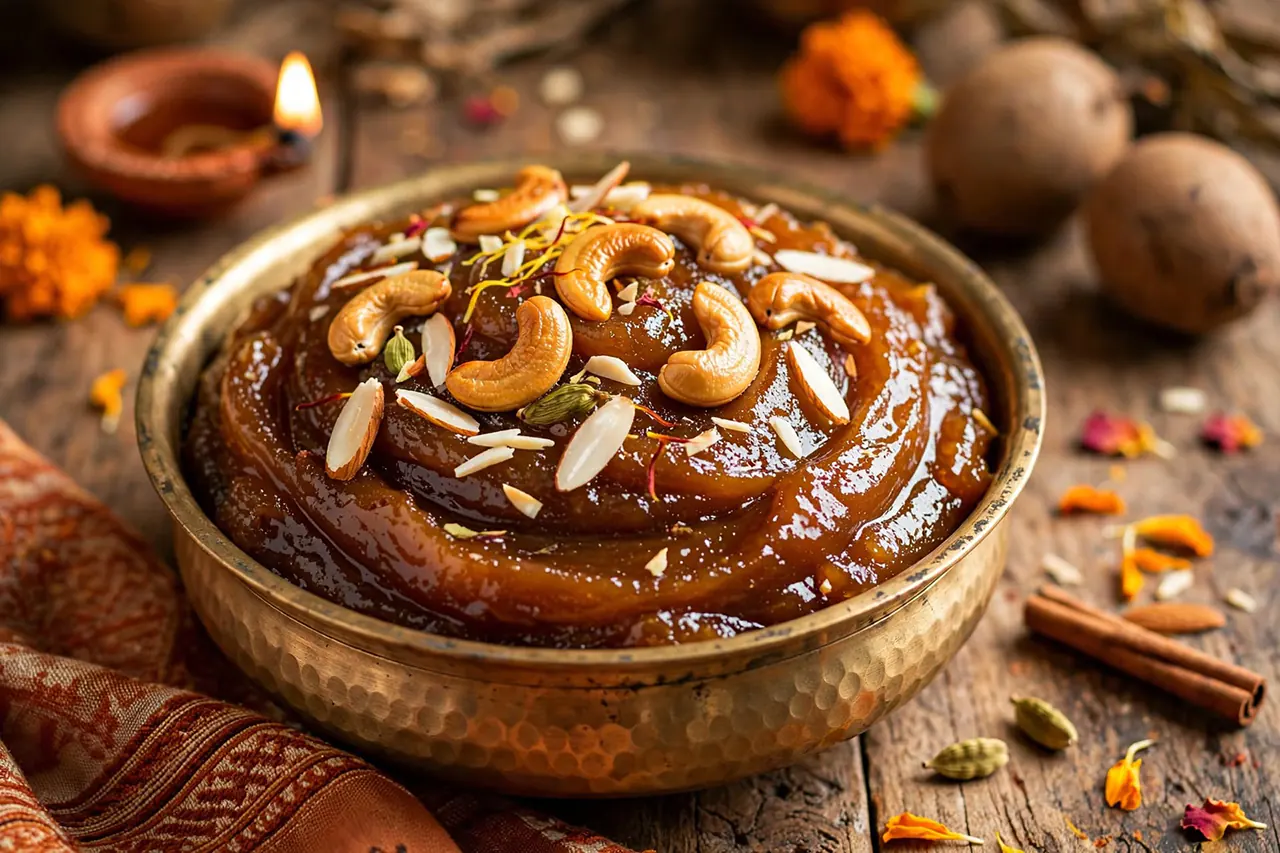
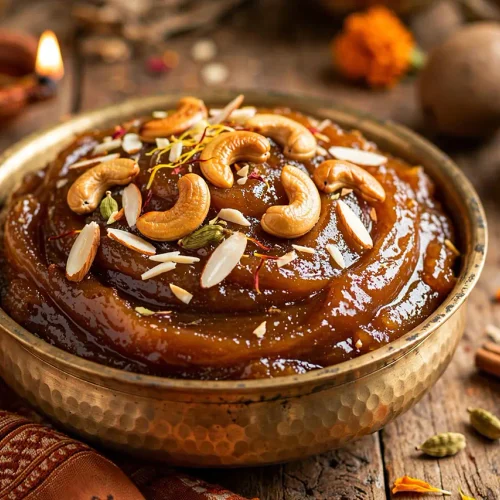
Chickoo halwa (sapota halwa) is a rich, aromatic Indian dessert made by simmering ripe sapota pulp with pure desi ghee, milk, subtle green cardamom, and crunchy fried nuts. Naturally sweet, malty, and delightfully grainy (danedar), it comes together in under 30 minutes without requiring complicated sugar syrups.
Because ripe chickoos are packed with natural sugars, this recipe needs far less added sugar than traditional grain- or lentil-based halwas. Below, you will find reliable ingredient proportions, visual doneness cues, and steps to make sure your milk never splits while cooking.
Why This Recipe Works
- Authentic grainy texture: Hand-mashing the fruit keeps the classic danedar mouthfeel instead of turning it into a gluey baby-food puree.
- Balanced sweetness: We taste-test the fruit before adding sugar so the dessert never turns cloying.
- Zero curdling: Pre-roasting the sapota pulp in ghee drives off excess moisture and acidity before the milk touches the pan.
- Vrat-friendly: Made with simple fruit, milk, ghee, and nuts, this halwa is completely gluten-free and suitable for Navratri, Shivratri, and Janmashtami fasting.
Ingredients
- Ripe Chickoo (Sapota): 500 g (approx. 5 to 6 medium-sized fruits; yields roughly 1.5 cups mashed pulp)
- Desi Ghee: 3 tablespoons
- Full-Fat Milk: 1/2 cup (120 ml), warm (or 3 tablespoons unsweetened milk powder / crumbled mawa for a richer finish)
- Sugar: 3 to 4 tablespoons (adjust according to the natural sweetness of your fruit)
- Green Cardamom Powder (Elaichi): 1/2 teaspoon, freshly ground
- Cashew Nuts: 10 to 12, halved
- Almonds: 8 to 10, sliced or slivered
- Raisins (Kishmish): 1 tablespoon (optional)
Ingredient Notes
- Chickoo / Sapota: Pick fruits that give slightly under gentle thumb pressure and smell sweet at the stem. Overripe chickoos with fermented alcoholic notes or dark black flesh inside will spoil the taste. If the flesh has an astringent white sap near the skin, peel slightly deeper.
- Ghee: Desi cow ghee provides the best aroma and prevents the sticky fruit sugars from adhering to the bottom of the pan.
- Milk vs. Mawa: Boiled, room-temperature full-fat milk produces a classic soft, comforting halwa. If you want a rich, festive texture similar to store-bought mithai, replace the milk with 3 tablespoons of unsweetened mawa (khoya) or dairy milk powder mixed with 2 tablespoons of warm milk.
- Sugar: Always taste your mashed pulp first. Sweet summer varieties like Kalipatti often require only 2 to 3 tablespoons of sugar, whereas winter batches may need 4 full tablespoons.
Step-by-Step Instructions
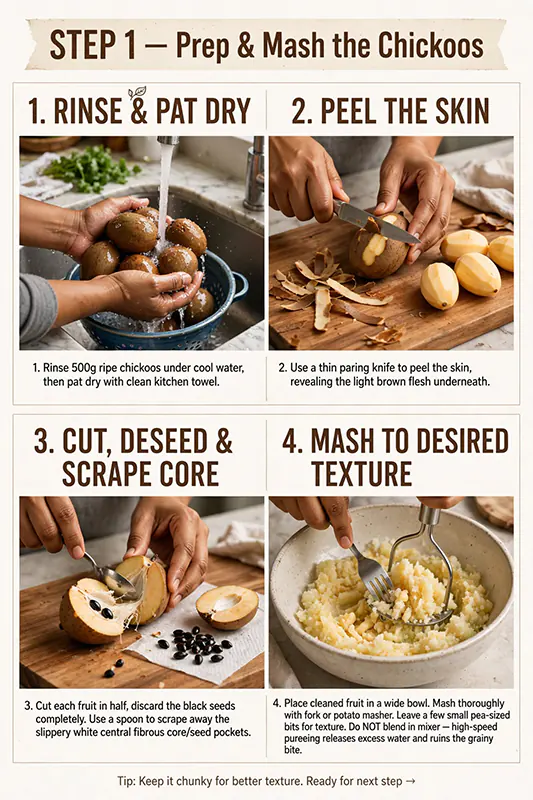
Step 1: Prep and Mash the Chickoos
Rinse 500 g of ripe chickoos under cool water and pat dry. Peel the skin thin using a paring knife. Cut each fruit in half, discard the black seeds completely, and scrape away the slippery white central fibrous core and any seed pockets with a spoon.
Place the cleaned fruit in a wide bowl and mash thoroughly with a fork or potato masher. Leave a few small pea-sized bits for texture; do not blend in a mixer, as high-speed pureeing releases excess water and ruins the grainy bite.
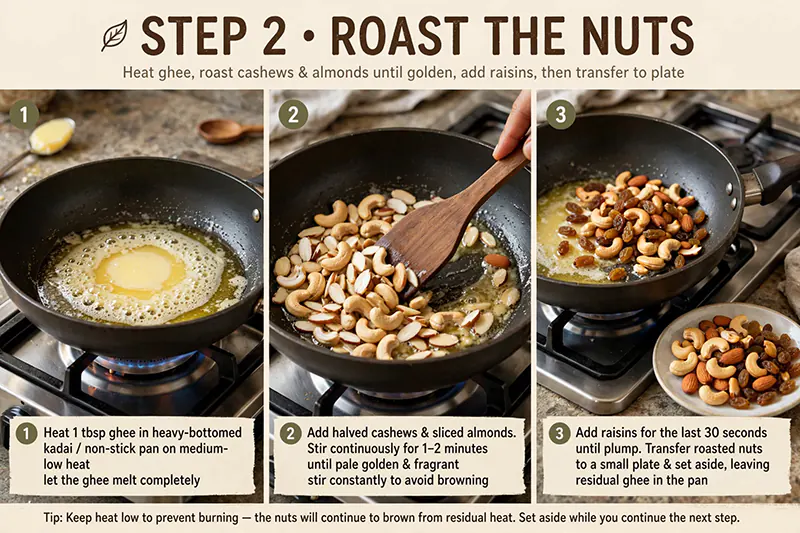
Step 2: Roast the Nuts
Heat 1 tablespoon of ghee in a heavy-bottomed kadai or non-stick pan over medium-low heat. Add the halved cashews and sliced almonds. Stir continuously for 1 to 2 minutes until the cashews turn pale golden and fragrant. If using raisins, add them during the last 30 seconds until they plump up. Transfer the fried nuts to a small plate and set aside, leaving any residual ghee in the pan.
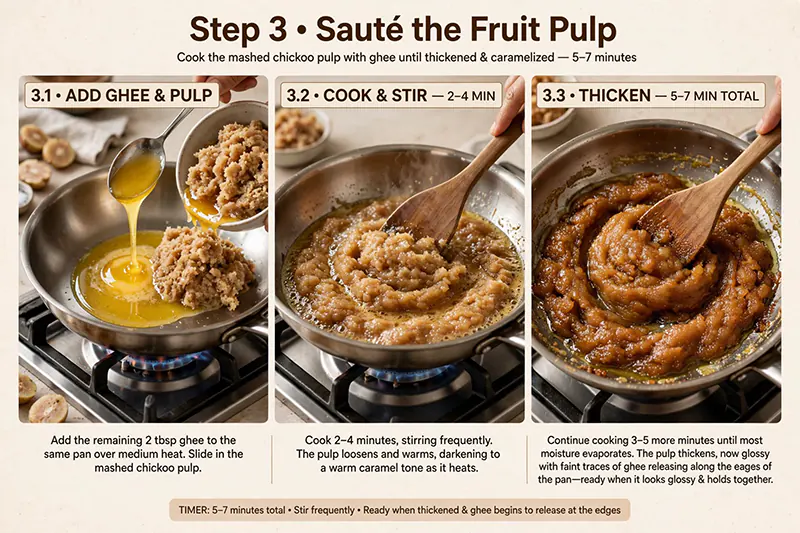
Step 3: Saute the Fruit Pulp
Add the remaining 2 tablespoons of ghee to the same pan. Turn the heat to medium and slide in the mashed chickoo pulp.
Cook the pulp for 5 to 7 minutes, stirring frequently. The pulp will initially loosen as it warms up, darken slightly to a warm caramel tone, and then begin to thicken. Cook until most of the raw moisture evaporates and you notice faint traces of ghee releasing along the edges of the pan.
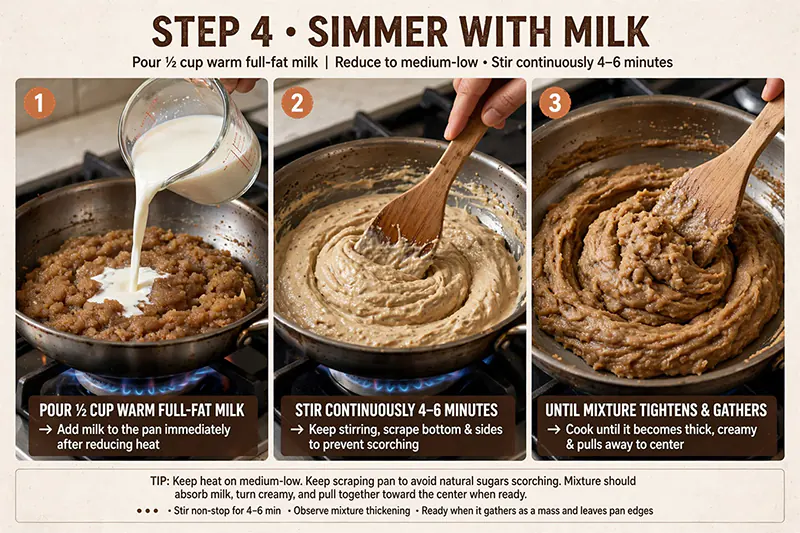
Step 4: Simmer with Milk
Pour in 1/2 cup of warm full-fat milk (or stir in your milk powder/mawa). Reduce the heat to medium-low immediately.
Stir continuously for 4 to 6 minutes. The mixture will absorb the milk and turn creamy. Keep scraping the bottom and sides of the pan with your spatula so the natural sugars do not scorch. Cook until the mixture tightens and gathers toward the center of the pan.
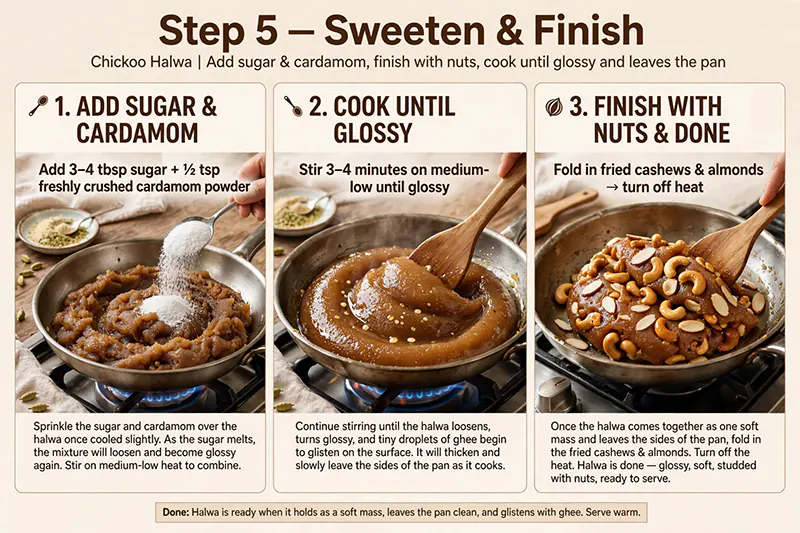
Step 5: Sweeten and Finish
Add 3 to 4 tablespoons of sugar and 1/2 teaspoon of freshly crushed cardamom powder. Once the sugar melts, the halwa will loosen and look glossy again.
Continue stirring over medium-low heat for another 3 to 4 minutes. The halwa is done when it leaves the sides of the pan in one soft mass and tiny droplets of ghee glisten on the surface. Fold in the fried cashews and almonds. Turn off the heat.
Practical Tips for the Best Texture
- Never use a blender: Pureeing chickoo in a mixer pulls out too much liquid and yields a sticky paste that requires double the ghee and cooking time. Hand-mashing delivers the signature halwai-style grainy mouthfeel.
- Use warm milk: Adding cold milk straight from the refrigerator to a hot, sugary pan creates a temperature shock that can cause splitting. Always use lukewarm or room-temperature boiled milk.
- Control your flame: Sapota has high amounts of fructose, which caramelizes quickly. Keep the heat strictly between medium-low and low once the dairy and sugar are added to avoid a bitter, burnt aftertaste.
- Choose a heavy pan: A cast iron kadai, heavy stainless steel pan, or non-stick pan is essential to prevent sticking.
Troubleshooting Common Issues
- The halwa feels sticky or chewy: This happens when chickoos are pureed completely smooth or cooked over high heat. To ease stickiness, stir in an extra teaspoon of warm ghee and saute on low flame for 2 minutes.
- The milk curdled slightly: If your chickoos were slightly underripe, their natural fruit acids can react with hot milk. While it will still taste fine (resembling a soft kalakand), you can prevent this entirely by thoroughly cooking the pulp in ghee for at least 6 minutes before pouring in the milk.
- The halwa is too loose: If the halwa spreads flat when spooned onto a plate, it still holds excess moisture. Simmer on low heat for an extra 3 to 4 minutes while stirring continuously until it rolls cleanly off the bottom of the pan.
- The dish turned oversweet: Chickoos can be deceptively sweet. If you over-sugared it, stir in 2 tablespoons of unsweetened mawa, roasted paneer crumbs, or a splash of thick unsweetened cream to balance the sweetness.
Variations
- Chickoo Sheera / Sooji Halwa: Roast 3 tablespoons of fine semolina (rava) in 1 tablespoon of ghee until fragrant, then cook it alongside the mashed chickoo and milk for a fluffier, grainier breakfast pudding.
- Khoya / Mawa Version: Skip the liquid milk entirely. Crumble 50 g of fresh unsweetened mawa directly into the roasted pulp for a dense, fudge-like festival mithai.
- Dairy-Free / Vegan Chickoo Halwa: Replace the desi ghee with unrefined coconut oil and swap the dairy milk with thick cashew milk or almond milk.
Serving Suggestions
- Warm Dessert: Serve freshly prepared chickoo halwa warm in small dessert bowls, topped with an extra pinch of freshly cracked cardamom and slivered pistachios.
- With Vanilla Ice Cream: Serve a warm scoop of halwa alongside a scoop of plain vanilla bean ice cream for an easy dinner-party sweet.
- Festival Platter: Pairs naturally with savory festive snacks like sabudana vada, spicy poha chivda, or kuttu ki puri during fasting days.
Storage and Reheating Instructions
- At Room Temperature: Keep covered in a cool spot for up to 12 hours. Because of the fresh fruit and milk content, it should not sit out longer in warm climates.
- In the Refrigerator: Store in an airtight glass or steel container for up to 3 to 4 days.
- Freezing: Not recommended, as the moisture separates from the fruit fibers upon thawing, making the texture watery.
- Reheating: The halwa will firm up slightly in the fridge as the ghee cools. To serve, transfer the required portion to a small pan, sprinkle 1 tablespoon of warm milk or water, and stir over low heat for 2 minutes until soft, glossy, and warm. You can also microwave it for 20 to 25 seconds.
Frequently Asked Questions
Can I make chickoo halwa without peeling the skin?
No. Chickoo skin has a rough, earthy texture and contains bitter tannins that spoil the mouthfeel and color of the halwa. Always peel the fruit completely before mashing.
Is chickoo halwa suitable for fasting (vrat)?
Yes. This recipe uses only fresh fruit, dairy (ghee and milk), sugar, and nuts, making it entirely grain-free and permissible for Navratri, Ekadashi, Maha Shivratri, and other Hindu fasts.
Why did my chickoo halwa turn dark brown?
Chickoo contains natural iron and sugars that naturally oxidize and caramelize when cooked with heat and ghee. A rich caramel-brown color is completely normal and indicates proper roasting.
Can I use jaggery instead of white sugar?
Yes, jaggery powder works well with sapota. However, add the jaggery only after turning off the heat or once the milk is fully absorbed and cooked down, as unrefined jaggery can curdle hot dairy milk.
Quick & Easy Chickoo Halwa (Sapota Halwa)
Ingredients
- – 500 g ripe chickoo sapota, peeled, deseeded, and mashed (approx. 1.5 cups pulp)
- – 3 tbsp desi ghee divided
- – 1/2 cup full-fat milk warm (or 3 tbsp milk powder)
- – 3 to 4 tbsp sugar adjusted to fruit sweetness
- – 1/2 tsp green cardamom powder
- – 10 to 12 cashew nuts halved
- – 8 to 10 almonds sliced
- – 1 tbsp raisins optional
Instructions
- Peel and deseed ripe chickoos; discard central white membrane and mash coarsely with a fork.
- Heat 1 tbsp ghee in a heavy pan on medium-low flame. Fry cashews, almonds, and raisins until golden; set aside.
- Add remaining 2 tbsp ghee to the pan. Add mashed chickoo pulp and saute on medium flame for 5-7 minutes until moisture evaporates and ghee starts separating.
- Pour in warm full-fat milk. Reduce flame to medium-low and stir continuously for 4-6 minutes until the liquid is fully absorbed.
- Add sugar and green cardamom powder. Cook for another 3-4 minutes until glossy, thick, and pulling away cleanly from the pan bottom.
- Fold in the roasted dry fruits, turn off flame, and serve warm.
Recipe Notes
- Mash by hand with a fork instead of blending to retain the signature grainy (danedar) mouthfeel.
- Taste the raw sapota first; naturally sweet fruit needs only 2 to 3 tbsp of sugar.
- Ensure the milk is warm to prevent thermal shock and curdling.
Storage:
- Refrigerate in an airtight container for up to 4 days. Reheat gently in a pan with a splash of milk.