Authentic Andhra Avakaya Pachadi (Traditional Raw Mango Pickle)
Andhra Avakaya Pachadi is a bold, shelf-stable raw mango pickle made by emulsifying hard-kernel green mango cubes with pungent raw mustard powder, fiery Guntur red chili, crystal salt, and cold-pressed sesame oil. It delivers a sharp, tongue-tingling pungent heat paired with a sour, crunchy fruit bite. With an active preparation time of 45 minutes and a mandatory 3-day maceration period, this kitchen-tested recipe balances traditional preservation science with exact culinary weights to guarantee zero spoilage for over 12 months.

The Culinary Science of Shelf-Stable Avakaya
Achieving a crisp, mold-free pickle that matures gracefully over a year depends on three non-negotiable chemical mechanics: moisture elimination, osmotic juice extraction, and anaerobic preservation.
- Raw Brown Mustard (Avala Pindi): Uses raw, sun-dried small brown mustard seeds (Brassica juncea). Unlike pickles that require cooked spices, Avakaya relies on raw mustard. Crushing mustard dry preserves the enzyme myrosinase. When hydrated by mango moisture, it hydrolyzes glucosinolates into allyl isothiocyanate—producing Avakaya’s unmistakable nasal pungency and serving as an organic antimicrobial agent. Never roast your mustard seeds for traditional Avakaya.
- Lightly Toasted Fenugreek (Menthulu): Fenugreek seeds contain bitter saponins. A gentle dry-toast on low heat denatures harsh raw notes into nutty aromatics before grinding. Fenugreek also acts as a natural digestion aid and balances chili heat.
- Cold-Pressed Sesame Oil (Nuvvula Nune / Til Oil): Pure, unrefined gingelly/sesame oil acts as an anaerobic barrier, blocking atmospheric oxygen from contacting the fruit flesh. It suspends volatile spice lipids without overpowering the fruit’s natural tang.
- Hard-Stone Mangoes (Tenka): Varieties like Chinna Rasalu, Collector/Totapuri (sour batch), or Pedda Rasalu must be harvested before internal starch converts to sugar. The inner seed hull (endocarp) must be fully hardened into a woody shell. This shell keeps the flesh structurally rigid against salt-induced cell collapse during months of pickling.
- Non-Iodized Rock Salt (Kallu Uppu): Iodine can discolor pickles and produce an off-flavor over time. Sun-dried sea salt creates high osmotic pressure, drawing water out of the mango tissues to inhibit microbial proliferation.
Essential Equipment Preparation (Zero-Moisture Protocol)
Ambient kitchen moisture and fungal spores on utensils are the primary causes of pickle spoilage. Complete this sterilization prep before cutting fruit:
- Jars: Use lead-free Indian ceramic pickling crocks (jaadi) or heavy food-grade glass jars. Wash thoroughly with hot soapy water, scald with boiling water, and dry completely under direct sunlight for at least 4 hours.
- Utensils: Use dedicated dry wooden or non-reactive stainless steel spoons. Do not use reactive iron, copper, or unlined brass.
- Towels: Keep 2 to 3 lint-free, bone-dry cotton kitchen towels ready for wiping fruit.

Ingredients Breakdown & Precise Ratios
Measured using a standard 240 ml cup. Ratios calculated for 1 kg chopped mango pieces with hard shell intact.
| Ingredient | Metric Weight | Volume / Count | Culinary Purpose |
| Sour Raw Mangoes (Hard-shelled) | 1000 g (net cut weight) | ~4 to 5 medium mangoes | Provides crisp matrix & natural citric acid |
| Mustard Powder (Raw brown mustard) | 200 g | 1 cup firmly packed | Pungency (jhanj) & microbial control |
| Guntur Red Chili Powder (Fine grind) | 200 g | 1 cup firmly packed | Primary heat, deep scarlet color & spice balance |
| Crystal Sea Salt (Sun-dried, powdered) | 180 g to 200 g | ¾ cup to 1 cup finely ground | Osmotic extraction & shelf-life preservation |
| Fenugreek Seed Powder (Lightly roasted) | 20 g | 2 tablespoons | Nutty undertone & anti-inflammatory balance |
| Turmeric Powder (Pasupu) | 15 g | 1 tablespoon | Color stability & antimicrobial preservation |
| Whole Garlic Cloves (Peeled, dry) | 100 g | 1 loose cup | Flavor infusion, texture crunch & pungency |
| Cold-Pressed Sesame/Gingelly Oil | 450 ml to 500 ml | ~2 cups | Anaerobic oxygen barrier & solvent for spice oils |
Prefer a visual walkthrough? Watch our step-by-step Andhra Avakaya Pachadi video on YouTube or play it directly below:
Step-by-Step Method: Andhra Avakaya Pachadi
1. Mango Washing, Cutting & Membrane Cleaning
Wash whole mangoes under cold running water to eliminate sticky sap and debris. Submerge them in a water bath for 30 minutes to reduce residual field heat.
Dry every mango with a clean cotton towel until not a single drop of water remains on the skin.
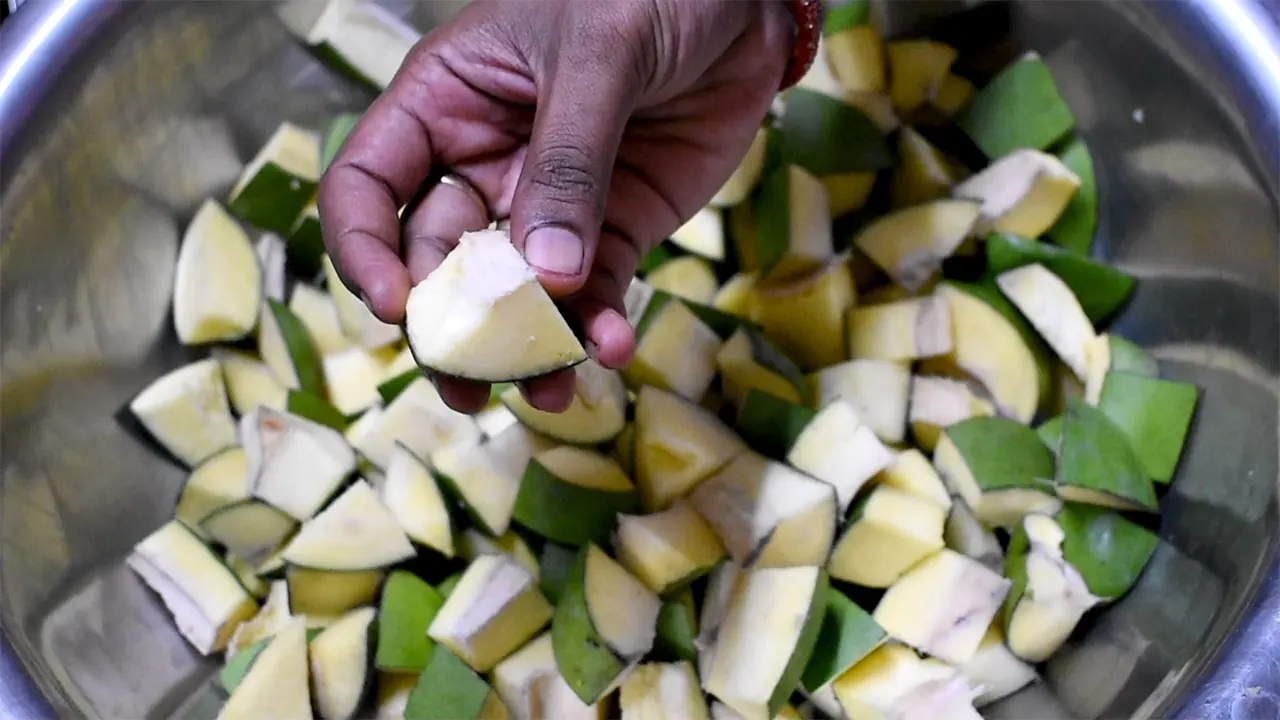
Using an Avakaya cleaver (vetthi kathi), chop the mangoes into uniform 1.25 to 1.5-inch cubes, ensuring each piece retains a segment of the hard inner woody shell (tenka).
Pry out the soft, white inner seed (jeedi). Using a dry cloth or your fingernail, locate and completely peel away the translucent, parchment-like membrane (jeedi pora) stuck to the inner concave shell.
Sensory Check: The inner shell surface should look clean, matte, and bone-dry.
Common Pitfall: Skipping the inner membrane removal. This paper-thin layer traps microscopic moisture and rots during storage, triggering white surface mold (fungus).
2. Dehydrating the Cut Cubes
Spread the cleaned mango pieces skin-side down on a dry cotton bedsheet under a ceiling fan or in filtered indoor air for 45 to 60 minutes.
Sensory Check: The exposed wet pulp shifts from glossy and wet to a touch-dry, semi-matte skin. Do not leave them in direct blazing sunlight at this stage, or the fruit flesh will lose structural turgor pressure and turn rubbery.
3. Spice Blend Preparation
Heat a dry heavy-bottom skillet over low flame. Add 2 tablespoons of whole fenugreek seeds. Toast for 2 to 3 minutes, tossing continuously, until they shift from pale yellow to light golden-red and emit a warm aroma. Cool completely to room temperature, then grind to a fine powder in a moisture-free grinder.
Grind the unroasted brown mustard seeds into a fine, smooth powder. Ensure your grinder runs in short bursts to prevent heat buildup, which can prematurely activate and dull the mustard compounds.
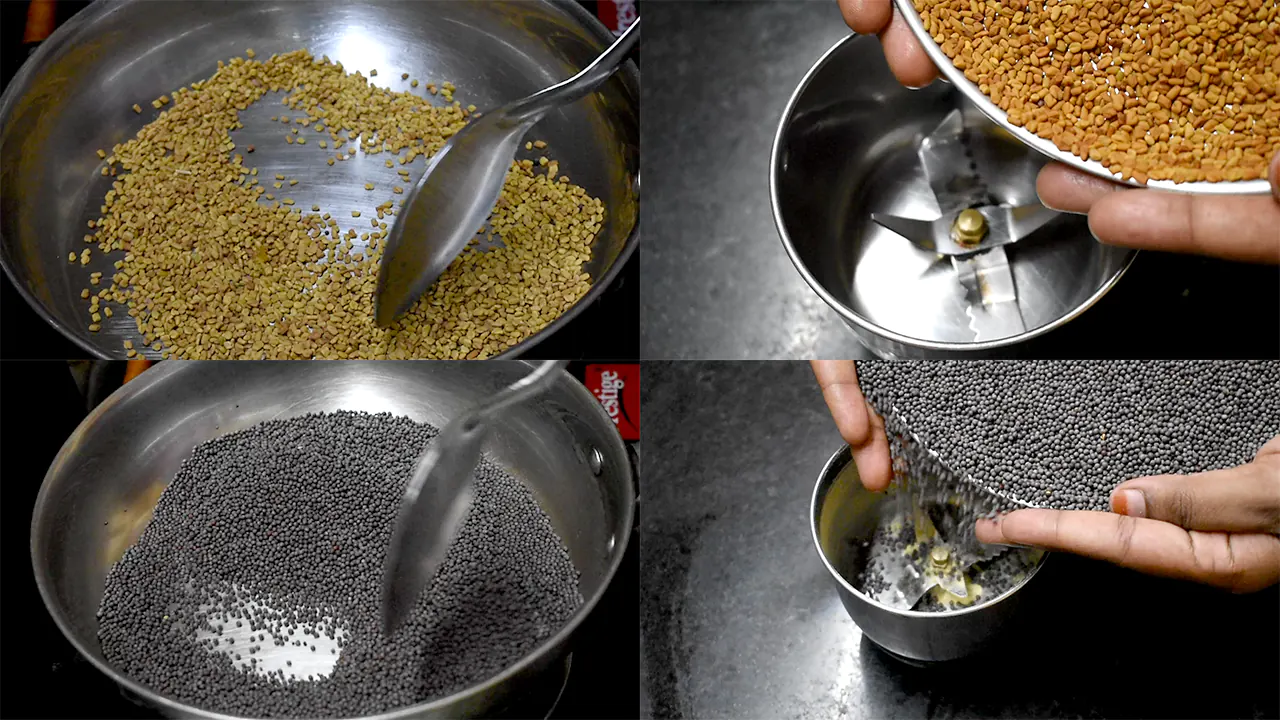
Finely grind the sun-dried crystal salt.
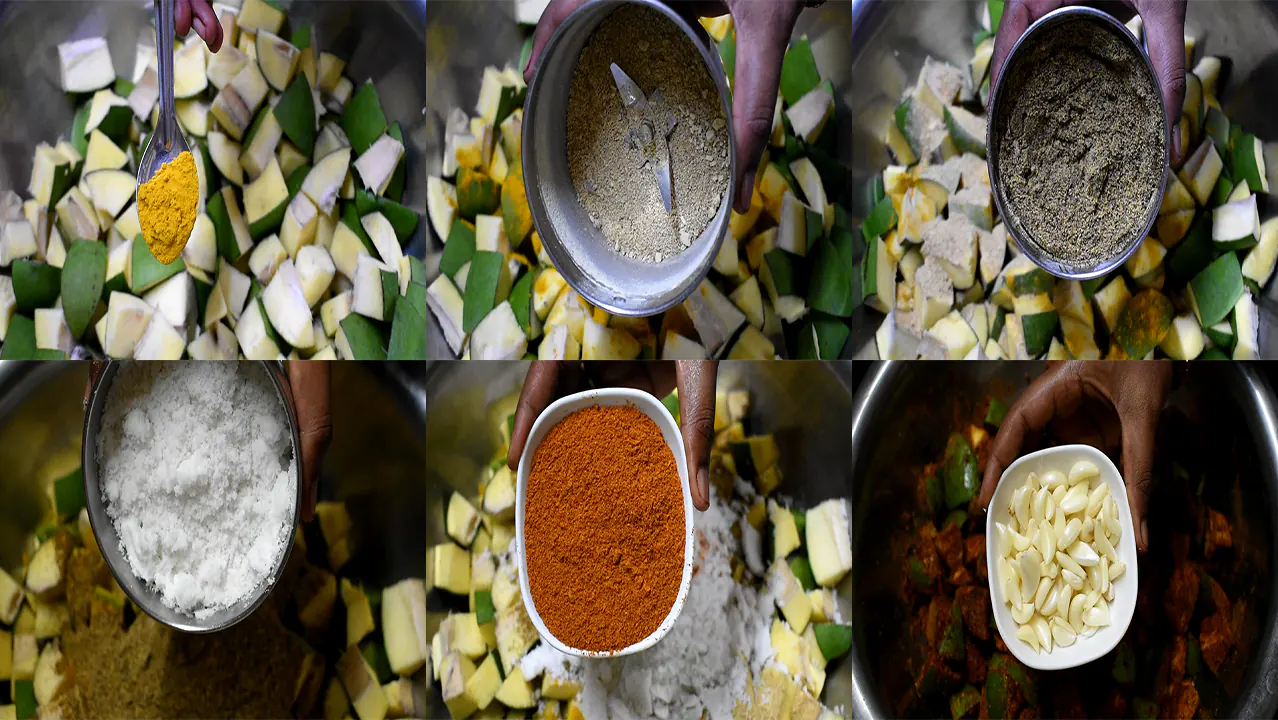
In a wide, sterilized mixing basin (thaalam), whisk together the raw mustard powder, Guntur red chili powder, ground salt, toasted fenugreek powder, and turmeric powder until the spice blend forms a uniform, deep crimson color.
Common Pitfall: Grinding mustard seeds continuously at high speed. The friction heat releases moisture and oils within the jar, creating clumpy, bitter spice paste instead of sharp powder.
4. Layering and Spice Coating
Pour 100 ml of cold-pressed sesame oil into a small side bowl. Dip a handful of dried mango pieces into the oil, then transfer them directly into the large bowl containing the spice blend.
Toss thoroughly so the oil-moistened fruit picks up a generous, even coating of spices on all sides. Repeat in batches until all mango pieces are coated.
Scatter the peeled, dry garlic cloves into the bowl. Pour in an additional 250 ml of sesame oil. Use clean, dry hands or a wooden spatula to turn and fold the ingredients together. At this stage, the mixture will look thick, slightly coarse, and dry.
Sensory Check: A dense, crumbly, dark red mass with visible oil sheen, but no standing pool of liquid.
5. Jar Packing & Anaerobic Sealing
Transfer the spiced mango mixture into your sterilized ceramic jar (jaadi) or glass container. Lightly press down the mixture with the back of a clean spoon to eliminate large air pockets.
Pour 100 ml of sesame oil directly over the top to blanket the surface.
Wipe the inner rim and neck of the jar with a completely dry paper towel. Cover the jar with its lid, place a clean square of cotton cloth (Avakaya battalu) over the lid, and wind twine tightly around the jar neck.
Store the jar in a warm, dark, completely moisture-free corner of your pantry for 3 days undisturbed.
The Critical “Day-3 Adjustment” (Moodo Roju Kalapadam)
On the morning of the third day, unbind the jar. The osmotic draw from the salt will have extracted moisture from the mango pulp, dissolving the spices into a glossy, semi-fluid gravy (oorpu), while natural fruit volume settles downward.
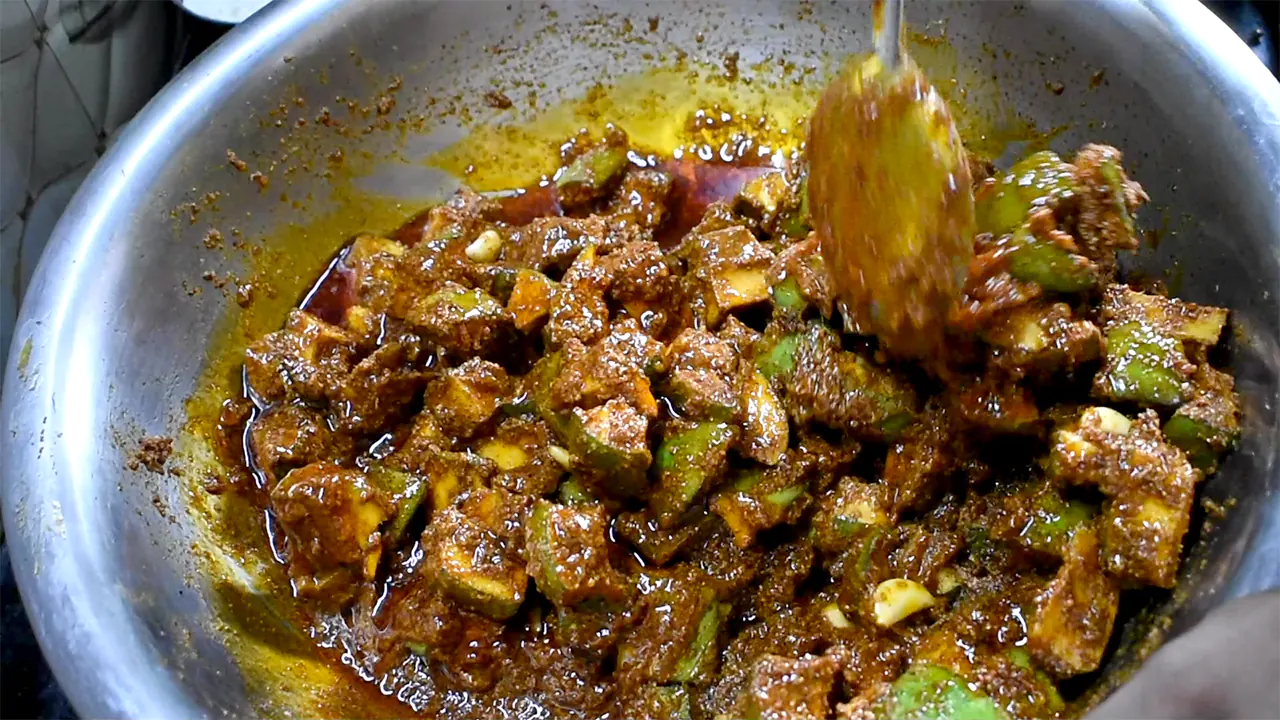
- The Deep Fold: Using an ultra-dry wooden ladle, gently fold the pickle from the bottom of the jar to the top. Ensure the resting spice sludge at the bottom thoroughly reintegrates with the floating oil.
- The Salinity & Acid Test: Taste a small drop of the liquid gravy. It should register as aggressively salty, fiery, and sharply sour. The salinity must slightly lead the sourness. If the gravy tastes sour-forward with mild salt, the pickle will ferment and spoil within months. Whisk in 2 to 3 tablespoons of finely powdered salt immediately if needed.
- The Protective Oil Seal: Smooth down the surface of the pickle. Check the oil level: a clear, uninterrupted layer of sesame oil measuring at least 0.5 inches (1.5 cm) must float continuously above the solid fruit and spice layer. If pieces protrude into the air, heat 100 ml of sesame oil until warm, cool it to room temperature, and pour it gently over the surface until the fruit is completely submerged. Reseal the jar. The pickle is ready to eat immediately, but reaches peak flavor maturation around Day 14 to 20.
Pro-Kitchen Tips for Texture & Longevity
- The Shell Thickness Rule: Never attempt to make authentic long-term Avakaya with mangoes cut using a standard paring knife. A standard blade cuts around the stone, leaving unprotected pulp that disintegrates into mush within 60 days. The structural woody endocarp is mandatory.
- Keep Oil Unheated: Traditional Andhra coastal methods use cold-pressed, unheated sesame oil straight from the mill. If you suspect your oil contains residual processing water, heat it to 100°C until fine bubbles subside, then cool it back down to room temperature before pouring. Never pour warm oil onto raw spices, or you will scald the mustard powder and create an acrid flavor.
- The “Working Jar” Strategy: Never dip into your primary ceramic crock for daily meals. Decant a 2-week supply into a small 250 ml glass jar. Keep the primary master crock tightly tied and undisturbed in a dark cabinet to prevent routine exposure to humid kitchen air.
Troubleshooting & Fixes
| Problem | Root Cause | Immediate Kitchen Fix |
| White fuzz / mold spots on surface | Ambient moisture exposure, inadequate salt, or fruit exposed above oil level. | Immediately scrape away and discard the mold layer with a sterile spoon. Sprinkle 2 tablespoons of fine salt over the top. Heat 1 cup of sesame oil, let it cool completely, and pour over until all contents are submerged under 1 inch of oil. |
| Pickle tastes unpleasantly bitter | Mustard seeds were roasted, or fenugreek was scorched over high heat. | Mustard bitterness mellows naturally as the organic acids in the mango break down spice oils over 3 to 4 weeks. If still sharp after 3 weeks, stir in an additional 50 ml of cold-pressed sesame oil and 2 tablespoons of peeled garlic cloves. |
| Mango pieces turned soft and mushy | Mango lacked hard stone; fruit was sun-baked directly; or insufficient salt failed to pull moisture fast enough. | The texture of softened mango cannot be reversed. Prevent progression by refrigerating the jar immediately to halt further enzymatic softening, and consume within 2 months. |
| Gravy looks dry; no oil on top | Mustard powder absorbed all available lipid volume without adequate top-off oil. | Heat 150 ml of sesame oil, cool to room temperature, and pour gently down the sides of the jar until the floating oil layer is restored. |
Storage & Preservation Timelines
- Pantry Storage (Ceramic Jaadi / Glass): Remains fully stable at room temperature (20°C to 30°C / 68°F to 86°F) for 12 to 14 months, provided the 0.5-inch surface oil seal is strictly maintained and zero moisture enters the container.
- Color Preservation via Refrigeration: While shelf-stable on the counter, ambient heat will gradually darken the bright scarlet red chili pigments to deep maroon or brown over 6 to 8 months. To preserve the vibrant red color and crisp fruit snap for up to 2 years, store the mature jar in the refrigerator after 1 month of counter maturation.
- Serving Hygiene: Use only bone-dry stainless steel or porcelain spoons. Never use wooden spoons for daily serving, as wood retains microscopic humidity that transfers into the jar.
Authentic Andhra Serving Pairings
- Muddha Pappu & Annam: The quintessential Andhra pairing. Serve a steaming mound of short-grain sona masuri rice, topped with a generous ladle of thick, unseasoned yellow pigeon pea dal (muddha pappu), a teaspoon of Avakaya gravy with a mango piece, and a liberal pool of warm, melted homemade A2 cow ghee.
- Chilled Curd Rice (Perugannam): Stir soft-mashed rice into thick, whole-milk yogurt with a pinch of salt. Dab Avakaya gravy on the side for a sour, spicy, cooling contrast.
- Avakaya Upma: Swirl a half-teaspoon of mature Avakaya oil and gravy into hot, savory semolina or broken wheat upma just before serving to replace standard breakfast chutneys.

Authentic Andhra Avakaya Pachadi (Raw Mango Pickle)
A traditional, shelf-stable Andhra raw mango pickle made with hard-shell green mango cubes, raw brown mustard powder, Guntur chili, and cold-pressed sesame oil.
Ingredients
- – 1000 grams raw sour green mangoes washed, dried, and cut into 1.5-inch cubes with hard inner shell intact
- – 200 grams 1 cup firmly packed raw brown mustard seeds, finely ground unheated
- – 200 grams 1 cup firmly packed Guntur red chili powder
- – 190 grams ¾ cup pure crystal sea salt, sun-dried and ground fine
- – 20 grams 2 tablespoons fenugreek seeds, lightly toasted and finely ground
- – 15 grams 1 tablespoon pure turmeric powder
- – 100 grams 1 loose cup peeled, moisture-free whole garlic cloves
- – 450 to 500 ml cold-pressed unrefined sesame gingelly oil
Instructions
Clean and De-membrane Mangoes
Wash whole mangoes thoroughly, submerge in room-temperature water for 30 minutes to cool, then dry completely with a clean towel. Chop into 1.5-inch cubes with the hard shell intact using an Avakaya cleaver. Remove inner seed and peel away the translucent white inner membrane from each piece. Air-dry cubes under a fan for 45 minutes until touch-dry.
Grind Spices
Dry-toast fenugreek seeds in a skillet on low heat for 2-3 minutes until lightly golden; let cool and grind to fine powder. Grind raw, unroasted brown mustard seeds in short pulses until smooth. Grind sun-dried rock salt to a powder.
Combine Dry Masala
In a sterile, bone-dry wide basin, whisk together the mustard powder, chili powder, ground salt, toasted fenugreek powder, and turmeric powder until uniformly blended.
Oil and Spice Coat
Dip dried mango pieces into a small bowl of sesame oil, transfer to the spice basin, and toss thoroughly until heavily coated. Mix in whole garlic cloves and pour in 250 ml of sesame oil, folding with a dry ladle until a thick, shiny, crumbly mixture forms.
Jar and Initial Rest
Pack the coated mangoes into a sterilized ceramic crock or glass jar. Pour remaining sesame oil over the top to seal the surface. Cover with lid, tie a clean cotton cloth around the neck, and rest at room temperature in a dry pantry for 3 days.
Day-3 Remix and Oil Seal
On Day 3, unbind the jar and fold thoroughly with a bone-dry spoon from bottom to top. Taste for salinity—salt must slightly lead sourness (mix in 2 tablespoons salt if tartness dominates). Level the surface and confirm at least 0.5 inches of clear oil rests above the solids, adding warm-then-cooled sesame oil if needed. Reseal tightly.


4 Comments