Authentic Temple-Style Kadambam Recipe (Kadamba Sadam)

Kadambam Recipe (also known as Kadamba Sadam) is a traditional South Indian temple-style mixed vegetable rice made by simmering rice, toor dal, and native country vegetables in a freshly ground, coconut-spice paste and tangy tamarind broth. Unlike everyday sambar sadam, authentic Kadambam is prepared without onion or garlic, featuring a distinct blend of slow-roasted chana dal, coriander seeds, fenugreek, dry red chillies, and fresh coconut finished with fragrant ghee.
A well-made Kadamba Sadam has a rich, semi-fluid consistency—soft and comforting, but with the vegetables retaining their clean bite rather than dissolving into the lentils.
What Makes Kadambam Distinct?
Kadambam translates to “a blend” or “garland of mixed varieties.” It holds a revered place in Tamil Nadu temple cuisine (particularly during the Tamil month of Purattasi and throughout Navratri) as well as festive spreads across South India.
While frequently compared to other mixed rice dishes, it stands apart structurally:
- Kadambam vs. Sambar Sadam: Everyday sambar rice typically uses pre-made sambar powder and often includes shallots (chinna vengayam). Kadambam strictly omits alliums and relies entirely on a freshly roasted, wet-ground masala paste with a heavy note of fresh coconut and fenugreek.
- Kadambam vs. Bisi Bele Bath: Karnataka’s Bisi Bele Bath incorporates warm spices such as cloves, cinnamon, and marathi moggu, along with vegetables like green beans, carrots, and peas. Kadambam uses no whole warming spices; its profile is clean, peppery, and rooted strictly in native Indian country vegetables (nattu kaikarigal).
Ingredients for Authentic Kadamba Sadam
1. For the Rice & Dal Base
- Raw Rice (Ponni or Sona Masoori): ½ cup (100g)
- Toor Dal (Split Pigeon Peas): ½ cup (100g)
- Turmeric Powder: ½ tsp
- Ghee: 1 tsp (added while cooking dal to prevent boil-over)
- Water: 3 cups (750ml)
2. For the Fresh Kadambam Masala Paste
- Chana Dal (Bengal Gram): 1 tbsp
- Urad Dal (Split Black Gram): 1 tsp
- Coriander Seeds (Dhania): 1½ tbsp
- Fenugreek Seeds (Methi): ¼ tsp (do not exceed, or the paste turns bitter)
- Dry Red Chillies: 5–6 (use a mix of 3 spicy Guntur chillies and 3 Byadagi chillies for deep color)
- Whole Black Peppercorns: ½ tsp
- Fresh Grated Coconut: ¼ cup tightly packed
- Sesame Oil or Ghee: 1 tsp (for roasting)
- Water: 3–4 tbsp (for grinding)
3. Vegetables & Tamarind Base
- Tamarind: Medium lemon-sized ball (soaked in 1½ cups warm water and extracted)
- Mixed Native Vegetables: 2 cups chopped into medium 1-inch chunks
- Yellow Pumpkin (Parangikkai): ½ cup
- Ash Gourd (Vellai Poosanikai): ¼ cup
- Drumstick (Murungakkai): 1 piece, cut into 2-inch lengths
- Broad Beans (Avarakkai): ½ cup, destringed and halved
- Colocasia (Seppankizhangu) or Sweet Potato: ¼ cup, peeled and cubed
- Raw Banana (Vazhaikkai): ¼ cup, cubed
- Turmeric Powder: ¼ tsp
- Asafoetida (Hing): ½ tsp (compounded asafoetida yields the best temple aroma)
- Jaggery: 1 tsp powdered (rounds out the sharp tamarind acidity)
- Rock Salt: 1½ tsp (adjust to taste)
- Water: 1 to 1½ cups (for simmering vegetables)
4. For the Tempering (Thalippu)
- Ghee: 2 tbsp
- Mustard Seeds: 1 tsp
- Curry Leaves: 1 sprig (10–12 leaves)
- Dry Red Chilli: 1 (broken)
- Cashew Nuts: 10–12 halves (optional, traditional for festival offerings)
Selecting the Right Vegetables
The integrity of a traditional Kadamba Sadam relies on using firm, native Indian vegetables. Avoid vegetables that leach heavy color, release excess water, or impart strong allium notes.
| Recommended Native Vegetables | Vegetables to Avoid |
| Yellow pumpkin (parangikkai) | Beetroot (bleeds red, ruins color) |
| Ash gourd (poosanikai) | Cauliflower & Cabbage (overpowering sulfur notes) |
| Drumstick (murungakkai) | Onion & Garlic (not authentic to temple style) |
| Broad beans (avarakkai) | Bottle gourd (too watery; dilutes the gravy) |
| Raw banana (vazhaikkai) | Potatoes (can make the mash excessively gummy) |
| Brinjal (kathirikai) | Capsicum / Bell Pepper (too pungent) |
Step-by-Step Instructions
Step 1: Cook and Mash the Dal
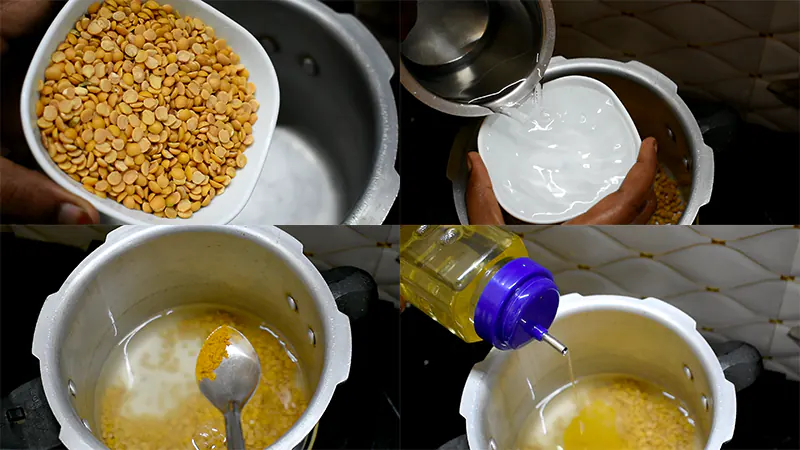
- Add yellow lentils (toor dal) to a pressure cooker. Add enough water to rinse the dal thoroughly, swishing with your fingers, then drain the water completely.
- Pour 3 bowls of water into the cleaned dal. Add a pinch of turmeric powder and 1 tablespoon of oil.
Cooking Tip: Adding oil and turmeric directly to the dal helps it cook faster, keeps the foam from spilling through the vent, and results in a noticeably smoother texture.
- Close the pressure cooker lid and cook over medium heat until the dal softens completely (about 4 to 5 whistles).
- Allow the pressure to release naturally, open the lid, and mash the hot dal with the back of a ladle until it reaches a smooth, creamy texture. Transfer the mashed dal to a small bowl and set aside.
Step 2: Soak and Extract the Tamarind Pulp
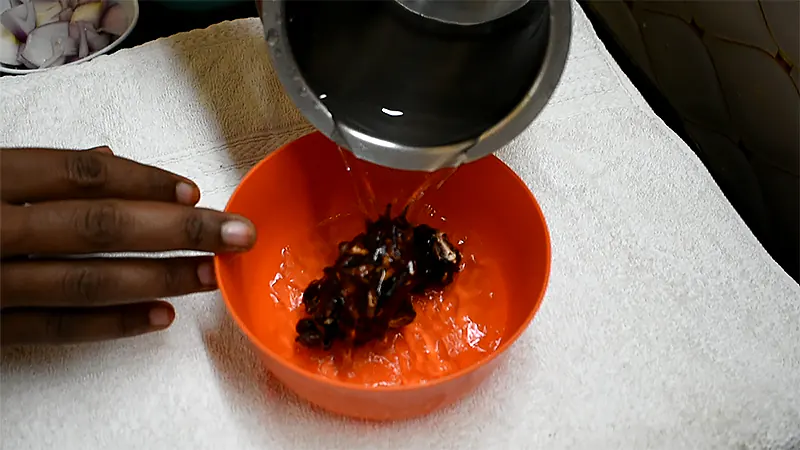
- Place a small ball of tamarind in a bowl and pour in a little warm water.
- Let it soak undisturbed for 5 to 10 minutes until softened.
- Squeeze the softened tamarind thoroughly using your fingers to extract the rich pulp, then strain out the seeds and fibrous residue. Set the smooth pulp aside.
Step 3: Fry the Whole Spices and Aromatics
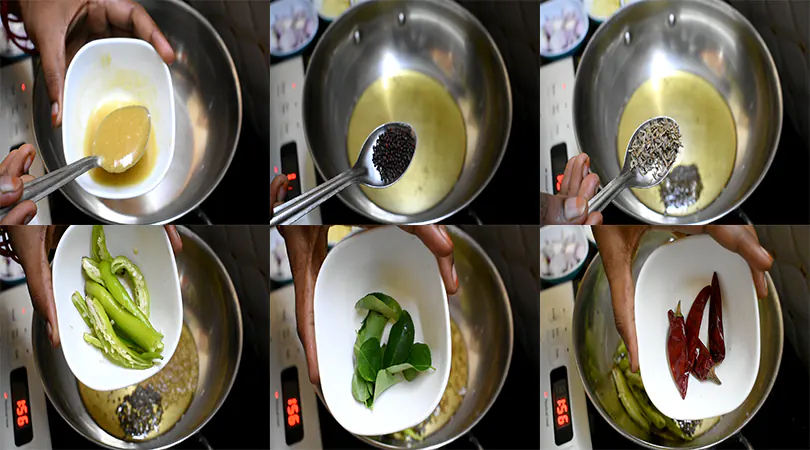
- Heat 3 tablespoons of ghee in a large, heavy-bottomed pan or pot over medium-low heat until completely melted.
- Add mustard seeds, cumin seeds, slit green chillies, and fresh curry leaves. Let the mustard seeds crackle and the leaves turn crisp.
- Snap the tips off the dry red chillies, add them to the pan, and sauté for a second so they toast without scorching.
- Sprinkle in a pinch of asafoetida (hing) and stir all the spices together for a few seconds until fragrant.
Step 4: Add the Mixed Vegetables
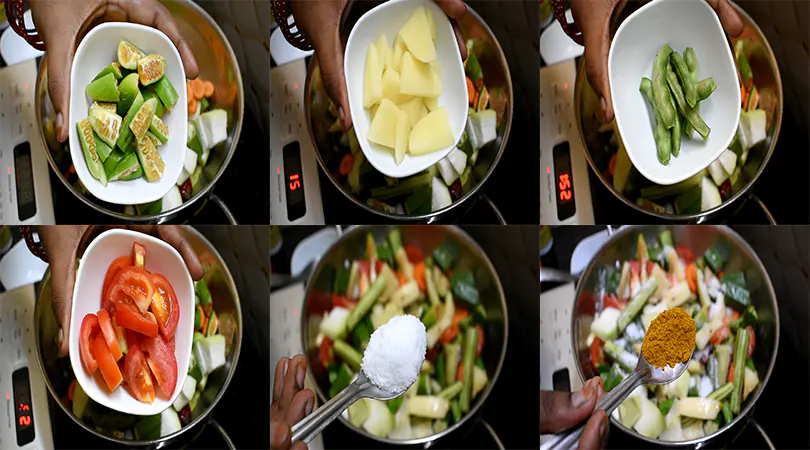
- Add sliced onions, bottle gourd pieces, drumsticks, and curry cucumber (dosakaya).
- Follow immediately with sliced ladyfinger (bhindi) and carrot rounds.
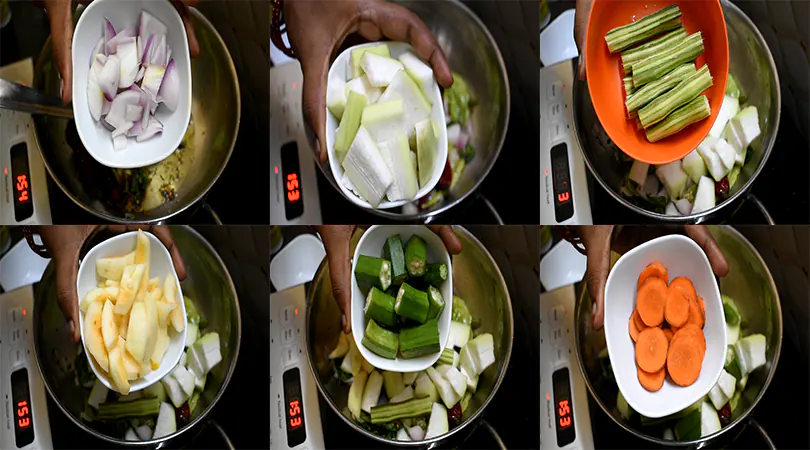
- Add the sliced tindora (dondakaya), potato slices, Indian broad beans (avarakkai) and sliced tomatoes.
- Stir gently to coat all the vegetables evenly in the hot ghee and whole spices.
- Sprinkle 1 tablespoon of salt and ½ tablespoon of turmeric powder over the vegetables and mix thoroughly so the seasoning distributes evenly.
Step 5: Steam and Soften the Vegetables
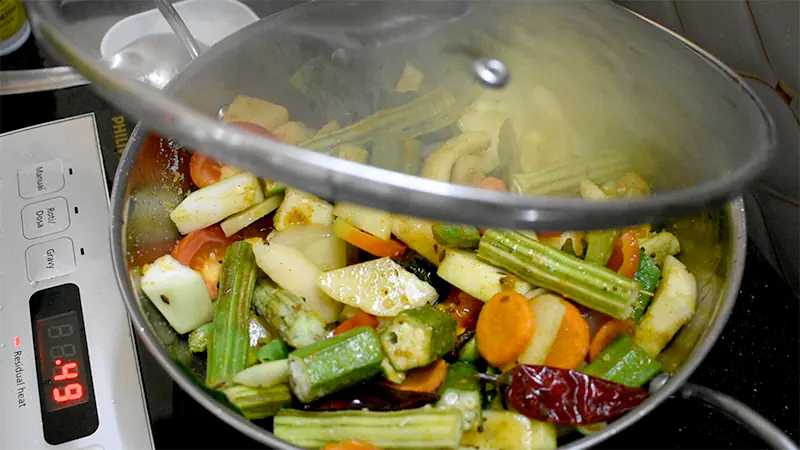
- Cover the pan securely with a tight-fitting lid.
- Cook over low heat for approximately 10 minutes. The moisture released from the tomatoes, onions, and bottle gourd will gently steam the vegetables.
- Remove the lid and gently test the vegetables with a spoon or fork to ensure they are tender and cooked through before moving to the liquids.
Step 6: Add the Dal, Tamarind, and Seasonings
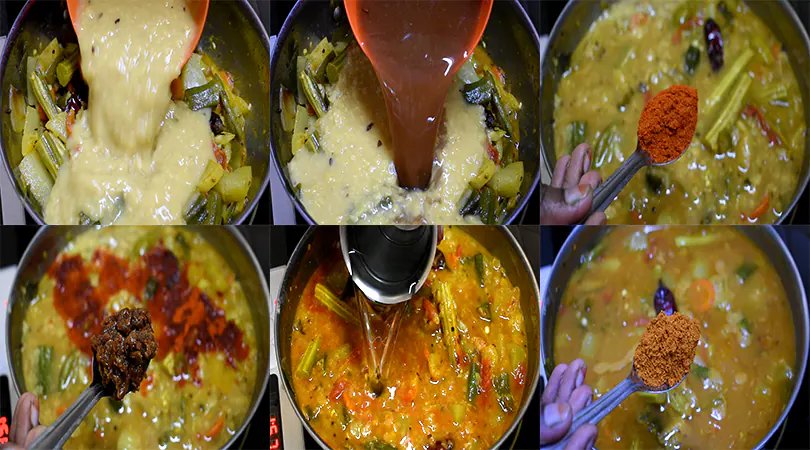
- Pour the cooked mashed dal and the prepared tamarind pulp directly into the softened vegetable mixture. Stir well until evenly combined.
- Sprinkle in red chilli powder and a small piece of jaggery, stirring continuously so the jaggery dissolves into the hot gravy.
- Check the consistency: if the mixture looks dense or sticky, pour in 250 ml of water, stir well, and bring it to a gentle boil for 1 minute.
- Sprinkle the sambar powder evenly across the surface and stir thoroughly.
Note: Sambar powder immediately thickens the liquid, tying the vegetables, tamarind, and lentils into a cohesive, rich gravy.
Step 7: Combine Rice, Simmer, and Garnish
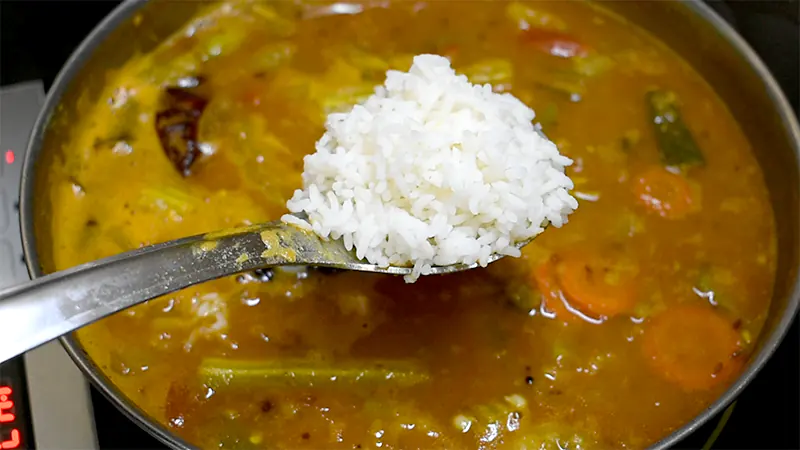
- Add the pre-cooked rice to the bubbling vegetable-dal gravy and fold gently from the bottom to prevent the rice grains and soft vegetable pieces from breaking.
- Cover the pot with the lid and let it simmer on low heat for 2 minutes. This brief rest under steam allows the rice to soak up the tangy, spiced broth.
- Turn off the heat and transfer the hot Kadambam into a wide serving bowl.
- Garnish generously with freshly chopped coriander leaves and serve immediately while hot.
Prefer a visual walkthrough? Watch our step-by-step Kadambam recipe video on YouTube or play it directly below:
Tips for Best Results
- Never Over-Roast the Fenugreek: Roast fenugreek (methi) over low heat only until fragrant. If fenugreek blackens even slightly, it imparts an unfixable bitter taste to the entire dish.
- Cook Dal and Vegetables Separately: Rice and toor dal need pressure cooking to break down into a comforting base, whereas country vegetables like pumpkin dissolve if subjected to multiple cooker whistles. Boiling the vegetables in the tamarind broth on an open stovetop keeps them whole and juicy.
- Maintain a Fluid Consistency Early: Kadamba Sadam thickens significantly as it cools due to the high starch content of toor dal and short-grain rice. When taking it off the stove, it should look slightly looser than your desired final texture.
- Use Only Hot Water for Adjustments: If the dish stiffens while simmering or resting, always thin it down with hot boiling water. Adding cold or room-temperature water breaks the emulsion and flattens the spice balance.
Troubleshooting Common Issues
1. The Kadambam Turned Out Too Thick and Solid
- Why it happens: Rice and lentils continue absorbing free moisture long after cooking stops.
- How to fix it: Heat ½ cup of water with a small pinch of salt in a saucepan until boiling. Pour it over the thick Kadambam and fold gently on low heat for 2 minutes until it regains a silky, spoonable texture.
2. The Gravy Tastes Harshly Sour
- Why it happens: The tamarind extract was either too concentrated, or the broth did not boil long enough to dispel raw acidity before dal was added.
- How to fix it: Stir in ½ teaspoon of powdered jaggery and 1 tablespoon of warm ghee. The fat from the ghee and the sweetness from jaggery instantly cut harsh acidity.
3. The Vegetables Dissolved Into Mush
- Why it happens: High-water vegetables (pumpkin, squash) were cooked at the same time as hard root vegetables, or pressure-cooked alongside the raw dal.
- How to fix it: In future batches, add softer vegetables 6 minutes after boiling hard vegetables. For the current batch, fold the dish very gently without vigorous stirring so remaining pieces stay intact.
4. The Dish Tastes Bland Despite Adding Salt
- Why it happens: Rice and dal require salt during the simmering stage to absorb flavor through the grain. Adding salt only at the very end leaves the center of the rice grains unseasoned.
- How to fix it: Dissolve ½ teaspoon of salt in 2 tablespoons of warm water, drizzle it evenly across the pot, and simmer on low for 3 minutes to allow it to permeate the grain.
Variations
- Single-Pot Pressure Cooker Method (Weeknight Quick Prep): If pressed for time, heat ghee directly in the pressure cooker, fry the spices/masala, toss in vegetables, add soaked rice, dal, tamarind extract, and 4 cups of water. Pressure cook for 3 whistles on medium. Note: Vegetables will be softer and slightly broken compared to the traditional two-pot method.
- Karthigai Deepam / Temple Festival Special: Prepare without cashews, doubling the quantity of ghee and using country raw banana, yellow pumpkin, and colocasia as the primary vegetables.
- No-Coconut Variation: While fresh coconut provides the signature temple texture, you can omit it and increase the chana dal in the roasted spice paste from 1 tbsp to 1½ tbsp to maintain thickness and body.
What to Serve With Kadambam
Kadambam is a complete, one-pot balanced meal containing carbohydrates, plant protein, and dietary fiber. It pairs best with contrasting textures:
- Fried Appalam or Vadai: Crispy plain urad dal appalam or crunchy Medu Vada provides the ideal crunch against the soft rice.
- Potato Roast / Urulaikizhangu Varuval: Spicy, slow-roasted, crispy South Indian potato fry makes the most popular festival combination.
- Cooling Raita: A simple cucumber, onion-free carrot, or plain salted yogurt raita tempers the peppery heat of the fresh masala.
Storage & Reheating Instructions
- Refrigeration: Store leftover Kadambam in an airtight glass or stainless steel container in the refrigerator for up to 2 days.
- Texture Change: The dish will firm up into a solid mass in the fridge as the starches cool and gel.
- Reheating on Stovetop (Recommended): Transfer the cold Kadambam to a saucepan. Add ⅓ cup of hot water per cup of cold rice. Stir continuously over medium-low heat for 3–4 minutes until loose, piping hot, and steaming. Drizzle ½ teaspoon of fresh ghee on top to revive the original aroma.
- Reheating in Microwave: Place the rice in a microwave-safe bowl, sprinkle 2 tablespoons of water over the surface, cover with a damp paper towel or microwave lid, and heat on high for 90 to 120 seconds. Stir well halfway through.
Frequently Asked Questions
Can I use ready-made sambar powder instead of grinding fresh masala?
You can use 2 tablespoons of standard homemade sambar powder in an emergency, but the dish will taste like everyday sambar rice. The hallmark of authentic temple-style Kadambam is the fresh roast of chana dal, fenugreek, coriander seeds, and grated coconut.
Which rice variety works best for Kadamba Sadam?
Short-to-medium grain South Indian white rice such as Ponni raw rice or Sona Masoori works best. Avoid aged Basmati rice; its firm, separate grains and distinct aroma clash with the intended soft, homogeneous temple texture.
Why is onion and garlic not used in Kadambam?
Traditional Kadambam originated as a temple offering (Prasadam) in South Indian temples, which strictly observe Satvik cooking principles prohibiting alliums. Even for festival home cooking, skipping onion and garlic keeps the dish authentic to its heritage.
Can I make Kadambam with brown rice or millets?
Yes. You can substitute white rice with foxtail millet, kodo millet, or unpolished brown rice in equal amounts. If using brown rice, increase the pressure cooking whistles from 4 to 6 and add ½ cup extra water to ensure the grains soften fully.

Temple-Style Kadambam (Kadamba Sadam)
Kadambam Recipe or Kadamba Sadam or simply sambar rice is one of the healthy nutrition filled South Indian recipes.
Ingredients
For Rice & Dal:
- – 1/2 cup Ponni or Sona Masoori raw rice 100g
- – 1/2 cup toor dal 100g
- – 1/2 tsp turmeric powder
- – 1 tsp ghee
- – 3 cups water 750ml
For Fresh Kadambam Masala:
- – 1 tbsp chana dal
- – 1 tsp urad dal
- – 1 1/2 tbsp coriander seeds
- – 1/4 tsp fenugreek seeds
- – 5 dry red chillies mix of Guntur and Byadagi
- – 1/2 tsp whole black peppercorns
- – 1/4 cup fresh grated coconut
- – 1 tsp sesame oil or ghee
- – 3-4 tbsp water for grinding
For Vegetable & Tamarind Broth:
- – 1 medium lemon-sized tamarind ball soaked in 1 1/2 cups warm water
- – 2 cups mixed country vegetables pumpkin, ash gourd, drumstick, broad beans, raw banana
- – 1/4 tsp turmeric powder
- – 1/2 tsp asafoetida hing
- – 1 tsp powdered jaggery
- – 1 1/2 tsp rock salt adjust to taste
- – 1 to 1 1/2 cups water
For Tempering:
- – 2 tbsp ghee
- – 1 tsp mustard seeds
- – 10-12 fresh curry leaves
- – 1 dry red chilli broken
- – 10 cashew nuts
Instructions
- Pressure cook rinsed rice, toor dal, 3 cups water, 1/2 tsp turmeric, and 1 tsp ghee for 4-5 whistles on medium heat. Let pressure release naturally. Mash lightly and set aside.
- Heat 1 tsp oil/ghee in a pan over low heat. Roast chana dal, urad dal, coriander seeds, fenugreek seeds, and black pepper until golden (2 mins). Add dry red chillies (1 min). Add grated coconut (1 min). Cool and grind with 3-4 tbsp water into a fine paste.
- In a wide pot, boil the tamarind extract with drumstick, raw banana, turmeric, hing, and salt for 6 minutes until the raw smell clears.
- Add pumpkin, ash gourd, broad beans, and 1 cup water. Simmer covered for 6-8 minutes until vegetables are tender.
- Stir in the ground coconut-spice paste, jaggery, and 1/2 cup water. Simmer for 3 minutes.
- Gently fold in the cooked rice-dal mash. Simmer on low heat for 4 minutes until well blended and loose. Adjust consistency with hot water if needed.
- In a tadka pan, heat 2 tbsp ghee. Crackle mustard seeds, fry cashews until golden, and add curry leaves and dry red chilli.
- Pour hot tempering over the rice. Cover and rest for 10 minutes before serving.
Recipe Notes
- Never brown fenugreek seeds past light golden; burnt fenugreek makes the gravy bitter.
- Keep the final dish slightly looser than desired, as dal and rice starch continue to thicken upon cooling.
- Use only boiling hot water to adjust the consistency if it thickens.
Storage:
- Store in an airtight container in the refrigerator for up to 2 days.
- Reheat with 1/3 cup of hot water per cup of cold Kadambam on the stovetop over low heat.