Traditional Chakkara Pongal Recipe (Sweet Pongal)
Chakkara Pongal (also known as Sakkarai Pongal or Bellam Pongali) is a classic South Indian sweet dish made from tender raw rice, aromatic roasted yellow moong dal, melted jaggery syrup, and pure ghee. Garnished with golden-fried cashews, plump raisins, and fragrant green cardamom, it is the quintessential festive dish prepared for Makara Sankranti, Pongal, Navratri, and temple poojas.
This foolproof recipe yields a velvety, glossy, temple-style sweet pongal that stays soft and creamy—even after cooling down.

Why This Recipe Works
- Roasting the Moong Dal First: Lightly toasting the lentils in dry heat or a teaspoon of ghee removes their raw grassy smell and creates a deep, nutty base aroma.
- Balanced 1:4.5 Liquid Ratio: Rice and lentils need ample moisture to break down completely before any sweetener touches them.
- Strained Jaggery Syrup: Dissolving jaggery separately ensures your prasadam is completely free of stones, grit, and sand.
- Layered Ghee Technique: Half the ghee cooks directly into the grains to create a soft, melt-in-the-mouth texture, while the remaining ghee dresses the top for a mirror-like shine and aroma.
- Authentic Temple Touch: An optional, microscopic pinch of edible camphor (pachai karpooram) instantly replicates the distinctive taste of South Indian temple prasadam.
Key Ingredients & Ratios
For authentic Chakkara Pongali, the standard proportion is 1 part rice to ¼ or ½ part moong dal, with 1.25 to 1.5 parts jaggery depending on your preferred sweetness level.
| Ingredient | Quantity | Purpose |
| Raw Rice (Sona Masoori) | ½ cup (100g) | Primary body; soft, starchy texture |
| Yellow Moong Dal | ¼ cup (50g) | Earthy, nutty aroma and protein balance |
| Jaggery (Gud/Bellam) | ¾ cup to 1 cup (150g–175g) | Deep caramel sweetness and color |
| Water | 2½ cups | To thoroughly soften rice and dal |
| Milk (Optional but recommended) | ½ cup | Adds creaminess and softens the grain structure |
| Ghee (Clarified Butter) | ¼ cup (4 tbsp) | Rich mouthfeel, gloss, and authentic aroma |
| Cashews | 12–15 whole (halved) | Nutty crunch |
| Raisins (Kishmish) | 1 tbsp | Sweet-tart balance |
| Cardamom Powder | ½ tsp | Warm, floral spice fragrance |
| Edible Camphor (Pachai Karpooram) | 1 tiny speck (pinhead size) | Signature South Indian temple aroma |
| Nutmeg Powder (Optional) | 1 pinch | Earthy, festive undertone |
Step-by-Step Instructions (Chakkara Pongal Recipe)
Step 1: Clean and Cook Rice and Moong Dal
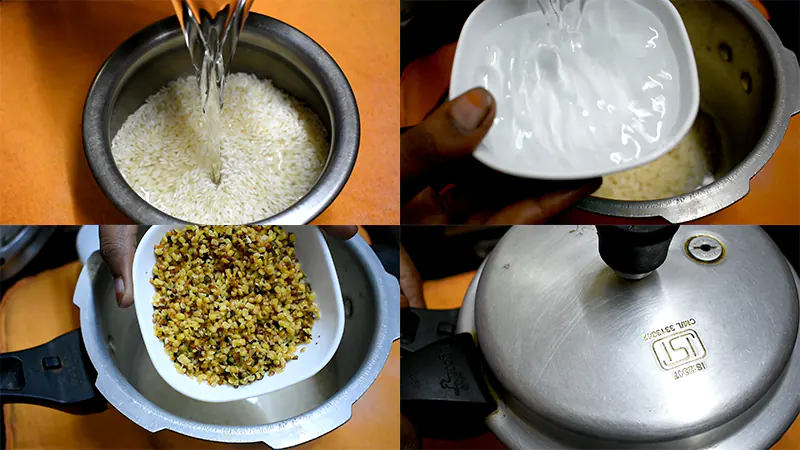
- Clean the rice: Add 1 bowl of raw rice to a vessel, pour in adequate water, and gently rub the grains to rinse away excess starch. Drain the water thoroughly.
- Measure cooking water for rice: Transfer the rinsed rice to a pressure cooker. Add 2 bowls of water (maintaining the 1:2 ratio of rice to water).
- Add moong dal and water: Add ½ bowl of moong dal to the pressure cooker and pour in 1 bowl of water (maintaining the 1:2 ratio of dal to water).
- Pressure cook: Secure the lid and place the cooker over medium heat. Cook for 4 to 5 whistles until both the rice and moong dal are completely tender and soft. Turn off the flame and allow the pressure to release naturally.
Step 2: Roast the Dry Fruits and Coconut in Cow Ghee
- Melt ghee: Heat 2 tablespoons of pure cow ghee in a frying pan over low heat until it completely melts.
- Fry cashews: Add the cashew nuts to the warm ghee. Fry over low temperature, stirring continuously, for about 1 to 2 minutes until they turn an even golden brown. Transfer the cashews to a small bowl and set aside.
- Fry raisins: In the same warm ghee, add the raisins. Fry on low temperature for 20 to 30 seconds until they swell and puff up like small round balls. Immediately remove them with a slotted spoon and keep aside.
- Roast coconut pieces: Add thinly sliced fresh or dry coconut pieces to the remaining ghee. Roast on low temperature for 2 to 3 minutes until they turn crisp and golden brown. Remove and keep aside.
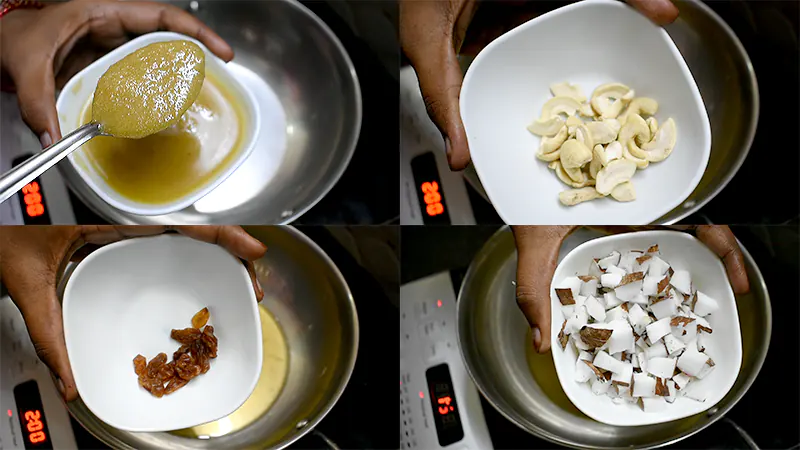
Step 3: Prepare the Jaggery and Sugar Syrup
- Combine sweeteners: In a wide, heavy-bottomed pan, combine the crushed jaggery, granulated sugar, and ½ cup water.
- Dissolve and boil: Place the pan over medium heat and stir well until both the jaggery and sugar dissolve completely without any lumps.
- Bring to a boil: Allow the syrup to reach a rolling boil for 1 to 2 minutes. (Tip: If using traditional jaggery blocks, pass the hot syrup through a fine strainer to filter out any natural sediment or grit before proceeding).
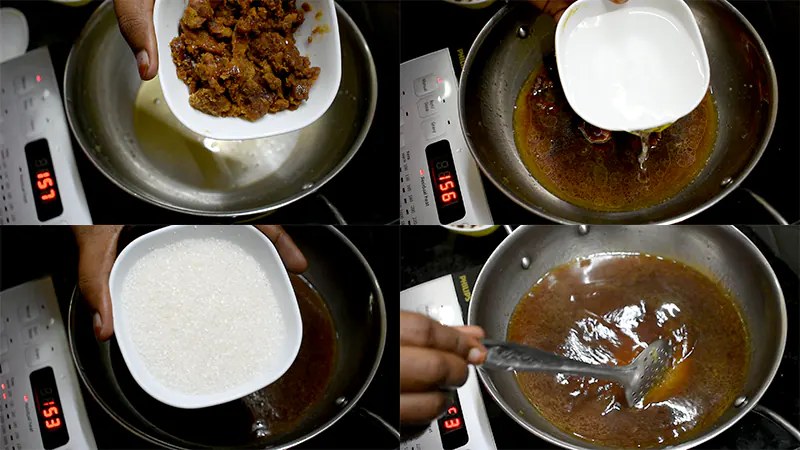
Step 4: Combine Rice, Dal, and Jaggery Syrup
- Check cooked grains: Open the pressure cooker once the steam has settled completely. Check the rice and dal—they should be soft, well-cooked, and easily mashable. Gently mash them with the back of a ladle.
- Add to syrup: Carefully transfer the cooked dal and rice, along with the roasted golden coconut pieces, into the hot jaggery-sugar syrup.
- Mix and simmer: Turn the heat to low and mix thoroughly until the rice and dal absorb the syrup uniformly. Simmer for 3 to 4 minutes, stirring continuously along the bottom to prevent sticking, until the pongal becomes glossy and thick.
- Flavor with cardamom: Sprinkle freshly ground cardamom powder evenly over the mixture and fold it in well to release its warm aroma.
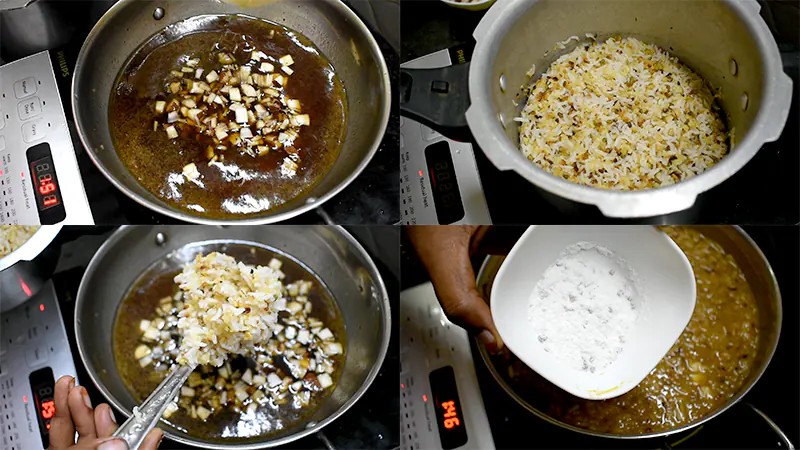
Step 5: Add Nuts and Finish with Ghee
- Add roasted nuts: Add the reserved golden cashews and plump raisins into the simmering pongal, stirring gently to distribute them evenly throughout the dish.
- Add finishing ghee: Drop a spoonful of fresh cow ghee directly into the mixture to enhance the rich flavor, gloss, and authentic aroma of the dish. Stir well and turn off the flame.
- Serve: Transfer the warm Chakkara Pongal into a serving bowl, garnish the top with a few extra roasted cashews and raisins, and serve.
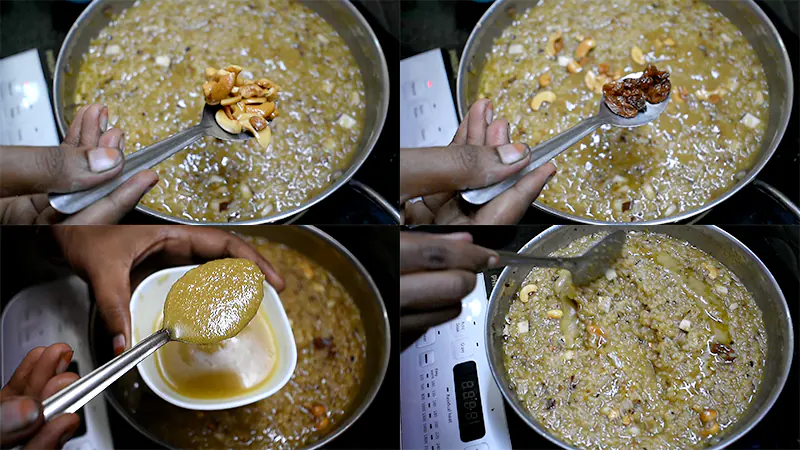
Prefer a visual walkthrough? Watch our step-by-step Chakkara Pongal video on YouTube or play it directly below:
Pro-Tips for Perfect Temple-Style Sweet Pongal
- Don’t Skimp on Ghee: Ghee not only provides flavor, it acts as an emulsifier that coats starch molecules, preventing sweet pongal from solidifying into a stiff brick as it cools.
- Keep the Texture Runny at the End: When you turn off the stove, sweet pongal should flow slowly off your spoon like lava. It will naturally set into a rich, spoonable pudding texture within 15 minutes.
- Add a Pinch of Salt: Adding a pinch (less than ⅛ teaspoon) of salt to the boiling rice or jaggery balances the heavy sweetness and elevates the rich caramel notes of the jaggery.
Common Mistakes & Troubleshooting
- Problem: The rice grains feel hard or crunchy in the middle.
- Cause: Adding jaggery syrup before the rice and dal were fully cooked, or under-cooking in the pressure cooker.
- Fix: Once jaggery is added, pressure cooking won’t fix crunchy grains. Prevent this by ensuring the grains mash easily between two fingers before pouring in the syrup.
- Problem: The pongal became too dry and thick after sitting.
- Cause: Natural starch retrogradation and cooling.
- Fix: Heat ¼ cup water or milk with 1 teaspoon ghee in a pan until warm. Gently stir it into the stiff pongal over low heat until it returns to a silky, creamy consistency.
- Problem: The sweet pongal tastes flat or overly cloying.
- Cause: Lack of fresh spices or missing salt.
- Fix: Stir in a pinch of fine salt, an extra ¼ teaspoon freshly pounded cardamom powder, and a tablespoon of warm ghee.
Legitimate Recipe Variations
- Temple-Style Sakkarai Pongal (Koil Style): Double the ghee to ⅓ cup, include a pinhead of edible camphor (pachai karpooram), and add 1 tablespoon of tiny fresh coconut bits fried in ghee alongside the cashews.
- No-Milk Traditional Andhra Chakkara Pongali: Omit the milk entirely and use 3 full cups of water to cook the rice and dal. This version stays fresh longer at room temperature for festival days.
- Kalkandu Pongal: Replace jaggery entirely with crushed rock sugar candy (kalkandu / mishri) and cook the rice in 100% milk for a pale, rich, ivory-colored festival dessert.
How to Serve
Serve Chakkara Pongal warm on a banana leaf or in small brass bowls. For festival meals, it pairs classically alongside savory Medu Vada (Garelu) and spicy Ven Pongal (Khara Pongal), providing a complementary contrast of sweet, salty, and peppery flavors.
Storage & Reheating Instructions
- Room Temperature: Safe at room temperature for up to 12 hours thanks to the preservative properties of clarified butter and boiled jaggery syrup. If milk was added, consume within 6 to 8 hours on warm days.
- Refrigeration: Store in an airtight container for up to 3 to 4 days.
- Reheating: Sweet pongal naturally firms up in the fridge. To reheat, transfer the required portion to a pan, splash with 2 to 3 tablespoons of warm milk or water, and warm over low heat for 3 to 4 minutes while stirring gently. A teaspoon of fresh ghee restores its original glossy sheen.
Frequently Asked Questions
What is the difference between Chakkara Pongal and Sakkarai Pongal?
They are regional names for the identical traditional dish. Chakkara Pongal (or Chakkara Pongali) is the Telugu name used across Andhra Pradesh and Telangana, while Sakkarai Pongal is the Tamil name used throughout Tamil Nadu.
Why did my sweet pongal become hard and stiff after an hour?
Rice and moong dal absorb liquid continuously as their starches cool. If insufficient water was used during the initial boiling step, or if too little ghee was incorporated, the mixture will set into a dense block. Always keep the cooked pongal slightly looser and runnier than your target consistency before taking it off the stove.
Can I make sweet pongal directly in an open pot without a pressure cooker?
Yes. Use a heavy brass pot or clay pot (traditional uruli). Increase the water ratio to 1:5, bring to a boil, and simmer the roasted dal and rice covered over low heat for 25 to 30 minutes, stirring periodically until completely soft and mashed.
Can I substitute sugar for jaggery?
Yes, but the flavor profile and color change completely. Jaggery provides a warm, earthy, caramel-like richness. If using white granulated sugar, use ¾ cup sugar and consider adding a pinch of saffron soaked in warm milk for color.

Chakkara Pongal (South Indian Sweet Pongal)
An authentic, foolproof South Indian sweet pongal recipe made with raw rice, roasted moong dal, dark jaggery, pure ghee, and aromatic spices.
Ingredients
- ½ cup Raw Rice Sona Masoori or Raw Ponni
- ¼ cup Yellow Moong Dal
- ¾ to 1 cup Jaggery powdered or grated
- 2½ cups Water for cooking rice
- ½ cup Milk optional, for creaminess
- ½ cup Water for melting jaggery
- ¼ cup Pure Ghee divided
- 15 Cashew nuts halved
- 1 tbsp Golden Raisins
- ½ tsp Cardamom Powder freshly crushed
- 1 pinhead speck Edible Camphor Pachai Karpooram, optional
- 1 pinch Salt
Instructions
Roast Dal: In a pressure cooker pan, dry-roast ¼ cup yellow moong dal over medium-low heat for 3–4 minutes until aromatic and light golden.
Cook Rice & Dal: Add ½ cup rinsed raw rice, 2½ cups water, and ½ cup milk. Pressure cook on medium heat for 4–5 whistles until very soft. Release pressure naturally.
Mash: Open the lid and mash the hot grains thoroughly using the back of a ladle.
Melt Jaggery: In a separate pan, heat ¾ cup jaggery with ½ cup water until completely dissolved. Strain the hot syrup through a fine mesh directly into the mashed rice-dal mix.
Simmer: Place the cooker over low heat, add 2 tbsp ghee, and stir continuously for 4–5 minutes until the mixture thickens into a glossy, loose pudding.
Flavor: Stir in cardamom powder, a pinch of salt, and a microscopic speck of edible camphor. Turn off the heat.
Temper Nuts: Heat remaining 2 tbsp ghee in a small pan. Fry cashews until golden, add raisins until puffed, and pour the hot ghee and nuts over the pongal. Stir and rest for 5 minutes before serving warm.
Recipe Notes
Always mash rice completely before pouring in jaggery syrup; jaggery prevents unmashed grains from softening further.
Keep the consistency loose when turning off the flame—it thickens considerably as it rests.
Storage
Store in an airtight container in the refrigerator for up to 3–4 days. Reheat with 2 tablespoons of warm milk or water and a teaspoon of fresh ghee.