Authentic Khara Pongal Recipe (Hotel-Style Ven Pongal in Pressure Cooker)
Khara Pongal (also known as Ven Pongal in Tamil Nadu) is a classic South Indian comfort food made with raw rice, yellow moong dal, mild spices, and generous spoonfuls of pure ghee. When made correctly, it is soft, creamy, fragrant with crushed black pepper and ginger, and studded with golden-fried cashew nuts.

The secret to restaurant-style Ven Pongal is getting the rice-to-dal ratio and the water volume right so the dish stays smooth and velvety rather than setting into a dry, firm block as it cools.
Below is a tested, step-by-step pressure cooker recipe that produces soft, aromatic Pongal in 30 minutes.
The Golden Ratio: Rice, Dal, and Water
To get the melt-in-the-mouth consistency served at traditional South Indian tiffin centers, use these proportions:
- Rice to Dal Ratio (1 : 0.5): Use 1 cup of raw short-grain rice to ½ cup of split yellow moong dal. This gives the dish body while keeping it light and easily digestible.
- Grain to Water Ratio (1 : 4.5): For 1.5 cups of combined rice and dal, use 4.5 to 5 cups of water. Standard steamed rice uses a 1:2 ratio, but Pongal requires significantly more moisture so the starches break down into a smooth, loose porridge.
Ingredients You Will Need
For Cooking the Rice and Dal
- Raw Short-Grain Rice: 1 cup (preferably Sona Masoori, Ponni raw rice, or Seeraga Samba; avoid parboiled or basmati rice)
- Yellow Moong Dal (Split Green Gram): ½ cup
- Water: 4.5 to 5 cups
- Salt: 1 teaspoon (adjust to taste)
- Turmeric Powder (Optional): ⅛ teaspoon (for a subtle pale-golden hue)
- Ghee: 1 teaspoon (added to the cooker pot to prevent froth from overflowing)
For the Ghee Tempering (Tadka / Thalippu)
- Pure Desi Ghee: 3 to 4 tablespoons
- Raw Cashew Nuts: 10 to 12 whole or halved
- Cumin Seeds (Jeera): 1 teaspoon
- Whole Black Peppercorns: 1 teaspoon (slightly crushed or kept whole)
- Fresh Ginger: 1 tablespoon, finely minced or grated
- Curry Leaves: 1 sprig (10–12 fresh leaves)
- Asafoetida (Hing): ¼ teaspoon
Key Ingredient Notes
- Rice Selection: Use traditional South Indian raw rice like Sona Masoori or Seeraga Samba. Do not use Basmati rice; its long grains stay separate and lack the necessary surface starch to create a cohesive, creamy texture.
- Black Peppercorns: Leaving peppercorns entirely whole causes people to pick them out at the table. Coarsely crushing half of the peppercorns in a mortar releases their aromatic heat into the hot ghee, while leaving the rest whole preserves the traditional look.
- Ghee Quality: Ghee is not just a cooking medium here; it is the primary flavoring agent. Using homemade or good-quality cow ghee creates the signature hotel-style flavor.
How to Make Khara Pongal (Step-by-Step Instructions)
Step 1: Roast and De-skin the Moong Dal
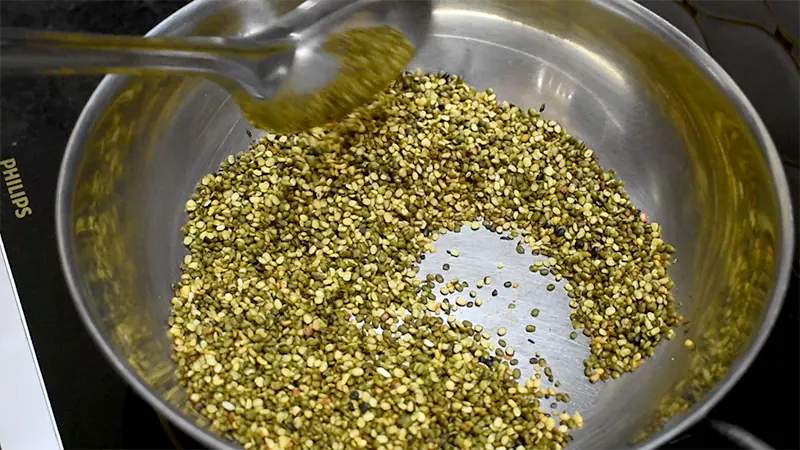
If you are using whole green moong dal (sabut moong), place it in a dry pan over medium-low heat. Roast the lentils gently for 3 to 4 minutes until warm and fragrant.
Immediately transfer the hot roasted dal to a wide bowl and cover it with cold water. Rub the lentils between the palms of your hands—the thermal shock loosens the green husks, making them float to the top. Pour off the water along with the skins. Repeat once or twice until most of the outer green skin is separated and discarded.
Ingredient Note: Whole moong dal retains more natural nutrients and a deeper, earthier flavor than split yellow dal. Because whole dal has more volume before shedding its skin, start with a slightly larger bowl; the yield will settle down once the husks are rinsed away.
Quick Alternative: If you are using split, polished yellow moong dal (pesara pappu / paasi paruppu), skip the skin-removal step completely. You can proceed directly to sautéing.
Step 2: Soak the Rice
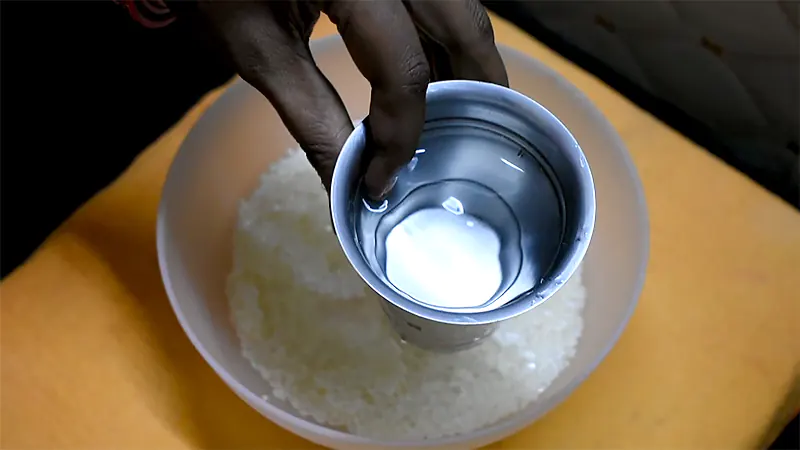
While prepping the dal, measure your raw rice into a separate bowl. Rinse it with cold water once or twice, drain, and let it soak in fresh water for 5 to 10 minutes. Soaking softens the grain slightly, ensuring it cooks evenly with the lentils.
Ratio Guide: Many traditional cooks prefer a 2:1 ratio (2 parts rice to 1 part dal), but for a richer, more comforting home-style texture, this recipe uses an equal 1:1 ratio of rice to moong dal.
Step 3: Sauté the Dal in Ghee
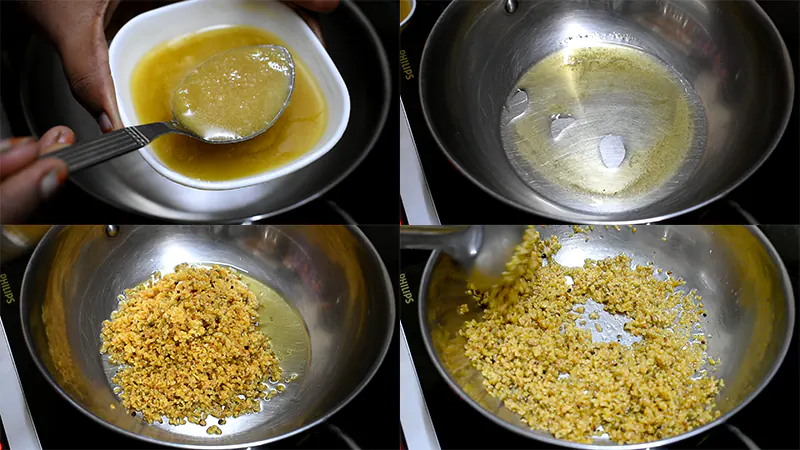
Place a pan over medium heat and add 2 tablespoons of pure desi ghee. Once the ghee warms up, add the drained, de-skinned moong dal. Sauté gently for 1 to 2 minutes. Frying the lentils in ghee before boiling coats each grain, bringing out a rich, nutty flavor and preventing the cooked dal from turning gluey.
Step 4: Pressure Cook the Rice and Dal
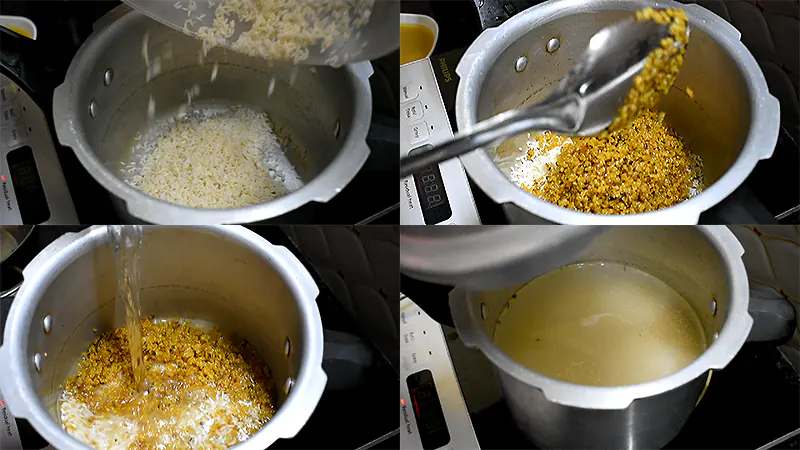
Transfer the soaked, drained rice and the ghee-sautéed moong dal into your pressure cooker. Pour in approximately 600 ml of water (around 2.5 cups).
Secure the cooker lid with the weight valve in place. Cook over medium flame for 3 whistles. Turn off the heat and allow the steam to release naturally so the trapped heat finishes softening the grains into a tender, mashable consistency.
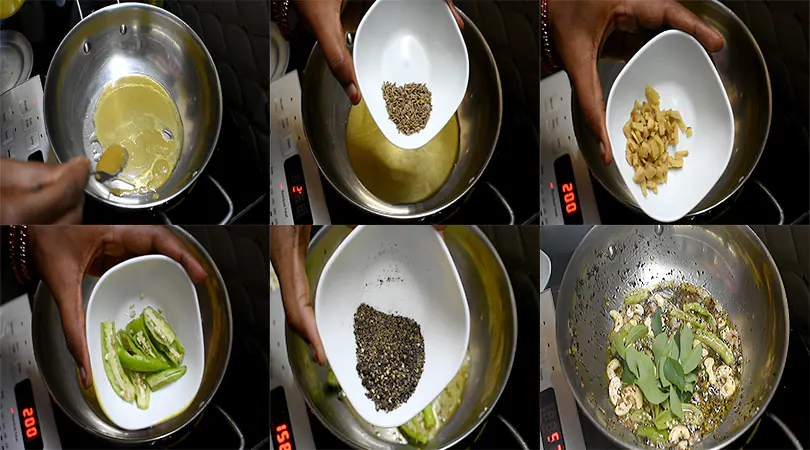
Step 5: Prepare the Aromatic Ghee Tempering (Tadka)
In a separate pan or tadka bowl, heat 3 tablespoons of ghee over medium-low heat.
- Add the cumin seeds (jeera), finely chopped ginger pieces, and slit green chillies. Sauté for 20 to 30 seconds until the ginger turns fragrant and the cumin seeds crackle.
- Add the whole black peppercorns, raw cashew nuts, fresh curry leaves, and a pinch of asafoetida (hing).
- Sauté for another 30 to 45 seconds until the cashews turn pale golden and the curry leaves become crisp. Remove from the flame immediately so the spices do not scorch.
Texture Tip: Desi ghee is essential here—using generous, good-quality ghee delivers the signature hotel-style aroma and keeps the Khara Pongal smooth and non-sticky as it cools.
Step 6: Combine and Simmer
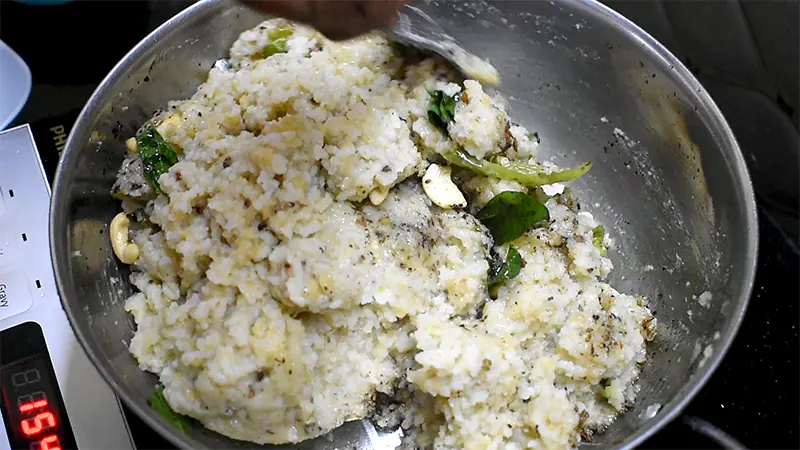
Open the pressure cooker and lightly stir the soft rice and dal mixture. Pour the hot spiced tempering directly into the cooker, or transfer the cooked rice-dal base into the tempering pan.
Fold everything together until the melted ghee and whole spices are evenly distributed throughout the grains. Keep the pan over low heat for 1 minute, stirring continuously, to let the flavors infuse.
Turn off the heat and serve the piping hot Khara Pongal immediately with fresh coconut chutney or warm tiffin sambar.
Prefer a visual walkthrough? Watch our step-by-step Khara Pongal (Ven Pongal) video on YouTube or play it directly below:
Tips for the Best Results
- Avoid Over-Roasting the Dal: The goal of roasting moong dal is only to remove its raw beany smell. If roasted until deep brown, the lentils form a hard shell and will stay gritty even after pressure cooking.
- Never Add Cold Water to Adjust Thickness: If your cooked rice and dal mixture is thicker than desired, always add boiling water. Cold water shocks the starches, dilutes the flavor unevenly, and causes water to separate from the grain later.
- Do Not Skimp on Ghee: Hotel-style Ven Pongal owes its glossy sheen and non-sticky texture to ghee. The fat coats the starch molecules, preventing the dish from setting into a firm, glutinous paste.
Common Mistakes and How to Fix Them
| Problem | Root Cause | How to Fix It |
| Pongal turns dry and clumpy quickly | Insufficient water during cooking or low ghee quantity. | Whisk in ¼ to ½ cup of boiling water and 1 tablespoon of warm melted ghee over low heat until silky. |
| Grains are hard or unevenly cooked | Quick-releasing pressure or over-roasting the dal. | Add ½ cup boiling water, seal the cooker, and cook for 1 additional whistle over medium heat. |
| Burnt spice taste in tempering | High heat during tempering burned the cumin seeds or asafoetida. | Discard the burnt tempering. Re-fry fresh spices in fresh ghee over low heat and mix in. |
| Pongal tastes bland or flat | Under-salted during the boiling stage. | Stir salt into 2 tablespoons of hot water until dissolved, then fold it into the warm Pongal. |
Variations
- Temple-Style Ven Pongal (Kovil Pongal): Increase the black peppercorns to 1.5 teaspoons, use a generous ½ teaspoon of powdered dry ginger (sukku) alongside fresh ginger, and double the ghee. Temple Pongal is bolder in spice and richer in fat.
- Millet Khara Pongal: Replace the 1 cup of raw rice with 1 cup of Foxtail Millet (Kangni / Tenai) or Little Millet (Samai). Keep the moong dal and water ratios identical; cook for 4 whistles.
- No-Onion, No-Garlic (Sattvic): This base recipe is naturally satvik. Ensure your asafoetida (hing) is gluten-free pure resin if preparing for religious fasting/vrat requirements.
What to Serve With Khara Pongal
- Traditional Hotel Combo: Serve piping hot with fresh Coconut Chutney (made with fresh grated coconut, roasted chana dal, green chillies, and ginger) and hot Tiffin Sambar.
- Crispy Texture Pairing: Serve alongside a fresh, crispy Medu Vada. The crisp exterior of the vada contrasts with the soft, velvety texture of the Pongal.
Storage and Reheating
- Refrigerator Storage: Store cooled leftover Pongal in an airtight glass or stainless-steel container in the refrigerator for up to 2 days.
- Texture Changes: As Pongal cools, the amylose starches undergo retrogradation, causing the dish to solidify into a firm block. This is completely normal.
- How to Reheat Correctly:
- Stovetop Method: Transfer the cold Pongal to a pan. Add 3 to 4 tablespoons of hot water and ½ teaspoon of ghee. Warm over low heat, stirring gently, until it returns to its original creamy consistency.
- Microwave Method: Place in a microwave-safe bowl, sprinkle 2 tablespoons of water over the top, cover loosely, and heat on high for 60 to 90 seconds. Stir well before serving.
Frequently Asked Questions
Can I make Khara Pongal without a pressure cooker?
Yes. You can cook the roasted dal and washed rice in an open, heavy-bottomed Dutch oven or pot. Use 5 to 6 cups of water instead of 4.5 cups to account for evaporation. Bring to a boil, cover tightly with a lid, and simmer on low heat for 25 to 30 minutes, stirring occasionally, until the grains mash easily when pressed.
What is the difference between Khara Pongal and Ven Pongal?
There is no difference in the core preparation. “Ven Pongal” is the Tamil name (translating to white savory Pongal), whereas “Khara Pongal” is the Kannada and Telugu name (translating to spicy/savory Pongal). Both feature the same combination of rice, moong dal, black pepper, cumin, ginger, and ghee.
Can I use Basmati rice for Pongal?
It is not recommended. Basmati rice contains high levels of amylose starch, which keeps the grains separate, firm, and fluffy when cooked. Authentic Pongal requires short or medium-grain raw rice (like Sona Masoori or Ponni), which releases surface amylopectin during cooking to produce a soft, porridge-like texture.
Why is my Pongal sticky rather than creamy?
Stickiness occurs when grains are over-mashed with high sheer force, breaking cell walls and turning starches gummy, or when insufficient ghee is used. To achieve creaminess, cook the grains until tender with adequate water, mash lightly for just a few seconds, and fold in warm ghee.

Hotel-Style Khara Pongal (Ven Pongal)
A traditional South Indian savory breakfast recipe made with rice, yellow moong dal, ghee, black pepper, ginger, and cashews.
Ingredients
- 1 cup raw short-grain rice Sona Masoori or Seeraga Samba
- ½ cup yellow moong dal split green gram
- 4.5 cups water
- 1 tsp salt or to taste
- ⅛ tsp turmeric powder optional
- 4 tbsp pure desi ghee divided: 1 tsp for boiling, remainder for tempering
- 10 –12 whole raw cashew nuts
- 1 tsp cumin seeds jeera
- 1 tsp whole black peppercorns coarsely cracked
- 1 tbsp fresh ginger finely minced
- 1 sprig fresh curry leaves 10–12 leaves
- ¼ tsp asafoetida hing
Instructions
- Roast Dal: In a pressure cooker base, dry-roast ½ cup yellow moong dal over medium-low heat for 2–3 minutes until warm and fragrant. Do not brown.
- Wash: Combine the warm dal with 1 cup raw rice. Rinse 2–3 times under cold water and drain.
- Pressure Cook: Add rinsed grains back to the cooker along with 4.5 cups water, 1 tsp salt, ⅛ tsp turmeric powder, and 1 tsp ghee. Close the lid and cook over medium heat for 4 to 5 whistles (approx. 10–12 minutes). Let pressure release naturally.
- Mash: Open lid and mash the cooked grains lightly with the back of a ladle. The consistency should be soft and loose. If thick, stir in ½ cup boiling water.
- Temper (Tadka): In a small pan, heat the remaining ghee over medium-low heat. Fry cashews until golden. Add cumin seeds and crushed peppercorns; let them sizzle for 15 seconds. Add minced ginger, curry leaves, and asafoetida. Fry for 10 seconds and remove from heat.
- Combine: Pour the hot tempering over the mashed rice and dal. Stir until incorporated. Rest covered for 3 minutes before serving.
Recipe Notes
Always use hot boiling water if you need to thin out the consistency after cooking; cold water will make the texture watery and separate.
To prevent children from picking out whole peppercorns, coarsely crush them in a mortar and pestle before frying in ghee.
Storage
Refrigerate in an airtight container for up to 2 days. Reheat on the stovetop with 3 to 4 tablespoons of boiling water and a drizzle of fresh ghee to restore its soft, velvety texture.


