Crispy Baked Bread Rolls (Golden Oven & Air Fryer Method)
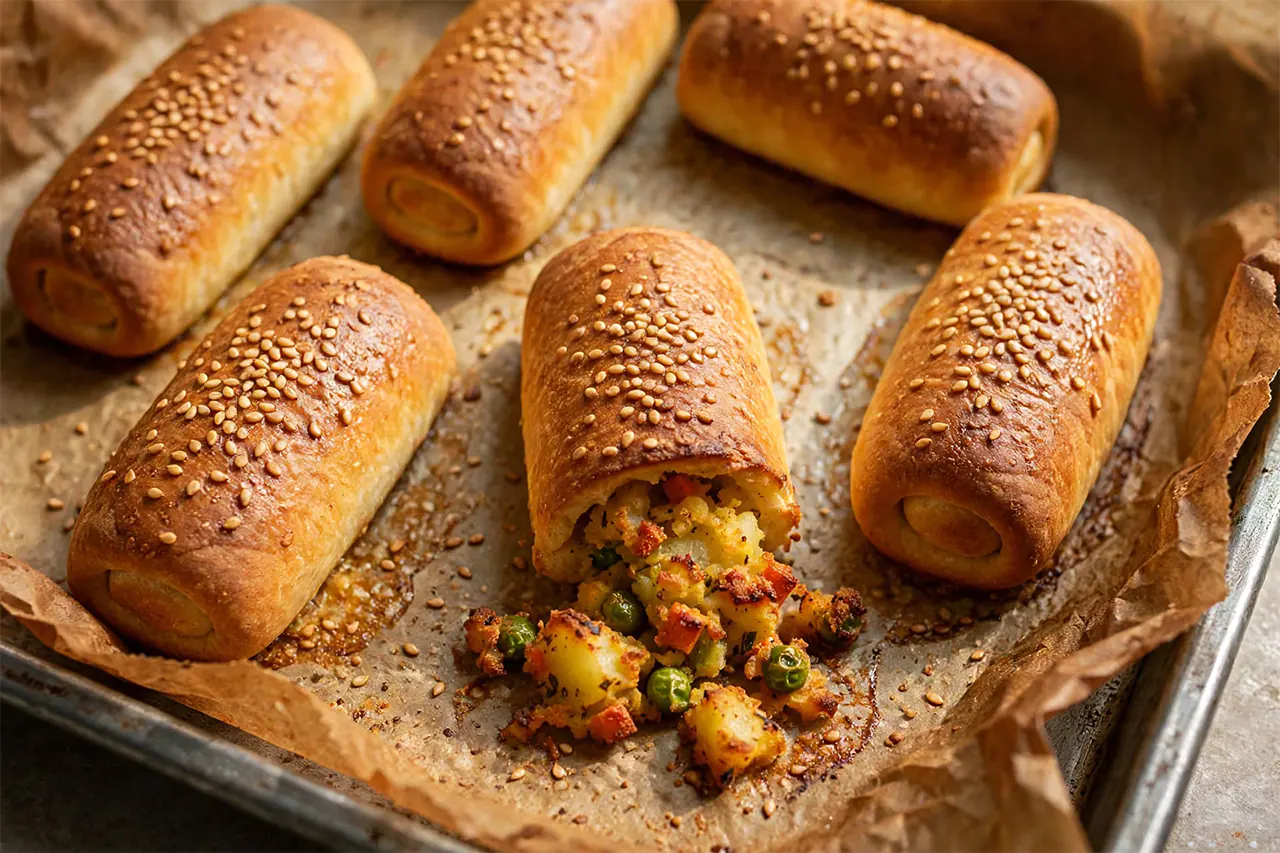
Crispy baked bread rolls deliver the shatteringly crisp exterior and spiced, savory potato core of traditional Indian street-style bread rolls without deep-frying. This tested recipe relies on steam-drying the potato mash and a high-heat fat-wash technique, producing evenly browned rolls in 20 minutes with zero bursting.
Why This Baked Method Outperforms Deep-Frying
Traditional deep-fried bread rolls act like sponges, absorbing significant amounts of cooking oil if the oil temperature drops even slightly below 180°C (350°F). Baking at high convection heat (200°C / 400°F) dehydrates the outer starch matrix of the bread rapidly, triggering the Maillard reaction while sealing the interior crumb. The result is a roll that stays crisp for over 45 minutes, unlike fried versions that turn greasy and limp as they cool.
Key Ingredients & Culinary Science
- Sandwich Bread (White or Whole Wheat): Fresh, soft sandwich bread is essential. Day-old bread has retrograded starch, making it brittle and prone to tearing when rolled. White sandwich bread yields the crispiest, glass-like crust, while 100% whole wheat bread provides a nuttier profile but requires a light mist of water to remain pliable during rolling.
- Starchy Potatoes (Russet or Yukon Gold): High-starch, low-moisture potatoes form a fluffy, cohesive filling. Avoid waxy new potatoes, which become gummy when mashed.
- Green Peas & Fine Carrots: Provide natural sweetness and textural contrast. Parboil and drain thoroughly to prevent releasing surface moisture inside the roll.
- Melted Ghee or Unsalted Butter: Brushing the exterior with fat lowers the surface water activity and conducts radiant heat directly to the bread crust, mimicking the rapid surface browning of an oil bath.
- Aromatics & Spices (Ginger, Green Chili, Garam Masala, Amchur): The acidity from dry mango powder (amchur) or lemon juice cuts through the dense potato starch, sharpening the savory profile.
Step-by-Step Cooking: Baked Bread Rolls
Step 1: Cook and Steam-Dry the Potato Base
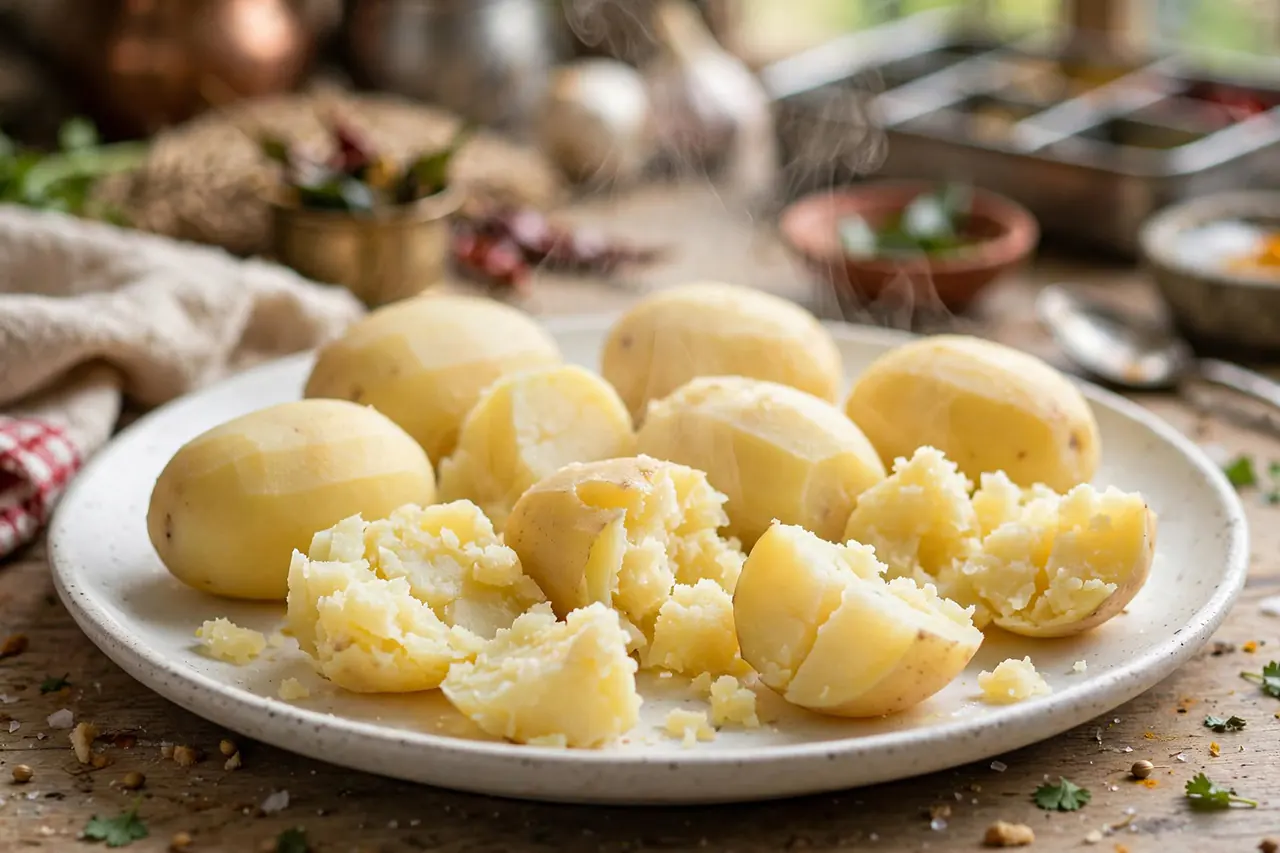
Boil 300g (2 medium) potatoes until fork-tender (approx. 15 minutes at a steady boil). Drain immediately, peel while warm, and spread them over a wide plate for 10 minutes.
- Sensory Cue: The potato surface turns matte and dry as steam evaporates.
- Common Mistake: Mashing piping hot potatoes inside a sealed bowl traps condensation, causing soggy filling that causes the bread seams to burst during baking.
Step 2: Sauté the Spiced Vegetable Mash
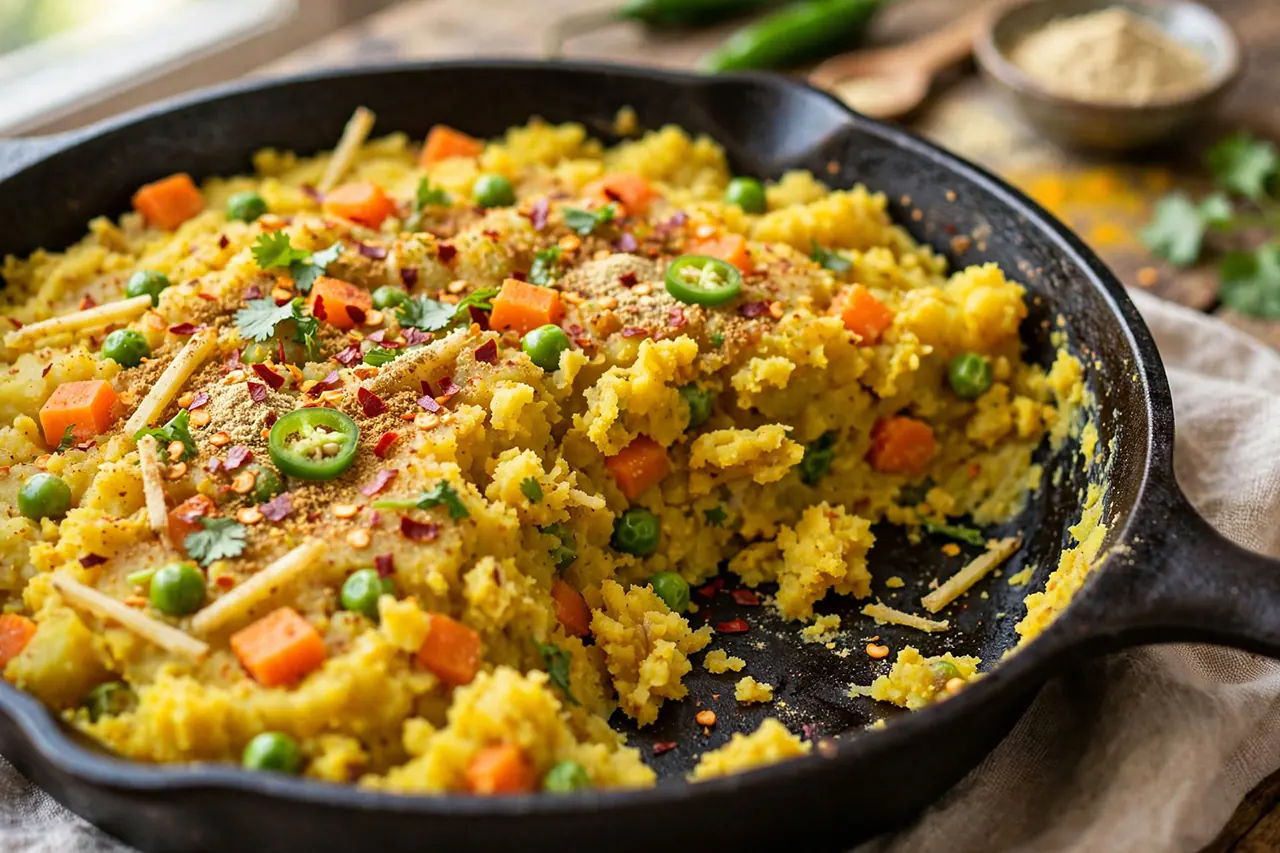
Heat 1 teaspoon of oil in a skillet over medium heat. Add 1 finely minced green chili, 1 teaspoon grated ginger, 1/4 cup finely chopped parboiled carrots, and 1/4 cup parboiled green peas. Sauté for 2 minutes until dry. Add 1/2 teaspoon turmeric, 1/2 teaspoon red chili flakes, 1/2 teaspoon garam masala, 3/4 teaspoon salt, and 1/2 teaspoon amchur. Stir in the mashed potatoes and cook for 3 minutes over medium-low heat. Remove from heat and allow to cool completely to room temperature.
- Sensory Cue: The mixture pulls cleanly away from the sides of the pan without sticking or leaving wet smears.
- Common Mistake: Rolling warm filling directly into bread; residual heat dissolves the inner bread crumb immediately.
Step 3: Trim and Condition the Bread
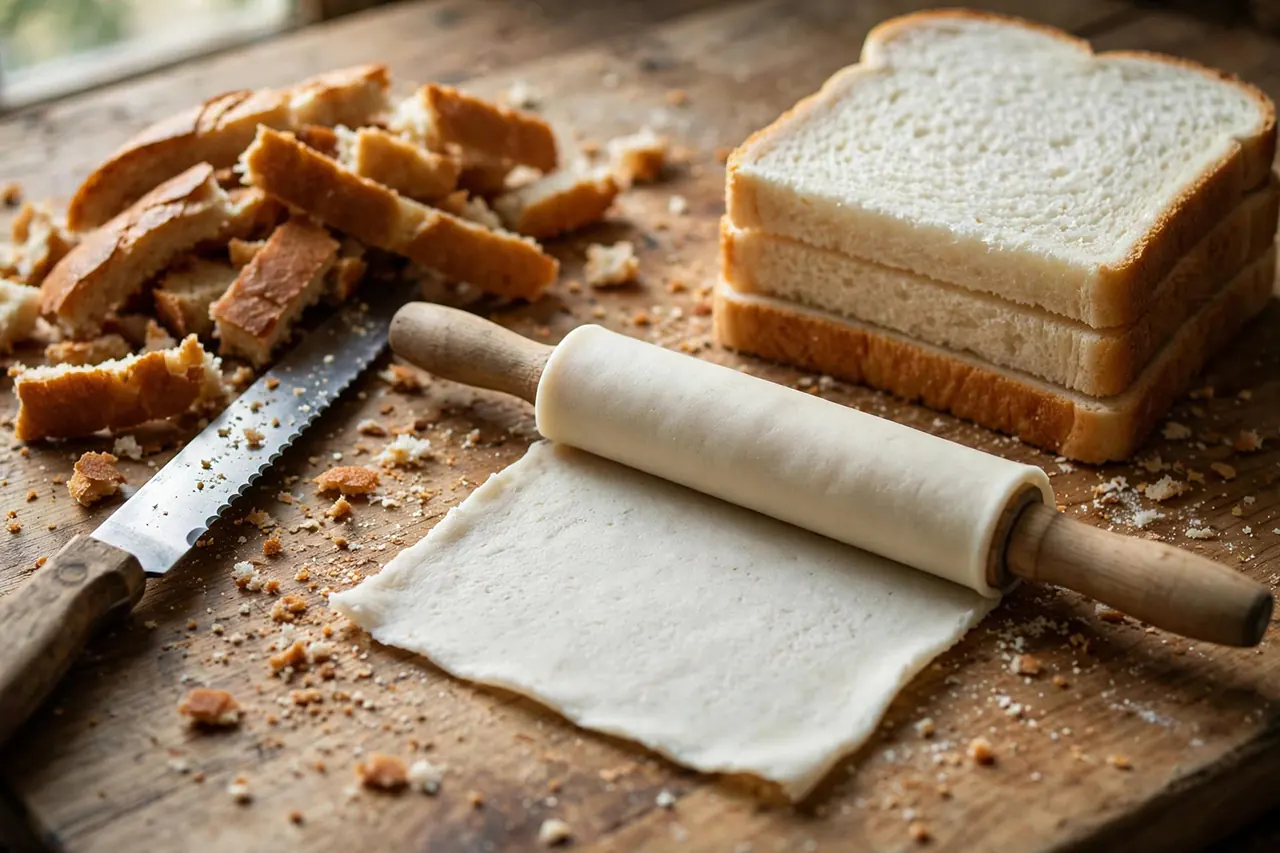
Trim the dark crusts off 6 slices of soft sandwich bread using a sharp serrated knife. Place one slice on a clean chopping board. Using a rolling pin, roll the bread flat from center to edge with firm, uniform pressure until it is compressed to a 2mm sheet.
- Sensory Cue: The bread feels pliable and flexible like a tortilla, with no tears along the grain.
- Common Mistake: Leaving crusts on; the thick edges resist rolling and puncture the delicate casing.
Step 4: Fill and Seal
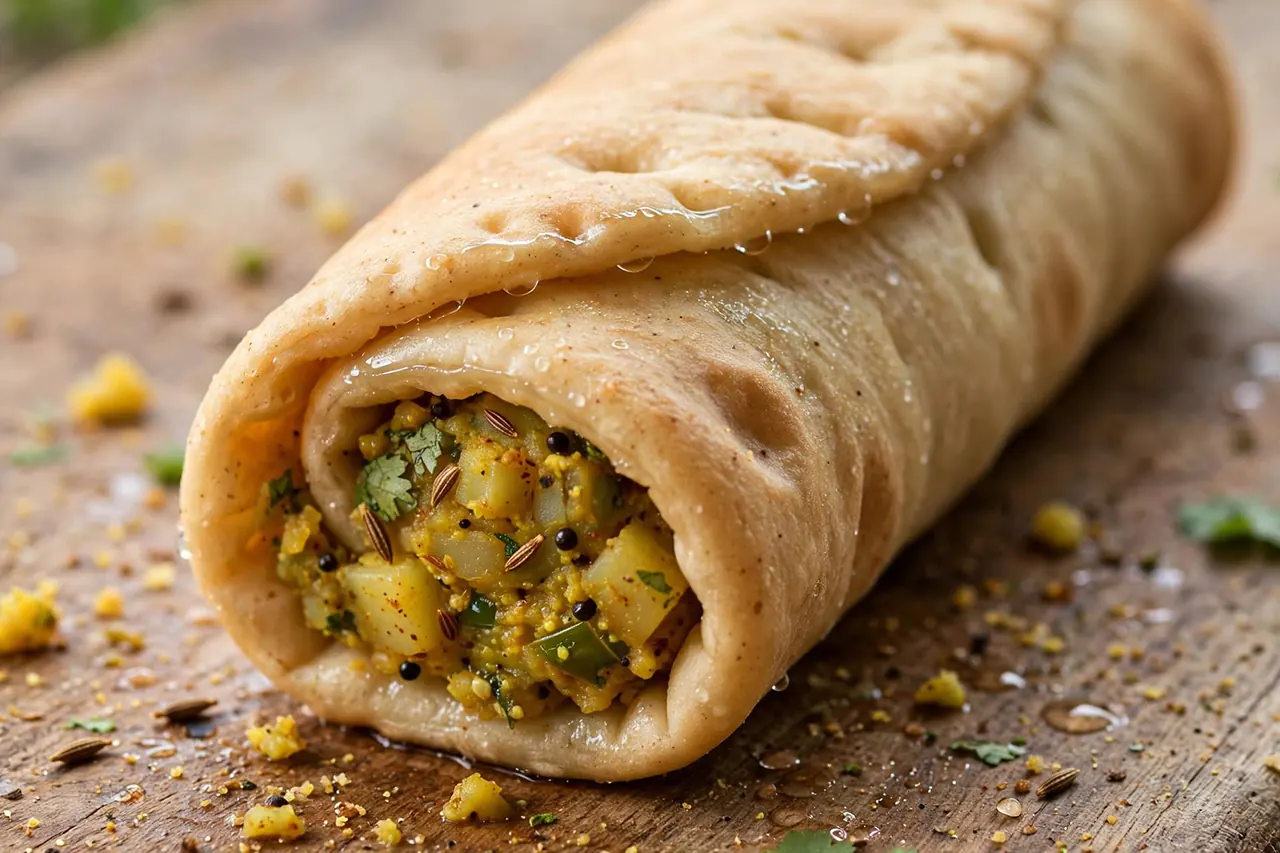
Shape 2.5 tablespoons of the cooled filling into a firm 3-inch cylinder. Place it along one end of the flattened bread. Lightly dip your fingertip into water and trace the outer perimeter of the bread slice. Roll the bread tightly over the filling, pressing the wet seam firmly for 5 seconds to fuse the starch. Lightly pinch the side edges inward to seal the ends.
- Sensory Cue: The roll feels compact and taut, with no gaps or loose flaps along the seam.
- Common Mistake: Excess water saturation. Slices should only be moist at the seam; soaking the entire slice dissolves the bread matrix.
Step 5: Fat-Wash and Seed Coating
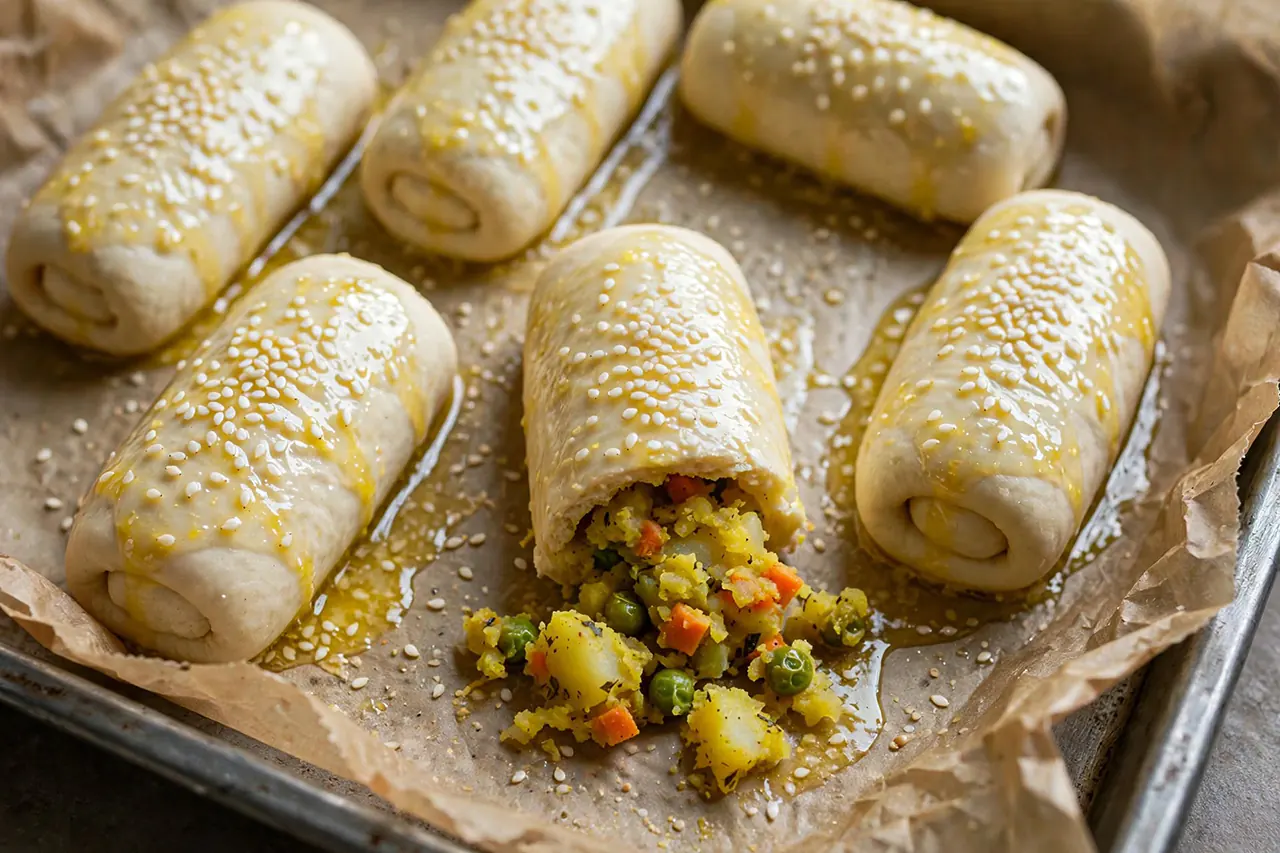
Preheat the oven to 200°C (400°F) in convection mode, or preheat your air fryer to 190°C (375°F). Brush all exposed sides of the roll generously with melted butter or ghee. Sprinkle with white sesame seeds, pressing gently so they adhere.
- Sensory Cue: The surface looks evenly glossy and wet with fat, ensuring uniform color distribution.
- Common Mistake: Skimping on butter/ghee wash; dry bread will parch and turn chalky instead of golden-brown.
Step 6: High-Heat Convection Baking
Arrange the rolls seam-side down on a parchment-lined baking tray, leaving at least 1 inch of space between them.
- Oven: Bake at 200°C (400°F) for 16 to 18 minutes, flipping at the 10-minute mark.
- Air Fryer: Air-fry at 190°C (375°F) for 10 to 12 minutes, shaking or turning at the 6-minute mark.
- Sensory Cue: The bread turns a deep amber-gold and makes a hollow, crisp scratching sound when tapped with a fork.
- Common Mistake: Baking at temperatures lower than 190°C; low heat dries out the interior potato before the bread crust has time to brown.
Pro-Kitchen Tips for Crispness and Structural Integrity
- Chill Before Baking (Optional for Make-Ahead): Place shaped rolls on a plate uncovered in the refrigerator for 20 minutes before baking. The ambient air in the fridge dries the surface starch, accelerating oven browning.
- Moisture-Proofing with Cheese: If adding cheese, use low-moisture block mozzarella or sharp cheddar cut into thin sticks placed inside the potato core. Avoid high-moisture fresh mozzarella, which releases water and splits the seam.
- Double-Roll Technique for Thin Slices: If using very thin commercial sandwich bread, slightly overlap two rolled slices using water as glue to create a sturdier jacket.
Troubleshooting Common Failures
- Problem: Rolls Split Open in the Oven
- Root Cause: Moisture inside the filling converted to steam and expanded, or the seam was insufficiently bonded.
- Fix: Cook the potato mash longer on the stove to evaporate moisture. Ensure filling is completely cold before assembling.
- Problem: Bottom of the Roll Stays Pale and Soft
- Root Cause: Trapped steam between the baking tray and the bread.
- Fix: Place a wire cooling rack on top of your baking sheet and bake the rolls directly on the rack to allow 360-degree air circulation.
- Problem: Rolls Are Tough and Chewy Instead of Crisp
- Root Cause: Oven temperature was too low (below 190°C / 375°F), causing the bread to dehydrate into hard rusks rather than rapidly crisping.
- Fix: Increase oven heat to 200°C (400°F) and verify temperature with an oven thermometer.
Storage, Freezing & Reheating
- Make-Ahead & Freezing: Assemble the rolls fully (without fat-brushing), place them in a single layer on a parchment-lined tray, and freeze for 2 hours until solid. Transfer to an airtight freezer container for up to 2 months. Bake directly from frozen at 190°C (375°F) for 20 to 22 minutes, brushing with melted ghee right before baking.
- Refrigeration: Store leftover baked rolls in an airtight glass container lined with a paper towel for up to 3 days.
- Reheating: Never reheat in a microwave; it drives moisture into the crust, leaving it spongy and rubbery. Reheat in an oven or air fryer at 180°C (350°F) for 4 to 5 minutes until the exterior regains its audible crunch.
Pairings and Flavor Variations
- Paneer-Stuffed Variation: Replace 50% of the boiled potato with grated firm paneer. Add 1/4 teaspoon roasted cumin powder (bhuna jeera) for a smoky dairy richness.
- Cheesy Corn Filling: Mix boiled sweet corn kernels, finely chopped bell peppers, and sharp cheddar with oregano and red chili flakes.
- Classic Accompaniments: Serve piping hot with tangy coriander-mint chutney and sweet-sour tamarind date sauce, alongside hot ginger tea (adrak chai).
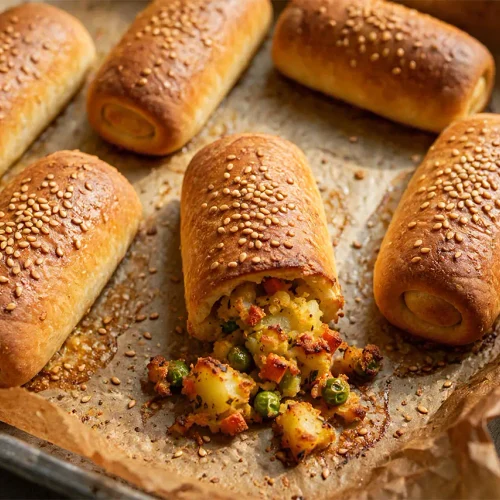
Crispy Baked Bread Rolls
Ingredients
- 6 slices fresh white sandwich bread crusts removed, rolled flat
- 300 grams starchy potatoes approx. 2 medium, boiled, peeled, and mashed
- 1/4 cup 40g green peas (parboiled and drained)
- 1/4 cup 35g carrot (finely diced, parboiled)
- 1 green chili finely minced
- 1 tsp fresh ginger grated
- 1 tbsp cooking oil for sautéing filling
- 1/2 tsp turmeric powder
- 1/2 tsp red chili flakes
- 1/2 tsp garam masala
- 1/2 tsp amchur dry mango powder
- 3/4 tsp fine sea salt adjust to taste
- 2 tbsp unsalted butter or ghee melted, for brushing
- 1 tbsp white sesame seeds for topping
Instructions
- Steam-dry the potatoes: Drain boiled potatoes thoroughly and allow to cool on an open plate for 10 minutes until steam stops rising. Mash smoothly with a fork.
- Sauté the aromatics: Heat 1 tablespoon oil in a pan over medium heat. Sauté green chili, ginger, carrots, and peas for 2 minutes.
- Cook the spiced filling: Stir in turmeric, chili flakes, garam masala, amchur, salt, and mashed potatoes. Sauté over medium-low heat for 3 minutes until dry and cohesive. Cool to room temperature.
- Prepare the bread sheets: Trim crusts off all 6 bread slices. Flatten each slice wafer-thin (approx. 2mm) using a rolling pin.
- Shape and seal: Shape 2.5 tablespoons of cooled potato filling into a tight log. Place at one end of a bread slice, moisten the perimeter with water, roll tightly, and press the seam for 5 seconds to lock.
- Fat-wash: Brush the surface of each roll generously with melted ghee or butter, then sprinkle with sesame seeds.
- Bake: Arrange seam-side down on a parchment-lined tray. Bake in a preheated oven at 200°C (400°F) for 16–18 minutes (or air-fry at 190°C / 375°F for 10–12 minutes), flipping midway until deep golden and crisp. Serve hot.