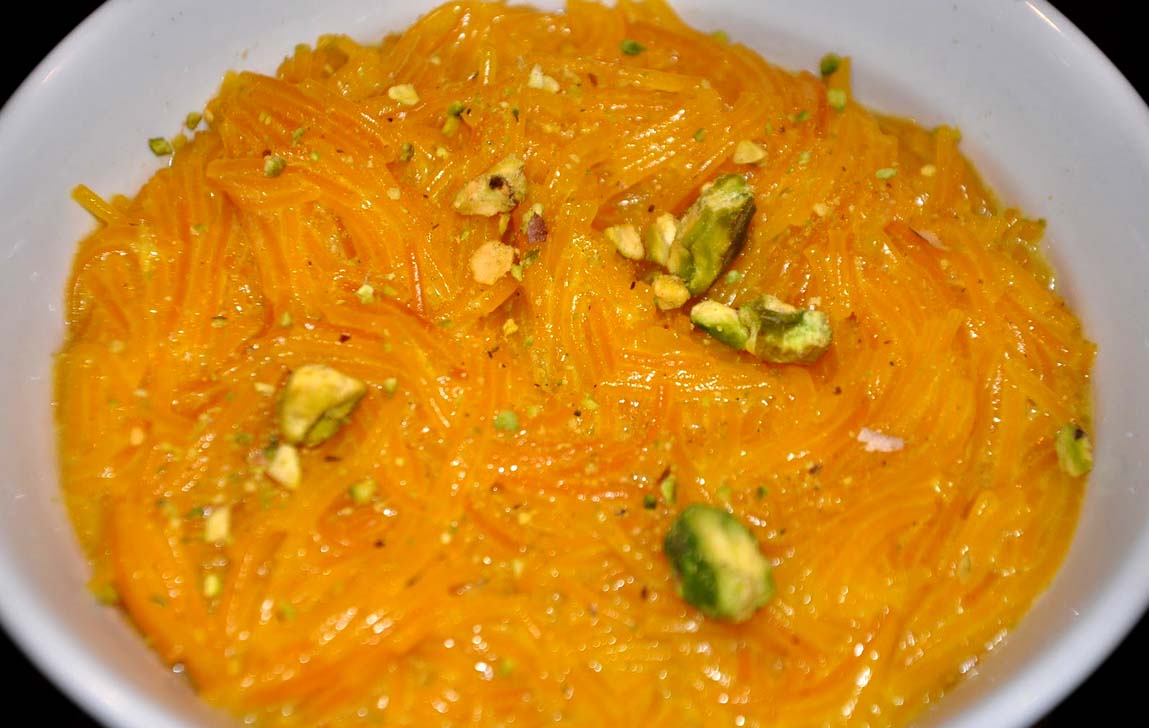
Atte Ka Sheera (Gujarati Whole Wheat Halwa): The Foolproof Golden Ratio Recipe
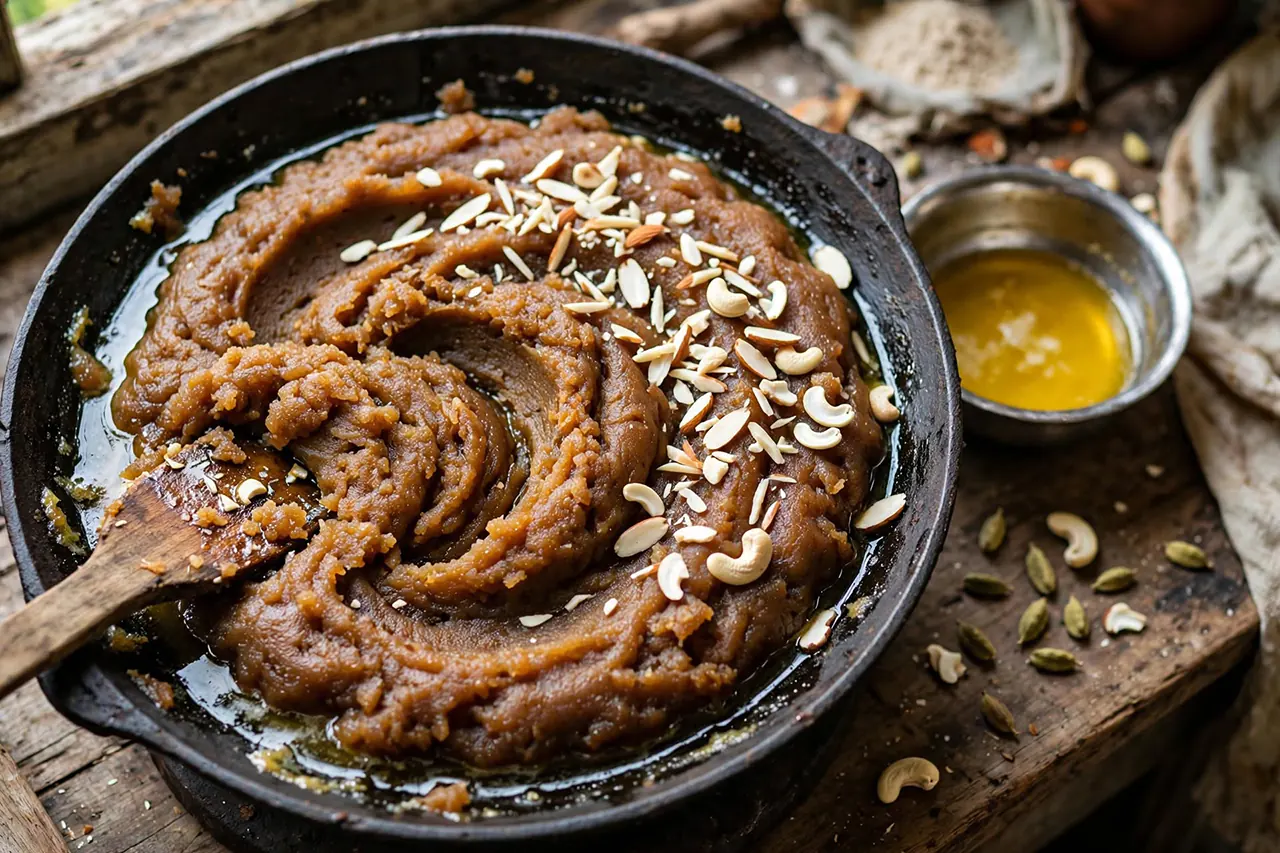
Atte Ka Sheera is a classic Indian dessert made by gently roasting whole wheat flour in pure ghee, then hydrating it with hot sweetened water until it reaches a velvety, melt-in-the-mouth consistency. This kitchen-tested recipe relies on a precise 1:1:1:2 ratio (flour to ghee, sugar, and water) and controlled thermal gelatinization, guaranteeing a lump-free, glossy sheera with deep nutty undertones in under 25 minutes.
Why This Method Works: The Culinary Mechanics
The primary challenge when cooking wheat flour halwa is preventing a dense, glue-like paste. Wheat flour (atta) is rich in gluten-forming proteins and fine starches. To achieve an authentic, silky finish, two biochemical stages must be managed:
- Fat-Coated Roasting (Dextrinization): Whisking the flour into equal parts melted ghee coats the starch granules completely in fat before heat penetrates. As the mixture roasts over medium-low heat, the starches break down into simpler pyrodextrins. This develops rich nutty, toffee aromas while physically inhibiting the protein matrix from linking into elastic gluten strands.
- Hot Hydration (Starch Gelatinization): Introducing rolling-boil sugar syrup directly into the hot ghee-flour roux allows the starch granules to absorb moisture instantaneously at temperatures above 68°C (154°F). Cold or lukewarm liquid causes the fat to solidify unevenly around raw starch pockets, creating gummy lumps.
Essential Ingredients & Smart Substitutions
| Ingredient | Role in Recipe | Practical Substitution |
| Whole Wheat Flour (Atta) | Primary starch base; delivers earthy, roasted wheat notes. | For a grainier, temple-style crumb, use coarse bhakhri atta or replace 2 tbsp of atta with fine semolina (sooji). |
| Desi Ghee (Clarified Butter) | Emulsifier and heat-transfer medium; keeps starch tender and delivers classic luster. | Do not reduce below ¾ measure. For a vegan alternative, use virgin coconut oil (note: flavor profile will shift). |
| Granulated Sugar or Jaggery | Sweetens and tenderizes by binding water, which prevents over-gelatinization. | Equal weight powdered jaggery (gur) creates an earthy, dark amber profile. Dissolve jaggery fully and strain to remove impurities. |
| Boiling Water or Whole Milk | Hydrates the roasted starches to expand the grain matrix. | Whole milk produces a richer, paler fudge-like sheera; a 50/50 mix of water and milk provides optimal balance. |
| Green Cardamom Powder | Volatile aromatic oil cuts through heavy dairy richness. | Freshly crush green cardamom seeds just before cooking for the most potent top notes. |
Step-by-Step Cooking Atte Ka Sheera Recipe
Step 1: Prepare the Hot Sweetened Liquid
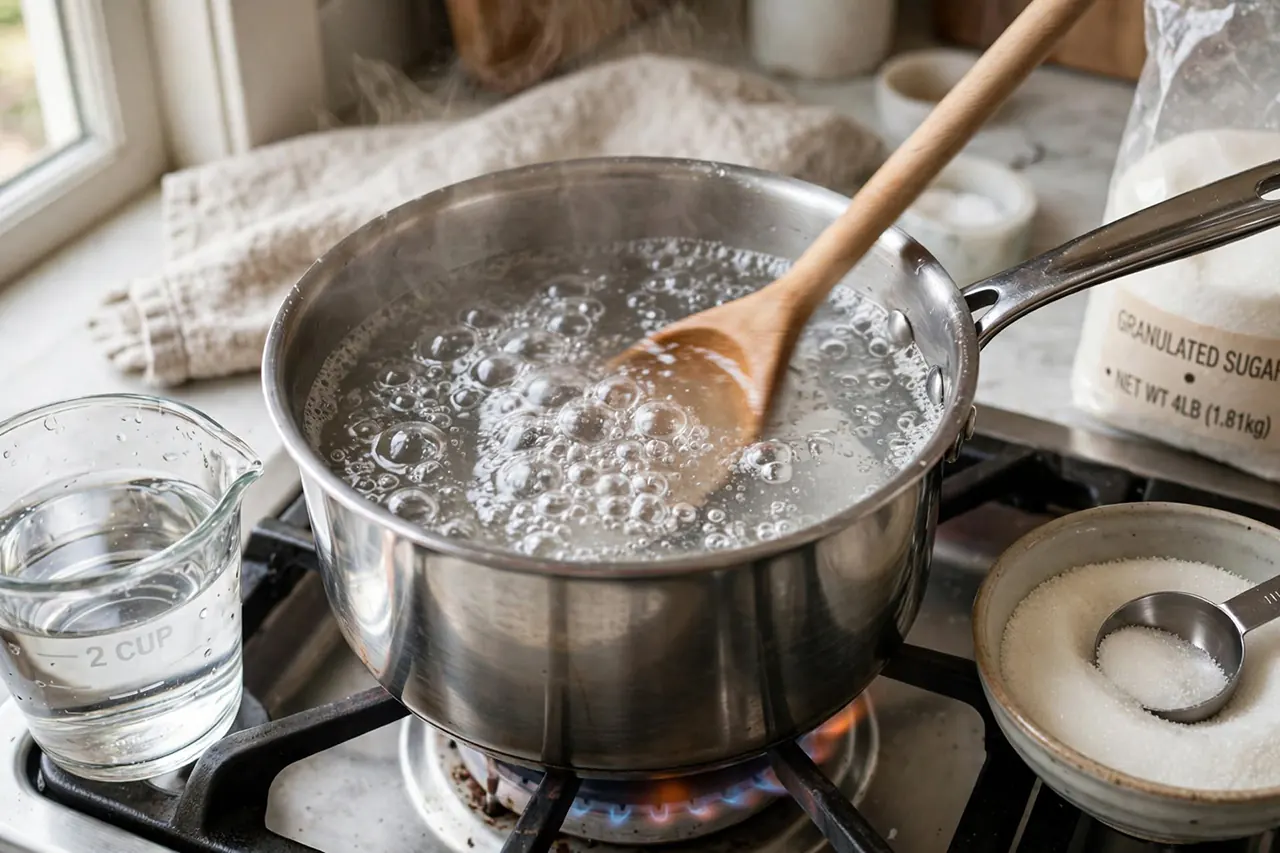
In a small saucepan, combine 2 cups water (or 1 cup water plus 1 cup whole milk) and ¾ to 1 cup granulated sugar. Bring the mixture to a rolling boil over medium-high heat, stirring until the sugar dissolves completely (approximately 3 to 4 minutes). Turn the heat to low and keep the liquid at a gentle simmer.
- Sensory Cue: The liquid is completely clear with small bubbles breaking across the entire surface; no sugar crystals remain at the bottom of the pan.
- Mistake to Avoid: Do not boil the liquid down into a thick single-string syrup; water loss here alters the hydration ratio and will make the finished halwa dry.
Step 2: Melt the Ghee and Fry the Aromatics
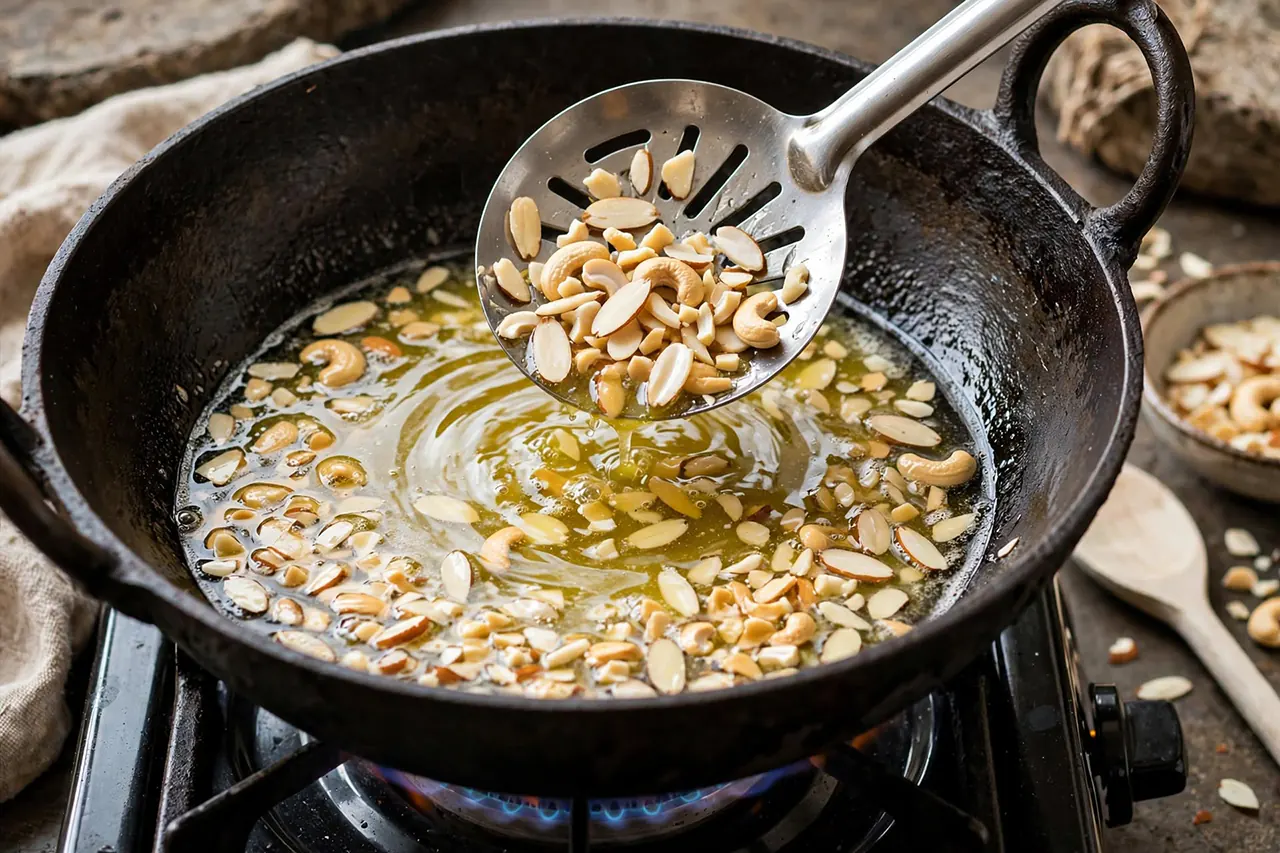
Set a heavy-bottomed pan or cast-iron kadai over medium-low heat. Add ¾ cup ghee. Once liquefied and shimmering, add 1 tablespoon each of slivered almonds and chopped cashews. Fry for 60 to 90 seconds until they turn pale golden. Remove the nuts with a slotted spoon and reserve them, leaving the hot fat in the pan.
- Sensory Cue: The nuts release a toasted aroma and take on a pale biscuity hue; ghee ripples gently without smoking.
- Mistake to Avoid: Do not let the ghee smoke. Overheated ghee develops a bitter acrid note that spoils the sweet profile of the dessert.
Step 3: Roast the Wheat Flour (The Roux Phase)
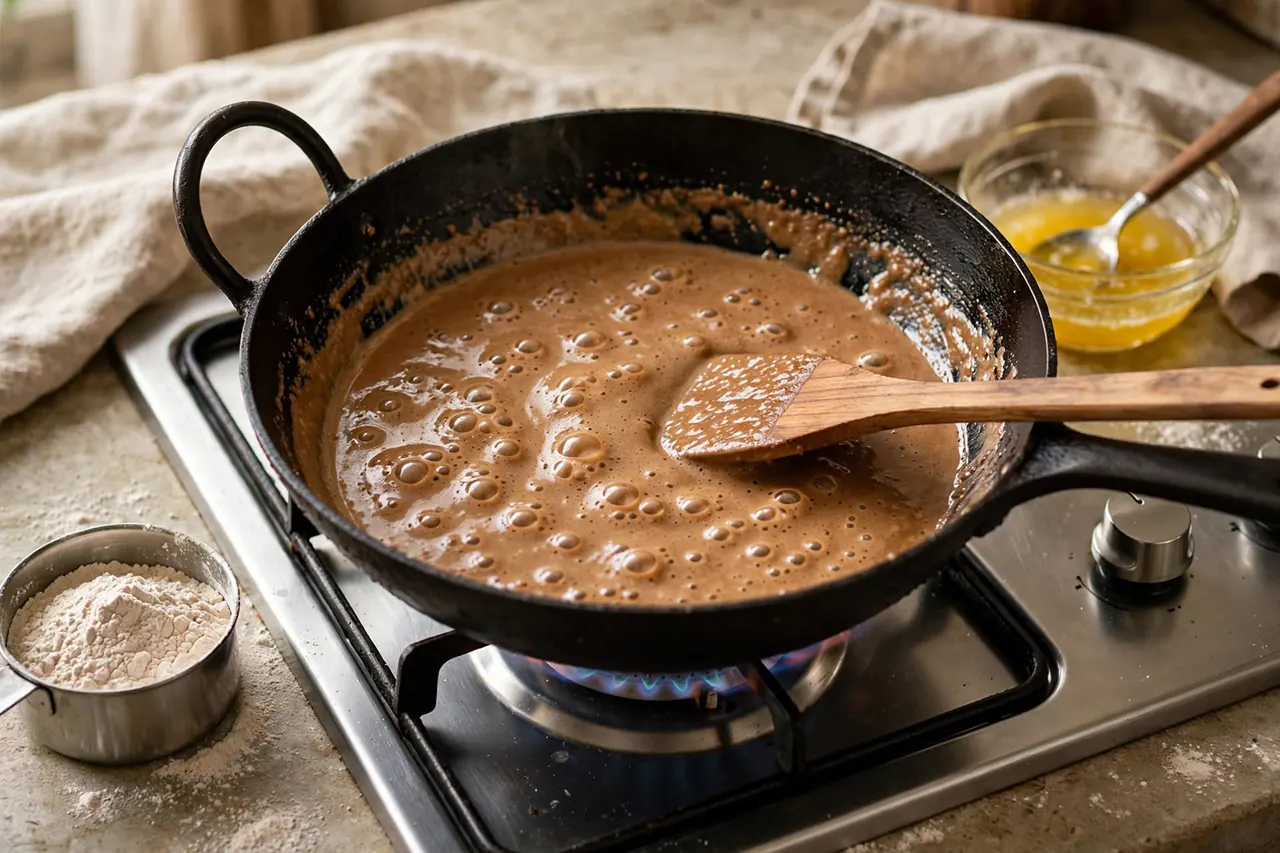
Lower the burner to medium-low. Add 1 cup whole wheat flour to the hot ghee. Stir continuously using a flat wooden spatula, scraping the bottom and sides of the pan. Continue roasting steadily for 8 to 12 minutes.
- Sensory Cue: The mixture transitions from a thick, gritty paste into a loose, frothy, liquid batter. The color shifts from pale beige to a warm, rich hazelnut brown, releasing an unmistakable aroma of freshly baked butter cookies.
- Mistake to Avoid: Never leave the pan unattended or raise the heat to speed up browning. Atta scorches rapidly, producing dark black flecks and a harsh, burnt taste.
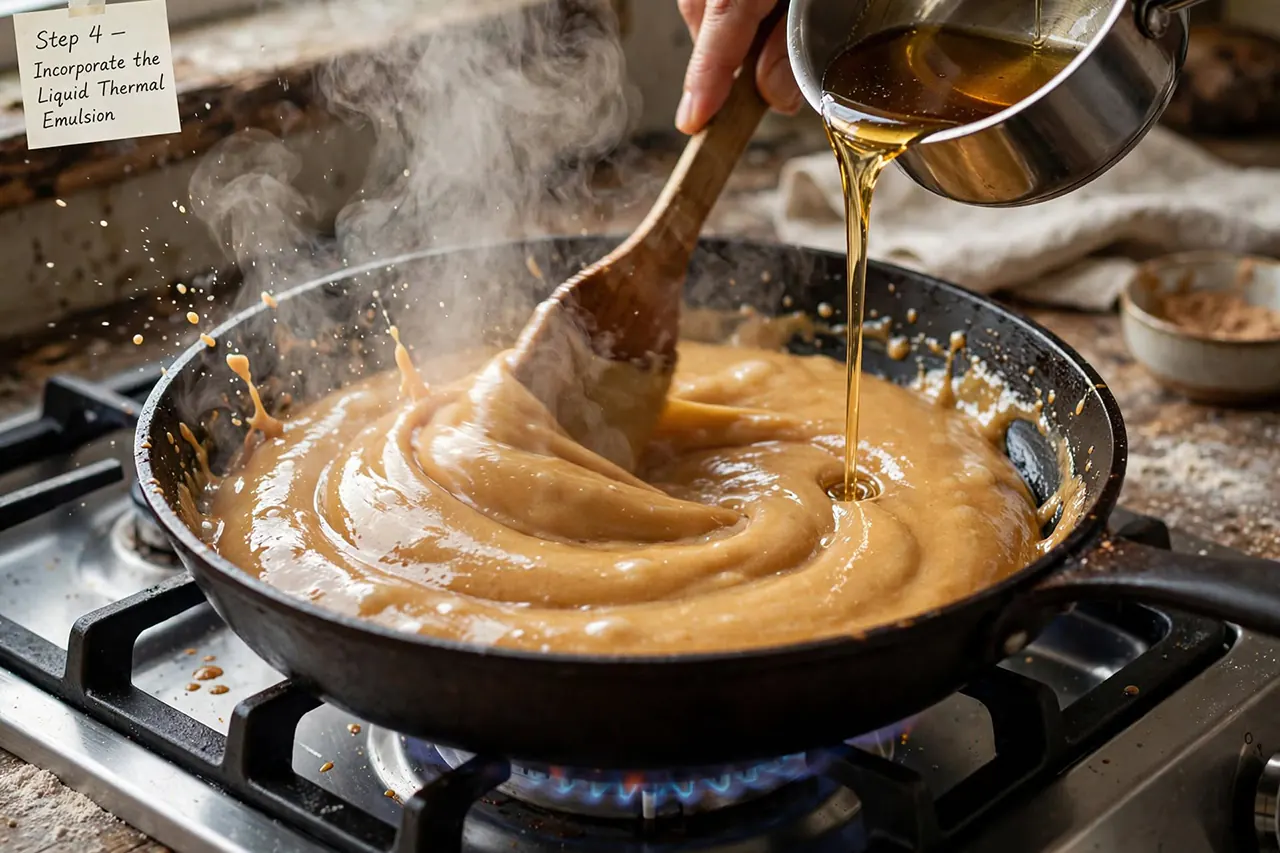
Step 4: Incorporate the Liquid (Thermal Emulsion)
Keep the heat on low. While stirring vigorously with one hand, pour the simmering sugar liquid into the pan in a steady, controlled stream with the other. The mixture will sputter vigorously and release steam as the hot starches hydrate.
- Sensory Cue: The batter swells instantly, pulls away from the steam, and transforms into a glossy, unified pudding within 30 to 45 seconds of continuous stirring.
- Mistake to Avoid: Do not pour cold liquid into the pan. Cold liquid shocks the fat, creates persistent lumps, and causes erratic splattering.
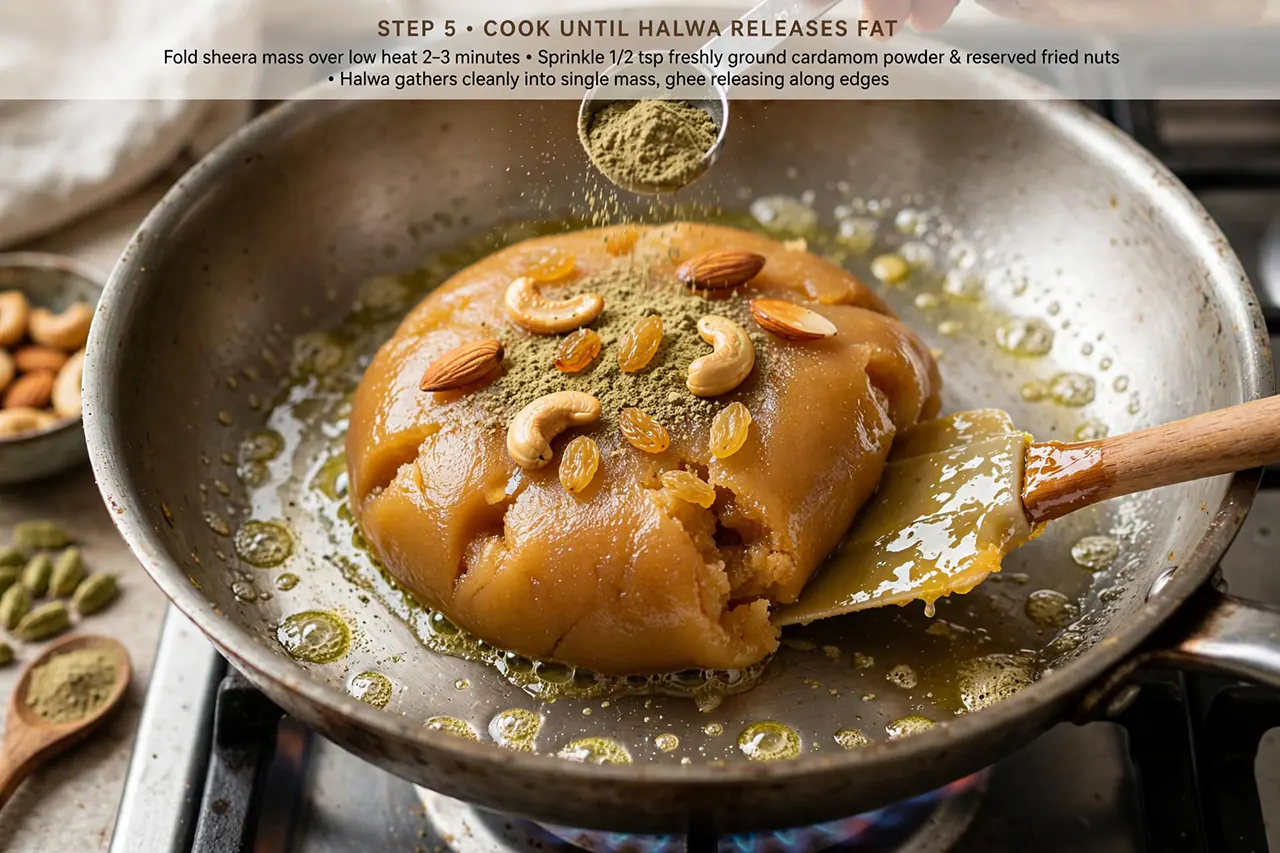
Step 5: Cook Until the Halwa Releases Fat
Continue folding the mass over low heat for 2 to 3 minutes. Sprinkle in ½ teaspoon freshly ground cardamom powder and the reserved fried nuts. Fold until combined.
- Sensory Cue: The sheera gathers cleanly into a single soft, pliable mass that rolls smoothly across the pan surface without sticking. Glistening beads of ghee release along the perimeter and coat the spatula.
- Mistake to Avoid: Do not overcook past the fat-release stage, or the starches will expel moisture, making the sheera oily and rubbery.
Pro-Kitchen Tips for Texture & Flavor
- Use a Heavy-Gauge Kadai: Thin stainless steel or light non-stick pans heat unevenly, leading to hot spots where flour scorches before the core batch roasts. Cast iron, anodized aluminum, or heavy copper-bottomed pans distribute heat evenly for uniform browning.
- Whisk to Disperse: If you are new to making halwa, switch from a wooden spoon to a balloon whisk for the first 10 seconds of pouring the hot water. The wire tines break apart any potential starch clusters instantly.
- Finish with a Rest: Turn off the burner, cover the pan with a lid, and let the sheera rest undisturbed for 3 minutes before serving. This allows residual steam to settle through the flour grains, perfecting the glossy sheen.
Troubleshooting Common Failures
Why is the sheera sticky, gluey, or pasty?
- The Cause: The flour was under-roasted, or too much water was added relative to the fat. Raw wheat starch produces a gelatinous glue when hydrated.
- The Fix: Roast the flour patiently until it darkens to a deep almond shade and releases fat before adding liquid. If already pasty, stir in 1 to 2 tablespoons of warm ghee and cook on low heat for 3 to 4 minutes to restore richness.
How do I fix lumps in the sheera?
- The Cause: The liquid was added too slowly without active stirring, or the water was lukewarm rather than boiling.
- The Fix: Immediately take the pan off the heat and use the back of a metal ladle or a silicone spatula to smear the lumps firmly against the warm sides of the pan until smooth.
Why is the halwa dry and crumbly?
- The Cause: Insufficient liquid or excess evaporation during cooking.
- The Fix: Heat ¼ cup of milk or water to a rolling boil. Drizzle it over the halwa 1 tablespoon at a time over low heat, folding gently until the grains absorb the liquid and regain a soft, supple texture.
Storage, Shelf Life & Reheating
- Room Temperature: Store covered in a cool, dry area for up to 24 hours.
- Refrigeration: Transfer cooled sheera to an airtight glass container and refrigerate for up to 5 days. The ghee will solidify in the cold, giving the halwa a firm, dense block texture.
- Freezer: Freeze in portioned freezer bags or containers for up to 2 months. Thaw overnight in the refrigerator before reheating.
- Reheating Instructions: Never microwave sheera uncovered, as this dries out the edges. Place the desired portion in a pan over low heat with 1 to 2 tablespoons of warm milk or water. Cover and let it warm through for 2 to 3 minutes, then stir gently until the ghee melts and the texture turns soft and glossy again.
More Traditional Sweets & Festival Pairings to Try
If you enjoyed the roasted aroma of this atte ka sheera, discover more time-tested sweets and celebratory meals from our kitchen collection. Experience a unique twist on festive breakfast by making our traditional halwa puri (semolina halwa stuffed puri), or whip up another quick prasad favorite with our aromatic suji ka halwa (ravva kesari). For light, milk-infused desserts, try our cardamom-spiced semiya halwa (vermicelli halwa), or prepare festive jaggery-infused prasadam like crispy sweet bellam appalu. Planning a full festive platter or Diwali sweet box? Add bite-sized crunch with golden sweet shankarpali or master crispy temple-style sweet boondi to round out your celebratory spread.
Traditional Variations & Pairings
- Kada Prasad (Gurdwara Style): Use an uncompromising 1:1:1:1 volumetric ratio of coarse whole wheat flour, desi ghee, sugar, and boiling water. Stir continuously until rich, amber, and deeply buttery.
- Gor Papdi / Sukhdi Style: Replace white granulated sugar with crushed jaggery. Turn the heat off completely before stirring in the jaggery so it melts from residual heat without turning hard or chewy.
- Classic Festive Pairing: Serve warm Atte Ka Sheera alongside hot, puffed whole wheat Pooris and spicy Kala Chana (black chickpea curry) for a classic North Indian festive breakfast.
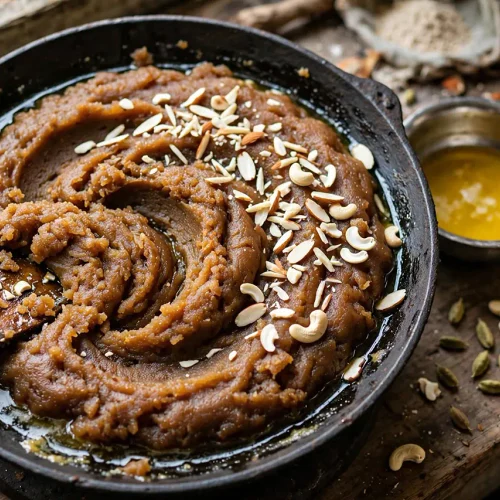
Authentic Atte Ka Sheera (Whole Wheat Halwa)
Ingredients
- – 1 cup 120g whole wheat flour (atta), preferably coarse-ground
- – 3/4 cup 150g pure desi ghee (clarified butter)
- – 3/4 cup 150g granulated white sugar (adjust up to 1 cup for higher sweetness)
- – 2 cups 480ml water (or equal parts water and whole milk)
- – 1/2 tsp green cardamom powder freshly crushed
- – 1 tbsp raw almonds slivered
- – 1 tbsp raw cashews chopped
Instructions
- Boil Liquid: Combine water and sugar in a saucepan; bring to a rolling boil until sugar dissolves. Keep hot on low heat.
- Fry Nuts: Heat ghee in a heavy-bottomed kadai over medium-low heat. Fry slivered almonds and cashews until pale golden (about 1 minute); remove and set aside.
- Roast Flour: Add whole wheat flour to the remaining hot ghee. Roast over medium-low heat, stirring constantly, for 8–12 minutes until the mixture turns deep golden-brown, froths, and emits a nutty aroma.
- Hydrate: Carefully pour the boiling sugar syrup into the roasted flour in a steady stream while stirring vigorously to prevent lumps.
- Finish & Emulsify: Cook over low heat for 2–3 minutes until the liquid is fully absorbed, the halwa leaves the pan sides, and ghee releases along the edges. Stir in cardamom and fried nuts.
- Rest: Cover with a lid off the heat for 2 minutes, then serve warm.