Perfect Cashew Pakoda Recipe | Crispy Kaju Pakoda Recipe
Cashew Pakoda Recipe is a revelation of texture and flavor, an elegant yet uncomplicated dish that elevates an ordinary nut to a memorable treat. It’s not about frying; it’s about pairing an intense, nutty center with a delicate, spiced, and incredibly crunchy exterior. My aim is to walk you through mastering the crispy Kaju Pakoda recipe so you can make a snack that will be the belle of the ball at any party.
About Cashew Pakoda Recipe
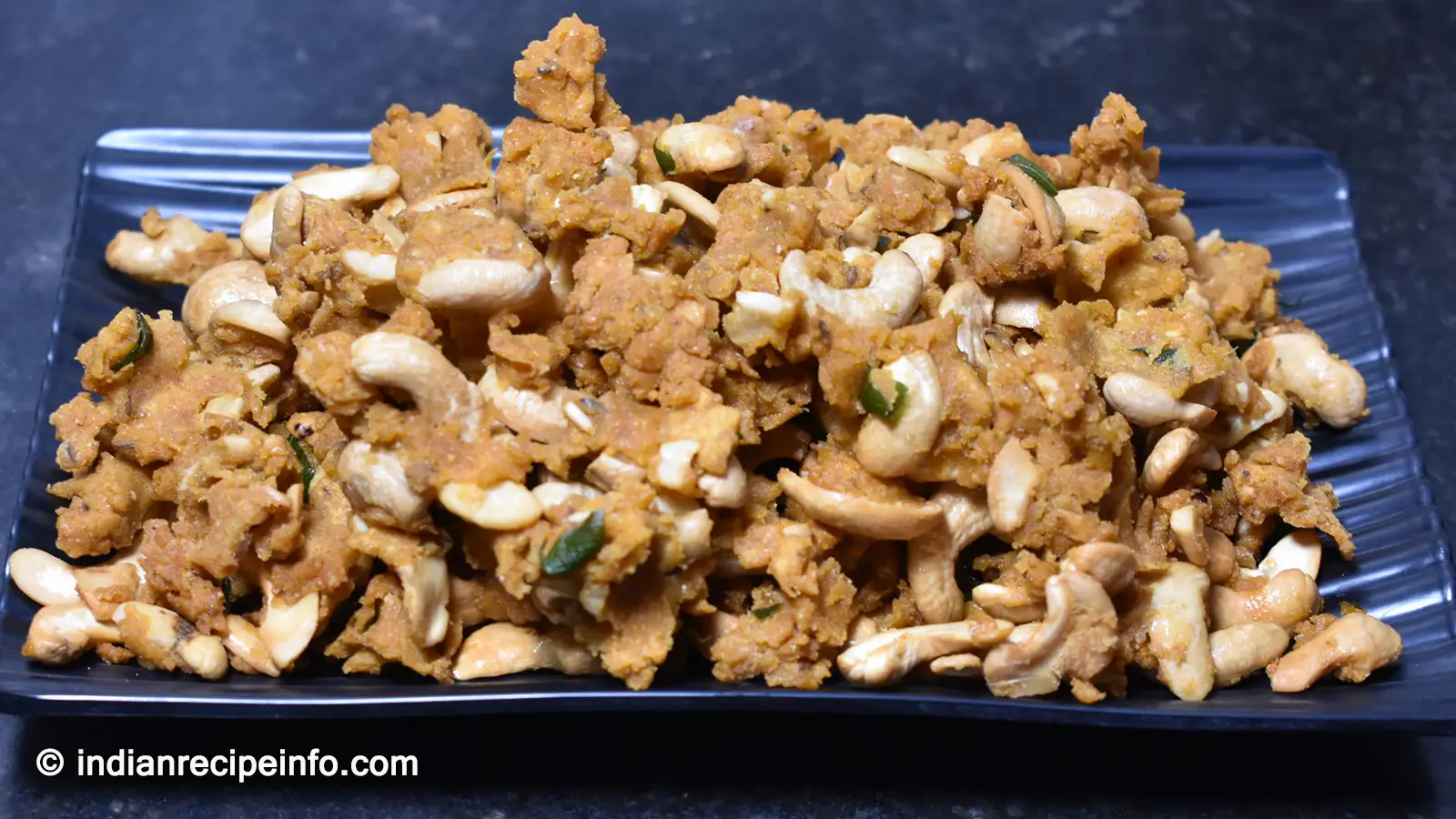
The recipe for Cashew Pakoda, or Kaju Pakoda, is a favorite Indian snack that breaks rank with its vegetable cousin recipes. Rather than using potatoes or onions, the recipe puts the decadent cashew nut at its center. The key to its popularity is a perfectly engineered batter—a combination of chickpea flour (besan) and rice flour that yields a light, airy crust. When fried, this coating crisps up beautifully, creating a satisfying crunch that gives way to the buttery, rich flavor of the cashew inside.
What makes this particular Kaju Pakoda recipe so special is its ability to deliver a complex experience with a simple list of ingredients. It’s a testament to the fact that great food doesn’t have to be complicated. The blend of ground spices, the warm spiciness of chili, and the inherent sweetness of the cashew makes for a snack that is both reassuringly comforting as well as unexpectedly sophisticated. This is a dish that has always united people for me, whether for a friendly chat over a cup of tea or a celebratory feast. It’s more than just food; it’s an experience built on warmth, flavor, and the joy of a perfect crunch.
Expert Tips for a Flawless Result
I’ve made this dish for years, and over time I’ve picked up some tips that will take your Kaju Pakoda recipe from good to great.
Get the Correct Batter Consistency: The batter must be thick to lightly coat the cashews but thin so that it does not create a heavy, doughy coating. I prefer to call it pancake batter consistency—pourable and smooth but not runny. To test it, dip a cashew in it; a thin, even coat of batter will stick to the nut.
Don’t Crowd the Pan: This is a mistake many make, and pakodas end up soggy. When you put too many pakodas in oil at the same time, the temperature of the oil declines greatly. The pakodas soak up more oil and go greasy rather than crisp. Fry small batches and leave some space for each to cook evenly.
Temperature Control is Everything: The oil must be hot, approximately 350°F (175°C). Too hot and the batter will burn too quickly and leave the inside raw. Too cold and the pakodas will be oily and heavy. The best test of temperature is to add a small amount of batter to the oil. It should sizzle immediately and come to the surface.
Drain Well: As soon as you remove the pakodas from the oil, pour them on a wire rack or a plate covered with paper towels using a slotted spoon. A wire rack is the best option as air can pass through and the bottoms of the pakodas won’t get soggy.
How to make cashew pakoda recipe:
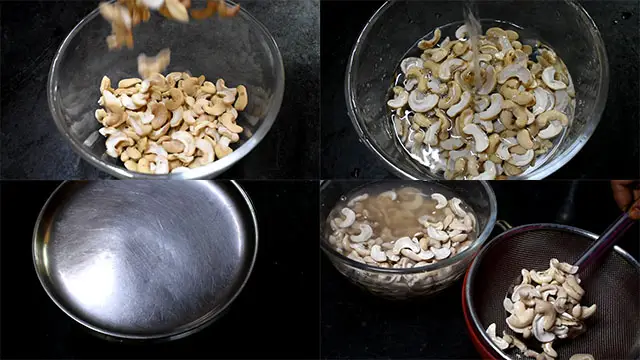
1. Put cashews in a bowl and pour the required water to soak them for 30 minutes. Drain water and put cashews in a skillet.
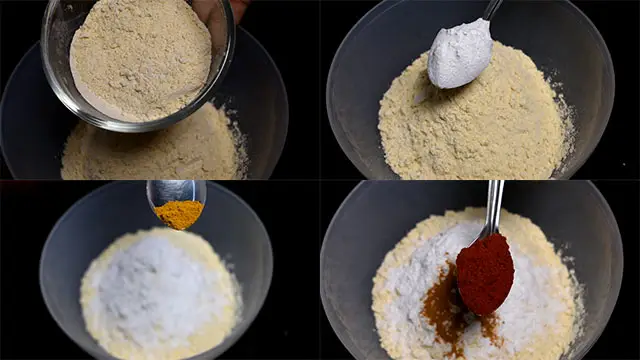
2. Add besan flour in a mixing bowl, rice flour, turmeric powder and red chili powder.
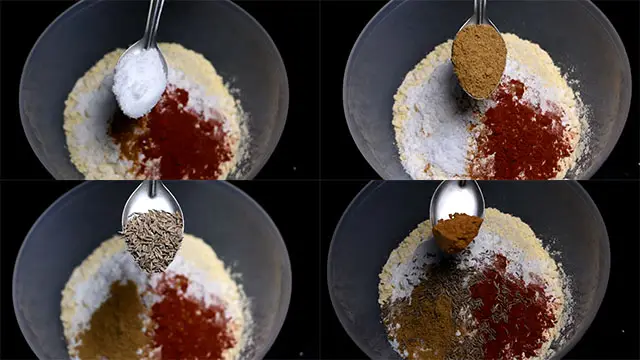
3. Sprinkle salt, coriander powder, garam masala powder and cumin seeds.
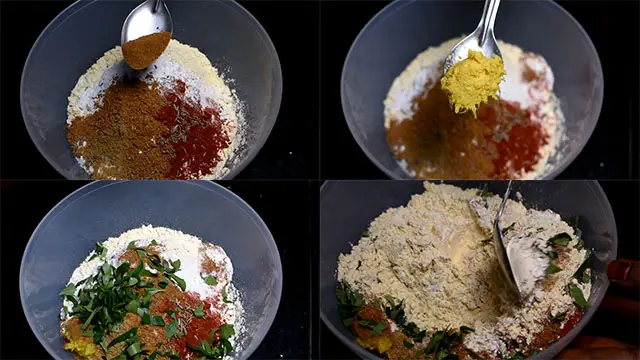
4. Add cumin powder, fresh ginger garlic paste, minced curry leaves and mix all spices.
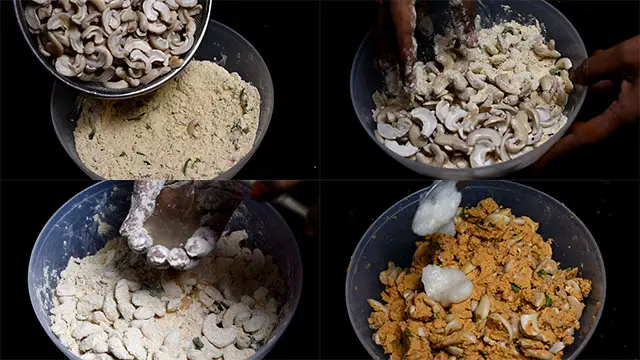
5. Put the soaked cashews and mix. Add water in small batches to get a thick batter. Put a little ghee to make it soft.
6. Heat oil in a pan and put cashew batter in small batches. Deep fry on a low flame till they turn golden colour.
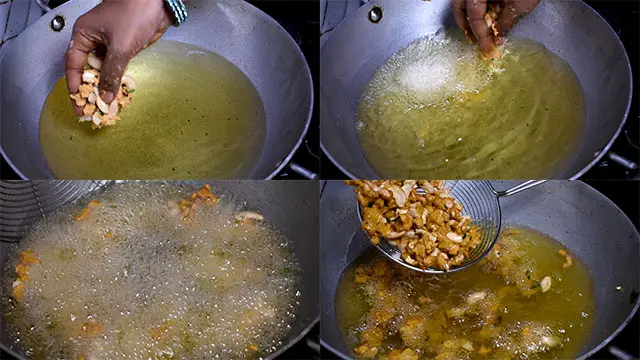
7. Drain excess oil and transfer the cashew pakoda recipe to a plate.
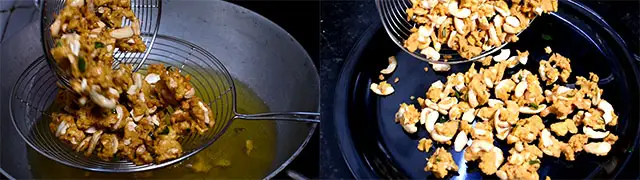
Learn how to make Cashew Pakora Recipe in this quick video!
An Origin Story: Why This Recipe Is Special
I first learned to make this Cashew Pakoda recipe from my grandmother, in her tiny, bustling kitchen. Her kitchen was a place of magic, filled with the aroma of roasting spices and the sizzle of frying oil. For her, cooking was a labor of love, and this dish was one of her masterpieces. We did not have a lot of fancy gadgets; just a heavy iron kadai and her much-used spice box. She would hand-grind the ginger and garlic and measure each spice carefully by eye, not by spoon. She used to always say the real test of a good dish was in how it felt, rather than how it tasted.
I recall one rainy monsoon night, a flash deluge had everyone home. My grandmother had the idea to make a new batch of these pakodas. The patter of the rain outside provided a great accompaniment to the soft sizzle of the cashews frying in hot oil. The smell of roasted cashews and spice filled the whole house, and it seemed like the world’s most expensive perfume. When she served the pakodas, they were just right—golden, light, and blissfully crispy.
That moment and the sense of comfort in her kitchen has lingered with me all these years. This recipe is more than a list of instructions; it’s a connection to my heritage and a reminder of the sweet pleasure that comes from a tasty homemade treat. Every time I prepare this crunchy Kaju Pakoda recipe, I am filled with a warmth and tradition that I’d love to share with everyone. It’s a flavor of that drizzly afternoon, of my grandmother, and the beautiful simplicity of a recipe that has been passed down for generations.
The Function of Every Ingredient
In order to really ace this Cashew Pakoda recipe, it’s important to know the function of each ingredient. Each and every one of these items has an important function in getting the perfect taste and texture.
Cashew: The hero of the show. Whole cashews are best as they offer a nice bite. Their natural oils make them rich and buttery, which is just the right counterpoint to the crunchy, spiced batter. A good quality cashew results in a better end product.
Besan Flour: This serves as the basis of the batter. Chickpea flour offers a nutty, earthy taste and creates the distinctive golden-brown color of the pakodas. It’s also what adheres the batter onto the cashews, forming a cohesive and flavorful shell.
Rice Flour: The key to a perfectly crispy Kaju Pakoda recipe. Rice flour, mixed in small amounts with besan, lightens the batter and provides a fantastic, airy crunch that remains long after frying.
Turmeric Powder: The spice is worth more than just the beautiful shade of yellow. Turmeric brings a hint of earthy depth and a soft warmth. It also happens to be a super antioxidant and adds depth to the visual appeal of the pakodas overall.
Red Chili Powder: This adds the burst of heat that helps to cut through the richness of the cashews. You can scale back to your taste, but the full tablespoon is a good balance of heat without overwhelming the other flavors.
Salt: Salt is a flavor enhancer. Not only does it season the pakodas, but it enhances the natural flavors of all the other spices and makes them come alive.
Coriander Powder: This is an important spice for its warm, slightly citrusy, and sweet flavors. Coriander powder provides an element of complexity and aroma to the pakodas that makes them more sophisticated.
Garam Masala Powder: A little of this spice mix works wonders. Garam masala provides a strong, aromatic heat with undertones of cinnamon, cloves, and cardamom. It’s the embellishment that brings all the flavors together.
Cumin Seeds & Cumin Powder: Employing both the seed and powder of cumin has a layered effect. The seeds have an earthy, definite crunch and a flavor burst, and the powder sees to it that the cumin’s warm, nutty flavor permeates the batter evenly.
Ginger Garlic Paste: This paste is a standard feature in Indian cuisine for a reason. It contributes a pungent, savory base note that provides the pakodas with an even more complex, richer flavor profile.
Curry Leaves: Fresh curry leaves, fried in the hot oil, emit a delightful, aromatic aroma that is quintessentially Indian. They contribute a fresh, slightly bitter, and full-bodied savory taste that balances the rich cashews just right.
Water: The water is what holds everything together to create the batter. The texture is the most important; it must be thick enough to cover the cashews but not too goopy.
Oil for Deep Frying: The oil used is important. A neutral-tasting oil with high smoke point such as vegetable or canola oil is ideal for deep frying, providing a clean and crispy finish.
Recipe Variations
One of the marvels of a traditional Cashew Pakoda recipe is that it’s highly adaptable. These are some of my favorite ways to mix it up:
Vegan and Gluten-Free: This Kaju Pakoda recipe is naturally vegan since it uses chickpea flour and no dairy. To make it completely gluten-free, simply ensure your besan and rice flours are certified gluten-free, as some brands may have cross-contamination.
The Spicy Kick: For an added kick of heat, add a tablespoon of finely chopped green chilies to the batter. This will create explosions of fiery spice in every bite. You may also sprinkle a pinch of black pepper or a dash of cayenne powder for added warmth.
Herbaceous Delight: To provide a fresh, fragrant twist, add a few sprigs of chopped cilantro and mint leaves to the batter. This not only gives it a flavor boost but a lovely green speck to the golden-brown pakodas.
Nutty Twist: Although the Cashew Pakoda recipe revolves around cashews, you can definitely try using other nuts. Experiment with half cashews and half almonds for a change in texture, or peanuts for a more authentic, street-food type pakoda.
Practical Tips and Serving Ideas
Having mastered the technique of making the perfect crispy Kaju Pakoda recipe, it is equally important to learn how to serve and store them for a full experience.
Storing Leftovers
While best consumed fresh and piping hot from the fryer, you may be left with some leftovers. The good news is that they keep well as long as you take a few easy steps. First, allow the pakodas to cool down completely to room temperature. After cooling, store them in an airtight container. They will remain fresh and crispy at room temperature for three days.
To regain that crispy fresh-off-the-fryer texture, you can simply reheat them. The optimum method is to arrange them in a single layer on a baking pan and place them in a preheated oven or toaster oven at about 350°F (175°C) for several minutes, until they’re warm and crispy once again. Steer clear of the microwave, though, since it’ll get the batter soft and chewy and totally demolish the texture you put all that effort into creating.
Serving Suggestions and Pairings
The proper Cashew Pakoda recipe is good enough that it can stand alone, but it comes into its own when served with the proper accompaniments.
Traditional Pairings: The most traditional pairing is a hot cup of chai (spiced tea) Indian. The spiciness and heat of the tea complement the salty, crispy pakodas beautifully, making for a perfect pairing to enjoy in the comfort of a winter afternoon. Homemade lemonade or sweet lassi is also a good choice to serve chilled in order to cut through the heaviness and offer a lovely contrast.
Dipping Sauces: For an added depth of flavor, try serving your pakodas with a range of dips. A colorful and zesty mint-cilantro chutney provides a bright, herbaceous contrast, whereas a sweet and tart tamarind chutney offers a great fruit counterpoint.
As Part of a Platter: These pakodas are a great addition to a snack platter. Pair them with other traditional Indian appetizers such as crispy samosas, spicy onion pakodas, or even a humble bowl of roasted peanuts for a celebratory spread.
Frequently Asked Questions
Can I substitute a different flour?
Though the use of besan and rice flour is what gives this Cashew Pakoda recipe its uniqueness, you can play around. For example, a small amount of cornstarch can also aid in crispiness, but the taste will not be as good.
Why are my pakodas oily?
This is generally due to the fact that the oil was not hot enough. When oil is too cold, the batter will soak up more of it before it can get a chance to crisp. Ensure your oil is the correct temperature (approximately 350°F or 175°C) before frying begins.
Can I make with cashew pieces rather than whole cashews?
Yes, you can. The use of cashew pieces is an excellent money-saving option and they turn out just as well. The only variation is texture at the end; you’ll have more loose pieces instead of a single whole, crunchy nut.
Why is the batter not adhering to the cashews?
This tends to occur if the batter is too thin. Add a small amount more of besan, tablespoon by tablespoon, and mix until the consistency is right. The batter should just coat the cashews without running off immediately.
Nutritional Information
Note that these values are approximate and may differ based on the exact ingredients and serving sizes. The Kaju Pakoda is a calorie-rich snack owing to the rich-fat content of cashews and the frying process.
Calories: Around 550-600 kcal per 100g serving.
Protein: 15-20g
Fat: 40-45g
Carbohydrates: 30-35g
Relish these tasty snacks in moderation as a constituent of regular diet.
Ingredients and Substitutes
Cashew: Although this is a Cashew Pakoda recipe, you may substitute other nuts such as almonds or peanuts if you prefer, but the taste and texture will vary.
Besan Flour: There is no good substitute for the taste of besan but still if you want to substitute you can try with millet flour to make it healthy. If you require gluten-free, make sure your besan is labeled gluten-free.
Rice Flour: You may substitute cornstarch for the crisping effect, but rice flour yields a lighter texture.
Ginger Garlic Paste: Equal amounts of minced fresh ginger and garlic can be used.
Curry Leaves: If using dried leaves is not possible, use them, though the flavor would be not so strong.
Oil: Neutral oil with high smoke point oil such as vegetable or canola oil would be fine for deep frying. If you check any street food, most of the vendors prefer palm oil. One needs to take care of what kind of palm oil is your vendor is using, as they tend to use low-grade oil to earn more profits.
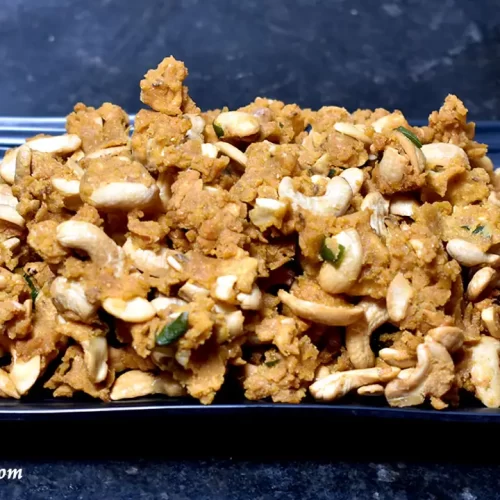
Perfect Cashew Pakoda Recipe | Kaju Pakora Recipe
Master the perfect Cashew Pakoda recipe! Learn how to make a delicious and crispy Kaju Pakoda recipe with our chef's expert tips and tricks.
Ingredients
- To soak the cashews for half an hour place them in a basin with the necessary amount of water. After draining the water, place the cashew on a skillet.
- In a mixing bowl combine rice flour, red chili powder, turmeric powder, and besan flour.
- Add cumin seeds garam masala powder, coriander powder, and salt.
- Mix minced curry leaves cumin powder, and fresh ginger garlic paste.
- Add the soaked cashew. For thickening the batter add water in small quantities. Add little ghee to make it soft.
- In hot oil add cashew batter in small lots. Fry them in a deep fryer on low heat till browned.
- Squeeze out the excess oil by pouring the cashew pakoda recipe on a platter.