Authentic South Indian Curd Rice Recipe (Temple-Style Daddojanam)
Curd rice—known as Thayir Sadam in Tamil, Daddojanam in Telugu, and Mosaranna in Kannada—is the ultimate South Indian comfort food. A proper bowl of curd rice should be creamy, velvety, gently savory, and balanced by a fragrant, crunchy tempering of mustard seeds, curry leaves, ginger, and lentils.

Whether you are preparing a quick cooling meal for a hot summer afternoon, packing a tiffin box that stays sweet until lunchtime, or making temple-style Daddojanam prasadam, this foolproof method ensures your rice never turns lumpy, dry, or sour.
Why This Recipe Works
- Stays creamy without turning hard: Mashing the rice while hot breaks the grain structure, allowing the dairy to bind smoothly rather than pool around stiff rice grains.
- Prevents souring: A balanced ratio of milk and fresh curd keeps the mixture mild and sweet for hours, making it ideal for travel and lunchboxes.
- Authentic temple aroma: Tempering with crushed black peppercorns, fresh ginger, and generous hing (asafoetida) produces the distinct flavor profile found in South Indian temple prasadam.
Ingredients You Will Need
For the Rice Base
- Raw Rice (Sona Masoori or Ponni): 1 cup (approx. 200g)
- Water: 3 cups (to overcook the rice slightly for a soft texture)
- Salt: 1 tsp (adjust to taste)
- Fresh Curd (Plain Yogurt / Dahi): 1.5 cups, whisked smooth (not overly sour)
- Boiled Whole Milk: 1/2 cup, cooled to room temperature
For the Tempering (Tadka / Talimpu)
- Oil or Ghee: 1.5 tbsp (ghee gives a traditional temple aroma)
- Mustard Seeds (Rai / Avalu): 1 tsp
- Cumin Seeds (Jeera): 1/2 tsp
- Split Urad Dal: 1 tsp
- Chana Dal: 1 tsp
- Green Chillies: 2, finely slit or chopped
- Fresh Ginger: 1 tsp, peeled and finely grated or minced
- Dried Red Chillies: 1–2, broken in half
- Black Peppercorns: 1/2 tsp, lightly crushed (essential for Daddojanam)
- Curry Leaves: 1 sprig (10–12 fresh leaves)
- Asafoetida (Hing): 1/4 tsp
Optional Garnishes
- Fresh Coriander Leaves: 2 tbsp, finely chopped
- Pomegranate Arils: 2 tbsp (for crunch and gentle sweetness)
- Raw Mango: 1 tbsp, finely diced (seasonal variation)
Ingredient Notes & Practical Swaps
- The Rice: Short to medium-grain rice like Sona Masoori, Ponni, or Seeraga Samba works best. Long-grain Basmati should be avoided; its firm, separate grains and distinct aroma do not absorb the curd into the necessary velvety consistency.
- The Curd (Dahi): Use fresh, thick, homemade or store-bought whole-milk curd. Avoid sour curd; as the rice sits, it naturally continues to acidify.
- The Milk: Adding boiled and cooled milk serves two essential functions: it moderates the acidity of the yogurt and prevents the mixture from turning sharply sour if kept for several hours.
- The Dal in Tadka: Urad dal and chana dal provide a crucial nutty crunch against the soft rice. Fry them gently so they become golden and crisp, not hard or burnt.
How to Make Curd Rice (Step-by-Step Instructions)
Step 1: Wash and Measure the Rice and Water
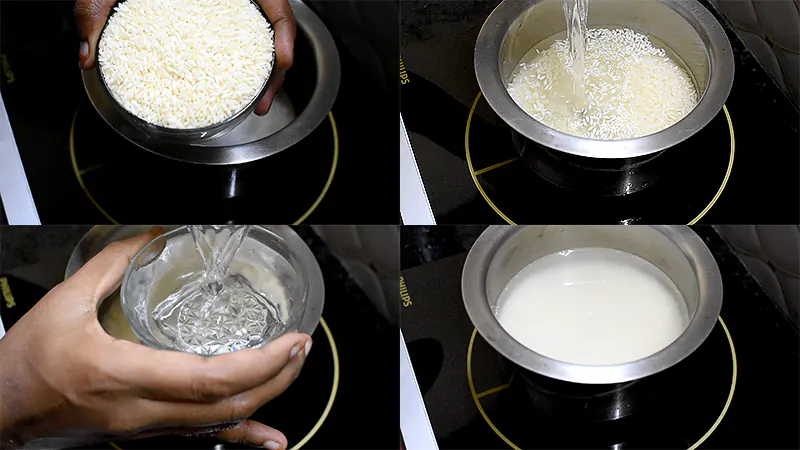
- Take 1 bowl of raw rice in a deep cooking vessel and rinse it thoroughly with clean water 2 to 3 times to remove excess surface starch. Drain completely.
- Add water to the vessel.
- Standard Cooking Ratio: For everyday rice, use a 1:2 ratio (2 bowls of water for 1 bowl of rice).
- Curd Rice Extra-Soft Ratio: Because curd rice requires very soft grains, add 1 extra cup/bowl of water (making it a 1:3 ratio total). This ensures the grains absorb enough liquid to mash smoothly without staying hard or separated.
Step 2: Cook the Rice in an Open Vessel
- Place the vessel on the stovetop over medium heat and bring the water to a rolling boil.
- Once boiling, reduce the heat to medium-low and place the lid on top, leaving it slightly open to allow excess steam to vent and prevent water from frothing over.
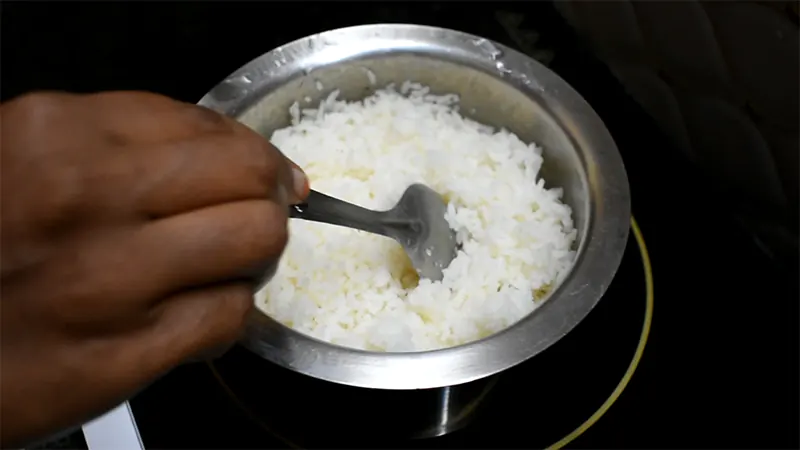
- Cook until all the water is absorbed and the grains are plump, tender, and overcooked.
- Turn off the heat and immediately transfer the hot, cooked rice to a wide mixing bowl.
- Pro-Tip for Leftover / Pre-cooked Rice: If you are using pre-cooked or leftover rice instead of fresh rice, pour in a little boiled and cooled milk. This softens the cold grains, enriches the flavor, and helps prevent the curd from turning sour quickly.
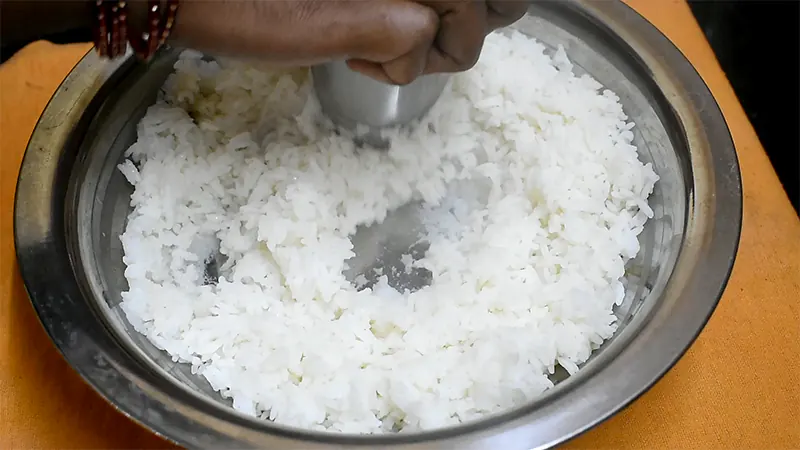
Step 3: Mash While Hot (The Tumbler / Glass Method)
- Do not wait for the rice to cool down. While the rice is still in its hot stage, take a sturdy, flat-bottomed steel glass or tumbler.
- Press the flat base of the glass firmly into the hot rice in circular motions, mashing it until the grains break down into a soft, uniform, creamy consistency.
- Why do this hot? Mashing hot rice breaks down the grain starches instantly with minimal effort, ensuring a smooth, velvety base that will not set like hard lumps later.
Step 4: Mix Salt and Fresh Curd
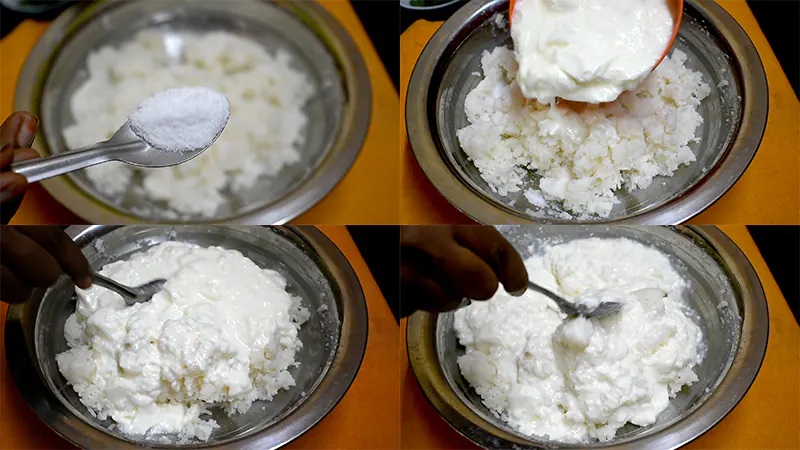
- Allow the mashed rice to cool down slightly from steaming hot to comfortably warm (lukewarm).
- Add 1 tablespoon of salt and fresh, thick curd (yogurt).
- Mix well with a spoon or ladle until the curd blends completely into the mashed rice, forming a thick, smooth, and creamy layer.
- Curd Quality Tip: Always use fresh and sweet curd. Fresh curd keeps the dish tasting rich and pleasant for many hours, whereas sour curd will continue to ferment and turn overly tart.
Step 5: Temper the Aromatics (Tadka / Talimpu)
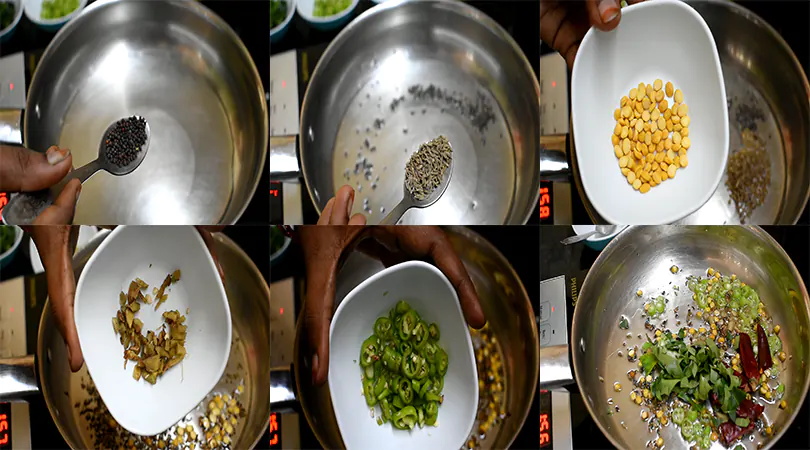
- Heat a small amount of oil in a tadka pan over medium-low heat.
- Add 1 teaspoon of mustard seeds and allow them to crackle and pop completely.
- Add cumin seeds (jeera) and chana dal. Sauté gently on low heat until the chana dal turns golden and crisp.
- Add finely chopped ginger pieces, slit green chillies, dried red chillies, and fresh curry leaves.
- Temple Naivedyam Tip: If you are preparing this Daddojanam specifically as Temple Naivedyam / Prasadam, skip the green chillies and ginger pieces entirely to keep it strictly satvik.
- Coarsely crush whole black peppercorns (using a mortar and pestle) and add them to the hot oil. Sauté everything for 15 to 20 seconds until the peppercorn aroma releases.
Step 6: Combine, Garnish, and Serve
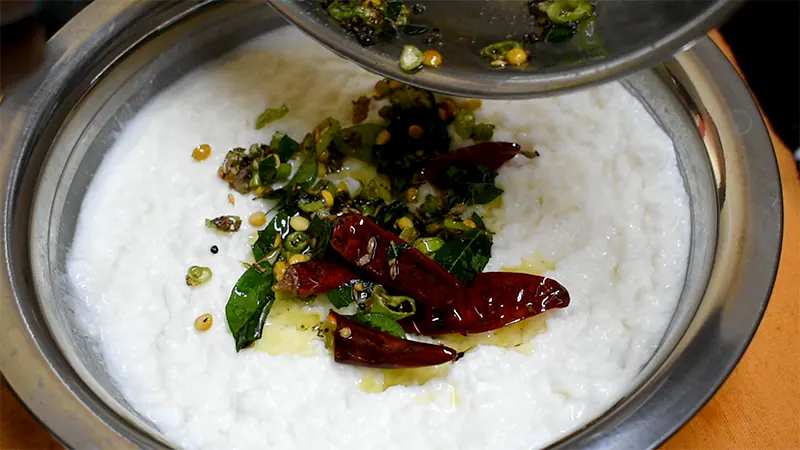
- Pour the hot spiced oil mixture directly over the bowl of prepared curd rice.
- Mix thoroughly so the seasoned oil, lentils, and aromatics are evenly distributed through the creamy rice.
- Transfer the Daddojanam into a serving bowl.
- Garnish with freshly chopped coriander leaves on top.
- Nutritional Upgrade Tip: To make this dish richer and more wholesome, fold in a handful of fresh pomegranate pearls, golden-fried cashew nuts, and finely grated carrot right before serving.
Pro-Tips for Perfect Texture
- Adjust for Tiffin / Lunchbox: If packing curd rice for 4 to 6 hours later, adjust the dairy ratio to 1 cup of milk to 3/4 cup of fresh curd. By lunchtime, the lactobacillus bacteria in the curd will ferment the milk, resulting in perfectly set, mild, and non-sour curd rice by midday.
- Keep It Loose: If your curd rice looks perfect in the pan, it will be too thick by the time you eat. Always finish with a slightly pouring, loose consistency.
- Crush the Black Pepper: Whole peppercorns are often picked out and pushed to the side of the plate. Coarsely crushing them releases piperine into the warm ghee, flavoring the entire dish while aiding digestion.
Common Mistakes and How to Fix Them
Why is my curd rice watery and separated?
This happens when curd is added to hot rice, causing the emulsion to split into curds and whey.
- The Fix: Cool the mashed rice completely to room temperature before stirring in the yogurt. If already separated, stir in 2 to 3 tablespoons of thick, chilled whisked dahi to bring the emulsion back together.
Why did my curd rice turn rock-hard in the fridge?
Starch retrogrades in cold temperatures, soaking up every drop of free moisture from the yogurt.
- The Fix: Never serve curd rice straight from the refrigerator. Bring it to room temperature and whisk in a few tablespoons of warm boiled milk with a pinch of salt until it regains its silky consistency.
Why is the curd rice too sour?
Using old curd or letting the prepared dish sit in a warm kitchen will accelerate fermentation.
- The Fix: Fold in 1/4 cup of cold, fresh cream or thick, cold whole milk. This instantly cuts through excessive lactic acid and restores a sweet, balanced profile.

Prefer a visual walkthrough? Watch our step-by-step Curd Rice (video on YouTube or play it directly below:
Prefer a visual walkthrough? Watch our step-by-step Curd Rice (Daddojanam) video on YouTube or play it directly below:
Variations of South Indian Curd Rice
- Temple-Style Daddojanam (Prasadam Style): Prepare the recipe strictly using pure desi ghee for the tempering. Double the crushed black pepper to 1 full teaspoon, keep the green chillies mild, and do not use coriander or pomegranate garnishes.
- Summer Fruit & Nut Curd Rice: Fold in 2 tablespoons of sweet pomegranate arils, 1 tablespoon of finely grated raw green mango, and 6 to 8 golden-fried cashews into the tempered rice.
- No-Dairy / Vegan Curd Rice: Replace dairy curd and milk with unflavored, thick cashew curd or coconut-soy yogurt. Use cold water to loosen the rice during mashing and temper exclusively in sesame (gingelly) oil or peanut oil.
What to Serve with Curd Rice
Curd rice is traditionally the cooling finale to a South Indian meal. Pair it with:
- Spicy South Indian Pickles: Mango Thokku, Avakaya, Lemon Pickle, or Citron (Narthangai) pickle.
- Crunchy Sides: Appalam, roasted papad, or potato fry (Urulaikizhangu Varuval).
- Vegetable Curries: Dry roasted okra (Bhindi fry) or raw banana stir-fry (Vazhakkai Poriyal).
Storage & Reheating Instructions
- Room Temperature: Safe to leave covered on the counter for 3 to 4 hours in cool to moderate weather. In peak summer, serve within 2 hours or store immediately.
- Refrigeration: Store in an airtight container for up to 2 days.
- How to Refresh: Do not heat or microwave curd rice; warm temperatures split yogurt instantly. Instead, leave the container on the counter for 20 minutes, stir in 3 to 4 tablespoons of cold milk, adjust salt, and serve.
Frequently Asked Questions
Can I make curd rice with leftover cooked rice?
Yes. Warm the leftover rice slightly with 2 to 3 tablespoons of water or milk, mash it with a fork until soft, let it cool to room temperature, and proceed with the recipe as written.
Which oil is best for tempering curd rice?
Ghee offers the best flavor for temple-style daddojanam. For standard South Indian home cooking, gingelly oil (sesame oil), peanut oil, or coconut oil are all authentic choices.
Why do my dals in the tadka taste hard instead of crunchy?
Dals become hard if fried on high heat where the outside browns before the center cooks through. Always fry split urad dal and chana dal over low-to-medium heat for at least 45 to 60 seconds until golden.
Is curd rice good for digestion?
Yes. The natural probiotics in fresh curd combined with carminative spices like ginger, hing, and curry leaves help soothe the gastrointestinal tract and aid digestion.

South Indian Curd Rice (Temple-Style Daddojanam)
Authentic, creamy South Indian curd rice tempered with mustard seeds, curry leaves, ginger, and lentils. Foolproof method to keep it velvety without turning sour.
Ingredients
For the Rice Base:
- 1 cup raw short/medium-grain rice Sona Masoori or Ponni
- 3 cups water
- 1 tsp salt
- 1.5 cups plain fresh curd dahi, whisked
- 1/2 cup boiled whole milk cooled
For the Tempering (Tadka):
- 1.5 tbsp ghee or oil
- 1 tsp mustard seeds
- 1/2 tsp cumin seeds
- 1 tsp split urad dal
- 1 tsp chana dal
- 2 green chillies slit
- 1 tsp grated ginger
- 1 –2 dried red chillies
- 1/2 tsp black peppercorns crushed
- 1 sprig curry leaves 10–12 leaves
- 1/4 tsp asafoetida hing
Optional Garnish:
- 2 tbsp fresh coriander chopped
- 2 tbsp pomegranate arils
Instructions
Cook Rice: Rinse 1 cup of rice. Pressure cook with 3 cups of water for 4 whistles on medium heat until soft. Allow steam to release naturally.
Mash Warm: Transfer warm rice to a bowl. Add 1 tsp salt and 1/4 cup milk. Mash roughly 70% of the grains with a potato masher. Cool until lukewarm.
Blend Dairy: Add remaining 1/4 cup milk and 1.5 cups whisked curd. Mix until creamy and slightly loose.
Temper: Heat 1.5 tbsp ghee/oil in a tadka pan. Add mustard seeds until they splutter. Add cumin seeds, chana dal, and urad dal; fry over medium-low heat until golden. Add crushed pepper, ginger, green chillies, and dried red chillies; sauté for 30 seconds. Add curry leaves and hing; fry for 10 seconds. Remove from heat.
Combine: Pour the hot tempering into the curd rice bowl. Add coriander leaves. Fold together gently. Rest for 10 minutes before serving.
Recipe Notes
For tiffin/lunchbox packing, use 1 cup milk and 3/4 cup curd to prevent souring by lunchtime.
If using commercial compounded asafoetida powder, check labels for wheat flour if strict gluten-free compliance is required.
Storage
Refrigerate in an airtight container for up to 2 days. Refresh before serving by stirring in 3 to 4 tablespoons of cold milk; never microwave.