Easy South Indian Sambar Recipe Vegetable
South Indian Sambar Recipe, a dish that is the heart and soul of South Indian cuisine. This isn’t just a recipe; it’s a journey into a rich and flavorful tradition, a dish that brings warmth and comfort with every spoonful. Sambar is a lentil-based vegetable stew, known for its complex flavors that are a beautiful blend of spicy, sour, and a hint of sweetness. Regardless of whether you’re a professional chef or just starting to explore the world of cooking, this detailed guide will guide you through preparing the perfect South Indian Sambar Recipe.
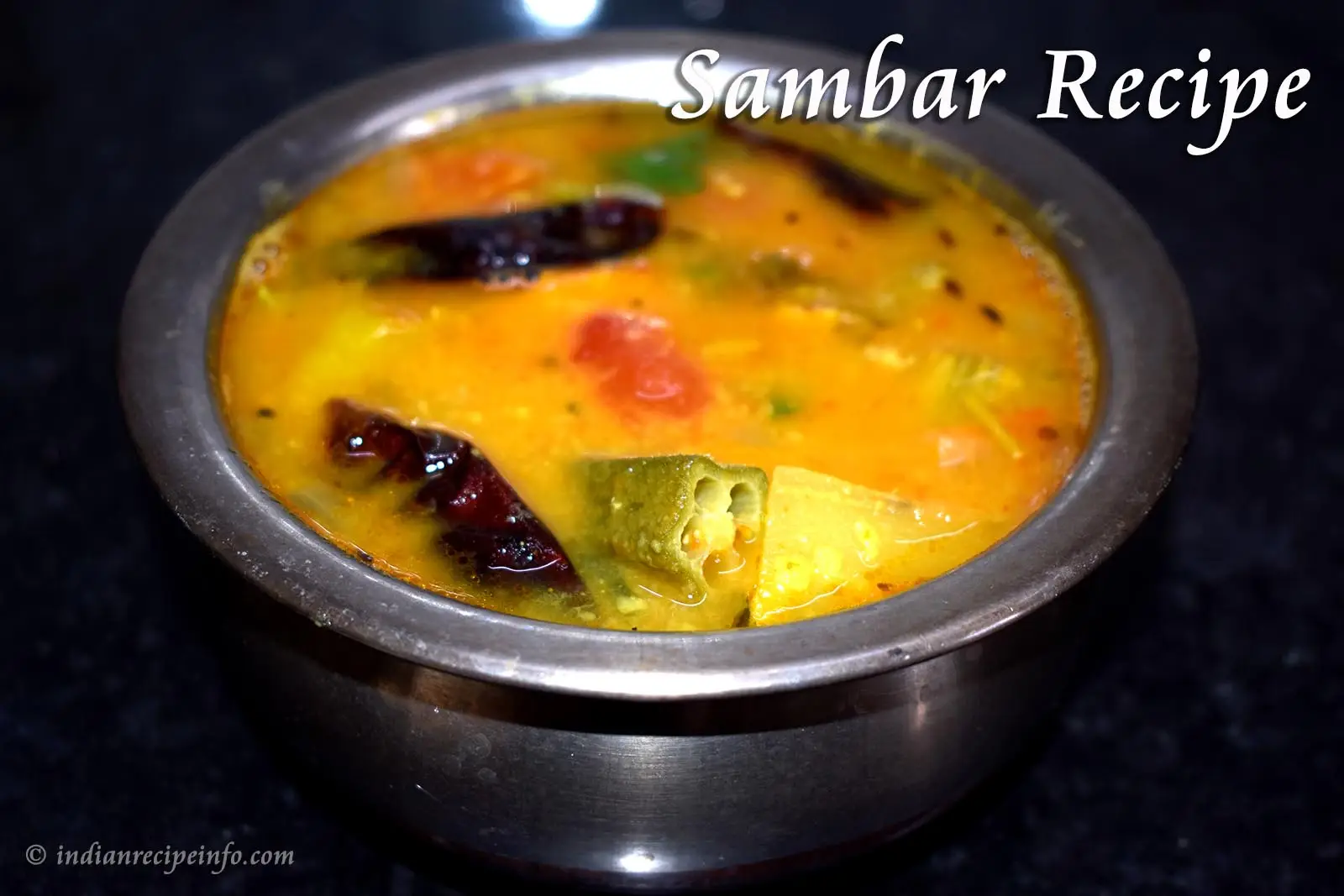
Making this recipe with Vegetables is very famous in Udupi restaurants as it is served with idli, dosas, Vada and other breakfast items.
In this recipe, I have used Sambar powder (In my previous post I have explained how to make this powder), to enhance its flavor and aroma.
About the Heart and Soul of South Indian Cuisine
The South Indian Sambar Recipe is a culinary gem. It is a household favorite in restaurants and homes all over the states of Kerala, Tamil Nadu, Karnataka, and Andhra Pradesh, accompanied by anything from fluffy idlis and crunchy dosas to plain rice and vadas. Sambar is a testament to the magic of simple, wholesome ingredients combining to achieve greatness. The foundation of the dish is a rich and velvety toor dal (pigeon pea) broth, which is subsequently topped with an assortment of fresh vegetables and spiced with an interesting combination of spices.
My first memory of sambar transports me to my grandmother’s kitchen. The fragrance of boiling lentils, tamarind, and the special sambar powder wafting through the house indicated that a banquet was in progress. She used to make the most perfect sambar, a recipe of generations. The secret, she would always claim, lay not in the ingredients but in the patience and love you pour into the dish. This South Indian Sambar Recipe is my tribute to her, an attempt to reproduce that original, soul-quenching flavor that I grew up with.
Why does a good sambar turn out great? It’s the balance. The tartness of the tamarind, the mild sweetness of the jaggery, the spiciness of the chillies, and the spiciness of the spices must all be balanced. I have over the years experimented, adapted, and fine-tuned my own recipe of the South Indian Sambar Recipe to include my elders’ knowledge and my own culinary experiences. This manual is an essence of that experience, presented to enable you to have the confidence to make a sambar that is authentic and extremely tasty.
We’ll investigate the role of each ingredient, discuss various variations, and present expert tips that will turn your sambar from good to really spectacular. So, let’s start our quest to mastering the traditional South Indian Sambar Recipe.
Expert Tips for Mastering Your Sambar
Creating an absolutely fantastic South Indian Sambar Recipe is not an easy task and requires a couple of important steps that can make all the difference.
Prepare the Dal to Perfection: The toor dal must be boiled until extremely soft and mushy, almost reaching a paste-like state. This sets up a creamy foundation for the sambar.
Don’t Overcook the Vegetables: The vegetables must be tender but not mushy. They should retain a little bite. It is a good idea to cook them separately for a few minutes before adding them to the dal.
Get the Tamarind Right: Tamarind pulp is the primary source of tang. Use a little and taste as you go. You can always add, but you cannot remove it.
The Importance of Tempering: The final tempering (tadka) is what elevates the sambar. Make sure your oil is hot enough for the mustard seeds to splutter and the cumin to sizzle. This releases their full flavor and aroma.
Let it Simmer: Once all the ingredients are mixed together, let sambar simmer for minimum 10-15 minutes on a low heat. This makes all the ingredients mingle together perfectly.
Adhering to these tips will make your South Indian Sambar Recipe a huge hit every time.
How to Make Sambar Recipe:
1. In a pressure cooker add yellow lentil and clean it by adding adequate water.
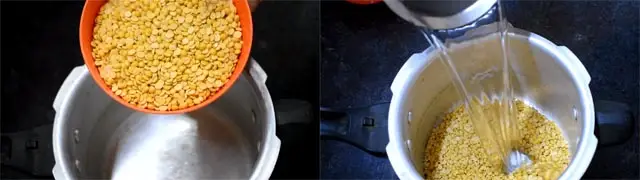
2. For each bowl of dal add two bowls of water, ¼ tbsp. turmeric powder, 1 tbsp oil and tomatoes.
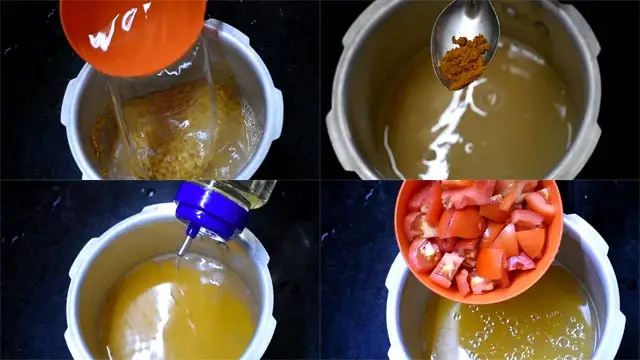
3. Pressure cook for 4 whistle blows. Usually, 3 blows are enough but cooking for an extra whistle blow will make dal soft and doesn’t require additional mashing.

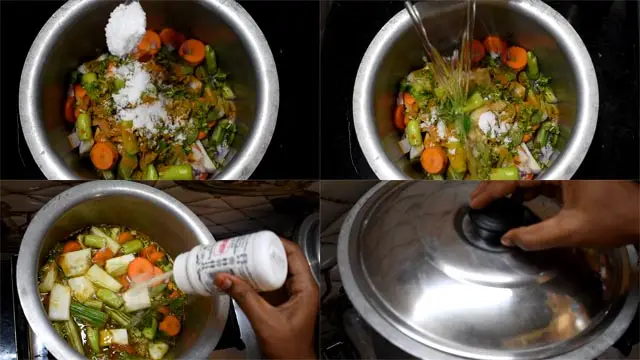
4. In a wide vessel add drumsticks, bottle gourd, carrots and onions.
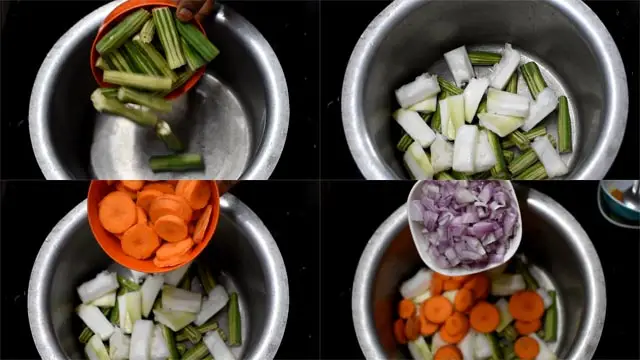
5. Add curry leaves, green chillies, coriander leaves and ¾ tbsp. turmeric powder.
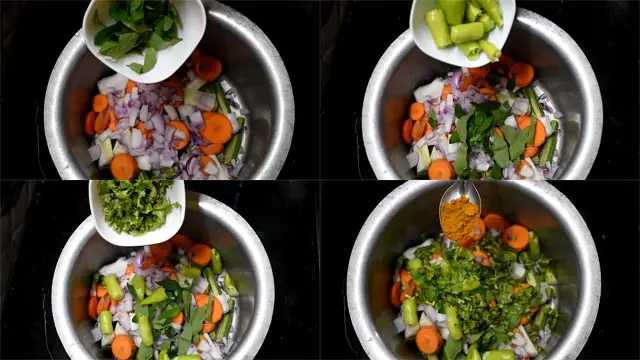
6. Sprinkle 2 tbsp. Salt and add ½ liter water, a pinch of asafetida and mix all ingredients and cook on medium flame with lid covered.
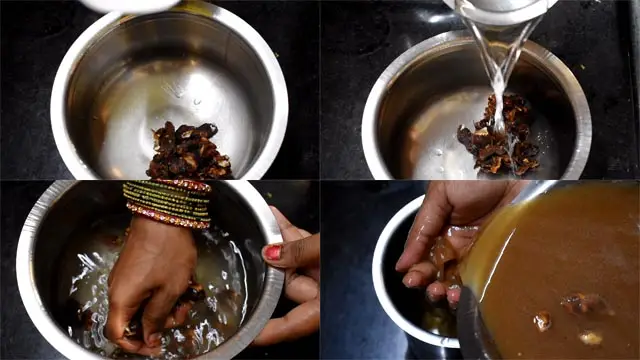
7. In another vessel add tamarind, ½ liter water and soak for a minute and squeeze tamarind pulp.
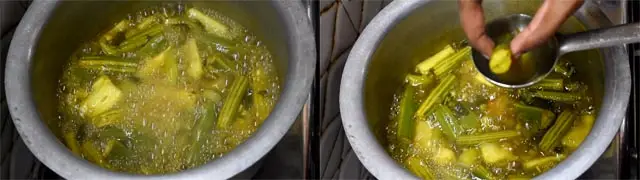
8. Open the lid and check whether drumsticks are cooked or not.
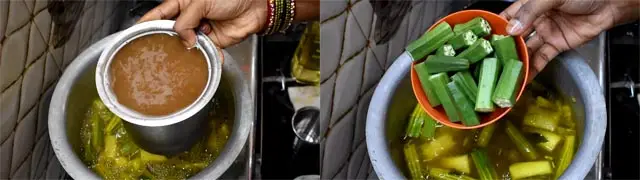
9. When vegetables are cooked, add tamarind pulp and ladies finger and cook for a minute with lid covered.
10. Open pressure cooker and check dal, if it’s pulpy then mash it to make soft.

11. While vegetable and tamarind pulp is being boiled, open the lid and pour dal paste in it.
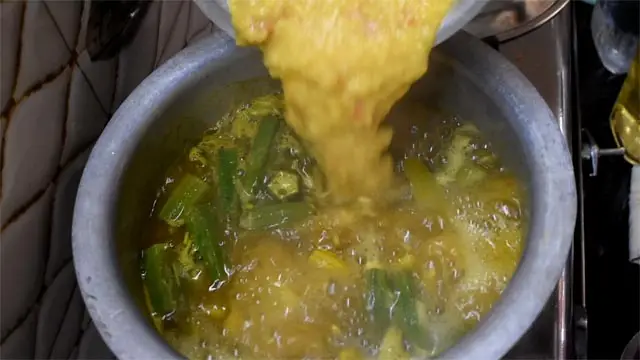
12. Based on the taste of the sambar recipe, add ½ tbsp. salt or more as per your taste.
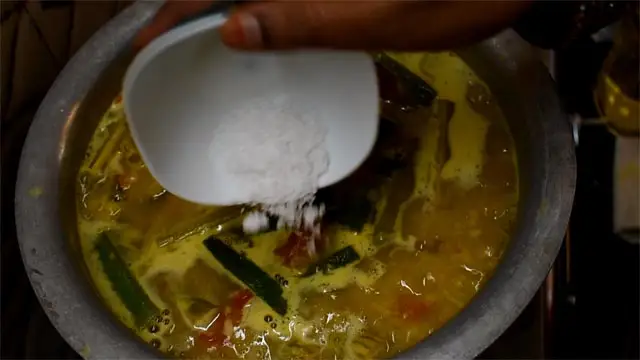
13. Sprinkle red chilli powder and jaggery. Mix well so that jaggery melts.
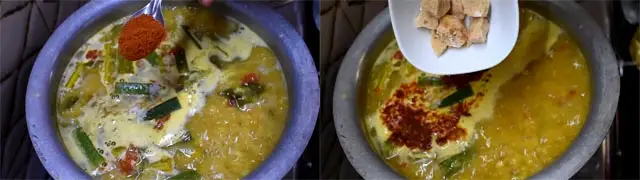
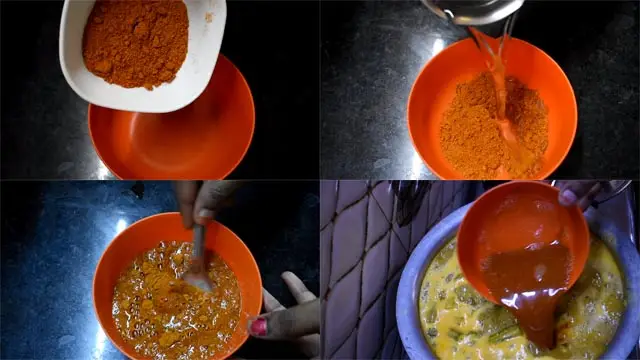
14. In a small bowl put sambar powder and pour water to make it liquid. Add this liquid to the tamarind pulp and cook on low flame.
Tempering:
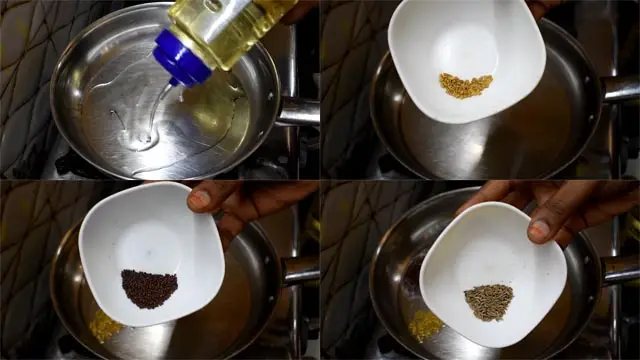
15. Heat 5-6 tbsp. oil in a pan, fenugreek seeds, mustard seeds and cumin seeds.
16. Add garlic cloves, dry red chillies, curry leaves and sauté for a while. Add this temper to sambar Recipe.
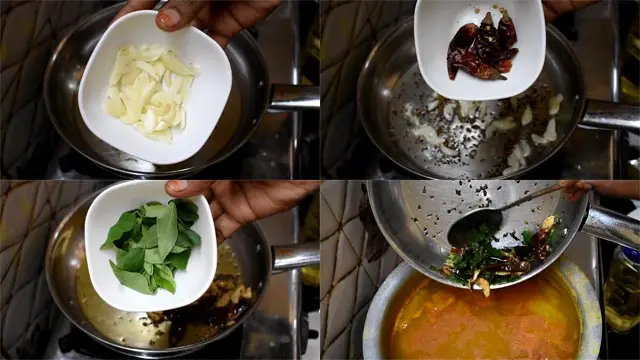
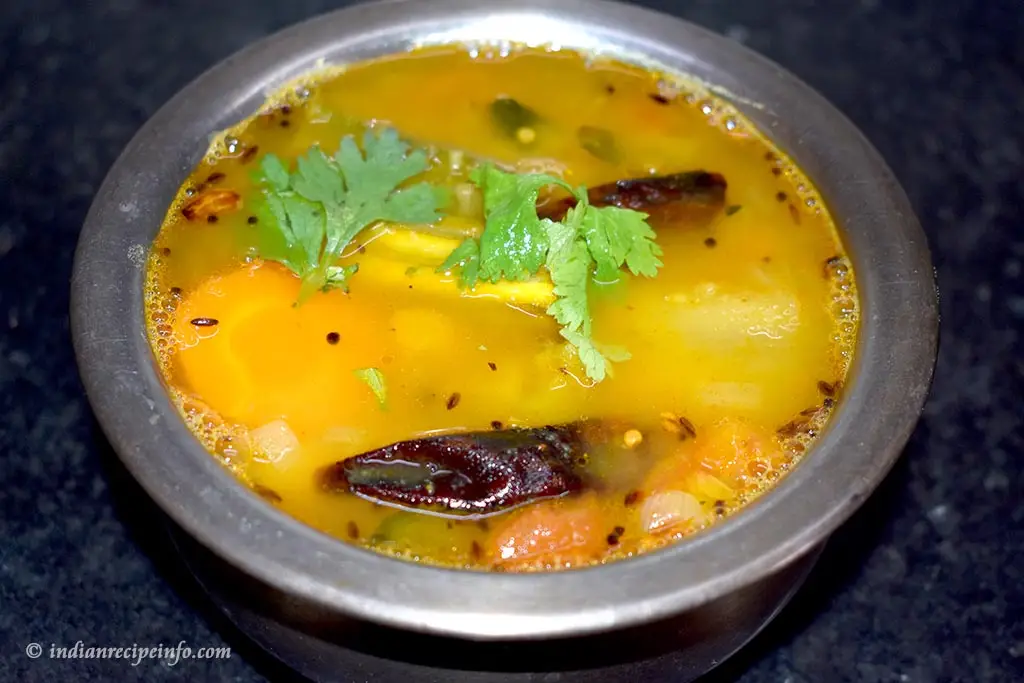
17. Garnish with coriander leaves and serve hot with steamed rice or with breakfast recipes like idli recipe.
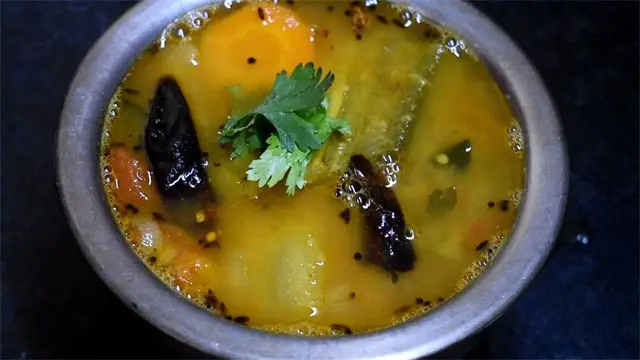
Learn how to make South Indian Sambar Recipe in this quick video!
Do we have different Sambar Recipe Variants? What is the difference between Kerala and Tamil Variant?
| Kerala | Tamil |
| It is made by adding different vegetables | It is made by adding only one vegetable. (Nowadays people make by adding different veggies to increase nutritional value) |
| People love to use coconut oil which gives it a distinct flavor. | People make use of available oil. |
| They usually add sliced onions and mustard seeds are added to temper. | They like to add mustard seeds, red chillies and curry leave to temper. |
| Coconut is not an integral part of Kerala sambar. | People sometimes love to add grated coconut to enhance flavor. |
Can we eat curd rice before eating with sambar recipe?
No, Sambar recipe is not only rich in nutritional values but also rich in protein as lentil-based recipes are rich in protein. When eating protein food our digestive system releases acidic enzymes to break them.
As this recipe is infused with different vegetables and spices digestive system works hard in breaking them into small.
Whereas when people eat with curd rice, the stomach releases a different proportion of enzymes as it has a cooling effect on the stomach.
As per Ayurveda, food should be consumed in order. Based on the calories our body uses to break the food they should be eaten first or last. Also based on the time of the day and season, food should be consumed.
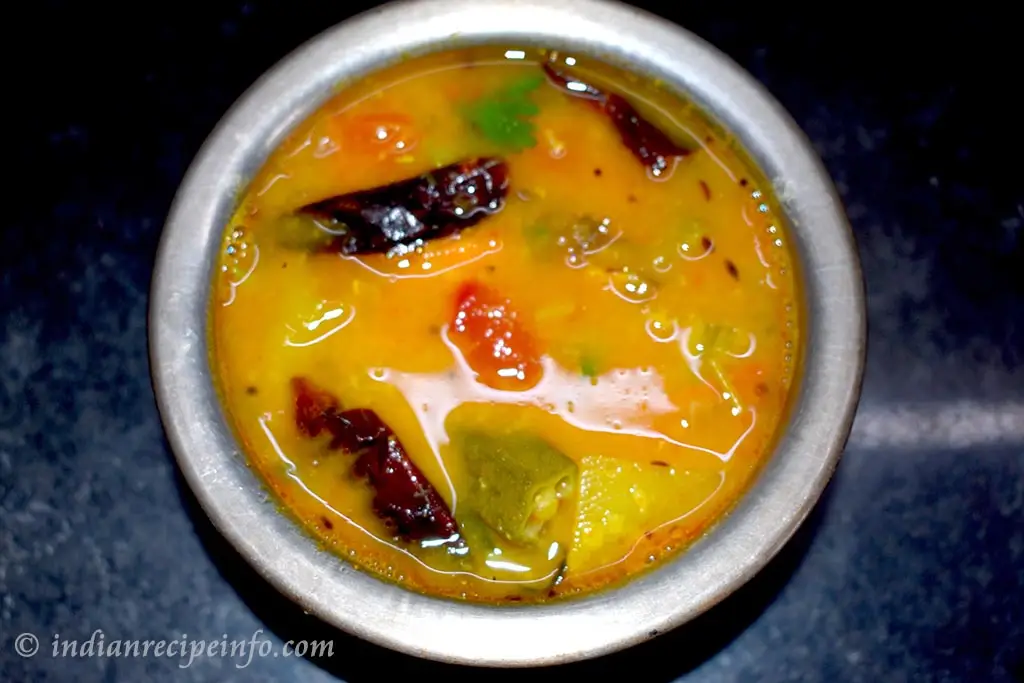
What is the difference between Sambar recipe and Rasam?
| Sambar | Rasam |
| Its consistency is thick as we add a large quantity of mashed dal. | It’s thin in consistency as we add or remove adding dal. |
| Spices added in making this recipe differ. To get thick consistency we add Sambar Powder. | Either we add spice powder or make without it. We sometimes make use of tamarind pulp or tomato to give tangling flavor. |
| We usually add different varieties of vegetables to enhance their flavor and nutrition. | We usually do not add vegetables and make it plain to keep it light on the stomach. |
| The recipe can be served with breakfast recipes like idli, dosa, vada, etc. along with rice. | It tastes good only when served with rice. |
Can we refrigerate Sambar Recipe for future use?
Yes, but a fresh recipe is good for your health. If you are planning to refrigerate then it should be done within 2 hours of preparation (once cooled).
This recipe can be preserved for 24-48 hours. When refrigerated stock settles to bottom and water on top.
When served after refrigeration, they should be mixed well and heated before use. If you find a change in taste or foul smell or bubbles tries to discard it.
The Symphony of Ingredients: Crafting Your Perfect Sambar
Every ingredient in this South Indian Sambar Recipe plays a crucial role in creating its complex and harmonious flavor profile. Understanding their purpose is key to mastering this dish.
Toor Dal / Yellow Lentil / Kandipappu: It is the base of the dish. When it is cooked until soft and creamy, it gives the body and a light, nutty flavor that is the ideal base for the other ingredients.
Turmeric Powder: It is used to prepare the dal and gives the sambar its lovely golden hue and adds a subtle, earthy taste.
Oil: The oil used to temper and sauté the vegetables. A good quality oil is important in creating the flavour base.
Vegetables: The combination of vegetables is the key to the wholesomeness of sambar. Tomatoes provide natural sweetness and a hint of acidity. Drumsticks, bottle gourd, and carrots provide a variety of textures and soak up the flavor of the sambar nicely. Ladies finger (okra) thickens the sambar and provides a special taste.
Curry Leaves: A South Indian culinary staple. They impart a characteristic pungent and slightly citrusy smell that cannot be substituted. Both in the main preparation and for the final tempering, they are utilized.
Green Chillies: These give a nice, green heat that is distinct from red chilli powder. They are a part of the taste of this South Indian Sambar Recipe.
Coriander Leaves: Added towards the end, they give a fresh, herbal finish that lightens up the whole dish.
Salt: Essential for seasoning and balancing all the other flavors.
Hing / Asafetida: A pinch of this pungent spice gives a distinct savory, nearly garlicky taste and helps in digestion. It’s a must-have for a true South Indian Sambar Recipe.
Tamarind: The secret to the characteristic tartness of sambar. The pulp provides a fruity, tangy flavor that counterbalances the heaviness of the dal and the spiciness of the spices.
Red Chilli Powder: For an intense, more mellow heat in comparison to the green chillies. It also contributes to the deep coloring of the sambar.
Jaggery: A dash of jaggery is the key to an equilibrated sambar. It balances the sourness and heat, bringing a soft sweetness to the dish that makes it literally addictive.
Sambar Powder: This is the soul of the dish! A carefully roasted blend of lentils and spices, it is the essence of sambar’s aroma and taste.
Tempering Spices: This final tempering, or tadka, is a crucial step. It involves frying these spices in oil until they are fragrant, then pouring this mixture over the finished sambar. This process releases the full potential of the spices, adding a final burst of flavor and aroma.
The Significance of Specific Spices in Sambar Recipe
In the South Indian Sambar Recipe, the spices are not only for flavor; each serves a unique role that enriches the richness of the dish and its complexity.
Sambar Powder: This is the highlight. It’s an expertly blended one, usually consisting of roasted chana dal, coriander seeds, dry red chillies, and fenugreek seeds. The distinct smell and taste it provides are what make a good sambar. A fresh, good-quality sambar powder is the secret to an authentic-tasting South Indian Sambar Recipe.
Fenugreek Seeds: These little seeds are bitter when raw but take on a nutty, complex flavor when lightly roasted. They also have a great fragrance and are essential to the traditional sambar flavor.
Hing (Asafetida): Commonly referred to as “devil’s dung” because of the pungent raw odor, hing becomes savory and full-bodied with an umami depth when heated. It imparts a richness that cannot be matched and also has known digestive properties.
Mustard Seeds: They crack and release a pungent, sharp flavor when they come into contact with hot oil. This is a traditional element of the South Indian tempering process.
Tamarind: Although technically a fruit pulp, it acts as a spice, imparting the all-important sourness. The tangy note serves to cut through the richness and heavy flavors and makes the sambar light and refreshing.
Jaggery: This raw cane sugar may appear anomalous, but it plays an essential role. It’s not added to sweeten the sambar but to counter the acidity of the tamarind and the hotness of the chillies and balance the flavors into a harmonious dish.
Delicious Variations of the South Indian Sambar Recipe
The charm of a traditional South Indian Sambar Recipe lies in the ease with which it may be modified to suit individual tastes and requirements.
Vegan Sambar: This South Indian Sambar Recipe is already vegan by nature, since all the ingredients are vegetarian. There is no dairy product or animal ingredient used, so it is ideal for those who adhere to a vegan diet.
Gluten-Free Sambar: All these ingredients are naturally gluten-free. Sambar powder is generally prepared with gluten-free ingredients, but do refer to the packet to make sure there are no additives or cross-contamination for a completely gluten-free South Indian Sambar Recipe.
Mixed Vegetable Sambar: You may use your imagination with the vegetables! You may include other vegetables in season, such as pumpkin, eggplant (brinjal), or potatoes. Only ensure they are sliced into the same size so they cook uniformly.
No-Onion, No-Garlic Sambar: For those who follow a sattvic diet or prefer to avoid onion and garlic, this South Indian Sambar Recipe can be easily adapted. Simply omit the onion and garlic cloves from the recipe. The hing and other spices will still provide plenty of flavor.
Recipe Notes for a Flawless Sambar
Tamarind Pulp: To bring out the best flavor, use a small tamarind ball and soak it in warm water for 15-20 minutes. Press out the pulp and strain it to get rid of the seeds or fibers.
Sambar Powder: You may use a store-purchased sambar powder, but to get the most authentic taste, try making it yourself at home.
Salt and Jaggery: Always add the salt and jaggery towards the end. Taste the sambar and if required, add more so that flavors can be adjusted.
Storing and Reheating Leftovers
Sambar usually tastes even better the following day!
Storage: Store leftover sambar in an airtight container in the fridge for a maximum of 3-4 days.
Reheating: To heat, simply pour the desired quantity into a saucepan and heat on a low heat. You might need to add a small amount of water if the sambar has set overnight. Heat until a gentle simmer is achieved.
Complementary Dishes and Drinks
A great South Indian Sambar Recipe is intended to be included in a larger, good meal.
Side dishes: Sambar is classically served with rice, idli, dosa, or vada. For a complete meal, it can be followed by a vegetable stir-fry (poriyal) and a few crispy papadams.
Drinks: A glass of cool buttermilk or a cup of hot filter coffee are traditional South Indian drinks that pair well with the flavors of the meal.
Other Recipes: Try serving your sambar with other South Indian foods such as a tangy tomato rice (thakkali sadam) or a basic coconut chutney.
FAQ Section
Q: Why is my sambar recipe too watery?
A: This may be because the dal was undercooked or because excess water was used. The right consistency of a good sambar should be a little thick and creamy.
Q: Can I use pre-cooked vegetables?
A: While it’s best to cook the vegetables in the sambar to absorb the flavors, you can use pre-cooked vegetables. Just add them at the end and simmer for a few minutes.
Q: What if I don’t have tamarind?
A: Although tamarind is crucial for a true South Indian Sambar Recipe, you can use a small amount of lemon juice or a few pinches of amchur (dry mango powder) to give it a tangy taste.
Q: Why is my sambar so bland?
A: It is probably because the sambar powder is old or there’s not enough salt. Make sure you are using new spices and taste the sambar while serving to add seasonings according to need.
Q: Is sambar healthy?
A: Yes, sambar is extremely healthy. It’s a good source of plant protein from the lentils and loaded with vitamins and minerals from the veggies.
Nutritional Information (Approximate values per serving)
- Serving Size: 1 cup
- Calories: ~150-200
- Fat: ~5-8g
- Carbohydrates: ~20-25g
- Protein: ~8-10g
- Sodium: ~400-600mg
Note: These are rough estimates and will vary depending on the ingredients and amounts used.
Serving Suggestions
Serve your hot sambar in a bowl with soft idlis for a traditional breakfast or over a bed of cooked rice for a healthy lunch. Garnish with a fresh sprig of coriander leaves to add color and flavor.
South Indian Sambar Recipe Vegetable
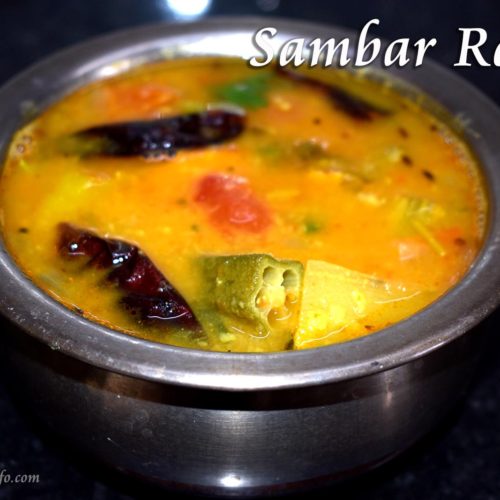
Sambar Recipe is considered as a traditional vegetable stew of South India which is made with yellow lentil, tamarind extract and vegetables.
Ingredients
Ingredients: Measurement: 1 bowl=200 gms.
- Toor dal/ Yellow Lentil/ Kandipappu – 1 bowl
- Turmeric powder – 1 tbsp.
- Oil – 6 tbsp.
- Tomatoes – 1 bowl
- Drumsticks – 1 bowl
- Bottle gourd – 1 bowl
- Carrots – ½ bowl
- Onions – 1 cup
- Curry leaves – 2 tbsp.
- Green chillies – 4 No.
- Coriander leaves – 3 tbsp.
- Salt – 2 ½ tbsp.
- Hing/ Asafetida – a pinch
- Tamarind – fist full
- Ladies finger – 1 cup
- Red chilli powder – 1 tbsp.
- Jaggery – 3 tbsp.
- Sambar powder – 3 tbsp.
- Fenugreek seeds – ¼ tbsp.
- Mustard seeds – ½ tbsp.
- Cumin seeds – ½ tbsp.
- Garlic cloves – 2 tbsp.
- Dry red chillies – 3-4 No.
- Curry leaves – 2 tbsp.
Instructions
- Slice vegetables and keep aside. Clean toor dal by adding adequate water.
- Based on the required consistency, we can adjust the water. But while boiling dal, we add two cups of water for each cup of dal.
- Add little oil, turmeric powder and tomatoes to dal and pressure cook for 4 whistle blows.
- While dal is being cooked, cook vegetables separately.
- Place vessel based on the quantity of sambar recipe you are planning to make. Add bottle gourd, onions, carrots, drumsticks, green chillies, coriander leaves and curry leaves.
- Sprinkle a little salt, turmeric powder, a pinch of asafetida and water.
- Cook all ingredients with lid covered on medium flame.
- Soak tamarind for a while and extract its pulp.
- When veggies are half cooked, add ladies finger.
- Check drumsticks, if they are cooked then add tamarind pulp and dal paste.
- Quantity of salt differs based on the vegetables so it’s a good idea to check it at this point.
- Sprinkle red chilli powder based on the spiciness you prefer as we have already added green chillies.
- Add jaggery and stir slowly till it melts if needed add more water based on the consistency you prefer.
- Put sambar liquid by adding little water to sambar powder. We can even sprinkle sambar powder directly but it forms lumps.
- Add above the liquid to the sambar recipe and cook on low flame till you get your required consistency.
- For tempering, we can add oil or ghee. Heat oil in a pan and fry mustard seeds, fenugreek seeds and cumin seeds.
- Once mustard seeds start spluttering add crushed garlic cloves, dry red chillies and curry leaves.
- When curry leaves are added, oil tends to splutter. Take care while adding them.
- Add temper to sambar recipe and garnish with coriander leaves.
Recipe Video
Recipe Notes
- Adding little oil while cooking dal will make it soft and gets cooked in less time.
- When you have small onions with you, it’s a good idea to add them. If not add small pieces of onions.
- Pressure cook toor dal separately by adding adequate water so that it can be cooked to mushy which gives a rich flavor.
- To obtain tangling flavor, we should not just depend on tomatoes or tamarind. They should contribute their flavor on an equal basis and should not dominate.
- Drumsticks and ladies fingers should be added base on their tenderness if not they become mushy.
- Carrots and jaggery give sweetness so they should be added in small quantity.
- Jaggery not only gives sweet taste but also compensates tangling flavor.
- When making temper, it’s a good idea to make using ghee as it gives a rich flavor.
- Adding sambar powder will make this recipe thick concentration. People who love watery flavor can adjust powder.
- When sambar powder is added to water and poured into the recipe, it helps in not forming lumps.
- Tamarind extract should always be added only when vegetables are half cooked or else sour taste will increase cooking time.
- When adding different vegetables they tend to absorb salt and sourness so adjust both of them.
- If in case this recipe becomes salty we can lower saltiness by adding sliced potatoes.
- People sometimes love to sauté onions, tomatoes and vegetables in oil and then add to the recipe to enhance flavor.
- When making Sambar recipe stir occasionally if you are making thick concentration so that bottom doesn’t get burnt.
- Fenugreek seeds not only adds flavor but it’s good for diabetic patients.