Traditional Sweet Pongal Recipe (Sakkarai Pongal)

Sweet Pongal (known as Sakkarai Pongal in Tamil and Chakkara Pongali in Telugu) is a classic South Indian sweet dish made from tenderly cooked raw rice, roasted yellow moong dal, melted jaggery, fragrant cardamom, and cashews fried in pure ghee. It is traditionally prepared during the harvest festival of Sankranti/Pongal, Navratri, and as an auspicious prasadam offering in South Indian temples.
Making sweet pongal at home is straightforward, but achieving that signature silky, glossy temple-style texture requires two specific techniques: roasting the lentils until aromatic and ensuring the rice is completely mashed before any sweetener touches it.
Follow this tested pressure-cooker method for a luscious, melt-in-the-mouth sweet pongal that stays soft for hours without turning stiff or chalky.
Ingredients You Will Need
For Cooking the Rice and Dal:
- Raw Rice (Sona Masoori or Raw Ponni): ½ cup (approx. 100 grams)
- Yellow Moong Dal (Split Petite Yellow Lentils): 3 tablespoons (approx. 35 grams)
- Water: 2¼ cups (to cook the rice and dal to a soft, mashable texture)
- Milk (optional, for extra richness): ¼ cup (boiled milk, can be replaced with water)
- Ghee: 1 teaspoon (added to the cooker to prevent frothing)
For the Jaggery Syrup:
- Dark Jaggery (Gud / Vellam / Bellam): ¾ cup powdered or grated (approx. 150 grams; increase to 1 cup if you prefer a very sweet taste)
- Water: ½ cup (just enough to dissolve the jaggery)
For the Ghee Roasting & Flavoring:
- Pure Ghee: 3 to 4 tablespoons (divided use)
- Cashews: 12 to 15 whole, split in halves
- Golden Raisins (Kishmish): 1 tablespoon
- Green Cardamom Powder (Elaichi): ½ teaspoon freshly ground
- Clove (Lavangam): 1 whole clove (optional, gives authentic temple depth)
- Edible Camphor (Pachai Karpooram): A microscopic speck, smaller than half a mustard seed (strictly optional, authentic temple prasadam flavor)
- Nutmeg Powder: A tiny pinch (optional)
Ingredient Notes & Practical Choices
- The Rice: Use short or medium-grain raw white rice like Sona Masoori or Raw Ponni. Avoid parboiled rice, long-grain basmati, or sticky jasmine rice. Basmati has too strong an aroma that clashes with jaggery and lacks the starchy breakdown needed for a creamy consistency.
- The Jaggery: For that dark, rich temple color, choose organic round jaggery (paagu vellam / dark ball jaggery). Light yellow, chemically clarified jaggery will make the dish look pale and taste flatly sweet rather than rich and caramel-like.
- The Ghee: Sweet pongal gets its velvety mouthfeel and shelf stability from ghee. Pure desi cow ghee yields the most authentic flavor. Do not reduce the ghee below 3 tablespoons, or the pongal will become sticky and dry as it cools.
- Edible Camphor (Pachai Karpooram): Use strictly culinary/edible camphor, never chemical camphor used for religious lamps (puja aarti). It is exceptionally potent; use only a tiny pinhead-sized crumb.
Step-by-Step Cooking Instructions
Step 1: Roast and Soak the Dal & Rice
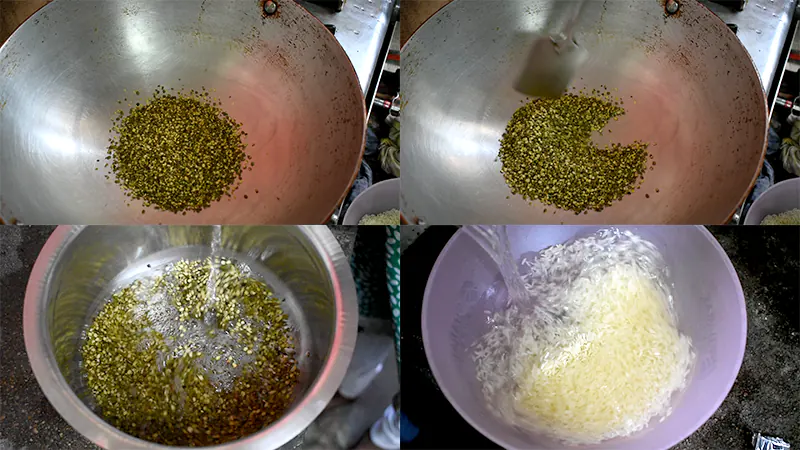
- Roast the Dal: Take the moong dal (before washing) in a dry pan over medium-low heat. Fry it gently until it turns a light golden-brown color and releases a distinct aromatic smell.
- Soak Separately: Transfer the roasted dal to a bowl and take the rice in another bowl. Soak both the rice and the dal individually in water for 10 minutes.
- Note: If you are using native moong dal with husk, wash and rub them thoroughly after soaking to remove the loose green skin.
Step 2: Wash and Cook the Rice & Dal Base
- Thoroughly wash the soaked rice and dal with fresh water, then drain completely.
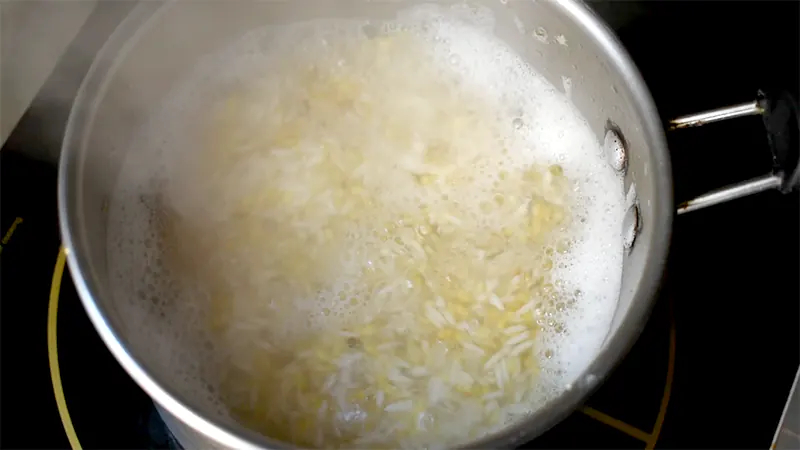
- Transfer them into your pressure cooker (or heavy cooking pan) with water.
- Cook until the grains are soft and almost completely done.Important Rule: Do not add any sweetener at this stage; rice and dal must be cooked soft first so they don’t remain hard or undercooked.
Step 3: Prepare and Add the Jaggery
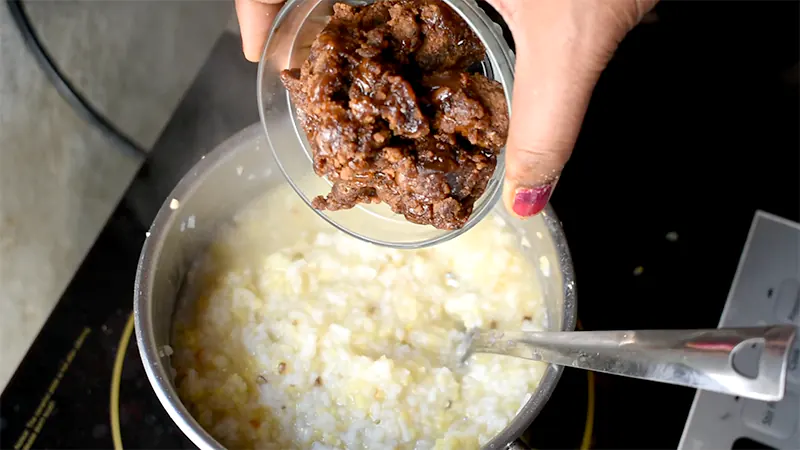
- Prepare the Syrup: Break the jaggery into small pieces. In a separate small vessel, add the jaggery along with very little water and heat until it melts into a liquid syrup.Tip: Always melt and strain ordinary jaggery separately through a fine sieve, as it often contains mud, stones, or sugarcane fiber. If using clean, branded jaggery, you may add it directly. You can also substitute jaggery with sugar if preferred.
- Combine: Pour the prepared jaggery syrup into the hot, cooked rice and dal mixture.
- Stir well on low flame so the sweet syrup blends smoothly with the mashed grains.
Step 4: Add Cardamom pods Milk and Salt
- Once the rice and dal are almost done and soft, pour in the milk.Why now? Add the milk only when the rice is almost done; adding it too early or at the wrong stage can cause the milk to curdle or break.
- Stir in ½ tbsp salt to balance the sweetness.
- Cook and stir gently on low heat for about 1 minute so the milk distributes evenly into the grains without catching at the bottom.
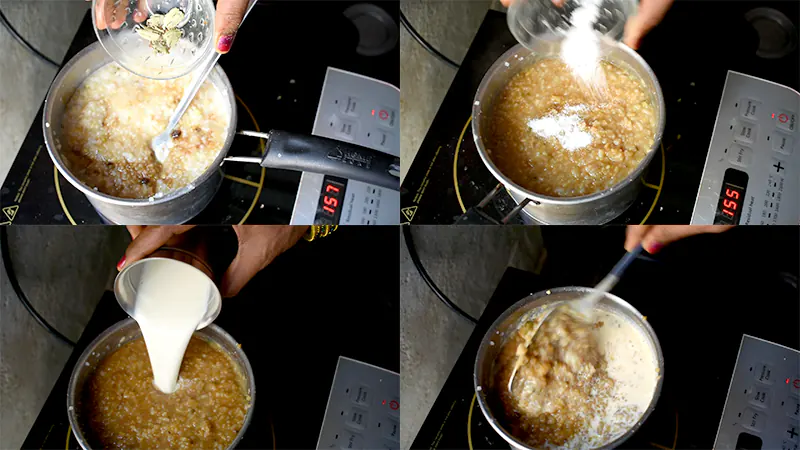
Step 5: Fry the Dry Fruits & Coconut
- Heat 1 tbsp ghee in a small pan over medium flame.
- Add the cashew nuts and fry until they start turning light golden.
- Add the raisins (and dry coconut slices, if using). Fry until the raisins puff up and the cashews turn an even golden-brown color. Remove from heat immediately.
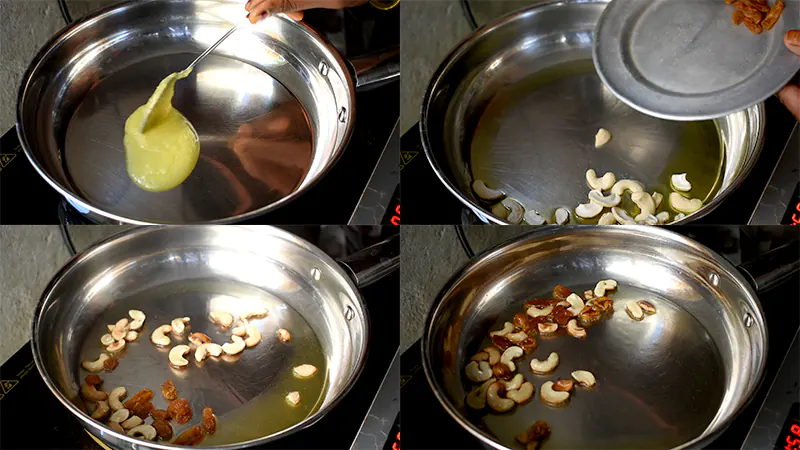
Step 6: Flavor, Garnish, and Finish
- Crush the green cardamom pods and stir the freshly ground cardamom powder into the simmering sweet pongal.
- Finish: Stir in a little extra ghee along with a portion of the fried cashews, raisins, and coconut so the rich flavor incorporates throughout the dish.
- Turn off the heat. Transfer to a serving bowl, garnish the top with the remaining golden cashews and puffed raisins, and serve hot.
Prefer a visual walkthrough? Watch our step-by-step Sweet Pongal Recipe video on YouTube or play it directly below:
Pro-Tips for Perfect Texture
- The Golden Rule of Rice & Sugar: Rice and lentils stop absorbing water and will never soften once sugar or jaggery is added. Always verify that the rice is completely overcooked and easily mashed before pouring in the jaggery syrup.
- Account for Cooling Starch: Sweet pongal thickens by at least 30–40% within 20 minutes of cooling down. Take the dish off the flame when it still has a ribbon-like, semi-fluid dropping consistency. If it looks thick in the pan, it will turn solid like a cake once served.
- Control Dal Proportion: Do not exceed a 1:3 or 1:4 ratio of dal to rice for sweet pongal. Too much moong dal gives the dish an unpleasantly sticky, heavy paste texture rather than a fluffy, rich pudding consistency.
- Roast Moong Dal on Gentle Heat: Roasting dal removes the raw, earthy legume smell and introduces a warm, popcorn-like nutty aroma that balances the sweetness of the jaggery.
Troubleshooting Common Issues
1. The Pongal Turned Hard and Stiff After Resting
- Cause: The jaggery syrup was boiled down too far (reached a candy/string stage), or too little cooking liquid was used.
- The Fix: Pour ¼ cup of hot boiled milk or boiling water along with 1 teaspoon of warm ghee into the cold pongal. Heat over low flame while stirring gently with a flat spatula until it loosens back into a silky, spoonable texture.
2. The Rice Grains Feel Gritty or Hard in the Center
- Cause: Jaggery was introduced before the grains cooked completely through.
- The Fix: Once jaggery binds to undercooked starch, pressure cooking it further rarely fixes the grain centers. To salvage it, add ½ cup of boiling water, transfer to a heavy pan, cover with a tight lid, and simmer on the lowest heat setting for 10–12 minutes (dum method) to soften the exterior as much as possible.
3. The Pongal Tastes Overly Mild or Lacks Color
- Cause: Chemically bleached, pale yellow jaggery was used.
- The Fix: Melt 2 tablespoons of dark organic palm jaggery or dark sugarcane jaggery in 2 tablespoons of water, strain, and stir it into the warm pongal along with an extra teaspoon of ghee.
Legitimate Variations
- Temple-Style Sakkarai Pongal (Kovil Prasadam): Prepared exclusively in bronze or heavy brass pots (uruli). Add 1 crushed clove, a microscopic speck of pachai karpooram, and an additional 2 tablespoons of ghee at the very end.
- Chakkara Pongali (Andhra Style): Often cooked with a slightly higher proportion of ghee, flavored with a pinch of grated nutmeg, and sometimes finished with small bits of fried dry coconut (kopra) along with cashews.
- Milk-Rich Sweet Pongal (Paal Pongal base): Cook the rice and roasted dal in 1½ cups water and 1 cup full-fat fresh milk for an extra creamy, kheer-like richness.
- Vegan Sweet Pongal: Substitute the dairy ghee with cold-pressed coconut oil. While coconut oil changes the classic flavor profile, it pairs pleasantly with dark jaggery and roasted cashews.
Serving Suggestions
- Serve Sweet Pongal warm in traditional stainless steel bowls or clean banana leaves.
- For the ultimate festive South Indian festival platter, pair sweet pongal with crispy, savory Medu Vada, spicy coconut chutney, and a steaming cup of South Indian filter coffee. The contrast between sweet, ghee-laden pongal and peppery, crunchy sabudana vada is a classic culinary pairing.
Storage & Reheating Instructions
- Room Temperature: Because of the preservative nature of boiled jaggery and ghee, sweet pongal stays fresh at room temperature for up to 12 to 14 hours in cooler conditions. Keep it tightly covered.
- Refrigeration: Store cooled leftovers in a clean, airtight glass or stainless steel container for up to 3 to 4 days.
- Reheating on the Stovetop: Cold sweet pongal will set firmly into a dense mass as the ghee solidifies. Place the portion in a small saucepan, splash 2 to 3 tablespoons of warm milk or hot water over it, and warm over low heat for 3 to 5 minutes, stirring continuously until smooth and glossy again. Finish with half a teaspoon of fresh ghee to revive the aroma.
- Microwave Reheating: Place in a microwave-safe bowl, sprinkle 1 tablespoon of water over the surface, cover with a microwave lid, and heat on high in 30-second bursts, stirring between each burst.
Frequently Asked Questions
Why does sweet pongal turn dry or hard after cooling?
Sweet pongal turns firm after cooling because rice starch retrogrades and absorbs surrounding moisture while ghee solidifies at room temperature. To prevent this, cook the rice-dal mixture with generous water (at least 4.5 times the total volume of grain) and pull the dish off the stove while it is still loose and pourable.
Can I add jaggery directly into the pressure cooker with the raw rice?
No. Never add jaggery to raw or partially cooked rice. The sugars in jaggery harden the starch cell walls of the rice and lentils, permanently preventing them from absorbing water and softening. Always cook the rice and dal to a soft mash before introducing melted jaggery.
What is the ideal ratio of rice to jaggery for sweet pongal?
A reliable proportion is 1:1.5 by volume—for every ½ cup of raw rice (with 3 tablespoons of dal), use ¾ cup of tightly packed grated jaggery. If you prefer a lighter sweetness, reduce to ½ cup jaggery; for rich festival-style sweetness, use 1 cup.
Can I make sweet pongal using an open pot instead of a pressure cooker?
Yes. To cook in an open pot or traditional clay/brass pot, increase the water quantity to 3½ to 4 cups. Simmer the roasted dal and rice on medium-low heat with a lid partially on, stirring periodically to prevent burning, for 25 to 30 minutes until completely soft and collapsible before adding the jaggery.
Is edible camphor safe to consume?
Yes, but only if it is certified food-grade edible camphor (pachai karpooram), not the chemical synthetic camphor used for religious pooja ceremonies. It must be used in microscopic quantities—a speck smaller than half a mustard seed for this entire recipe. If in doubt, omit it entirely; the pongal will still taste delicious with cardamom and clove.
Traditional Sweet Pongal Recipe (Sakkarai Pongal)
Classic South Indian sweet pongal made with raw rice, roasted moong dal, jaggery syrup, and ghee-roasted cashews using an easy pressure cooker method.
Ingredients
- ½ cup Raw Rice Sona Masoori or Raw Ponni, ~100g
- 3 tbsp Yellow Moong Dal ~35g
- 2¼ cups Water for cooking rice
- ¼ cup Milk boiled, or substitute with water
- ¾ cup Jaggery grated or powdered, dark variety, ~150g
- ½ cup Water for dissolving jaggery
- 3 to 4 tbsp Pure Desi Ghee
- 12 Cashews halved
- 1 tbsp Golden Raisins
- ½ tsp Green Cardamom Powder
- 1 whole Clove
- 1 pinhead-sized speck Edible Camphor pachai karpooram, optional
Instructions
Roast Dal: Dry-roast yellow moong dal in a heavy pan on medium-low heat for 2–3 minutes until lightly golden and fragrant. Transfer to a plate.
Wash Grains: Combine the roasted dal with raw rice, rinse twice with water, and drain completely.
Pressure Cook: Place rinsed rice and dal into a pressure cooker with 2¼ cups water, ¼ cup milk, and 1 tsp ghee. Cook for 4 to 5 whistles on medium flame until thoroughly soft. Allow pressure to drop naturally, then mash gently with a ladle.
Dissolve Jaggery: In a separate pan, melt jaggery in ½ cup water over medium heat. Bring to a rolling boil for 1 minute (no string consistency needed). Strain through a sieve directly into the mashed rice.
Simmer: Stir the strained jaggery and mashed rice over low flame for 3–4 minutes until blended, glossy, and slightly thick yet pourable. Stir in 1 tbsp ghee. Turn off flame.
Temper Aromatics: Heat 2 tbsp ghee in a small pan. Fry 1 clove and cashews until golden. Add raisins and let them puff up. Remove from heat, stir in cardamom powder and a microscopic speck of crushed edible camphor, then pour over the pongal.
Rest and Serve: Mix gently, let it rest covered for 5 minutes, and serve warm.
Recipe Notes
Doneness Check: The rice-dal base must be completely mushy before adding the jaggery. If the grains are still firm, pressure cook with an extra ¼ cup of water for 2 more whistles.
Consistency: Take the pongal off the fire while it is still loose; it solidifies naturally as the starches cool.
Storage
Keeps well at room temperature for 12 hours, or refrigerated up to 4 days. Reheat with 2 tablespoons of hot water or milk to restore its velvety consistency.