Easy Aval Payasam Recipe | Atukula Payasam | Poha Kheer
Aval Payasam recipe, a dessert that has gone by numerous names and is loved in millions of homes around India. You might also call it Atukula Payasam or Poha Kheer, but no matter the name, this dessert is a light, refined, and easy-to-make delicacy that infuses any event with memories and warmth. Its subtle sweetness and pleasing texture lend it to be a festival favorite, party delight, or even just a comforting treat on a slow afternoon.
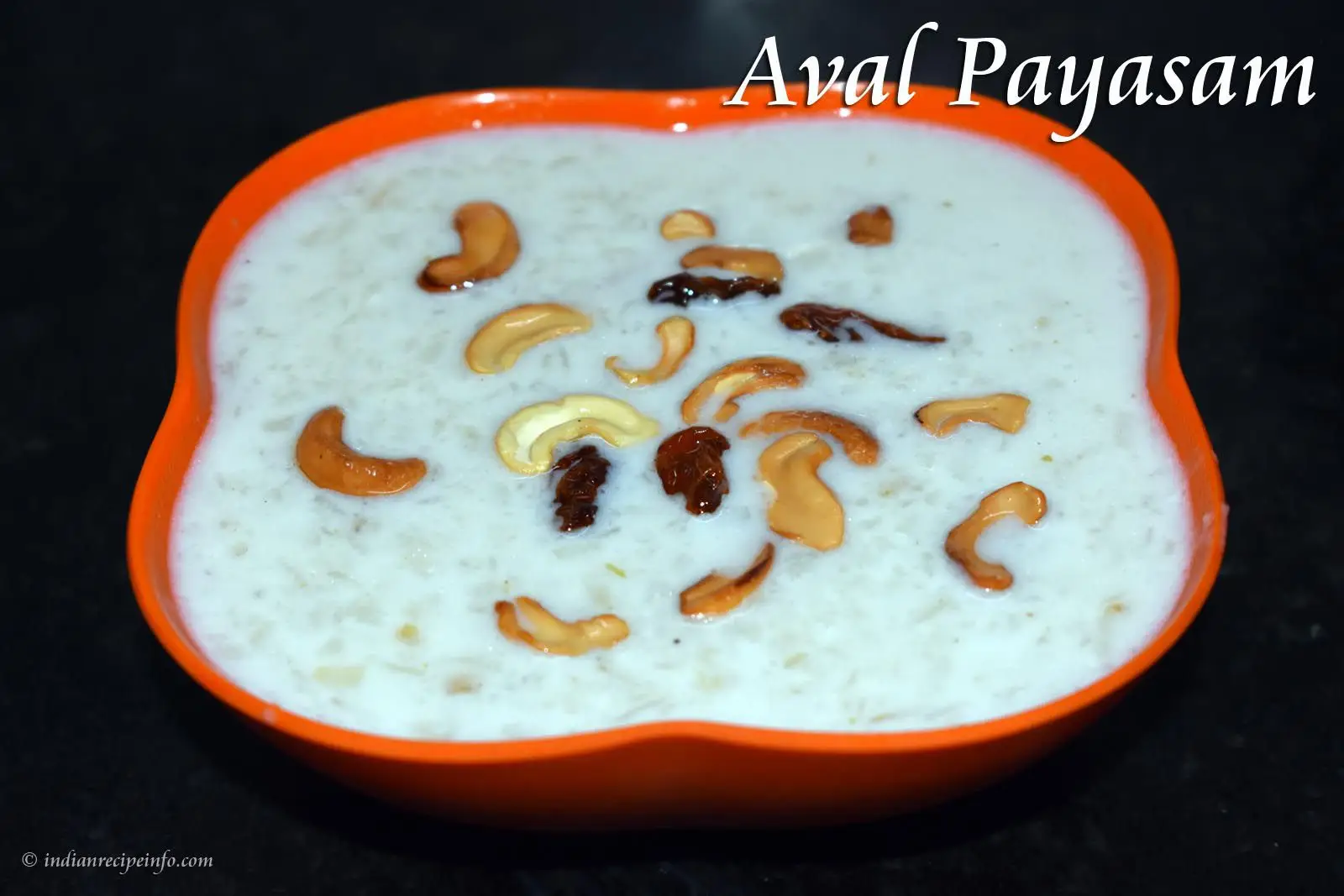
The Heart of Indian Cuisine: Aval Payasam, Atukula Payasam, and Poha Kheer
The Aval Payasam recipe, popularly also known as Atukula Payasam or Poha Kheer, is one of the most iconic Indian desserts much-loved by the hearts of many. It is a reflection of how beautiful simplicity can be in traditional cooking, where common ingredients are made into a work of art of flavor and texture. This unassuming dish is composed of aval (flattened rice), a staple that serves in every pantry and is renowned for its versatility and speed of cooking. The sorcery lies when light rice flakes are cooked slowly in milk, soaking in the creamy goodness and puffing to give a rich, porridge-like texture.
The reason this dish enjoys such popularity is its flexibility and convenience. While other payasams take hours of simmering to prepare, the Aval Payasam recipe takes just a few minutes to come together, and that too makes this recipe an ideal last-minute dessert to serve guests or instant sweet craving satisfter. It’s a dish that captures the very essence of comfort food—plain, wholesome, and utterly satisfying.
In numerous South Indian homes, Atukula Payasam is a staple during festive occasions and special celebrations. The gentle sweetness of sugar, the creamy taste of ghee, the nutty crunch of cashews, and the fragrant burst of cardamom all blend together to produce a culinary symphony that is soothing yet energizing.
This is an excellent representation of how regional names lend individuality to one single recipe. In Tamil Nadu and Kerala, it goes by a common name of Aval Payasam. In Andhra Pradesh and Telangana, it’s lovingly known as Atukula Payasam. And in the North of India, it’s a much-loved sweet dish known as Poha Kheer.
Regardless of the variation in nomenclature, the essence and process are one and the same, with a common culinary heritage binding various regions. The rich texture and lovely flavor profile of this Poha Kheer render it a delectable component of a bigger meal or a solo indulgence. Its universal appeal lies in its simplicity and the warm, comforting feeling it brings to those who enjoy it.
You may also like to check other recipes:
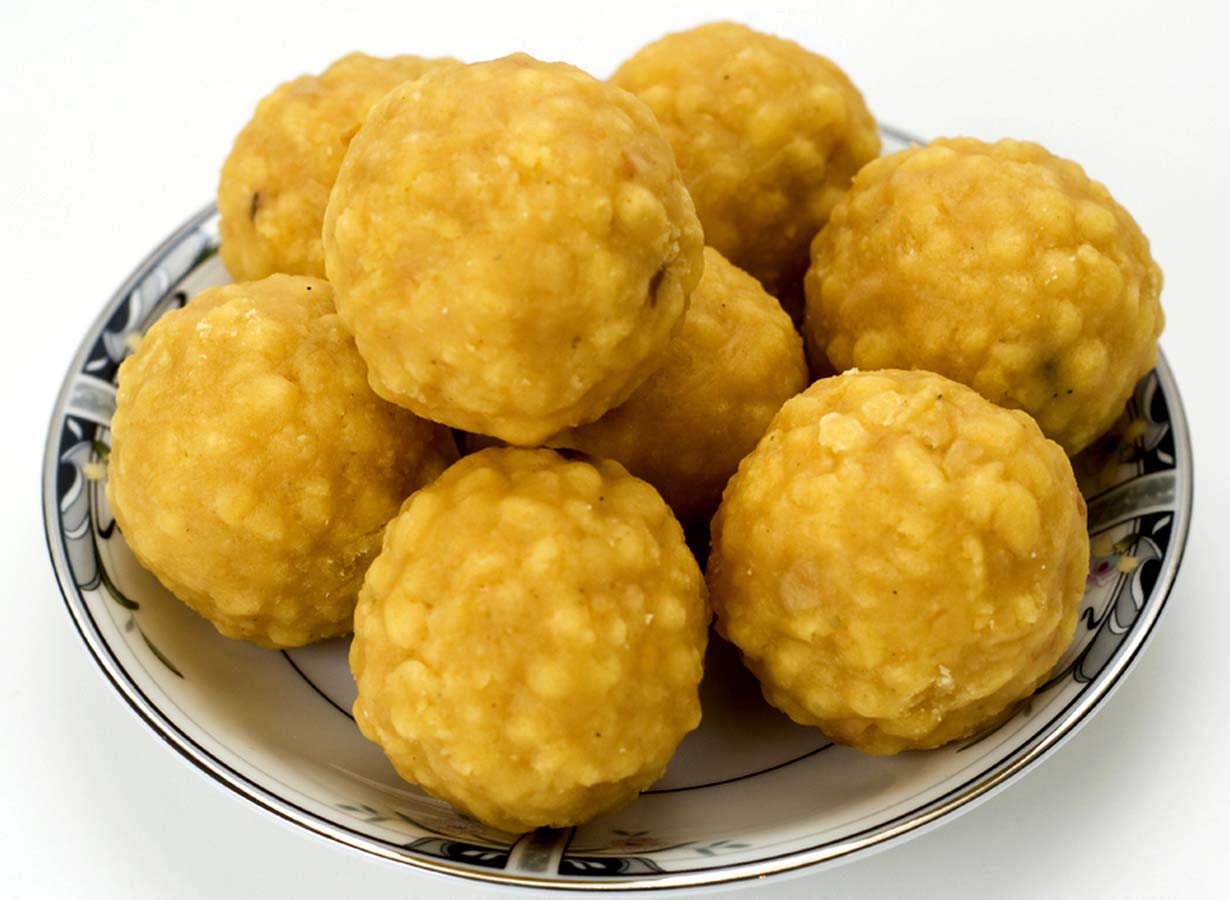
Poha Ladoo: Its a dessert prepared with flattened rice (poha), jaggery or sugar, and ghee. The roasted and ground poha is combined with melted jaggery and nuts and molded into small balls. It’s a speedy, crunchy, and chewy snack usually prepared for festivals such as Diwali.
Rice Kheer is a rich Indian rice pudding prepared by slow-boiling rice with milk and sugar. Basmati rice is often used due to its fragrance. The rice mixture is boiled until creamy and thickened, and then seasoned with cardamom, saffron, and other nuts. It’s a traditional and soothing dessert for every occasion.
Semiya Saggubiyyam is a South Indian sweet dish which is a combination of vermicelli and sago pearls. The vermicelli is roasted in ghee, and the sago is cooked until pale before both are added to boiling milk with sugar. The dessert has a rare combination of texture and is a wealthy variation of kheer.
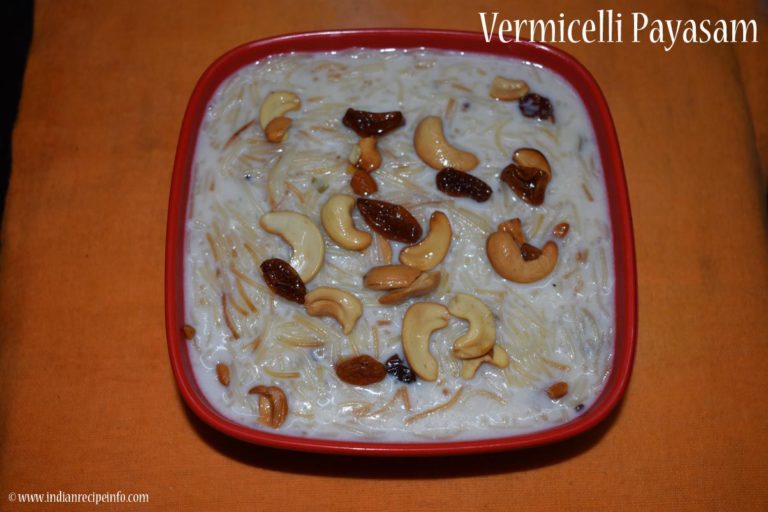
Vermicelli Payasam or Semiya Payasam is a simple and quick sweet course. Vermicelli is roasted in ghee and then cooked in milk with sugar. Cardamom, nuts, and raisins are also put in for flavor. This creamy dessert is a favorite in parties.
Kesari Kheer is a refined rice pudding characterized by its stunning orange hue and fabled saffron flavor (kesar). Saffron threads are soaked in milk and mixed into the rice and milk during cooking. This adds the classic kheer a rich perfume and flavor, making it ideal for special occasions.
Professional Tips for Flawless Payasam
Aval Payasam is easy to make, but certain professional tips help to take your dish from good to unforgettable.
Rinse the Flattened Rice Well: Rinse the aval under running water for a minute or two prior to adding it to the milk. This ensures all dust and starch is removed. Don’t soak it for too long since it will turn mushy. A simple rinse is enough to get it ready for Aval Payasam preparation.
Use Full-Fat Milk: For a creamy and luxurious kheer, use full-fat milk. It creates a rich mouthfeel that cannot be duplicated with low-fat versions. The creamy texture is a characteristic of a perfect Poha Kheer.
Add Flattened Rice at the Right Time: Let the milk simmer gently before adding the flattened rice. Adding it to cold milk can result in the rice not absorbing the liquid evenly, which creates an uneven texture.
Stir Constantly: After adding the crushed rice, constantly stir the mixture for the initial minutes. It keeps the rice from getting stuck to the pan bottom and ensures it cooks evenly.
Toast Nuts and Raisins to Perfection: The secret to this step is toasting the cashews and raisins golden and aromatic. Do not burn them, as this will impart a bitter flavor to your Atukula Payasam.
How to make Aval Payasam Recipe or Atukula Payasam:
1. Heat ghee in a pan, add cashew and raisins. Roast till cashew turns golden brown and raisins swell.
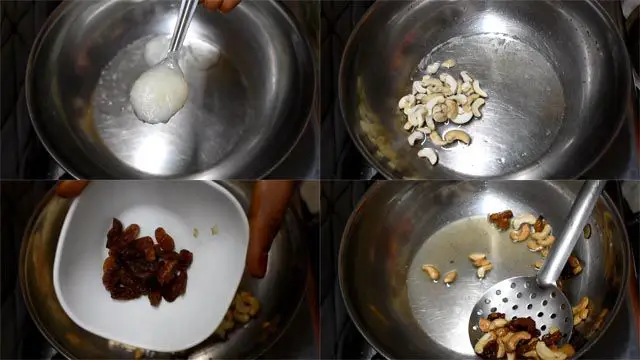
2. In leftover ghee add flattened rice and roast till they turn slight color and become crisp.
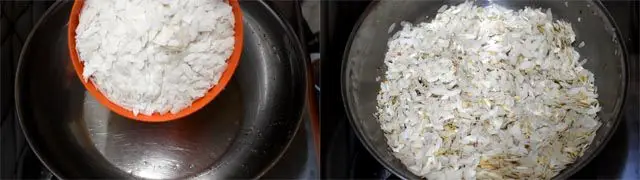
3. Add approximately 1-liter milk and bring it to boil so that flattened rice becomes soft.
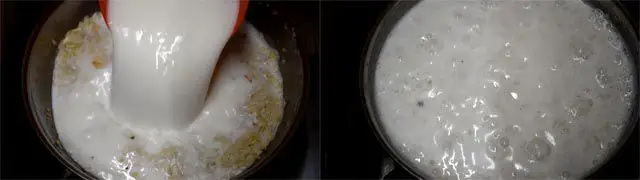
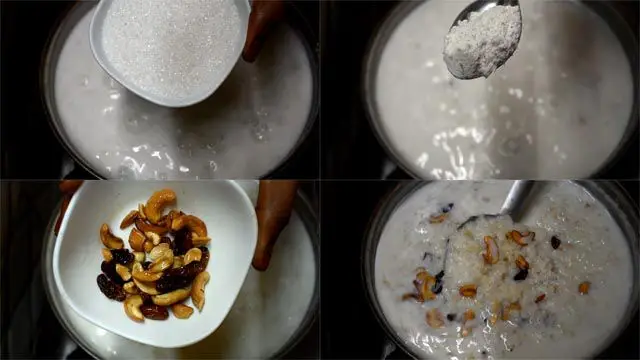
4. Put sugar, cardamom powder, and roasted dry fruits. Mix well and cook for a minute.
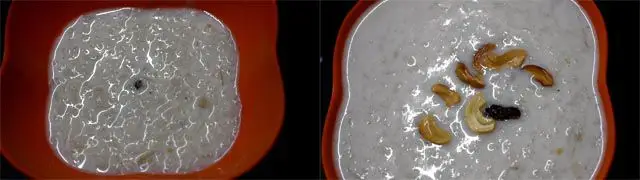
5. Serve Aval Payasam Recipe | Atukula Payasam | Poha Kheer hot in a bowl and garnish with roasted dry fruits.
Watch the Aval Payasam Recipe | Atukula Payasam | Poha Kheer recipe video on YouTube.
Why Each Ingredient is Essential for Perfect Payasam
Every component in the Aval Payasam recipe plays a crucial role in creating the final, delicious result. Here’s a breakdown of how each ingredient contributes to the perfection of this dish:
- Atukulu / Aval / Flattened Rice: This is the star of our Poha Kheer. Flattened rice cooks very quickly, making it the ideal base for a fast and delicious dessert. When added to hot milk, it swells and softens, giving the payasam its signature thick, creamy texture without the need for a long simmering time. It’s a light ingredient that becomes a hearty and satisfying part of the dish.
- Ghee: Frying the cashews and raisins in ghee is not just about cooking them; it’s about infusing a rich, nutty aroma into the very foundation of the payasam. Ghee, or clarified butter, provides a deep, luxurious flavor that is irreplaceable. Its rich taste elevates the sweetness of the sugar and adds a velvety quality to the final dish.
- Cashews: These nuts provide a wonderful crunch and buttery taste that contrasts so well with the softness of the Aval Payasam. Toasting in ghee releases their inherent sweetness and nuttiness, making them an ideal garnish.
- Raisins: When fried in ghee, raisins plump up and burst with a sweet, concentrated flavor. They provide a wonderful textural and taste contrast to the creamy kheer, adding a pop of natural sweetness and a slightly chewy texture that makes every bite interesting.
- Milk: The milk used needs to be of high quality. It’s the rich, creamy foundation of the Atukula Payasam. Full-fat milk is ideal for a creamiest texture and richest flavor, as it adds a great body to the kheer. Slowing down the milk slightly by simmering it prior to the addition of other ingredients thickens it and makes it more concentrated in flavor.
- Sugar: While the raisins provide a subtle sweetness, sugar is what gives the kheer its primary sweetness. The amount of sugar can be adjusted to your personal preference. Its role is to balance the richness of the milk and ghee and to highlight the flavor of the cardamom.
- Cardamom Powder: This spice is an essential addition to nearly any Indian dessert. Cardamom powder adds a warm, aromatic, and slightly floral flavor to the Poha Kheer that’s absolutely enchanting. It’s what makes the dish taste so quintessentially Indian dessert and feel like a real special treat.
Creative Recipe Variations
The genius of the Aval Payasam recipe is its versatility. You can instantly modify it to suit various tastes and dietary requirements.
- Vegan Aval Payasam: This is a quick and easy variation. Replace the cow’s milk with a plant-based milk such as coconut milk, almond milk, or cashew milk. Coconut milk is especially good because it provides a rich, tropical taste that goes well with the other ingredients. To replace the ghee, use a neutral-tasting plant-based oil or vegan butter. The rest of the recipe is the same. This turns into a tasty and dairy-free Atukula Payasam.
- Gluten-Free Poha Kheer: Since flattened rice is naturally gluten-free, traditional Poha Kheer is already a great gluten-free dessert option. No substitutions are required here, so this is an ideal dessert for those with gluten intolerance.
- Jaggery-Sweetened Payasam: For a more traditional and earthy sweetness, replace the white sugar with jaggery. Jaggery lends a deeper, more caramel-like flavor and a beautiful golden-brown color to the payasam. Be sure to dissolve the jaggery in a small amount of water first and strain it to remove any impurities before adding it to the milk. This creates a truly authentic Aval Payasam recipe.
- Fruity Payasam: For a fresh taste, fold in some chopped fruits such as mangoes or bananas once the payasam cools a bit. The fruit sweetness goes well with the creamy texture of the Atukula Payasam.
- Nutty Versions: Mix in other toasted nuts such as almonds, pistachios, or walnuts for extra crunch and taste. Alternatively, add a teaspoon of poppy seeds for a completely new texture. This provides an extra level to the traditional Poha Kheer.
Recipe Notes
Consistency is Important: The consistency of your Aval Payasam is your choice. If you prefer a thicker kheer, use less milk or boil for slightly longer time. To get a thinner consistency, add a dash of warm milk towards the end.
Cooling Down: Bear in mind that the payasam will thicken a lot while cooling. If you intend to serve it cold, you might as well leave it slightly more liquid than you would want for a hot serving.
Sweetness Level: The sugar content in the list of ingredients is a suggestion. Adjust it to your liking. Add a pinch of salt as well to balance and bring out the sweetness.
Storing Leftovers
One of the best things about Aval Payasam is that it can be stored so easily, thus making it an ideal make-ahead dessert.
Cool Complete: Allow the payasam to cool to room temperature before refrigerating it. Refrigerating a warm payasam will make it release its moisture, and when it is refrigerated, that moisture becomes water, resulting in a watery kheer.
Airtight Container: Put the cooled payasam into an airtight container. This prevents any fridge odors from seeping in and keeps the payasam fresh for longer.
Refrigeration: Refrigerate the container for 2-3 days.
Serve Cold or Warm: You can serve the Aval Payasam cold right from the refrigerator for a cool cold dessert. If you want it warm, take it gently over low heat on the stovetop and add a splash of milk if it has thickened too much.
Dishes and Drinks to Go With
Aval Payasam is a flexible dessert that can be served alongside other dishes and drinks.
Savory Snacks: The sweet, creamy Poha Kheer is well-balanced by a spicy, savory snack. Accompany it with crunchy murukku or a spicy namkeen mix.
Light Main Courses: Follow a light meal of a simple vegetable curry or dal and rice with a small bowl of Atukula Payasam. Its richness provides a contented conclusion to a plain meal.
Drinks: A glass of hot, spiced chai or a cold glass of milk goes well with the warm, comforting taste of Aval Payasam. A glass of traditional filter coffee also goes well with this dessert.
Other Desserts: Serve Aval Payasam on a festive platter with other traditional Indian sweets such as gulab jamun, rasgulla, or modak. The mix of flavors and textures will provide a stunning and remembrance-making dessert platter.
Frequently Asked Questions (FAQ)
Q: Can I use thick flattened rice for this recipe?
A: Yes, you can. But thick flattened rice (mota aval) will take more cooking time and might not give as creamy a consistency as the thinner variety. It’s better to use the medium or thin variety for the traditional Aval Payasam recipe.
Q: Why did my payasam turn out runny?
A: This can occur if the flattened rice wasn’t cooked for sufficient time or if you added excessive milk. Just continue to reduce the mixture over low heat, stirring continuously, until it reaches your preferred consistency.
Q: Is condensed milk acceptable as a substitute for sugar?
A: Yes. With the use of condensed milk, the payasam will be not only sweet but also richer and creamier. If you prefer to use condensed milk, take note of the sweetness and add less milk accordingly. This is an excellent short cut to preparing a rich Poha Kheer.
Q: I don’t have milk. Can I use water?
A: Although you can boil the flattened rice in water, the kheer that is obtained won’t be as rich or creamy. To get the proper Atukula Payasam flavor, milk is recommended strongly.
Q: What was the reason for my payasam becoming too thick once cooled?
A: Flattened rice continues to absorb liquid as it cools. This is a natural process. To serve, simply add a splash of warm milk and stir it until it reaches your preferred consistency.
Nutritional Information (Approximate values per serving)
This is an estimate and can vary based on ingredients and portion size.
- Calories: ~250-300 kcal
- Fat: ~10-15 g
- Saturated Fat: ~6-9 g
- Carbohydrates: ~35-45 g
- Sugar: ~20-25 g
- Protein: ~8-10 g
Note: The nutritional value may differ based on the type of milk used, the quantity of sugar added, and the amount of nuts and ghee used. The calories come from the mixture of milk, sugar, and ghee.
Serving Suggestions
Serve Aval Payasam in tiny bowls, topped with the toasted cashews and raisins. It may be served warm for a warm treat or chilled for a cooling dessert. The colorful garnish of golden cashews and dark raisins provides a stunning contrast to the white creamy Poha Kheer. It’s ideal for celebration feasts or a light dessert following a meal.
The Role of Spices
The application of cardamom powder in Aval Payasam is not merely for taste—it’s an absolute essential that brings the whole dish to life.
Aroma and Flavor: Cardamom possesses a rich, sweet, and somewhat floral fragrance characteristic of Indian sweets. It enhances the creaminess of the milk and subtlety of the sweetness of the sugar, achieving a balanced and rounded flavor. Without cardamom, the dish would no longer have its traditional character.
Digestive Properties: Cardamom has long been used in Ayurvedic medicine for its digestive properties. It is said to aid in the digestion of rich, sweet, and milky foods. The inclusion of cardamom in Atukula Payasam is a considerate addition to balance out the richness of the ingredients and make the dessert better digested.
Improving Sweetness: Adding a pinch of cardamom can make a dish taste sweeter without making it cloyingly sweet, and you will be able to add less sugar without sacrificing flavor.
It is in the subtle addition of this spice that the Poha Kheer becomes more than a simple sweet dish, but rather an aromatic and satisfying culinary experience.
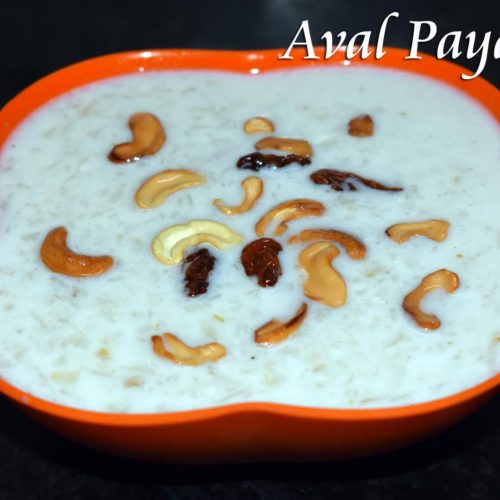
Aval Payasam Recipe | Atukula Payasam | Poha Kheer
Aval Payasam Recipe | Atukula Payasam | Poha Kheer is one of the simple yet delicious recipes made during Krishna Janmashtami, Navratri, Ganesh Chaturthi and other festivals.
Ingredients
- Atukulu/ Aval/ flattened rice – 1 bowl
- Ghee – 2 tbsp.
- Cashew – 2 tbsp.
- Raisins – 1 tbsp.
- Milk – 3 bowls approximately 1 litre
- Sugar – ¾ cup
- Cardamom powder – 1 tbsp.
Instructions
- In a pan, melt 2 tbsp. ghee and fry cashew to light golden color and then add raisins.
- Once raisin blows and expands remove from ghee and keep aside.
- Add flattened rice and roast on medium flame till they change its color.
- Pour 1-liter (3 bowls milk) and bring it to boil. Cook for 5 minutes.
- Add sugar (if you want you can substitute with jaggery but should be put at the end of the recipe).
- Sprinkle cardamom powder to enhance the aroma of Poha Kheer.
- Put roasted dry fruits and mix well. Once you feel poha is cooked and consistency is about to thicken off the flame.
- Garnish Aval Payasam Recipe | Atukula Payasam | Poha Kheer with dry fruits and offer as prasadam to god.
Recipe Video
Recipe Notes
- There are many variants of poha available in the market, choose thick variant so that it cooks and releases its flavor in milk.
- If we use thin or medium flattened rice, they melt and become mushy.
- For additional flavor, we can make use of coconut milk.
- For good taste, try to use full cream milk. If this recipe is made as naivedyam, its recommended to make use of cow milk.
- As poha absorbs milk and make this recipe thick, we need to off the flame while this recipe is diluted.
- If this recipe is served on the next day, it’s a good idea to refrigerate and add milk to dilute