Semiya Saggubiyyam Payasam (Creamy Vermicelli & Sago Kheer)
Semiya Saggubiyyam Payasam is a traditional South Indian sweet made by simmering roasted vermicelli (semiya) and soaked tapioca pearls (saggubiyyam or sabudana) in rich, cardamom-scented milk, finished with golden ghee-fried cashews and raisins. Popular across Andhra Pradesh, Telangana, and Tamil Nadu (where it is known as Semiya Javvarisi Payasam), it strikes a balance between the silky strands of vermicelli and the soft, chewy texture of sago.

The challenge with this festive dessert is texture: sabudana often remains hard in the middle while vermicelli overcooks, or the pudding turns into a thick, solid mass within an hour of cooling. This step-by-step guide covers the correct soaking method, the ideal water-to-milk ratio, and the exact sequence of adding ingredients so your payasam stays rich, creamy, and pourable from the first serving to the last.
Ingredients You Will Need
- Saggubiyyam (Sabudana / Tapioca Pearls): 1/4 cup (medium-sized pearls).
- Semiya (Vermicelli): 1/2 cup (regular cut vermicelli, unroasted or roasted).
- Full-Fat Milk: 4 cups (1 liter), boiled and kept warm.
- Water: 1.5 cups (for boiling the saggubiyyam).
- Sugar: 3/4 cup (adjust between 1/2 cup to 1 cup depending on desired sweetness).
- Ghee: 2 tablespoons.
- Cashews: 10–12, halved.
- Raisins (Kishmish): 1 tablespoon.
- Cardamom Powder (Elaichi): 1/2 teaspoon, freshly crushed.
Ingredient Notes and Substitutions
- Saggubiyyam (Sabudana): Use regular, medium-sized white saggubiyyam. Avoid tiny “nylon” saggubiyyam for this method, as they dissolve too quickly and change the cooking time entirely.
- Semiya: If using pre-roasted vermicelli from a store packet, you still benefit from tossing it in ghee for 30–45 seconds to coat the strands and impart flavor.
- Milk: Whole full-fat milk gives the classic rich payasam texture. Using toned (skimmed) milk yields a thinner, watery consistency that separates easily.
- Sugar Alternatives: Jaggery (bellam) can be used, but it must never be boiled with milk. To use jaggery, melt it separately with 2 tablespoons of water, let it cool completely, and stir it into the warm payasam after turning off the flame to avoid curdling.
How to Make Semiya Saggubiyyam Payasam (Step-by-Step)
Step 1: Clean and Soak the Sago (Saggubiyyam)
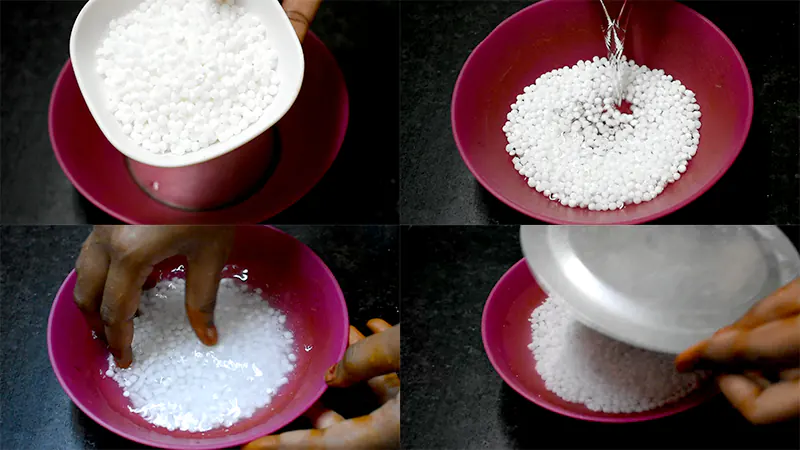
Place the sago in a bowl, add water, and rinse gently to clean away surface starch. Drain the water, then pour in 1 glass of fresh water and let it soak for about 1 hour.
Doneness Cue: After soaking, test a pearl by pressing it between two fingers; it should yield and break easily rather than feeling hard like raw sago.
Step 2: Make the Cardamom Sugar Powder
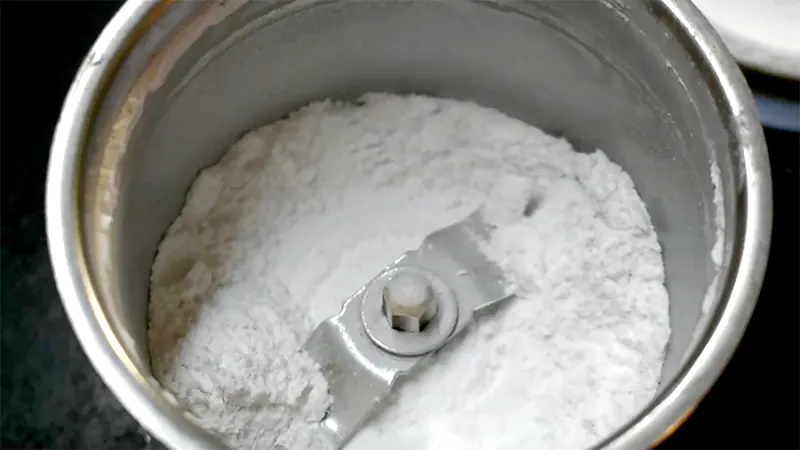
Add the green cardamoms and 3 tablespoons of sugar to a small mortar or grinder jar, then crush into a fine powder and transfer to a bowl.
Smart Tip: Grinding whole cardamoms with sugar creates a much finer powder that dissolves quickly and evenly into the payasam without leaving coarse spice bits.
Step 3: Roast the Dry Fruits and Vermicelli in Ghee
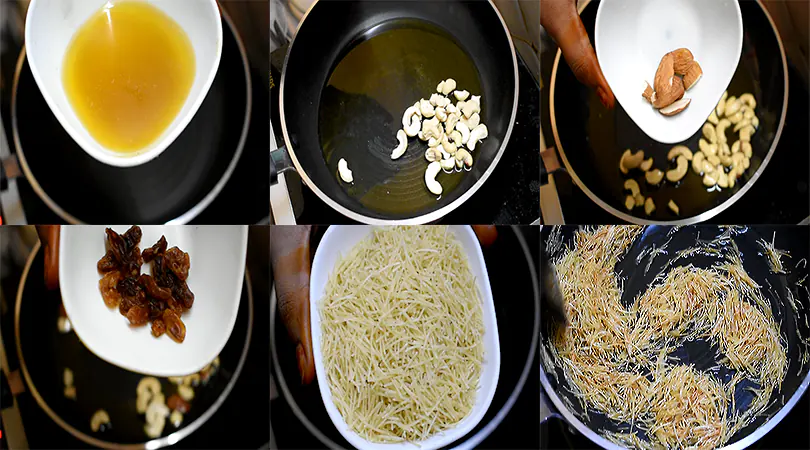
Heat ghee in a pan over low flame. Add the cashews, almonds, and raisins, stirring continuously for a few seconds until the nuts turn lightly golden and the raisins swell up like bubbles. Transfer them to a bowl. In the same pan using the leftover ghee, add the vermicelli and roast gently until golden brown, then take it off the heat and set aside.
Doneness Cue: Keep the heat strictly on low; gentle roasting releases a rich nutty aroma without burning the dry fruits or scorching the delicate vermicelli strands.
Step 4: Boil the Milk and Cook the Soaked Sago
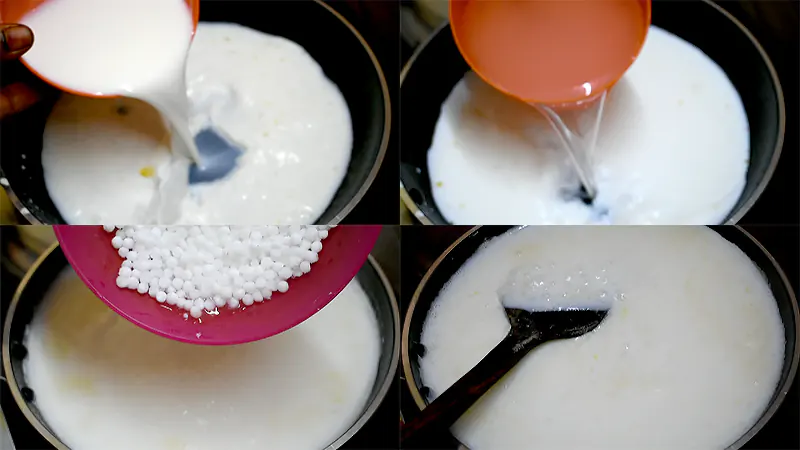
In a cooking pot, combine milk and water in equal proportions (1:1 ratio) and bring the mixture to a rolling boil over medium heat. Once boiling, add the drained, soaked sago. Simmer for a few minutes, stirring occasionally from the bottom so the pearls cook evenly without sticking to the pan.
Consistency Note: This equal ratio of milk and water keeps the payasam at the right consistency once cooled. If you prefer a thinner, looser payasam, add an extra splash of water at this stage.
Step 5: Add Vermicelli, Sweeten, and Garnish
Add the roasted vermicelli to the simmering pot and cook for about 5 minutes until the strands are soft and the milk begins to thicken. Stir in the remaining sugar and 1 tablespoon of the prepared cardamom-sugar powder, mixing well until fully dissolved. Turn off the heat, fold in the roasted cashews, almonds, and plumped raisins, and serve warm or chilled.
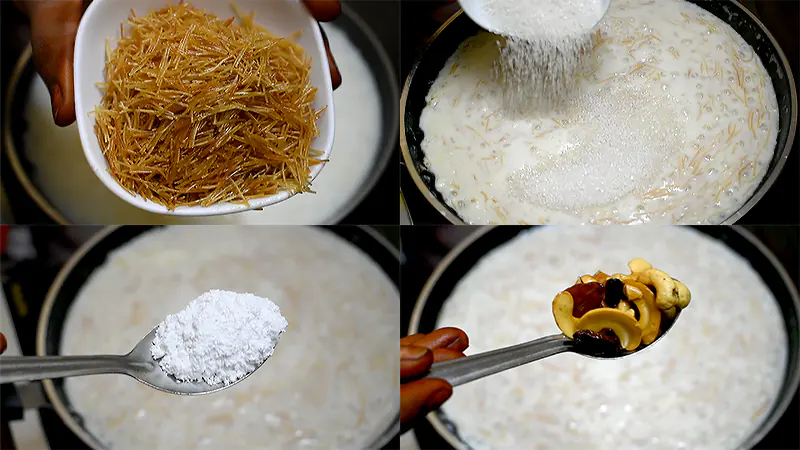
Prefer a visual walkthrough? Watch our step-by-step Semiya Saggubiyyam Payasam video on YouTube or play it directly below:
Tips for the Best Results
- Always use warm milk: Adding fridge-cold milk into a hot pot of boiling sabudana drops the temperature abruptly, causing starches to seize and turn gummy.
- Use a heavy-bottomed stainless steel or cast-iron pot: Tapioca starch naturally settles at the bottom of the vessel. A thin pan will scorch within seconds, ruining the sweet dairy aroma of the payasam.
- Keep stirring at intervals: Give the pot a gentle sweep from the base every 2 minutes while simmering to keep the pearls suspended.
- Account for post-cook thickening: Turn off the stove when the payasam is 20% thinner than your ideal serving consistency. It thickens noticeably within 15 minutes of standing.
Common Mistakes and How to Fix Them
1. The Payasam Turned into a Solid Cake upon Cooling
- Why it happened: Saggubiyyam and semiya are starch-heavy ingredients that absorb liquid even after the heat is turned off.
- The fix: Warm 1/2 cup to 1 cup of full-fat milk with 1 teaspoon of sugar in a separate pan. Gently pour this warm milk into the thick payasam and whisk slowly over low heat until the creamy, pourable consistency is restored. Never dilute with plain cold water, which ruins the richness.
2. Saggubiyyam Is Hard in the Middle
- Why it happened: The pearls were either not soaked long enough, cooked over overly fierce heat, or sugar was introduced before the pearls were fully translucent.
- The fix: If you haven’t added sugar yet, add 1/2 cup hot water and simmer covered on low heat for 4–5 minutes. If sugar has already been added, let the payasam sit covered off the heat for 20 minutes; the residual trapped steam will soften the pearl centers slowly.
3. The Milk Curdled
- Why it happened: Using unboiled sour milk, adding acidic unrefined jaggery directly into boiling milk, or cooking on excessively high heat after adding sugar.
- The fix: Always boil your milk separately first to ensure freshness before introducing it to the starches. If using jaggery instead of sugar, incorporate it only after the dish has cooled down to warm.

Recipe Variations
- Jaggery Version (Bellam Semiya Saggubiyyam Payasam): Replace 3/4 cup sugar with 3/4 cup grated jaggery. Melt jaggery in 3 tablespoons of water, strain impurities, and let it cool completely. Prepare the recipe using water and milk as directed; turn off the heat, let the payasam cool for 10 minutes until warm (not steaming hot), then fold in the melted jaggery.
- Condensed Milk (Rich Party Style): Reduce sugar to 1/4 cup and stir in 1/2 cup sweetened condensed milk (Milkmaid) during Step 6 for a thicker, rabdi-like texture.
- Saffron Infusion (Kesar Touch): Steep 8–10 strands of saffron in 2 tablespoons of warm milk for 10 minutes and stir it in along with the cardamom powder for a pale golden hue and festival aroma.
If you are short on time and need an even quicker festive dessert that skips the soaking step altogether, try making atukula payasam (poha kheer). Prepared with flattened rice, warm milk, and jaggery or sugar, it softens in minutes while offering a light, comforting texture that pairs wonderfully with roasted cashews and raisins.
During festivals like Varalakshmi Vratam, Sankranti, or Navratri, this payasam is traditionally prepared as naivedyam alongside deep-fried festive sweets. Complete your traditional Andhra festival platter by pairing it with crispy, golden poornam boorelu, which feature a soft, sweet chana dal and jaggery filling coated in a delicate urad dal-rice batter.
If you enjoy classic temple-style naivedyam recipes, you might also like preparing a rich pot of chakkara pongal. Made with freshly cooked rice, yellow moong dal, melted jaggery, and an extra splash of fragrant ghee, it provides a warm, hearty alternative to milk-based payasams for special pujas and family celebrations.
For special gatherings or wedding-style spreads where you want an aromatic, saffron-infused dessert, you can also explore making kesari kheer. Infusing the slow-simmered milk with crushed saffron strands lends the dish a delicate golden tint and royal floral aroma that elevates standard milk puddings into a celebration showstopper.
Storage and Reheating Instructions
- Room Temperature: Semiya Saggubiyyam Payasam stays fresh at room temperature for up to 8–10 hours. On warm summer days, refrigerate within 3 hours.
- Refrigeration: Store in an airtight container in the refrigerator for up to 3 days. The payasam will set into a firm pudding once chilled.
- Reheating: Transfer the desired portion to a saucepan, add 3–4 tablespoons of warm milk, and stir over low heat until warm and flowing. Avoid high heat or prolonged microwaving, which can cause the milk fat to separate.
Frequently Asked Questions
Can I make this payasam without soaking saggubiyyam?
Yes, but cooking will take 20–25 minutes longer, and you will need to add an extra 1 cup of water to keep the pot from drying out. Unsoaked saggubiyyam also releases excessive surface starch into the milk, making the payasam sticky rather than creamy. Soaking for just 30 minutes yields far superior texture.
Why cook saggubiyyam in water before adding milk?
Tapioca pearls hydrate and expand much more efficiently in water than in milk. Cooking them directly in dairy coats the pearls in milk fat, slowing down water absorption and often scorching the milk at the bottom of the pan before the centers soften.
Can I use roasted vermicelli directly from the packet?
Yes, but lightly tossing pre-roasted vermicelli in 1 teaspoon of warm ghee for 30–45 seconds refreshes the flavor and coats the strands, preventing them from turning mushy when simmered in the milk.
Is Semiya Saggubiyyam Payasam served warm or cold?
It tastes delicious at both temperatures. In South Indian homes and weddings, it is customarily served warm at the end of a traditional meal on a banana leaf. However, during summer, chilling it in the refrigerator transforms it into a thick, refreshing dessert similar to kheer.

Semiya Saggubiyyam Payasam (Vermicelli Sabudana Kheer)
Authentic South Indian Semiya Saggubiyyam Payasam recipe made with roasted vermicelli, soft tapioca pearls, milk, sugar, and ghee-fried dry fruits.
Ingredients
- 1/4 cup Saggubiyyam Sabudana / Tapioca pearls, medium size
- 1/2 cup Semiya Vermicelli
- 4 cups Full-fat milk boiled and warm
- 1.5 cups Water
- 3/4 cup Sugar granulated
- 2 tbsp Ghee
- 10 –12 Cashews halved
- 1 tbsp Raisins kishmish
- 1/2 tsp Cardamom powder freshly ground
Instructions
Soak Saggubiyyam: Rinse 1/4 cup saggubiyyam under cold water until clear. Soak in 1/2 cup water for 30–45 minutes. Drain excess water before cooking.
Fry Nuts & Semiya: Heat 2 tbsp ghee in a pot over medium heat. Fry cashews until light golden, add raisins until plump, and set aside. In the same ghee, roast 1/2 cup semiya on low-medium heat for 3–4 minutes until golden brown; remove and set aside.
Parboil Saggubiyyam: In the same pot, bring 1.5 cups water to a boil. Add the soaked saggubiyyam and cook for 6–8 minutes on medium heat until the pearls turn translucent on the outside.
Simmer with Milk: Pour 4 cups of warm boiled milk into the pot. Bring to a gentle simmer for 3 minutes over medium-low heat.
Cook Semiya: Add the roasted semiya to the milk. Simmer for 4–5 minutes until the vermicelli is soft and the saggubiyyam pearls are fully clear like glass beads.
Sweeten & Flavor: Lower the heat. Stir in 3/4 cup sugar and 1/2 tsp cardamom powder. Simmer for 2 minutes until the sugar dissolves completely. Turn off the heat while the consistency remains pourable and light.
Garnish: Stir in the fried cashews, raisins, and remaining ghee from the plate. Serve warm or chilled.
Recipe Notes
Turn off the heat while the mixture looks slightly thinner than desired; it thickens significantly as the tapioca cools.
Never add sugar before the saggubiyyam is completely soft, or the pearls will remain hard.
Storage
Refrigerate in an airtight container for up to 3 days. Loosen chilled, thickened payasam by stirring in 1/4 to 1/2 cup of warm milk over low heat.


One Comment