Traditional Rice Kheer Recipe (Chawal Ki Kheer)
Traditional rice kheer recipe is a slow-simmered Indian pudding made with fragrant white rice, whole milk, sugar, and crushed green cardamom. Cooked slowly in a heavy-bottom pan, the starch from the rice dissolves into the reducing milk, creating an authentic, naturally creamy dessert with soft, melting grains of rice in every spoonful.
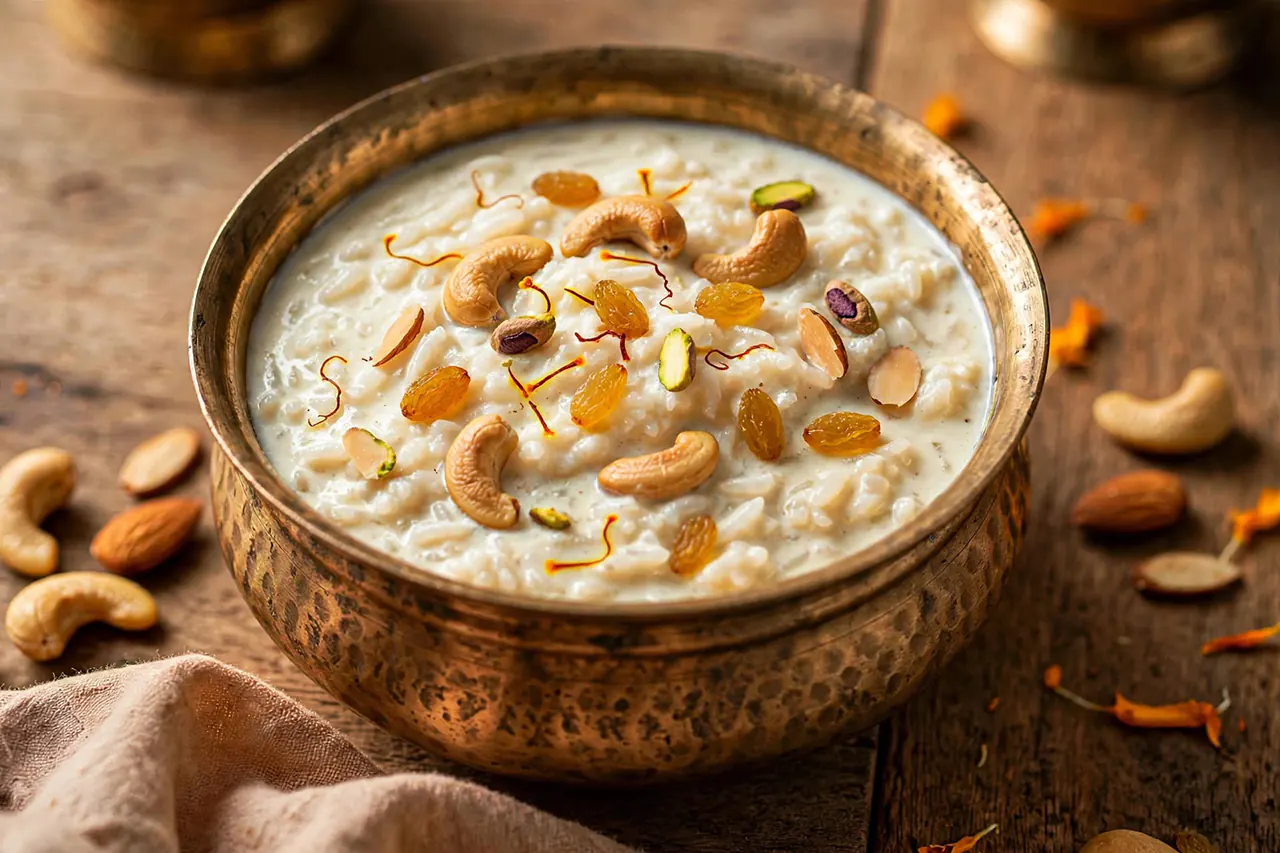
This step-by-step guide covers the exact rice-to-milk ratio, how to prevent the milk from scorching, and the exact moment to add sugar so the rice grains cook through completely.
Why This Traditional Method Works
- No condensed milk or artificial thickeners: The rich, velvety texture comes entirely from the natural starches of the rice gently emulsifying with the slow-reduced milk fats.
- Balanced consistency: Using 50 grams of rice per 1 liter of whole milk ensures the kheer remains creamy and spoonable whether served warm or chilled from the refrigerator.
- Tender grains: Soaking and lightly crushing a portion of the rice releases starches into the milk while leaving enough whole grains for classic texture.
Key Ingredients and Ratios
The balance between rice, milk, and sugar determines the final texture of the kheer.
- Full-Fat Milk (Whole Milk): 1 liter (approx. 4 cups). Full-cream cow’s milk or buffalo milk provides the essential milk solids (mawa/khoya notes) as it reduces. Avoid skim or toned milk, which make the kheer thin and watery.
- Aromatic White Rice: 50 grams (1/4 cup). Short-grain aromatic varieties like Gobindobhog, Ambemohar, or broken fragrant Basmati (tukda) yield the best creaminess. Long-grain basmati can be used if broken down slightly by hand.
- Sugar: 75 to 100 grams (1/3 cup to 1/2 cup). Regular granulated white sugar. Adjust according to taste. 75 grams yields a mild, balanced sweetness; 100 grams provides a festive sweetness.
- Ghee: 1/2 teaspoon for coating the rice, plus 1 teaspoon for roasting nuts.
- Green Cardamom (Elaichi): 4 to 5 pods, freshly ground into a fine powder.
- Saffron (Kesar): 10 to 12 strands steeped in 2 tablespoons of warm milk (optional, for aroma and a golden hue).
- Nuts and Dry Fruits: 10 whole cashews (halved), 10 almonds (slivered), and 1 tablespoon chironji (charoli) or raisins (kishmish).
Ingredient Notes & Substitutions
- Rice Selection: Starchier, short- to medium-grain fragrant rices are superior to long, aged basmati for kheer. Varieties like Gobindobhog (Bengal), Ambemohar (Maharashtra), Jeerakasala (Kerala), or Kalanamak (Uttar Pradesh) release starch readily while adding a natural aroma. If using long-grain basmati, coarsely break the soaked grains between your palms or pulse them once in a dry grinder.
- Sugar Alternatives: You can use jaggery (gud) or raw cane sugar (khandsari). However, never add jaggery to boiling milk, as the acid in jaggery will curdle hot milk instantly. Stir crushed jaggery into the kheer only after turning off the flame and letting the pot cool for 5 minutes.
- Flavor Enhancers: A teaspoon of pure rose water or kewra water added in the final 30 seconds gives wedding-caterer-style aroma.
How to Make Rice Kheer Recipe (Step-by-Step)
Step 1: Rinse and Soak the Rice
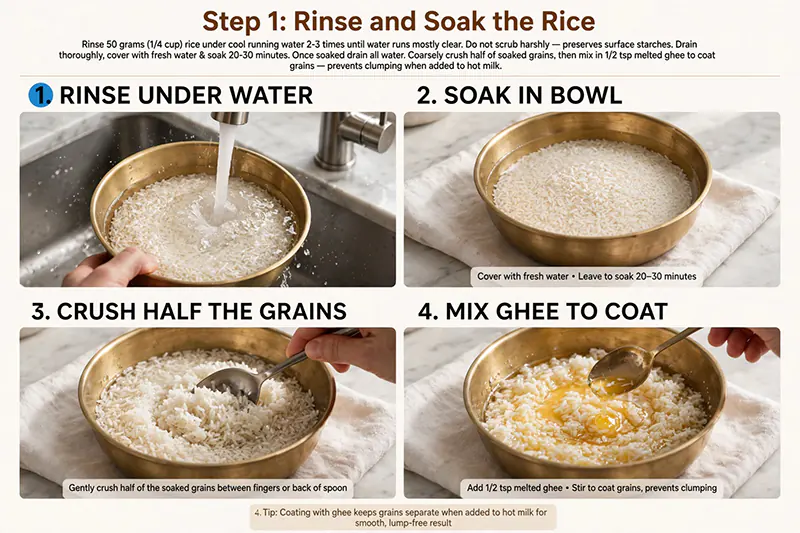
Rinse 50 grams (1/4 cup) of rice under cool running water 2 to 3 times until the water runs mostly clear. Do not scrub harshly, as this removes surface starches. Drain the water thoroughly, cover the rice with fresh water, and leave it to soak for 20 to 30 minutes.
Once soaked, drain all water. Coarsely crush half of the soaked grains between your fingers or with the back of a spoon. Mix in 1/2 teaspoon of melted ghee to coat the grains. This prevents the rice from clumping into lumps when it hits the hot milk.
Step 2: Bring the Milk to a Boil
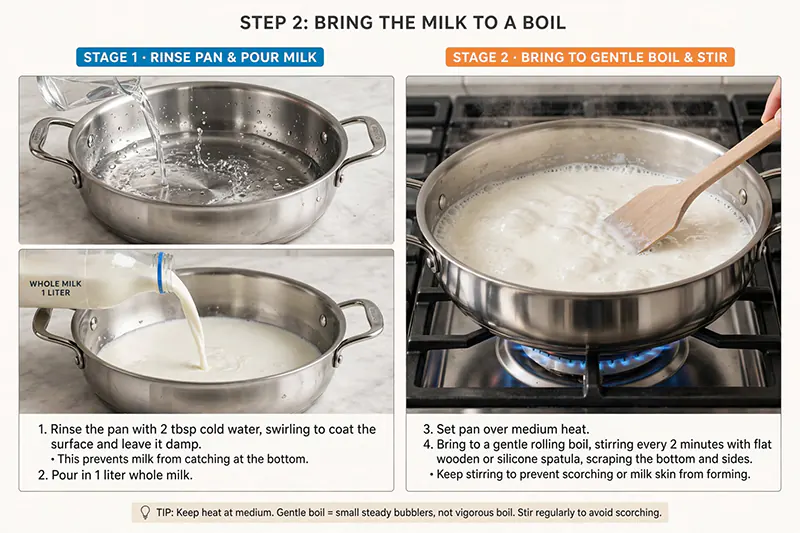
Rinse a heavy-bottomed, wide stainless steel pan, kadai, or Dutch oven with 2 tablespoons of cold water (leaving the surface damp prevents milk from catching at the bottom). Pour in 1 liter of whole milk.
Set the pan over medium heat. Bring the milk to a gentle, rolling boil, stirring every 2 minutes with a flat wooden or silicone spatula, scraping the bottom and sides of the pan.
Step 3: Add the Rice and Simmer
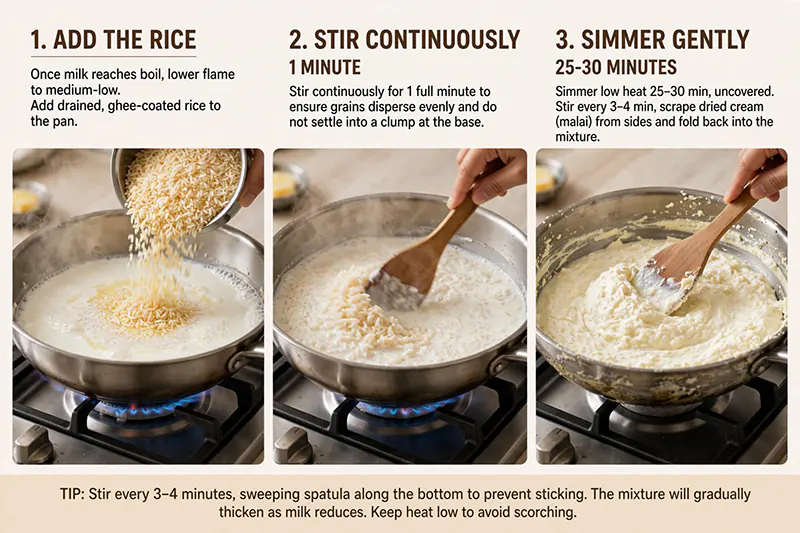
Once the milk reaches a boil, lower the flame to medium-low. Add the drained, ghee-coated rice to the pan, stirring continuously for 1 full minute to ensure the grains disperse evenly and do not settle into a clump at the base.
Let the mixture simmer gently on low heat for 25 to 30 minutes uncovered. Stir every 3 to 4 minutes, ensuring your spatula sweeps across the bottom of the pan to dislodge any resting milk solids. Scrape down the dried cream (malai) that forms along the sides of the pan and fold it back into the simmering milk.
Step 4: Check Rice Doneness (The Two-Finger Crush Test)
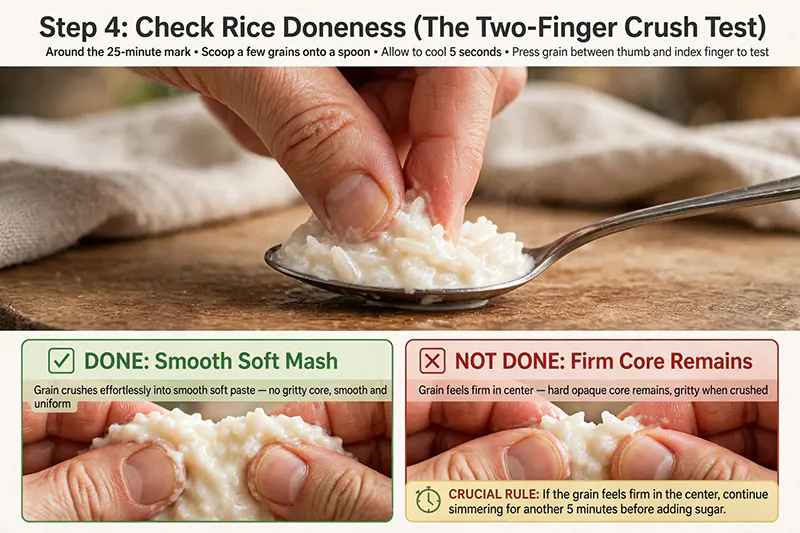
Around the 25-minute mark, scoop out a few grains of rice onto a spoon and allow them to cool for 5 seconds. Press a grain between your thumb and index finger.
- Doneness cue: The grain must crush effortlessly into a smooth, soft mash with zero gritty core or hard center remaining.
- Crucial rule: If the grain feels firm in the center, continue simmering for another 5 minutes before adding sugar.
Step 5: Add Sugar, Saffron, and Cardamom
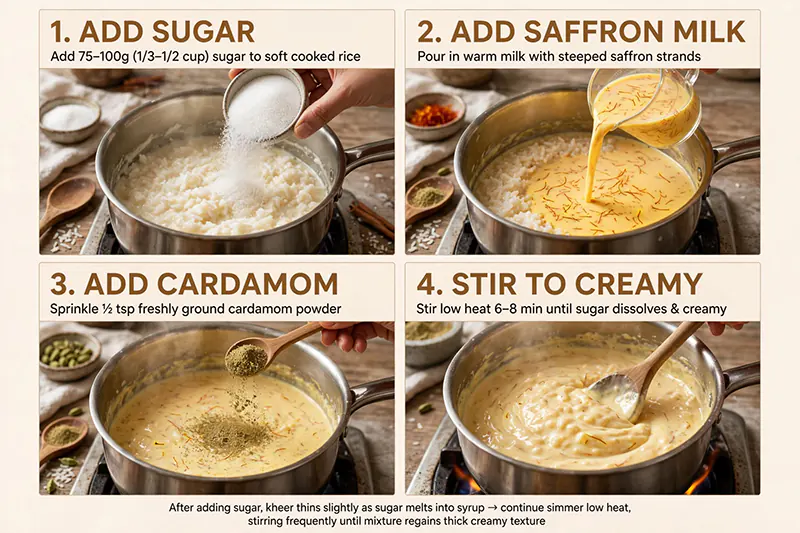
Once the rice is fully soft, add 75 to 100 grams (1/3 to 1/2 cup) of sugar, the warm milk with steeped saffron strands, and 1/2 teaspoon of freshly ground cardamom powder.
Stir well until the sugar dissolves completely. After adding sugar, the kheer will thin out slightly as the sugar melts into syrup. Continue to simmer over low heat for another 6 to 8 minutes, stirring frequently, until the mixture regains its cohesive, creamy texture.
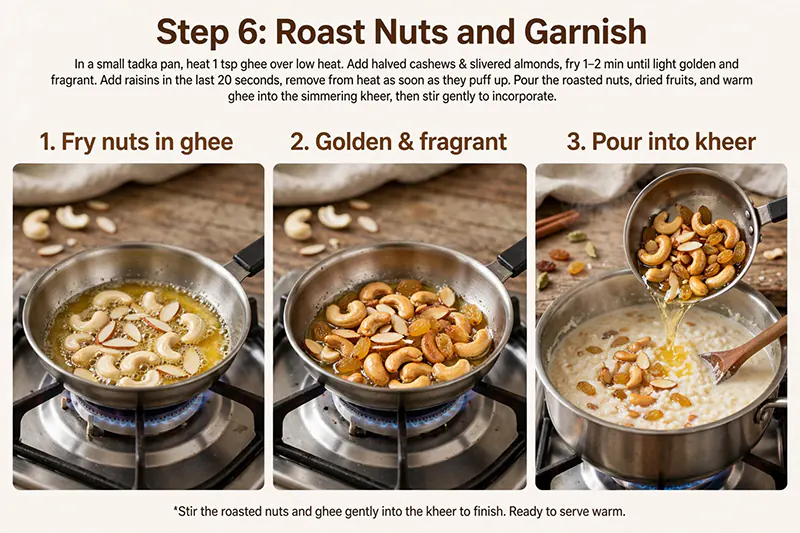
Step 6: Roast Nuts and Garnish
In a small tadka pan, heat 1 teaspoon of ghee over low heat. Add the halved cashews and slivered almonds. Fry for 1 to 2 minutes until light golden and fragrant. If using raisins, add them during the last 20 seconds; remove from heat as soon as they puff up.
Pour the roasted nuts, dried fruits, and warm ghee directly into the simmering kheer. Stir gently to incorporate.
Step 7: Check Final Consistency and Remove from Heat
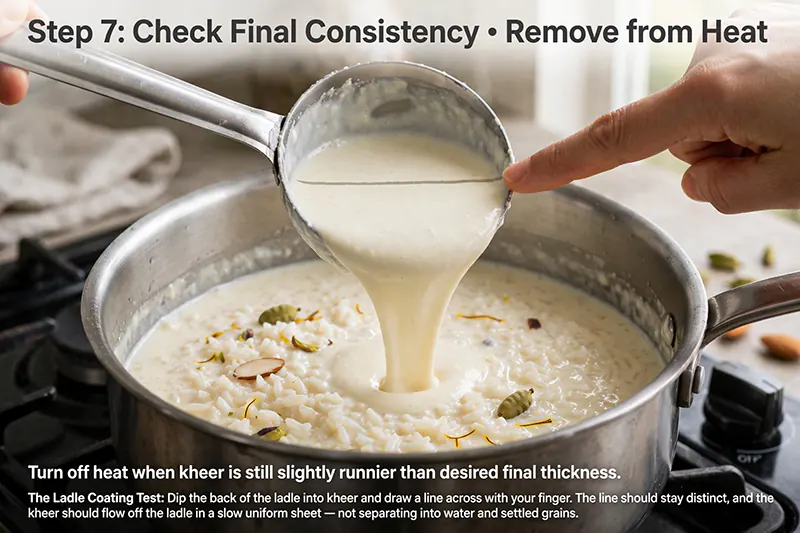
Turn off the heat when the kheer is still slightly runnier than your desired final thickness.
- The Ladle Coating Test: Dip the back of a ladle into the kheer and draw a line across it with your finger. The line should stay distinct, and the kheer should flow off the ladle in a slow, uniform sheet rather than separating into water and settled grains.
The kheer will thicken considerably as it cools. Serve warm, at room temperature, or transfer to an airtight glass container and chill for at least 3 hours.
4 Practical Tips for the Best Texture
- Use a wide, heavy-bottom pan: A wide surface area increases milk evaporation, cutting down simmering time, while a heavy base distributes heat evenly to prevent scorching.
- Never add sugar before the rice is soft: Sugar draws moisture out of the rice grains and hardens their outer cell walls, stopping further starch gelatinization. Adding sugar prematurely leaves the rice grains unpleasantly chalky.
- Scrape the clotted cream continuously: As milk simmers, proteins and fats collect along the inner perimeter of the pot. Scraping this khoya-like skin back into the pudding creates traditional body without adding heavy cream.
- Mash a spoonful of cooked rice: For an even thicker, velvety texture without adding extra rice, crush 2 tablespoons of the cooked rice grains against the side of the pot using the back of your ladle during the 20th minute of simmering.
Troubleshooting Common Issues
The Kheer Turned Out Watery or Runny
- The Cause: The milk did not reduce sufficiently, or excess water remained from soaking the rice.
- The Fix: Simmer the mixture on medium-low heat for an additional 7 to 10 minutes, stirring constantly. Alternatively, mix 1 tablespoon of milk powder with 2 tablespoons of warm milk into a lump-free paste, stir it into the kheer, and simmer for 2 minutes.
The Kheer Solidified into a Thick Cake Upon Cooling
- The Cause: Too much rice was used relative to the milk, or the kheer was over-reduced on the stovetop.
- The Fix: Pour 1/4 to 1/2 cup of warm, boiled whole milk into the chilled kheer. Whisk gently with a fork or small wire whisk until smooth and creamy again. Taste and adjust with a pinch of powdered sugar if needed.
The Base of the Pot Began to Catch or Burn
- The Cause: Cooking on high flame or leaving the milk unattended without scraping the base.
- The Fix: Immediately turn off the flame. Do not scrape the bottom of the pot. Carefully ladle the unburned top layer of kheer into a fresh, clean pan, leaving the bottom 1/2-inch layer behind. Add a drop of rose water and 1/4 teaspoon of freshly crushed cardamom to mask any faint smokiness, then finish simmering.
The Sugar Made the Kheer Excessively Sweet
- The Fix: Stir in 1/4 cup of warm unsweetened whole milk or 2 tablespoons of fresh, unsweetened clotted cream (malai) to soften the sweetness and restore balance.
Legitimate Variations
- North Indian Festival Style (Shadiyon Wali Kheer): Add 2 tablespoons of crumbled fresh unsweetened mawa (khoya) alongside the sugar. This produces the ultra-rich, dense consistency characteristic of traditional festive banquets.
- Bengali Payesh (Chaler Payesh): Use fragrant Gobindobhog rice, pure cow’s milk, and finish with date palm jaggery (Nolen Gur or Patali Gur). Remember to take the pan off the heat and allow it to cool for 5 minutes before folding in liquid date jaggery.
- South Indian Pal Payasam: Made without frying the nuts or using saffron; the focus is purely on caramelizing the milk sugar with rice over long, slow simmering until the pudding develops a natural light-pink hue.
- Dry Fruit & Rose Kheer: Omit saffron and add 1 teaspoon of culinary-grade rose water with finely pounded pistachios right after turning off the flame.
Serving Suggestions
- Festive Meal: Serve warm alongside hot, puffed whole-wheat pooris and spicy sookhe aloo (dry potato curry) or chana masala. The combination of hot, crispy, savory pooris dipped in rich, chilled rice kheer is a classic festive pairing across Northern and Central India.
- After-Dinner Dessert: Chill the kheer in traditional clay bowls (shikora or matka) for 4 to 6 hours. Clay absorbs excess moisture and imparts an earthy aroma, firming the texture into a thick pudding. Garnish with silver foil (vark), chopped pistachios, and fresh saffron strands before serving.
Storage and Reheating Guidelines
- Refrigeration: Cool the kheer completely to room temperature within 1 hour of cooking. Transfer to a clean, airtight glass or stainless steel container. Store in the refrigerator for up to 3 to 4 days.
- Freezing: Freezing rice kheer is not recommended. The milk fats separate and the rice starches become spongy and watery upon thawing.
- Reheating:
- Stovetop: Transfer refrigerated kheer to a small saucepan. Add 2 to 3 tablespoons of warm whole milk per cup of kheer to loosen its chilled, set texture. Heat over low flame for 3 to 5 minutes, stirring continuously, until warm throughout.
- Microwave: Place kheer in a microwave-safe bowl, stir in 1 tablespoon of milk, and heat in 30-second bursts, stirring between each burst, until gently heated.
Frequently Asked Questions
Which rice variety makes the best kheer?
Aromatic short-grain white rice varieties like Gobindobhog, Ambemohar, or broken basmati (basmati tukda) yield the best kheer. Their high surface starch softens readily into the milk to create a naturally thick consistency while imparting an authentic floral aroma. Long-grain basmati stays too separate and firm unless lightly crushed before cooking.
Can I make rice kheer with cooked leftover rice?
Yes, but the texture will be lighter and less cohesive than traditional kheer. To use cooked rice, mash 1 cup of cooked rice lightly with a fork, add it to 750 ml of boiling whole milk, and simmer over low heat for 12 to 15 minutes to allow the starches to meld before adding sugar.
Why did my milk curdle when I made kheer?
Milk curdles in kheer for two main reasons: adding jaggery directly to boiling milk, or using stale cardamom powder containing impurities. If using jaggery, always take the pot off the flame and let it cool for 5 minutes before stirring it in. Ensure your milk is fresh and brought to a rolling boil before adding the rice.
What is the ideal ratio of rice to milk for kheer?
The ideal volume ratio is 1:16—specifically 50 grams (1/4 cup) of raw rice to 1 liter (approx. 4 cups) of full-fat milk. This proportion ensures that as the milk reduces by roughly 25 to 30%, the expanding rice grains thicken the dessert into a rich, spoonable pudding that does not turn solid once chilled.
How do I stop milk from sticking to the bottom of the pot?
Rinse your pan with cold water right before adding the milk, and choose a heavy-bottomed stainless steel pan, cast iron Dutch oven, or brass vessel. Keep the heat on medium-low and use a flat-edged spatula every 3 to 4 minutes to scrape the bottom cleanly across its entire base.
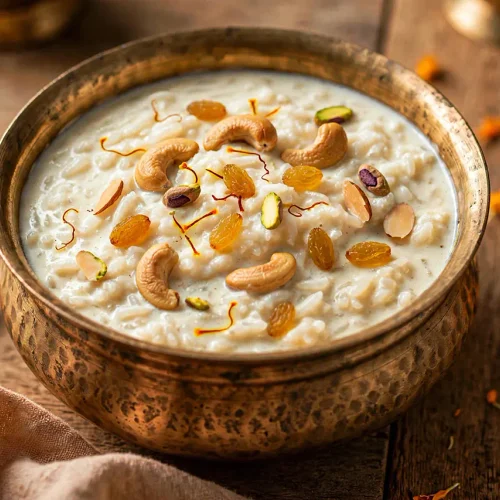
Traditional Rice Kheer (Chawal Ki Kheer)
Authentic, rich, and slow-simmered traditional Indian rice kheer made with full-fat milk, short-grain aromatic rice, sugar, cardamom, and roasted nuts.
Ingredients
- 50 g 1/4 cup aromatic short-grain rice (or broken basmati)
- 1 liter full-fat whole milk
- 75 g to 100 g 1/3 to 1/2 cup granulated white sugar
- 1/2 tsp green cardamom powder freshly ground from 4–5 pods
- 10 –12 saffron strands steeped in 2 tbsp warm milk
- 1/2 tsp ghee for coating rice + 1 tsp ghee (for roasting nuts)
- 10 cashews split in halves
- 10 almonds blanched and slivered
- 1 tbsp chironji or raisins
Instructions
Prep Rice: Rinse rice until water is clear. Soak in water for 20 minutes; drain thoroughly. Coarsely crush half the soaked grains with your fingers. Toss with 1/2 tsp ghee.
Boil Milk: Rinse a heavy-bottom pan with cold water. Add 1 liter whole milk; bring to a boil over medium heat, stirring occasionally.
Simmer Rice: Add the prepared rice to the boiling milk. Lower heat to medium-low and simmer for 25 minutes, stirring every 3 to 4 minutes and scraping down side cream.
Test Tenderness: Scoop a few grains and crush between thumb and forefinger. They must yield smoothly with no hard center.
Sweeten & Flavor: Add sugar, cardamom powder, and saffron-infused milk. Simmer for 6 to 8 minutes until sugar dissolves and kheer re-thickens.
Fry Nuts: In a small pan, heat 1 tsp ghee; fry cashews and almonds until golden. Add raisins for the final 20 seconds. Pour nuts, dried fruits, and hot ghee directly into the kheer.
Finish: Turn off heat when the kheer lightly coats the back of a spoon. Serve warm or chill for 3 hours.
Recipe Notes
Do not add sugar until rice grains pass the two-finger crush test; sugar halts starch gelatinization.
If kheer thickens too much after cooling, stir in 1/4 cup warm milk to restore its creamy consistency.
Storage
Keep refrigerated in an airtight container for up to 4 days. Reheat on low flame with a splash of milk. Not suitable for freezing.