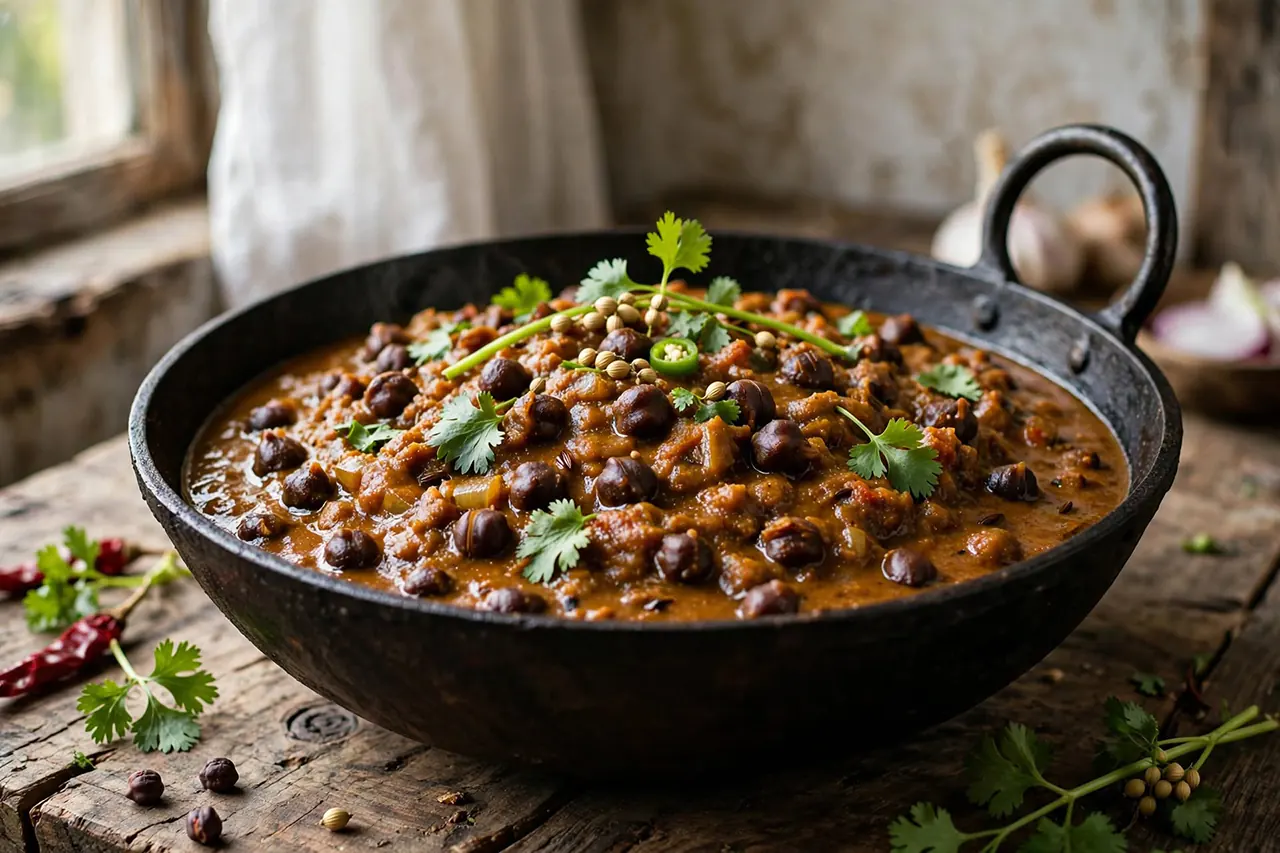
Authentic Black Bengal Gram Curry (Kala Chana Gravy)
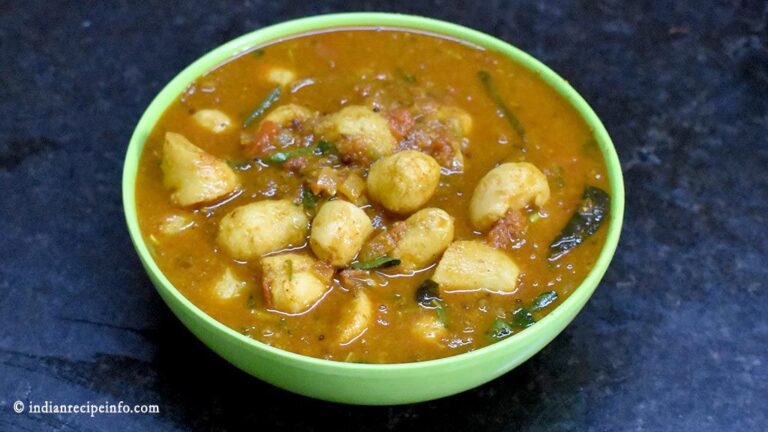
A fragrant, protein-packed South Indian curry made with tender brown chickpeas simmered in a spiced onion-tomato gravy.
This dependable Black Bengal gram curry delivers plump, velvety chickpeas enveloped in a thick, clingy gravy seasoned with toasted cumin, coriander, and garam masala. Requiring just 15 minutes of active prep, this foolproof pressure-cooker technique eliminates chalky, undercooked legumes and watery sauces.
What is Bengal Gram (Kala Chana)?
Bengal gram (Cicer arietinum), known as kala chana in Hindi and nalla senagalu in Telugu, is a dark-brown, thick-skinned legume belonging to the chickpea family.
Unlike split chana dal or large white garbanzo beans (kabuli chana), whole Bengal gram retains its nutrient-dense outer husk. It has a pronounced earthy, nutty profile and holds its structure remarkably well during long braises.
Note on terminology: Do not confuse Bengal gram with “black gram.” Black gram refers to urad dal (Vigna mungo), which is an entirely different legume used for dosas and idlis.
Key Ingredients and Culinary Mechanics
- Whole Bengal Gram (Kala Chana): The structural core of the dish. It requires thorough overnight hydration to soften its fibrous seed coat and ensure even heat penetration to the core.
- Mustard Seeds & Cumin Seeds: Bloomed in hot oil at the initial step, these whole spices release essential volatile oils (allyl isothiocyanate and cuminaldehyde) that create the signature South Indian aromatic foundation.
- Finely Chopped Red Onions: Slowly caramelized to provide sweetness and foundational bulk for the gravy.
- Fresh Ginger-Garlic Paste: Adds pungent warmth and aids in digesting dense legume starches.
- Ripe Plum Tomatoes: Pureed or finely diced, tomatoes introduce malic and citric acids that cut through the earthy richness of the gram while deglazing the fond from the pan.
- Kashmiri Red Chilli & Coriander Powder: Coriander acts as a natural thickening agent due to its high seed-fiber content, while Kashmiri chilli imparts vibrant red color with manageable heat.
- Garam Masala: Added near the finish to preserve delicate aromatic terpenes that break down under sustained boiling.
Ingredient Substitutions
- Fresh Tomatoes: Replace with 3 tablespoons of canned tomato puree or 1 tablespoon of tamarind paste mixed with 3 tablespoons of warm water for a tangier, Andhra-style finish.
- Mustard Oil / Coconut Oil: Ghee provides a richer, festive finish, while cold-pressed coconut oil gives a distinct coastal South Indian aroma.
How to Make Bengal Gram Curry (Step-by-Step)
Step 1: Soak and Hydrate the Gram
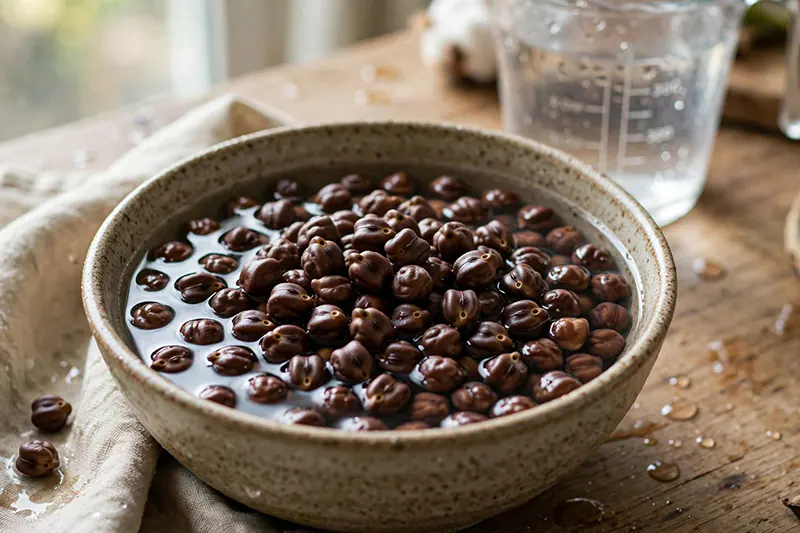
Rinse 1 cup (200g) of dried Bengal gram under cold running water until the runoff is clear. Transfer to a large bowl, cover with 3 cups of room-temperature water, and soak for at least 8 hours (or overnight).
- Sensory cue: The grains should double in volume, appear plump, and yield slightly when pressed hard between two fingers without snapping.
- Common mistake to avoid: Skimping on soaking time. Unsoaked Bengal gram remains hard and gritty in the center even after extended pressure cooking.
Step 2: Pressure Cook Until Fork-Tender
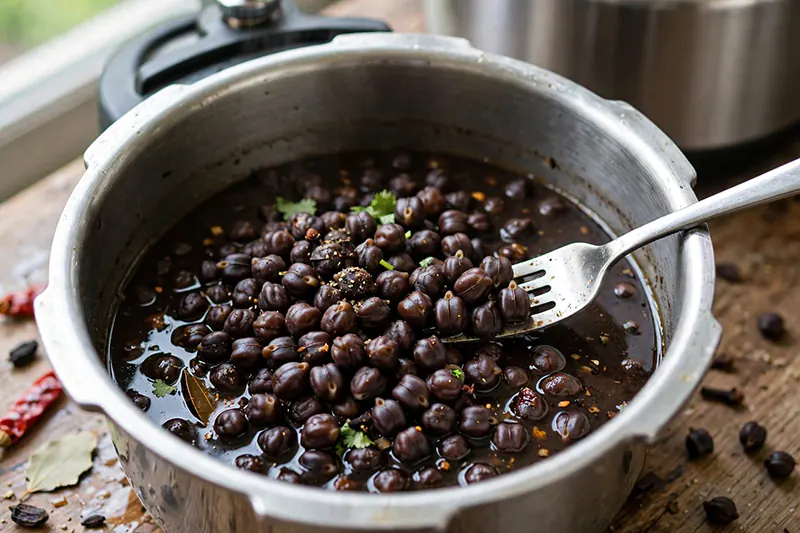
Drain the soaking liquid. Add the soaked gram to a pressure cooker along with 2.5 cups of fresh water and 1/2 teaspoon of fine salt. Secure the lid and cook over medium-high heat for 5 to 6 whistles (or 18 minutes at high pressure in an electric multi-cooker). Allow the pressure to release naturally for 15 minutes.
- Sensory cue: Remove a single gram and press it between your thumb and forefinger; it should crush smoothly with no gritty, pale white core.
- Common mistake to avoid: Discarding the dark cooking broth. This liquid is packed with water-soluble legume proteins and minerals; reserve every drop for simmering the gravy.
Step 3: Bloom the Whole Spices and Aromatics
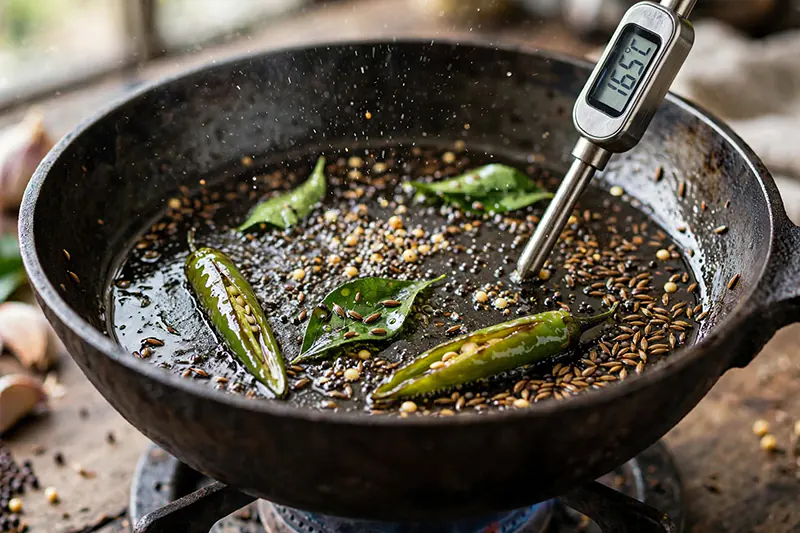
Heat 2 tablespoons of oil in a heavy-bottomed kadai or sauté pan over medium heat (around 165°C / 330°F). Add 1/2 teaspoon of mustard seeds and 1/2 teaspoon of cumin seeds. Once the mustard seeds crackle and sputter vigorously (about 10 seconds), add 1 sprig of fresh curry leaves and 2 slit green chillies.
- Sensory cue: Spices pop cleanly without smoking, releasing a toasted, nutty aroma.
- Common mistake to avoid: Adding onions before the seeds finish sputtering, which traps raw, unbloomed whole spices in moisture.
Step 4: Brown the Onions and Build the Base
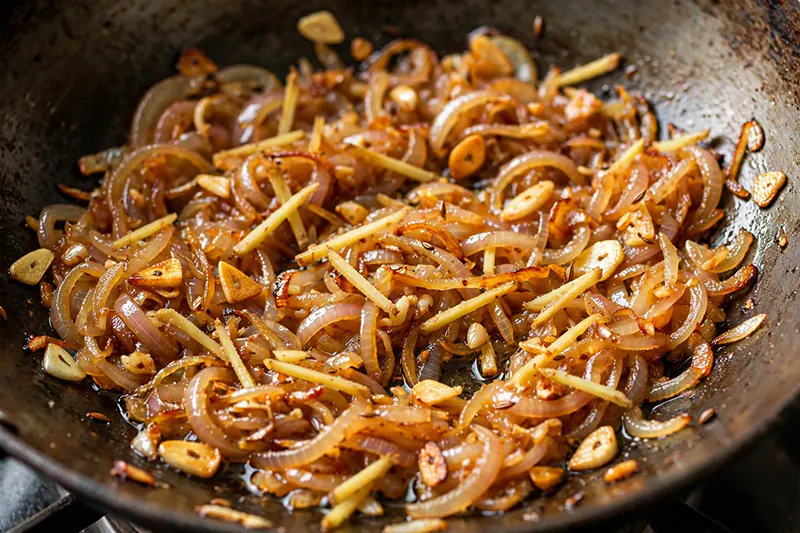
Add 1 large finely chopped onion (approx. 150g). Cook over medium heat for 6 to 8 minutes, stirring frequently, until the edges turn a deep golden brown. Stir in 1 tablespoon of fresh ginger-garlic paste and cook for 60 to 90 seconds.
- Sensory cue: The sharp, pungent raw sulfur smell of garlic dissipates, replaced by a sweet, roasted scent.
- Common mistake to avoid: Leaving the heat on high. Burnt garlic turns irrevocably bitter and will ruin the underlying gravy.
Step 5: Cook the Tomatoes and Spices to Oil Separation
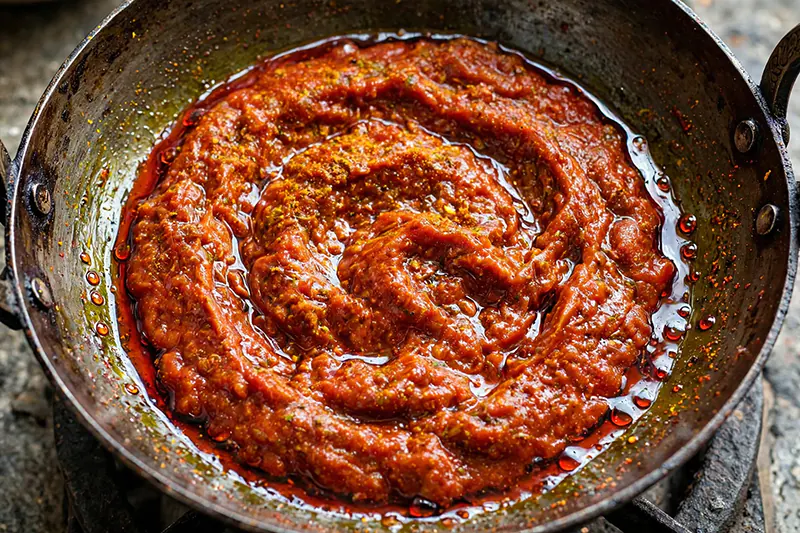
Add 2 pureed medium tomatoes, 1/2 teaspoon turmeric, 1 tablespoon coriander powder, 1 teaspoon cumin powder, and 1 teaspoon red chilli powder. Cook over medium-low heat, stirring constantly, until the tomato moisture reduces and the spice paste thickens into a glossy paste.
- Sensory cue: Tiny droplets of red-tinted oil shimmer and separate along the perimeter of the pan (rogan release).
- Common mistake to avoid: Adding the cooked legumes before the tomato water completely cooks out, which leaves a raw, acidic tomato edge.
Step 6: Emulsify and Simmer
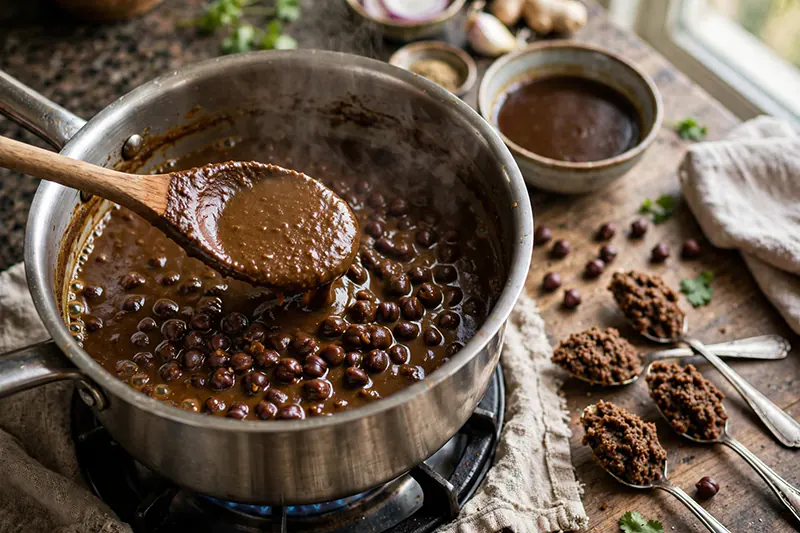
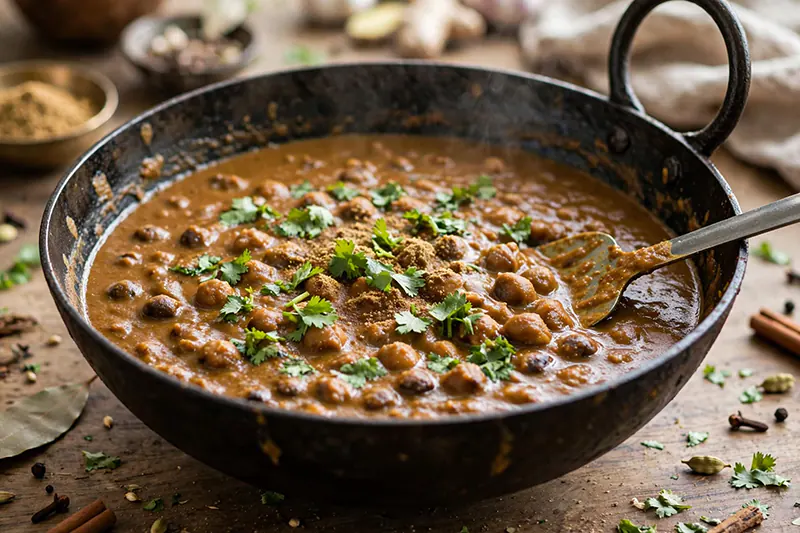
Add the cooked Bengal gram and its reserved cooking liquid into the pan. Scoop out 3 to 4 tablespoons of the cooked gram, mash them into a coarse paste with the back of a ladle or fork against the side of the pan, and stir back into the gravy. Bring to a vigorous boil, then lower the heat to medium-low, cover, and simmer for 10 minutes.
- Sensory cue: The gravy transforms from a thin, watery liquid with floating beans into a cohesive, velvety curry that coats the back of a wooden spoon.
- Common mistake to avoid: Leaving all chickpeas whole. The mashed portion is the sole natural emulsifier that prevents water from separating on the plate.
Step 7: Finish with Aromatic Masala
Uncover, stir in 1/2 teaspoon of garam masala and 1 tablespoon of finely chopped fresh coriander leaves. Simmer uncovered for 2 minutes to integrate, taste, and adjust salt if necessary. Remove from heat and let rest for 5 minutes before serving.
Pro-Kitchen Tips for Texture and Flavor
- The Starch-Mash Gravy Fix: Because whole Bengal gram does not shed starch easily, crushing 10% of the cooked chickpeas releases amylose into the water-fat mixture, creating a rich sauce without relying on heavy cream, cashew paste, or cornstarch.
- Never Add Raw Cold Water to Simmering Curry: If you need to loosen the curry, always stir in boiling water. Cold water drops the pan temperature abruptly, causing the fats to separate and toughening the chickpea skins.
- The Acid Timing Rule: Never cook dried chickpeas directly in acidic liquids (like raw tomatoes or tamarind) from raw. Acid prevents the pectin chains in legume skins from dissolving, permanently locking the chickpeas into a tough, unyielding texture. Only introduce tomatoes once the gram is fully cooked.
- Use Whole Spices First, Ground Spices Mid-Way, Finishing Spices Last: Whole seeds need direct hot oil to bloom; powdered spices (coriander, turmeric) need gentle heat in the onion-tomato base to prevent scorching; finishing blends (garam masala) contain delicate volatile aromatics that must be added at the end of cooking.
Troubleshooting Common Curry Mistakes
| Problem | Root Cause | Solution |
| Chickpeas are chalky or firm | Insufficient soak time or cooked in hard/acidic water. | Return to the pressure cooker with 1/2 cup boiling water and pressure-cook for an additional 2–3 whistles. |
| Water separates from the beans on the plate | Insufficient natural starch binding. | Take 1/2 cup of the curry, pulse it in a small blender or mash thoroughly with a potato masher, stir back into the pan, and simmer vigorously for 3 minutes. |
| Curry tastes sharp and sour | Tomato acid was not neutralized by enough cooking. | Simmer uncovered for 5 more minutes, then stir in 1/4 teaspoon of jaggery (or brown sugar) and 1/2 teaspoon of ghee to round out the acidity. |
| Curry tastes bland or one-dimensional | Spices were added to watery gravy instead of bloomed in hot fat. | Heat 1 teaspoon of ghee in a small ladle, fry 1/4 teaspoon cumin seeds and a pinch of Kashmiri chilli until fragrant, and pour over the finished curry as an extra tadka (tempering). |
Storage, Freezing, and Reheating
- Refrigeration: Cool completely to room temperature within 2 hours of cooking. Store in an airtight glass container in the refrigerator for up to 4 days. The flavor actually deepens and improves after 24 hours.
- Freezing: Bengal gram freezes exceptionally well because of its sturdy cell structure. Portion into freezer-safe containers or silicone bags, leaving 1/2-inch of headspace for liquid expansion. Freeze for up to 3 months.
- Reheating: Legume curries naturally thicken as starch gelatinizes upon cooling. Place the chilled curry in a saucepan over medium-low heat, add 3 to 4 tablespoons of warm water, and stir gently until heated through (reaching an internal temperature of 74°C / 165°F). Avoid microwaving on high without a cover, as whole chickpeas can burst.


Serving Suggestions and Variations
Perfect Pairings
- Steamed Jeera Rice or Sona Masuri Rice: The rich spiced gravy coats long grains beautifully.
- Layered Parotta or Hot Rotis: Tear pieces of warm flatbread to scoop up the plump chickpeas and clingy sauce.
- Crisp Onion Salad (Kachumber): Finely sliced red onions tossed with lemon juice, salt, and fresh coriander provide bright, crisp contrast to the dense curry.
Regional Variations
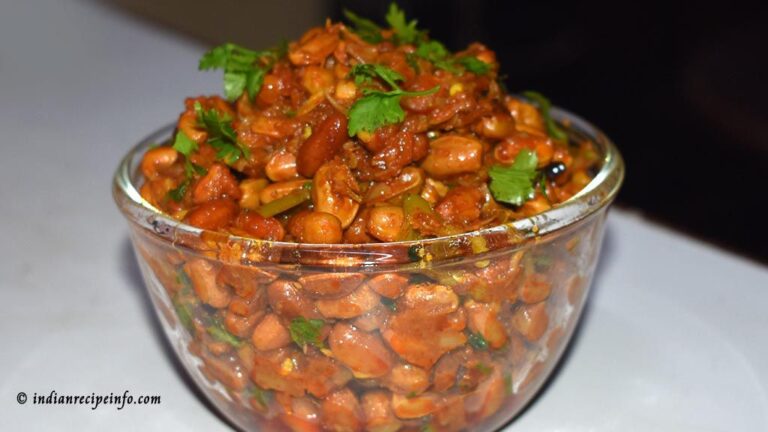
- Andhra Senagala Koora (Dry Snack / Prasadam): Skip the tomatoes. After boiling the gram, temper in coconut oil with mustard seeds, urad dal, dried red chillies, asafoetida (hing), curry leaves, and 2 tablespoons of freshly grated coconut. Sauté for 3 minutes until dry.
- Kala Chana with Coconut Paste (Kerala Style): Grind 1/2 cup grated coconut with 1/2 teaspoon fennel seeds and 1 green chilli into a fine paste. Stir into the curry during the final 5 minutes of simmering for a creamy, mildly sweet coastal profile.
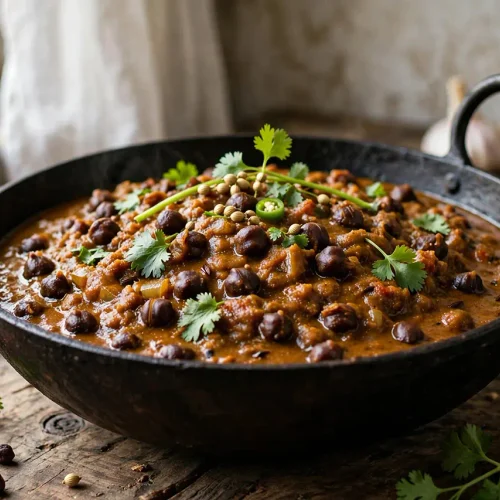
Homestyle Black Bengal Gram Curry (Kala Chana Masala)
Ingredients
- 1 cup 200 g dried whole Bengal gram (kala chana), thoroughly rinsed
- 3 cups water for soaking
- 2.5 cups water for pressure cooking
- 2 tbsp neutral cooking oil or peanut oil / mustard oil
- 1/2 tsp black mustard seeds
- 1/2 tsp cumin seeds jeera
- 1 sprig fresh curry leaves approx. 10–12 leaves
- 2 fresh green chillies slit lengthwise
- 1 large red onion finely chopped (approx. 150 g)
- 1 tbsp fresh ginger-garlic paste 1:1 ratio
- 2 medium ripe tomatoes pureed (approx. 180 g)
- 1/2 tsp turmeric powder haldi
- 1 tbsp coriander powder dhaniya
- 1 tsp cumin powder jeera powder
- 1 tsp Kashmiri red chilli powder
- 1/2 tsp garam masala powder
- 1 tsp fine sea salt divided: 1/2 tsp for boiling, 1/2 tsp for gravy, or adjust to taste
- 2 tbsp fresh coriander leaves finely chopped
Instructions
- Soak: Rinse Bengal gram in cold water. Soak in 3 cups of water for 8 hours or overnight. Drain.
- Pressure Cook: Combine soaked gram, 2.5 cups fresh water, and 1/2 tsp salt in a pressure cooker. Cook for 5–6 whistles over medium-high heat (18 minutes on High Pressure in an Instant Pot). Let pressure drop naturally. Reserve cooking broth.
- Temper: Heat 2 tbsp oil in a deep skillet over medium heat. Add mustard seeds and cumin seeds; fry until they pop (10 seconds). Add curry leaves and slit green chillies.
- Sauté Aromatics: Add chopped onions. Cook for 6–8 minutes until golden brown. Add ginger-garlic paste; stir for 1 minute until fragrant.
- Cook Tomato-Spice Base: Pour in pureed tomatoes, turmeric, coriander, cumin, and red chilli powder with remaining 1/2 tsp salt. Cook over medium-low heat for 6–8 minutes until thick and oil droplets bead at the edges.
- Simmer & Emulsify: Add cooked Bengal gram with all reserved cooking liquid. Mash 3–4 tablespoons of gram against the side of the skillet using the back of a ladle to thicken the gravy. Bring to a boil, reduce heat to low, cover, and simmer for 10 minutes.
- Finish: Stir in garam masala and chopped coriander leaves. Simmer uncovered for 2 minutes. Rest 5 minutes before serving hot.