Simple Homestyle Cauliflower Curry (Gobi Curry)
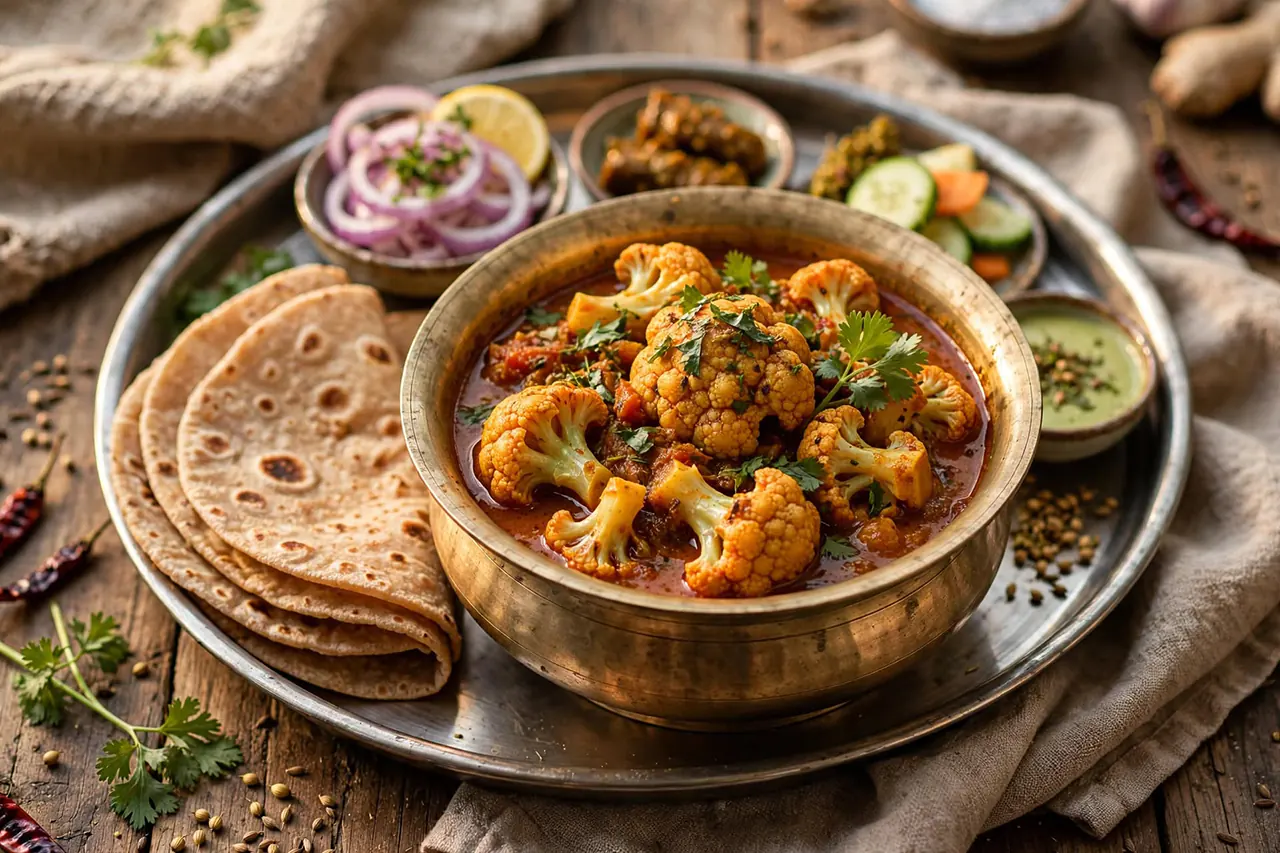
This homestyle cauliflower curry features tender florets simmered in a spiced onion-tomato gravy. It is a dependable, everyday Indian vegan curry made with standard pantry spices, requiring no heavy cream or store-bought pastes. It comes together in about 35 minutes and pairs naturally with hot rotis, parathas, or steamed basmati rice.
What Makes This Recipe Work
- Intact Florets: Soaking the cauliflower briefly in warm salted water cleans it thoroughly without pre-cooking it, preventing mushy florets later.
- Balanced Everyday Gravy: Cooking the onion-tomato base until the raw aroma leaves creates a rich, clinging sauce without needing cashews or cream.
- One-Pan Convenience: The entire dish cooks in a single kadai or deep skillet on the stovetop.
- Flexible Consistency: Easily adjust from a thick semi-dry sabzi for rolling inside rotis to a saucy gravy for pouring over rice.
Ingredients
For Prepping the Cauliflower
- Cauliflower: 500 g (1 medium head), cut into medium, bite-sized florets (about 4 cups)
- Water: 4 cups (warm, not boiling)
- Turmeric powder: 1/4 tsp
- Salt: 1/2 tsp
For the Curry Base
- Cooking oil: 2 tbsp (peanut, sunflower, or mustard oil)
- Mustard seeds (rai): 1/2 tsp
- Cumin seeds (jeera): 1/2 tsp
- Curry leaves (kadi patta): 1 sprig (8–10 leaves, optional but recommended)
- Onion: 1 large (approx. 150 g), finely chopped
- Ginger-garlic paste: 1 tbsp (freshly crushed preferred)
- Green chilies: 1–2, slit lengthwise
- Tomatoes: 2 medium (approx. 200 g), finely chopped or pureed
Ground Spices & Seasoning
- Turmeric powder (haldi): 1/4 tsp
- Kashmiri red chili powder: 1 to 1.5 tsp (gives rich color with mild heat)
- Coriander powder (dhania): 1 tbsp
- Cumin powder (jeera powder): 1/2 tsp
- Garam masala: 1/2 tsp
- Salt: 1 tsp (adjust to taste)
- Water: 1 to 1.5 cups (warm)
- Fresh coriander leaves: 2 tbsp, finely chopped for garnish
Ingredient Notes & Substitutions
- Cauliflower: Choose a compact, firm head with clean white curds and tight green leaves. Avoid heads with brown blemishes or loose, yellowing florets.
- Tomatoes: Ripe, red Roma or plum tomatoes give the best balance of sweetness and acidity. If using tart country tomatoes (desi tamatar), reduce to 1.5 medium tomatoes or balance with a pinch of sugar.
- Kashmiri Chili Powder: Provides vibrant red color without making the curry excessively spicy. If using standard spicy red chili powder, reduce the quantity to 1/2 or 3/4 tsp.
- Ginger-Garlic Paste: Freshly grated ginger and minced garlic produce a noticeably brighter aroma than bottled preservatives.
How to Clean and Prep Cauliflower
Cauliflower heads often hide tiny caterpillars or dirt inside the tight florets. Clean them with this simple warm-water bath before cooking:
- Cut the florets: Trim away the thick bottom stem and green leaves. Cut the head into even, bite-sized florets (roughly 1.5 to 2 inches each). Keep a short piece of stem attached to hold each floret together.
- Warm salt soak: Place the florets into a large bowl. Pour in 4 cups of warm water (comfortable to touch, around 45°C–50°C), 1/4 tsp turmeric, and 1/2 tsp salt.
- Rest and drain: Let the florets rest in the water for 5 minutes. Swirl gently, then drain completely in a colander. Do not boil or cook the florets at this stage.
Step-by-Step Cooking Instructions
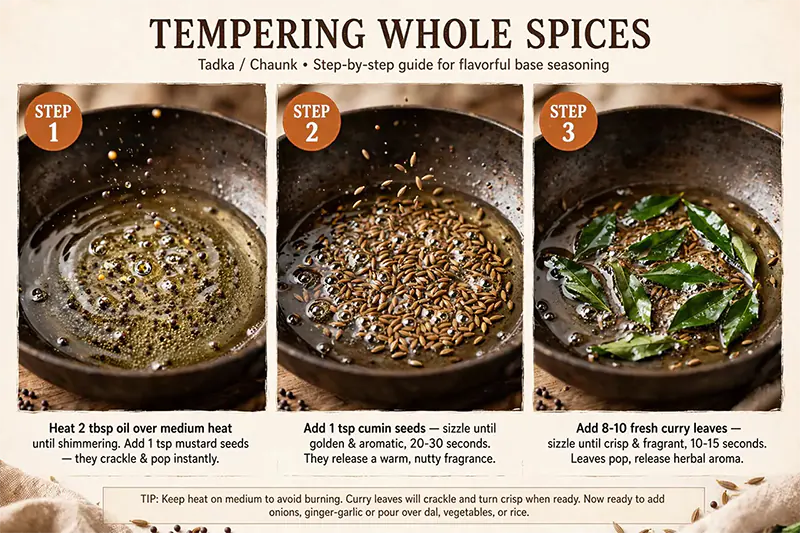
Step 1: Temper the Whole Spices
Heat 2 tablespoons of oil in a heavy-bottomed kadai, deep skillet, or pan over medium heat.
Once the oil is shimmering, add 1/2 teaspoon of mustard seeds. Let them crackle completely (about 10–15 seconds). Add 1/2 teaspoon of cumin seeds and 8–10 curry leaves. Let them sizzle for 10 seconds until fragrant. Keep the heat on medium so the seeds do not turn black.
Step 2: Sauté Aromatics and Onions
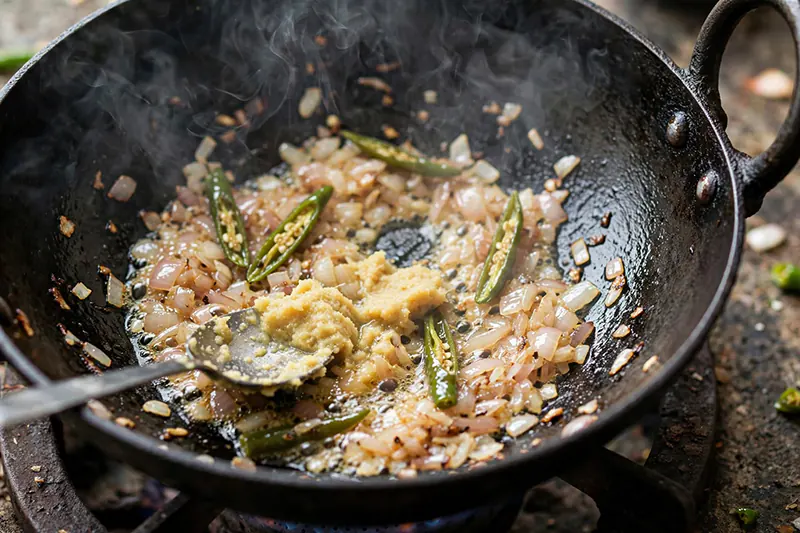
Add the finely chopped onions and slit green chilies to the pan. Sauté over medium heat for 5 to 7 minutes, stirring occasionally.
The onions should turn soft, translucent, and light golden brown around the edges. Add 1 tablespoon of ginger-garlic paste. Sauté continuously for 1 to 2 minutes until the raw, pungent garlic smell completely disappears.
Step 3: Cook the Tomato-Spice Masala (Bhunao)
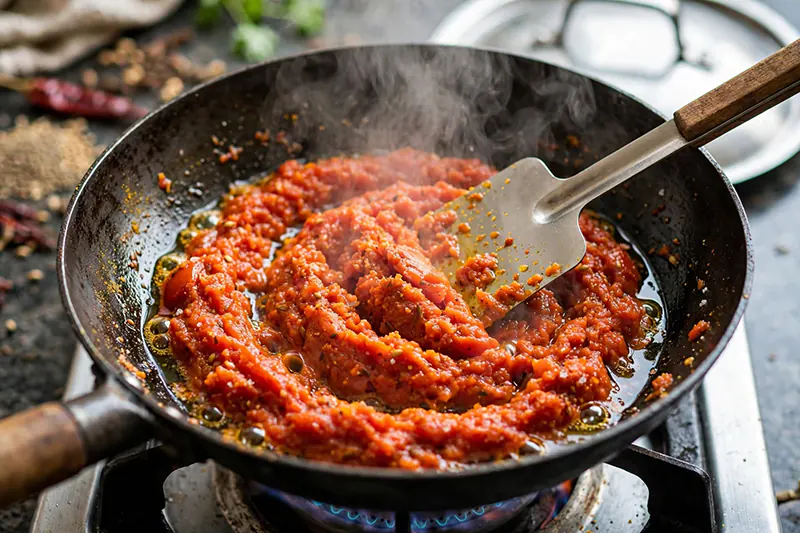
Add the chopped tomatoes, 1/4 tsp turmeric powder, 1 to 1.5 tsp Kashmiri chili powder, 1 tbsp coriander powder, 1/2 tsp cumin powder, and 1 tsp salt. Mix thoroughly.
Cover the pan with a lid and cook over medium-low heat for 5 to 6 minutes, stirring once halfway through.
Visual Cue: Remove the lid and cook for another 2 minutes, mashing the tomatoes with the back of your spatula. The masala is done when the tomatoes turn into a soft, cohesive paste and small droplets of oil begin to separate from the edges.
Step 4: Coat the Cauliflower
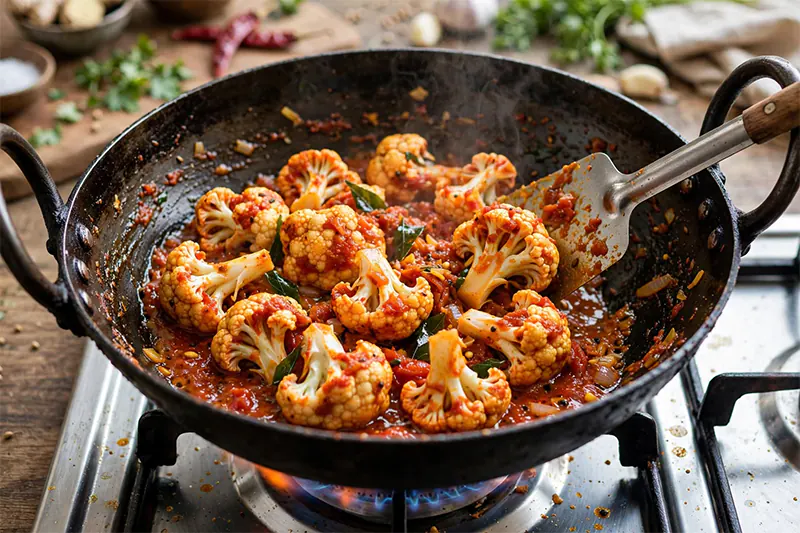
Add the drained, cleaned cauliflower florets to the cooked masala base.
Turn the heat to medium and gently stir-fry (bhun) the florets for 2 to 3 minutes. Ensure every floret is evenly coated with the warm spice paste. This short sauté helps the cauliflower absorb flavor and prevents it from tasting boiled.
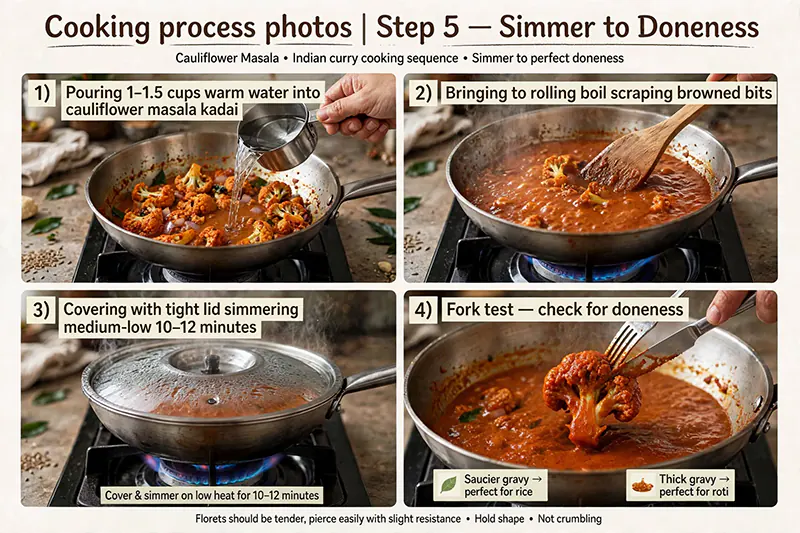
Step 5: Simmer to Doneness
Pour in 1 to 1.5 cups of warm water, depending on your preferred consistency:
- Use 1 cup for a thicker, clingy gravy suited for roti and chapati.
- Use 1.5 cups for a saucier gravy suited for mixing with steamed rice.
Stir gently to combine, scraping up any browned bits stuck to the bottom of the pan. Bring the liquid to a rolling boil over medium-high heat.
Once boiling, lower the heat to medium-low, cover with a tight-fitting lid, and simmer undisturbed for 10 to 12 minutes.
Visual and Texture Check: Insert a fork or knife tip into the thickest part of a floret stem. It should pierce easily with slight resistance, not crumble or break apart. The florets should retain their distinct shape.
Step 6: Finish with Garam Masala and Herbs
Remove the lid. If the gravy looks too thin, simmer uncovered on medium heat for 2 additional minutes until reduced to your liking.
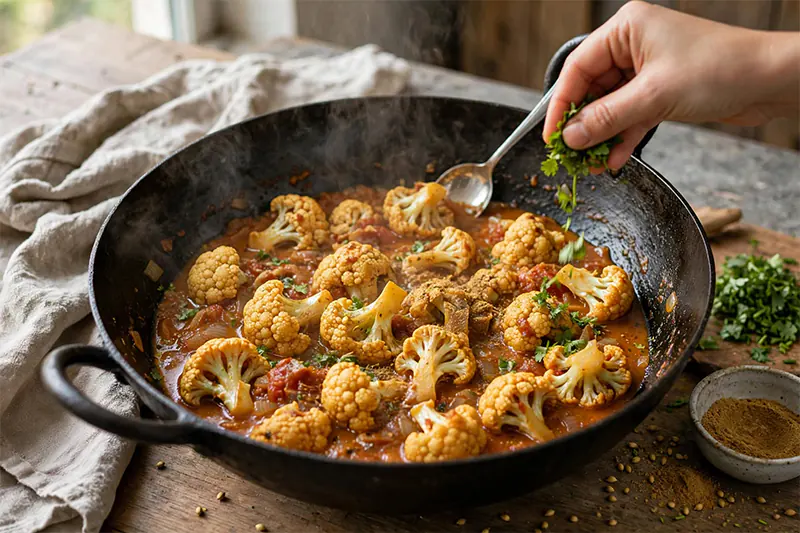
Sprinkle 1/2 teaspoon of garam masala across the curry and stir gently from the edges inward to avoid snapping the tender florets. Turn off the heat.
Garnish with 2 tablespoons of freshly chopped coriander leaves. Keep the pan covered for 5 minutes off the flame before serving to allow the flavors to settle.
Practical Tips for the Best Texture
- Cut Florets Evenly: Keep all florets roughly the same size (1.5 to 2 inches). If pieces vary widely, smaller florets will dissolve into mush while larger stems remain raw and tough in the center.
- Use Warm Water: Adding cold water to a hot pan drops the cooking temperature abruptly, causing the cauliflower to absorb water sluggishly and turn spongy.
- Avoid Vigorous Stirring: Once the cauliflower is tender, avoid stirring through the middle of the pan. Use a flat ladle and stir gently around the perimeter to keep florets whole.
- Thickening Without Starches: To naturally thicken the gravy, crush 2 to 3 small pieces of cooked cauliflower floret or stem against the side of the pan with your spatula and stir back into the simmering sauce.
Common Mistakes and How to Fix Them
| Problem | Cause | How to Fix It |
| Cauliflower is mushy and broken | Overcooked or boiled on high heat for too long. | Stop cooking immediately and take the lid off. Next time, cook over medium-low heat and test for doneness at the 10-minute mark. |
| Curry tastes watery or flat | Water was added before tomatoes broke down, or too much water was used. | Simmer uncovered on medium heat for 3–4 minutes to reduce excess liquid. Stir in 1/4 tsp garam masala or a pinch of dry mango powder (amchur) to brighten the flavor. |
| Raw, bitter spice taste | Ginger-garlic paste or dry spice powders were undercooked. | Always sauté ginger-garlic paste until the raw bite softens (1–2 minutes) and cook the tomato-spice mixture until oil visibly releases before adding water. |
| Curry is too spicy | Heavy hand with green chilies or chili powder. | Stir in 1 tablespoon of plain whisked yogurt (off heat), 1 tablespoon of coconut milk, or a teaspoon of ghee. |
Easy Recipe Variations
- Cauliflower & Green Peas (Gobi Matar): Add 1/2 cup of fresh or frozen green peas alongside the cauliflower in Step 4. Peas cook in the same 10–12 minute simmering window.
- South Indian Coconut Style: Grind 3 tablespoons of fresh grated coconut with 1/2 teaspoon of fennel seeds and 2 tablespoons of water into a smooth paste. Stir this paste into the curry 3 minutes before turning off the heat for a fragrant, mild coastal finish.
- No-Onion, No-Garlic Version: Omit the onions and ginger-garlic paste. Use 1/4 teaspoon of asafoetida (hing) in the oil tempering, increase grated ginger to 1 tablespoon, and add an extra ripe tomato to build body.
What to Serve with Cauliflower Curry
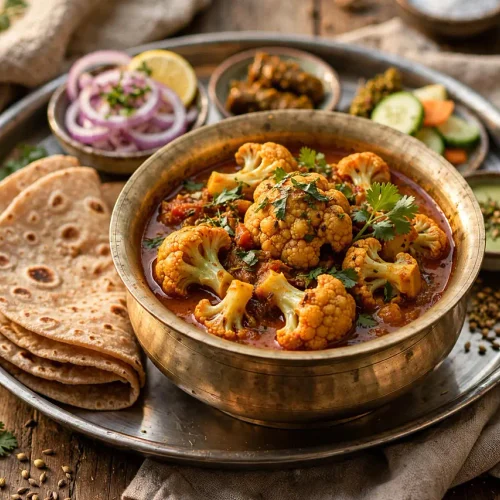
- Flatbreads: Pairs naturally with warm phulkas, butter rotis, plain parathas, or poori.
- Rice Dishes: Serve alongside steamed basmati rice, jeera rice, or ghee rice with a side of plain yogurt, papad, and lemon pickle.
- Complete Indian Meal: Pair with a bowl of yellow tadka dal, a crisp cucumber-onion kachumber salad, and warm chapatis.
Storage and Reheating Instructions
- Refrigeration: Store cooled leftover curry in an airtight glass or stainless-steel container in the refrigerator for up to 3 days.
- Texture Changes: Cauliflower continues to absorb liquid as it sits, meaning the gravy will be thicker the next day.
- Reheating: Transfer the curry to a small saucepan, add 2 to 3 tablespoons of hot water, and reheat over low-medium heat until steaming. Avoid microwave heating on full blast, which makes the floret stems rubbery.
- Freezing Note: Freezing is not recommended. Cooked cauliflower breaks down structurally upon thawing, releasing moisture and turning into a spongy paste.
Frequently Asked Questions
Can I use frozen cauliflower for this curry?
Yes. Thaw the frozen florets completely and pat them dry with a clean kitchen towel before adding them to the masala in Step 4. Reduce the water in the curry to 3/4 cup, as frozen cauliflower releases significant moisture during cooking. Reduce simmering time to 6–8 minutes.
Why do you soak the cauliflower in warm salted water?
The warm salted water expels any small insects or debris trapped inside tight florets and reduces sulfurous odors. It cleans the vegetable without softening the fibers, ensuring it cooks evenly later in the gravy.
How do I make this curry thicker without cream or cashews?
Simmer the curry uncovered for 3–5 minutes at the end of cooking. Lightly press 2–3 pieces of cooked cauliflower floret against the side of the pan with the back of your spoon to release natural starch into the gravy, creating body instantly.
Is this recipe vegan and gluten-free?
Yes. This recipe is naturally 100% vegan (made with vegetable oil) and gluten-free as written. If you choose to add asafoetida (hing) in variations, ensure it is certified gluten-free, as many commercial brands are compounded with wheat flour.
Homestyle Cauliflower Curry (Gobi Curry)
Cauliflower Curry Recipe is one of the famous Indian dishes.
Ingredients
- 500 g cauliflower 1 medium head, cut into bite-sized florets
- 4 cups warm water for soaking
- 1/2 tsp turmeric powder divided: 1/4 tsp for soak, 1/4 tsp for curry
- 1.5 tsp salt divided: 1/2 tsp for soak, 1 tsp for curry, adjust to taste
- 2 tbsp cooking oil
- 1/2 tsp mustard seeds
- 1/2 tsp cumin seeds
- 1 sprig curry leaves 8–10 leaves
- 1 large onion finely chopped (approx. 150 g)
- 1 tbsp ginger-garlic paste
- 1 –2 green chilies slit
- 2 medium tomatoes finely chopped (approx. 200 g)
- 1.5 tsp Kashmiri red chili powder
- 1 tbsp coriander powder
- 1/2 tsp cumin powder
- 1/2 tsp garam masala
- 1 to 1.5 cups warm water
- 2 tbsp fresh coriander leaves finely chopped
Instructions
Clean Cauliflower: Soak florets in 4 cups warm water with 1/4 tsp turmeric and 1/2 tsp salt for 5 minutes. Drain thoroughly.
Temper: Heat 2 tbsp oil in a pan over medium heat. Crackle mustard seeds (10 seconds), then add cumin seeds and curry leaves.
Sauté Aromatics: Add chopped onions and green chilies. Sauté 5–7 minutes until light golden. Add ginger-garlic paste; sauté 1–2 minutes until fragrant.
Build Masala: Add tomatoes, remaining 1/4 tsp turmeric, Kashmiri chili powder, coriander powder, cumin powder, and 1 tsp salt. Cover and cook 5–6 minutes on medium-low until tomatoes soften and oil separates at edges.
Coat: Add drained cauliflower florets. Sauté gently on medium heat for 2–3 minutes until evenly coated in masala.
Simmer: Add 1 to 1.5 cups warm water. Bring to a boil, then cover and simmer on medium-low for 10–12 minutes until florets are fork-tender but hold their shape.
Finish: Stir in 1/2 tsp garam masala. Garnish with chopped coriander leaves. Cover and rest for 5 minutes off heat before serving.
Recipe Notes
Cut florets into uniform 1.5 to 2-inch pieces so stems and heads cook at the same rate.
For roti pairing, use 1 cup water for a thick semi-dry gravy. For rice pairing, use 1.5 cups water.
Storage
Refrigerate in an airtight container for up to 3 days. Reheat gently in a pan with 2 tablespoons of warm water. Freezing is not recommended.