Authentic Andhra Tamarind Pulihora Recipe (Temple-Style Chintapandu Pulihora)
Andhra tamarind pulihora is a traditional South Indian sour rice dish made by mixing cooled, fluffy rice with a thick, simmered tamarind paste (pulihora pulusu) and a fragrant tempering of crunchy peanuts, lentils, mustard seeds, green chilies, and asafoetida. It delivers a balanced profile of sour, spicy, salty, and nutty flavors, making it a staple for festivals, temple prasadam, and travel lunchboxes.
This recipe breaks down the classic method step-by-step, ensuring your rice grains remain separate, the tamarind reduction hits the right consistency, and the tempering stays crisp.

What Makes Temple-Style Pulihora Unique?
Authentic temple-style pulihora (prasadam pulihora) differs from everyday mixed rice in three ways:
- No Onion, No Garlic: It is strictly satvik, allowing the pungent aroma of asafoetida (hing) and fresh curry leaves to shine.
- Two-Stage Tamarind Cooking: The raw tamarind extract is simmered thoroughly with green chilies, turmeric, salt, and oil until reduced to a glossy, thick paste. Raw tamarind should never be mixed directly into rice without boiling.
- Fluffy, Coated Rice Grains: The rice is cooked so each grain stays separate, then immediately spread out and coated with unrefined sesame or groundnut oil, turmeric, and fresh curry leaves while still warm.
Key Ingredients and Why They Matter
| Ingredient | Purpose in the Recipe |
| Sona Masoori Rice | Medium-grain rice that absorbs the sour sauce without turning mushy. |
| Aged Tamarind (Chintapandu) | Dark, mature tamarind provides a rich, mellow sourness without harsh astringency. |
| Groundnut or Sesame Oil | Traditional cooking medium; adds authentic South Indian aroma and preserves shelf-life. |
| Raw Peanuts & Dals | Chana dal, urad dal, and raw peanuts provide texture and nutty crunch in every bite. |
| Green & Dry Red Chilies | Green chilies simmer in the paste for heat; red chilies infuse the tempering oil. |
| Asafoetida (Hing/Inguva) | The defining aroma of traditional prasadam; balances the heavy sourness of tamarind. |
| Turmeric Powder (Pasupu) | Imparts the classic golden-yellow color and acts as a natural preservative. |
| Jaggery (Optional) | A small piece (1/2 tsp) balances the sharp acidity without making the rice sweet. |
Ingredient Measurements
For Cooking the Rice:
- Raw Rice (Sona Masoori): 1 cup (200 g)
- Water: 2 cups (480 ml)
- Turmeric Powder: 1/4 tsp
- Oil (Groundnut or Sesame): 1 tbsp
- Salt: 1/2 tsp
For the Tamarind Paste (Pulihora Pulusu):
- Tamarind (tightly packed): 50 g (lemon-sized ball)
- Hot Water (for extraction): 1.5 cups (360 ml)
- Green Chilies (slit lengthwise): 4 to 5
- Turmeric Powder: 1/4 tsp
- Salt: 1 tsp (adjust to taste)
- Oil: 1 tbsp
- Jaggery: 1/2 tsp (optional, highly recommended)
For the Tempering (Popu / Talimpu):
- Groundnut or Sesame Oil: 2.5 tbsp
- Mustard Seeds (Avalu): 1 tsp
- Bengal Gram (Chana Dal): 1 tbsp
- Split Black Gram (Urad Dal): 1 tsp
- Raw Peanuts (Verusanaga Pappu): 3 tbsp
- Dry Red Chilies (broken): 3 to 4
- Asafoetida (Hing / Inguva): 1/4 tsp (generous pinch)
- Fresh Curry Leaves: 2 sprigs (about 15–20 leaves)
- Grated Ginger (optional): 1 tsp
Step-by-Step Cooking Instructions
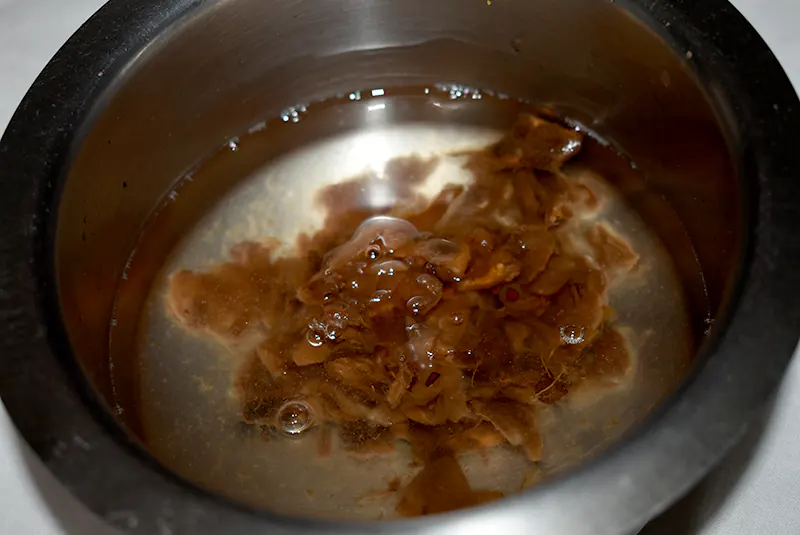
Step 1: Soak and Extract the Tamarind Pulp
Soften the dry tamarind in warm water to extract a clean, smooth base.
- Place 50 g of tamarind in a small heatproof bowl and pour in 1.5 cups of warm water.
- Let it soak for 15 to 20 minutes until thoroughly soft and pliable.
- Mash the tamarind vigorously with your fingers to separate the pulp from the hard seeds and fibers.
- Strain the liquid through a medium-mesh sieve into a clean bowl, pressing the solids firmly with the back of a spoon. Discard the leftover fibers and seeds.
Visual Cue: You should have roughly 1 to 1.25 cups of smooth, medium-thick tamarind water with no gritty residue.
Step 2: Boil the Tamarind Pulp into a Thick Concentrate
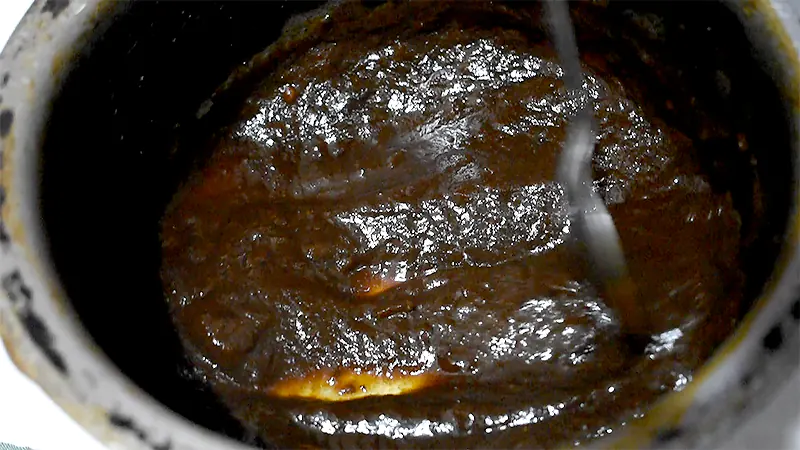
Boiling removes the raw, astringent edge of the tamarind and creates the concentrated base.
- Pour the strained tamarind extract into a small saucepan or kadai over medium heat.
- Bring the extract to a rolling boil (about 3 to 4 minutes).
- Lower the heat to medium-low and let it simmer gently for 7 to 9 minutes, stirring occasionally so it does not catch at the bottom.
- Turn off the heat once it reaches a syrupy, thick consistency. Set aside.
Visual Cue: The pulp is ready when it coats the back of a spoon without running off immediately, and bubbles appear slow and glossy.
Step 3: Cook and Cool the Rice
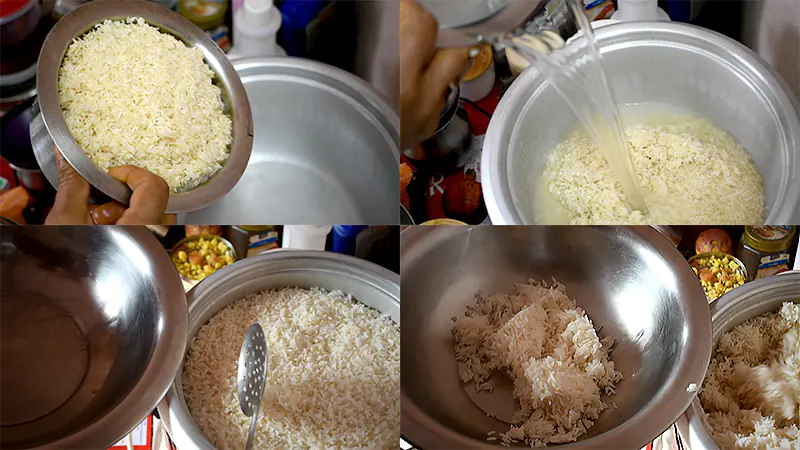
Keeping the grains separate and intact is the secret to non-mushy pulihora.
- Rinse 500 g (approx. 2.5 cups) of raw rice under running water 2 to 3 times until the water runs mostly clear. Drain completely.
- Add the rice and 1 liter (4 cups) of water to a pressure cooker or heavy pot, following the strict 1:2 rice-to-water ratio.
- Cook for 2 whistles on medium heat (or cook until all water is absorbed and grains are tender yet firm).
- Remove the cooker from heat and let the steam release naturally for 5 minutes, then open the lid.
- Immediately spread the hot rice across a wide vessel, rimmed tray, or steel thali.
Crucial Tip: Spreading the rice while hot releases excess trapped steam and cools the grains individually, preventing them from sticking together into a paste. Do not mash or stir aggressively.
Step 4: Roast and Grind Sesame Seeds
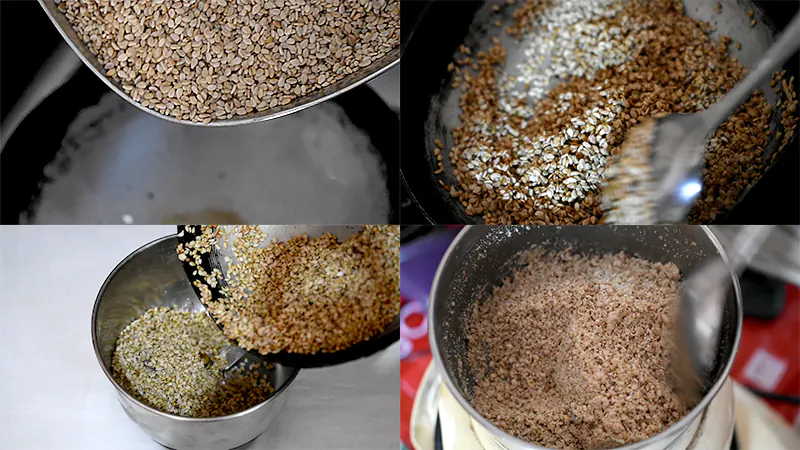
Roasted sesame seed powder adds a rich, nutty undertone and helps temper the acidity.
- Heat a small dry pan over low heat.
- Add 2 tablespoons of white or brown sesame seeds.
- Toast for 1.5 to 2 minutes, tossing continuously, until they turn light golden and begin to pop.
- Transfer immediately to a plate to prevent them from burning on the residual pan heat.
- Once cooled, pulse the toasted seeds in a small spice grinder into a coarse powder.
- Scatter the coarse sesame powder evenly over the warm, spread-out rice on your tray.
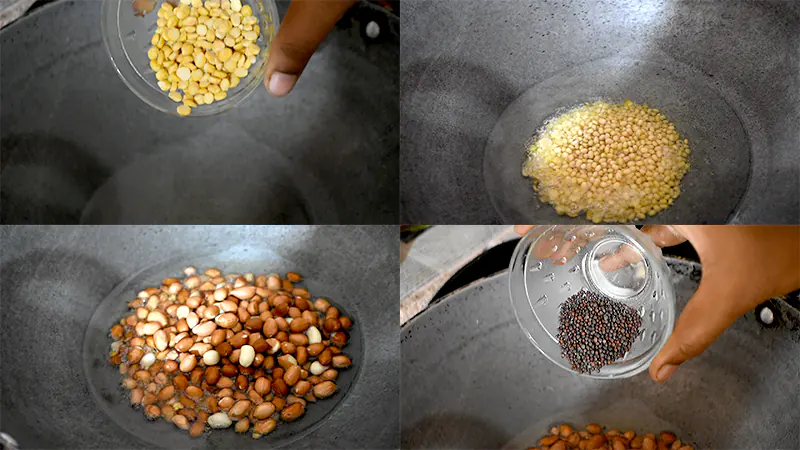
Step 5: Fry the Dals, Peanuts, and Mustard Seeds
Layering the tempering ingredients ensures each item turns golden and crunchy without burning.
- Heat 3 to 4 tablespoons of oil in a heavy kadai or pan over medium heat.
- Add raw peanuts, chana dal (Bengal gram), moong dal (split yellow lentils), and mustard seeds.
- Fry steadily for 2 to 3 minutes, stirring frequently.
Visual Cue: Listen for the mustard seeds to pop and watch for the peanuts and dals to turn an even, light golden-brown.
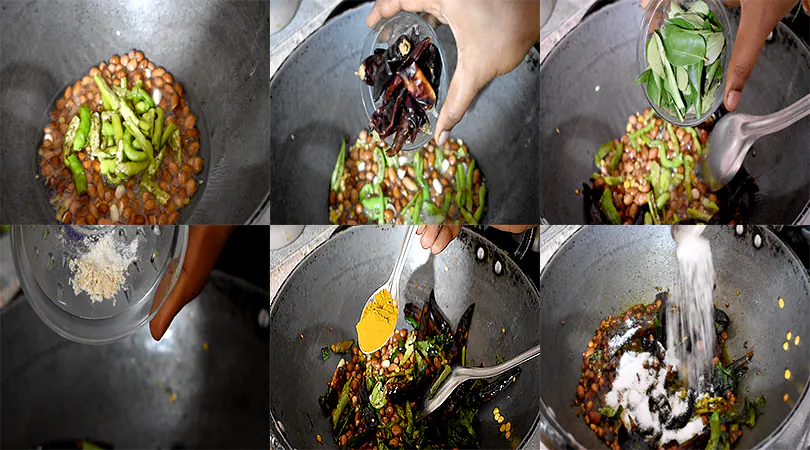
Step 6: Add Chilies, Curry Leaves, and Aromatics
Infuse the hot oil with heat, fragrance, and color.
- Slit 4 to 5 green chilies and drop them into the hot oil; fry for 10 to 15 seconds until blistered. (Adjust chili count to suit your heat tolerance).
- Add 3 to 4 broken dry red chilies and stir for another 15 seconds until they deepen in color.
- Add a handful of fresh curry leaves. They will splutter vigorously and turn translucent and crisp within 10 seconds.
- Lower the flame to low and stir in:
- 1/4 tsp asafoetida (hing)
- 1/2 tsp turmeric powder
- The boiled tamarind concentrate from Step 2
- 1.5 to 2 tsp salt (adjust to taste)
- Mix all the ingredients thoroughly in the pan over low heat for 1 to 2 minutes until well integrated and bubbling lightly.
Make-Ahead Preservation Note: At this exact stage, this cooked, tempered tamarind mixture (pulihora pulusu) is fully shelf-stable. You can cool a portion and store it in an airtight glass container in the refrigerator for future quick meals.
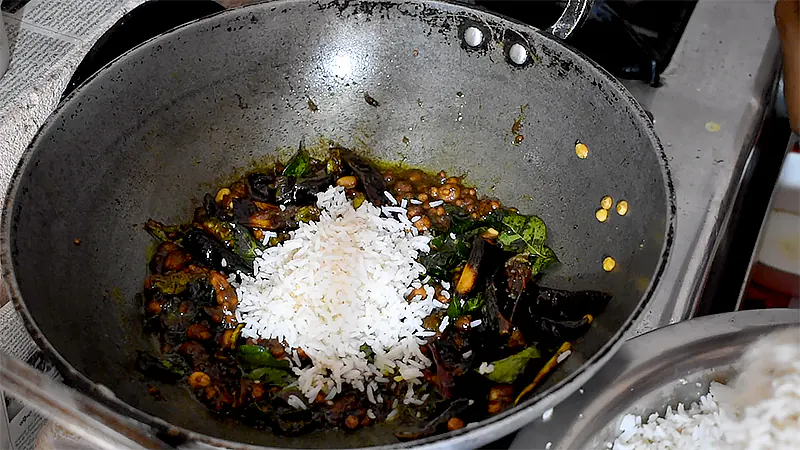
Step 7: Mix with Rice and Rest
Gently combine the tempered sauce with the prepared rice grains.
- Pour the warm tempered tamarind mixture over the cooled rice in the wide vessel.
- Using a wide, flat spatula or clean hands, gently fold the mixture into the rice from the outer rim toward the center.
- Continue folding until every grain is evenly coated in a bright golden-yellow color and no white patches remain. Avoid pressing down or mashing the grains.
- Let the dish rest covered for 20 to 30 minutes before serving. This allows the grains to absorb the tart, spicy, and nutty flavors fully.
Your authentic Tamarind Pulihora (Chintapandu Pulihora) is ready to serve at room temperature.
Prefer a visual walkthrough? Watch our step-by-step Tamarind Pulihora Recipe video on YouTube or play it directly below:
4 Rules for the Best Pulihora
- Never Mix Sauce into Hot Rice: Hot rice breaks down mechanically when stirred, releasing starch and turning the dish pasty. Always cool the rice on a wide plate first.
- Fry Peanuts Before Dals: Peanuts take twice as long to cook through as chana dal or mustard seeds. If you add everything together, the mustard burns before the peanuts become crunchy.
- Cook the Pulusu Until Oil Releases: If the tamarind reduction is watery or undercooked, the rice will absorb excess moisture and turn soggy within two hours.
- Give It Time to Rest: Freshly mixed pulihora always tastes slightly sharp and disjointed. After 1 hour, the starch binds with the tamarind acid and the spices harmonize.
Troubleshooting Common Mistakes
- The pulihora is too sour: Add 1–2 tablespoons of hot oil tempered with a pinch of hing and turmeric, or mix in 1/2 cup of plain, cooked, cooled rice. A tiny pinch of powdered jaggery also neutralizes harsh acid.
- The rice turned sticky or mushy: The rice was either overcooked or mixed while still hot. For your next batch, reduce cooking water to 1.75 cups per cup of raw rice, and spread the rice with oil on a flat tray immediately after cooking.
- The peanuts and lentils turned soft quickly: The tempering was mixed into hot, steamy rice, or the tamarind paste was too watery. Ensure the rice is room temperature and the pulusu is cooked down thick.
- The tamarind paste tastes bitter: The tamarind extract was boiled on excessively high heat and scorched at the bottom of the pan, or burnt mustard seeds were added. Simmer the paste on medium-low in a heavy-bottomed kadai.
Authentic Variations
- Temple Prasadam Style (with Roasted Powder): Dry roast 1/2 teaspoon fenugreek seeds (methi) and 1 teaspoon mustard seeds until fragrant and golden. Grind to a fine powder. Sprinkle 1/4 teaspoon of this powder over the rice while mixing for that distinct temple-counter aroma.
- With Roasted Sesame Powder (Nuvvula Pulihora): Dry-roast 2 tablespoons of white sesame seeds until they pop, grind into a coarse powder, and fold into the rice along with the tamarind pulusu.
- Green Chili Paste Version: Instead of just slit green chilies, crush 3 green chilies with a small piece of ginger into a coarse paste and sauté it in the tempering. This increases the heat significantly.
What to Serve with Tamarind Pulihora
Tamarind pulihora is a self-contained, complete meal, but it pairs naturally with:
- Crisp Accompaniments: Plain fried papad, potato chips, or deep-fried vada (medu vada).
- Yogurt-Based Sides: Chilled curd rice or plain yogurt, which balances the high acidity and spice.
- Festival Thali: Often served alongside Garelu (Medu Vada), Paramannam (Sweet Rice Kheer), and vegetable stir-fries (Vepudu).
Storage and Reheating Guidelines
- At Room Temperature: Tamarind pulihora keeps exceptionally well due to the natural preservative properties of tamarind, turmeric, and oil. It stays fresh at room temperature for up to 24 hours in moderate climates.
- In the Refrigerator: Store leftovers in an airtight glass or stainless-steel container for up to 4 days.
- Reheating Instructions: Pulihora is traditionally served at room temperature. If cold from the fridge, do not microwave it with high heat (which ruins the texture). Instead, let it sit on the counter for 30 minutes to come to room temperature, or steam it gently for 2–3 minutes.
- Make-Ahead Tamarind Paste (Pulihora Pulusu): You can scale up the tamarind paste recipe, cook it until thick, and store it in a dry, sterile glass jar in the refrigerator for up to 1 month. When needed, simply mix with freshly cooked, cooled rice and fresh tempering.
Frequently Asked Questions
Can I use store-bought tamarind paste?
Yes, but check the ingredient label. Use 100% pure unsalted tamarind concentrate (about 2.5 tablespoons for 1 cup of raw rice). Whisk it with 1/2 cup of water, then simmer it with green chilies, salt, and turmeric as described in Step 3 to remove the raw, processed taste.
Which rice variety is best for pulihora?
Sona Masoori is the gold standard for Andhra pulihora. Long-grain basmati is too aromatic and does not absorb the sour-salty tempering traditionally. Ponni boiled rice or any medium-grain raw rice also works well.
Why is my pulihora pale yellow instead of golden?
Add turmeric at two stages: a pinch directly into the hot cooked rice while spreading it out, and another pinch into the boiling tamarind paste. This yields a rich, vibrant yellow hue.
Can I make this without jaggery?
Yes. Jaggery is optional, but a 1/2 teaspoon does not make the dish sweet; it rounds off the sharp, biting edge of pure tamarind acid.

Authentic Andhra Tamarind Pulihora (Chintapandu Pulihora)
A traditional South Indian recipe for authentic Andhra-style tamarind rice (chintapandu pulihora) made with fluffy rice, simmered tamarind paste, and a crisp lentil-peanut tempering.
Ingredients
For the Rice:
- 1 cup Sona Masoori rice raw
- 2 cups water
- 1/4 tsp turmeric powder
- 1 tbsp groundnut or sesame oil
- 1/2 tsp salt
For the Tamarind Pulusu (Paste):
- 50 g tamarind tightly packed lemon-sized ball
- 1.5 cups hot water for soaking
- 4 green chilies slit
- 1/4 tsp turmeric powder
- 1 tsp salt adjust to taste
- 1 tbsp oil
- 1/2 tsp powdered jaggery optional
For the Tempering (Popu):
- 2.5 tbsp groundnut or sesame oil
- 1 tsp mustard seeds
- 1 tbsp chana dal bengal gram
- 1 tsp urad dal split black gram
- 3 tbsp raw peanuts
- 3 dry red chilies halved
- 1/4 tsp asafoetida hing
- 15 fresh curry leaves
Instructions
Cook the Rice: Rinse 1 cup Sona Masoori rice. Cook with 2 cups water for 2 whistles in a pressure cooker. Spread immediately on a wide plate. Drizzle 1 tbsp oil, 1/4 tsp turmeric, 1/2 tsp salt, and a few curry leaves. Let it cool completely.
Extract Tamarind: Soak 50 g tamarind in 1.5 cups hot water for 15 minutes. Squeeze thoroughly and strain out all seeds and fibers to yield smooth extract.
Simmer the Pulusu: Heat 1 tbsp oil in a pan. Add tamarind extract, slit green chilies, 1/4 tsp turmeric, 1 tsp salt, and 1/2 tsp jaggery. Simmer on medium-low for 8–10 minutes until thick and oil droplets surface. Turn off heat.
Fry the Tempering: Heat 2.5 tbsp oil in a pan. Fry peanuts until golden (2 mins). Add chana dal and urad dal; fry until lightly browned (1 min). Add mustard seeds and let them splutter completely. Add dry red chilies and curry leaves; sauté 20 seconds. Turn off heat, add asafoetida, and stir.
Combine & Rest: Pour 3/4 of the tamarind reduction and the warm tempering over the cooled rice. Mix gently using a spatula from edges to center without mashing grains. Taste and add remaining paste if more tanginess is desired.
Rest: Cover and let sit for 30–45 minutes before serving for flavors to penetrate.
Recipe Notes
Always cool the rice fully before mixing to prevent mushiness.
Sona Masoori rice provides the ideal grain texture; avoid fragrant basmati.
Adjust green chilies and red chilies to match preferred spice tolerance.
Storage
Stays fresh at room temperature for up to 24 hours.
Refrigerate in an airtight container for up to 4 days. Serve at room temperature.


