Traditional Coconut Rice Recipe (Thengai Sadam / Kobbari Annam)
Traditional South Indian coconut rice—known as Thengai Sadam in Tamil and Kobbari Annam in Telugu—is a fragrant, mildly spiced dish made by folding freshly grated coconut into cooked, fluffy rice tempered with mustard seeds, crunchy lentils, green chilies, ginger, and curry leaves. It is naturally vegetarian, prepared without onion or garlic, and comes together in just 15 minutes when you have pre-cooked rice ready.

Whether you are preparing it as neivedyam (prasadam) for festivals like Navratri, Aadi Perukku, and Varalakshmi Vratham, or packing it into a school or office lunchbox, this step-by-step guide ensures separate grains, perfectly crisp tempering, and an authentic coconut flavor without greasiness.
What Makes This Recipe Work
- Fluffy, Non-Sticky Grains: Simple cooling techniques keep the rice grains separate and intact when tossed with the tempering.
- Balanced Crunch and Warmth: Slow-fried chana dal, urad dal, and cashews provide a nutty crunch that balances the tender coconut, while ginger and green chilies cut through the natural sweetness.
- No Browned Coconut: Precise heat guidance keeps the coconut pristine white, fragrant, and juicy rather than toasted or dry.
- Naturally Vegan and Satvik: Pure plant-based comfort made without onions or garlic.
Ingredients You Will Need
For the Rice Base:
- Cooked Rice: 3 cups (cooked and cooled; Sona Masoori, Ponni, or any medium-grain non-sticky rice; Basmati works too)
- Salt: ¾ to 1 teaspoon (adjust to taste)
- Oil for cooling rice: ½ teaspoon (optional, helps separate grains)
For the Tempering (Tadka / Thalippu):
- Coconut Oil or Sesame (Gingelly) Oil: 1.5 to 2 tablespoons
- Mustard Seeds (Rai / Kadugu): 1 teaspoon
- Split Urad Dal: 1 teaspoon
- Chana Dal (Bengal Gram): 1 teaspoon
- Cashew Nuts: 10 to 12 halves (optional, but recommended for rich texture)
- Dry Red Chilies: 2, broken in half
- Green Chilies: 2 to 3, slit lengthwise (adjust for spice preference)
- Fresh Ginger: 1 teaspoon, finely grated or minced
- Asafoetida (Hing): ¼ teaspoon (use gluten-free hing if needed)
- Fresh Curry Leaves: 1 sprig (10–12 leaves), rinsed and wiped dry
The Star Ingredient:
- Fresh Coconut: 1 to 1.25 cups, freshly grated (tightly packed, white portion only)
Key Ingredient Notes & Substitutions
- Fresh Grated Coconut: Always grate only the white meat of the coconut. Avoid grating deep into the brown inner shell (chotta), which makes the rice gritty and discolored.
- Substitute: If fresh coconut is unavailable, use unsweetened frozen grated coconut (thawed to room temperature). If using dry desiccated coconut, soak it in 3 tablespoons of warm water or thin coconut milk for 10 minutes, squeeze lightly, and then add to the pan to restore natural moisture.
- The Rice: Short to medium-grain South Indian varieties like Sona Masoori, Seeraga Samba, or Ponni provide the most traditional flavor and mouthfeel. The rice must be cooked so the grains are soft but firm, never mushy.
- The Cooking Oil: Pure coconut oil yields the most pronounced aroma. Sesame oil (gingelly oil) gives a classic Tamil temple-style finish. Ghee adds festive richness if vegan preparation is not required.
- Asafoetida (Hing): Adds digestive benefits and savory depth to an allium-free dish. Do not skip it unless adhering to a strict gluten-free diet using wheat-compounded hing.
Step-by-Step Instructions
Step 1: Wash and Cook the Rice
- Place 1 bowl of raw rice in a deep vessel, add water, and rinse gently to wash away excess surface starch. Drain the water completely.
- Pour 2 bowls of water into the vessel with the cleaned rice.
- Place the vessel on the stove and cook over low heat until all the water is absorbed and the grains are tender.
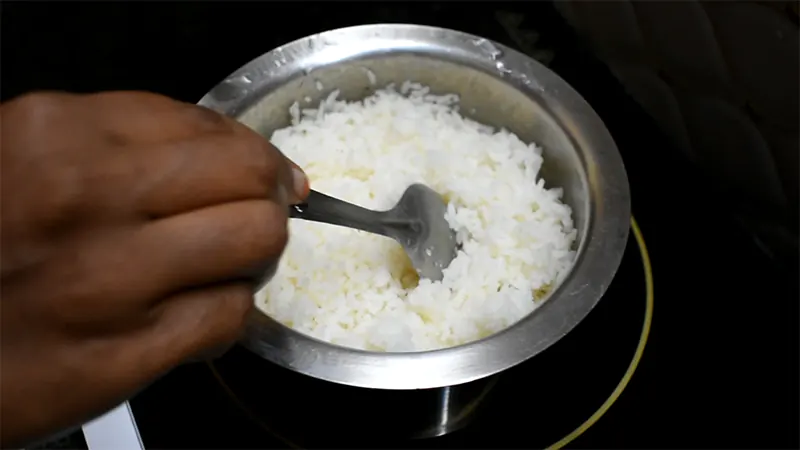
- Visual & Texture Doneness Check: Once cooked, you will notice the top layer looks dry rather than watery. Insert a dry spoon vertically into the center of the rice: if it comes out clean and non-sticky, the rice is fully done. If it feels wet or pasty, keep it covered on low heat for another 2 minutes.
- Turn off the flame, transfer the rice to a wide plate, and spread it gently so it cools without clumping.
Step 2: Temper the Whole Spices and Dal in Ghee
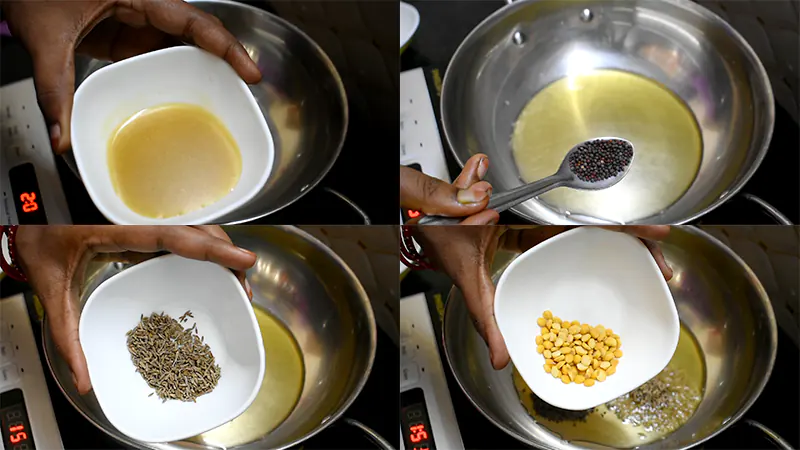
- Heat 2 tablespoons of ghee in a wide, heavy pan over medium-low heat.
- Once the ghee melts and turns warm, add 1 teaspoon of mustard seeds and allow them to crackle.
- Add ½ teaspoon of cumin seeds (jeera) along with 1 teaspoon of chana dal.
- Fry for 45 to 60 seconds on low-medium flame, stirring continuously, until the chana dal turns a light, crisp golden yellow.
Step 3: Add Aromatics, Chilies, and Curry Leaves
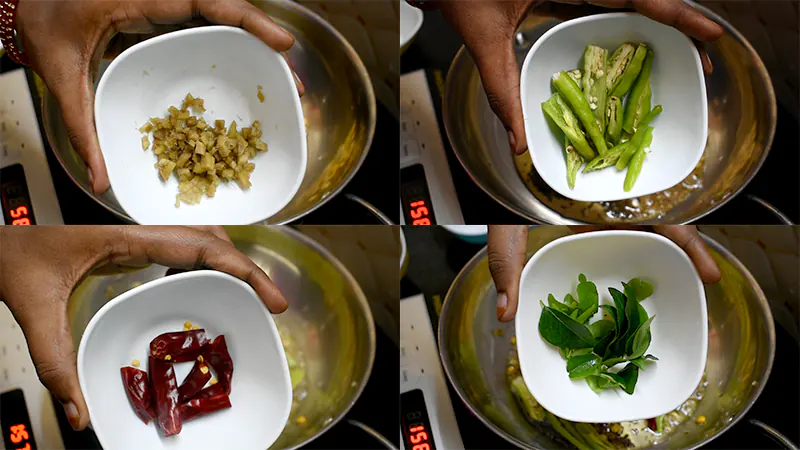
- Add the finely sliced ginger pieces, slit green chillies, broken dry red chillies, and fresh curry leaves to the hot ghee.
- Sauté for 30 to 40 seconds over medium-low heat until the chilies blister slightly and the ginger releases its aroma into the ghee without burning.
Step 4: Sauté the Cashews and Grated Coconut
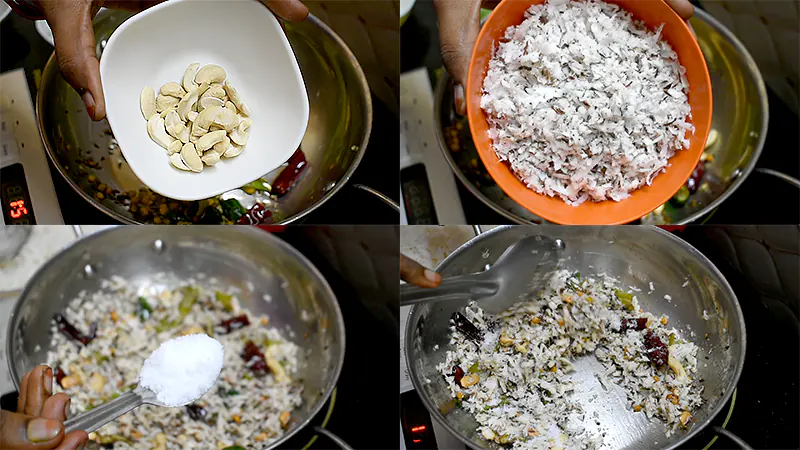
- Drop in 10 to 12 cashew halves followed by 1 bowl of freshly grated coconut.
- Sprinkle salt (approx. ¾ to 1 teaspoon, adjusted to taste) over the coconut mixture.
- Sauté over low heat for 1 to 2 minutes, stirring steadily.
- Visual Cue: Cook just until the raw smell of the coconut disappears and the cashew pieces turn lightly golden. Keep the flame low so the coconut stays soft and white instead of turning brown or dry.
Step 5: Mix in the Cooked Rice and Garnish
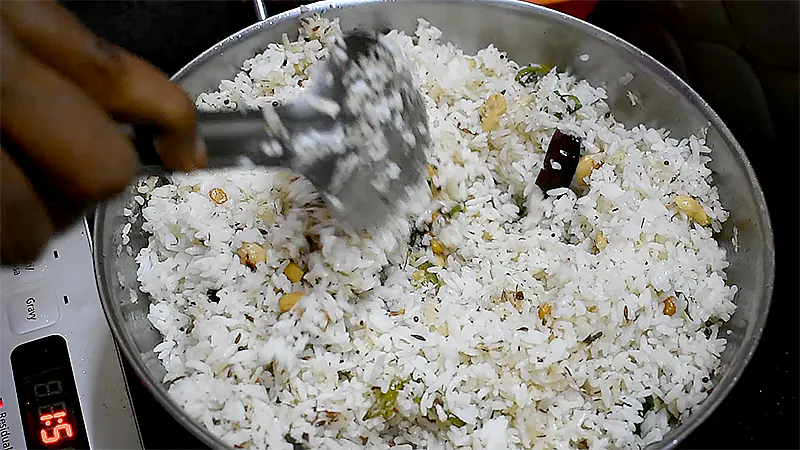
- Add the cooled, non-sticky cooked rice directly into the pan over the sautéed coconut mixture.
- Keep the flame on the lowest setting (or turn it off) and gently fold the rice using a wide ladle from the sides toward the center, ensuring the grains remain intact and the coconut tempering coats every grain evenly.
- Transfer the hot Coconut Rice (Thengai Sadam) onto a serving plate.
- Garnish with a sprinkle of freshly chopped coriander leaves and serve warm.
Prefer a visual walkthrough? Watch our step-by-step Coconut Rice Recipe video on YouTube or play it directly below:
Pro-Tips for Perfect Coconut Rice
- Never Toss Hot Rice: Mixing fresh grated coconut with hot, steaming rice releases moisture, creating gummy clumps. Always cool your rice until it is barely warm or at room temperature.
- Leftover Rice Is Ideal: Day-old refrigerated rice works exceptionally well. Take it out of the fridge 20 minutes before cooking, gently separate the cold grains with oiled hands, and fold it straight into the warm tempering.
- Control the Coconut Moisture for Lunchboxes: If packing this dish for school or office tiffins in hot weather, sauté the coconut for an extra 60 seconds on low flame. Removing that extra surface moisture dramatically delays bacterial growth and fermentation.
- Use Heavy-Bottomed Cookware: A thick-bottomed cast iron or stainless steel kadai distributes heat evenly, preventing the delicate lentils and coconut from scorching.
Troubleshooting Common Issues
- The Rice Became Mushy: The rice was either overcooked with too much water or mixed while piping hot. If this happens, spread the mixture onto a flat tray and let it air-dry under a fan for 10 minutes to firm up the starches.
- The Lentils (Dals) Are Too Hard to Chew: Dals turn rock-hard if dropped into boiling-hot oil or fried too fast over high heat. Always fry them over medium-low heat. If you struggle with dal hardness, soak the chana dal in warm water for 15 minutes and pat it dry before frying.
- The Coconut Turned Brown: The flame was too high or the coconut was left sitting in a hot pan without stirring. Sauté strictly on low heat and remove from the pan promptly once the raw scent is gone.
- The Dish Feels Dry on the Palate: Fresh coconut varies in natural oil content. If your rice feels dry after mixing, warm 1 teaspoon of coconut oil or melted ghee with a pinch of salt and gently fold it through.
Flavor Variations
- Temple-Style Prasadam (Koil Thengai Sadam): Use pure gingelly (sesame) oil for tempering, skip the cashews, add a generous pinch of coarse black pepper powder along with the green chilies, and fold in 1 tablespoon of freshly crushed raw coconut along with the sautéed coconut.
- Rich Festive Style: Fry the cashews in 1 tablespoon of pure cow ghee until deeply golden, mix into the rice, and finish with a sprinkle of crushed roasted peanuts.
- Lemon-Coconut Rice Twist: Squeeze 1 teaspoon of fresh lemon juice into the rice just before serving to add a refreshing, tangy lift that cuts the richness of the coconut.
- Mavinkai-Thengai Sadam (Raw Mango Coconut Rice): Sauté 2 tablespoons of finely grated tart green raw mango along with the grated coconut for a balanced sweet-tangy seasonal dish.
What to Serve With Thengai Sadam
Coconut rice has a mild, subtly sweet, and nutty profile, making it the perfect canvas for spicy, tangy, and crunchy accompaniments:
- Spicy South Indian Potato Fry (Urulaikizhangu Varuval): The crispy, chili-rubbed edges of skillet-roasted potatoes provide the classic South Indian combination.
- Tangy Gravies: Pair with a fiery Vatha Kuzhambu, roasted vegetable Ennai Kathirikai (brinjal curry), or a bright bowl of Tomato Rasam.
- Crispy Extras: Appalam (papadams), vadam, or spicy potato chips.
- Cooling Accompaniments: Fresh vegetable raita, plain curd, or a sour mango pickle (avakai).
Storage & Reheating Instructions
- Room Temperature: Because fresh coconut contains moisture and protein, coconut rice can ferment quickly in warm climates. Consume within 4 to 6 hours at room temperature.
- Refrigeration: Store leftovers in a clean, airtight stainless steel or glass container for up to 2 days.
- How to Reheat:
- Steaming (Best Method): Place the rice in a heatproof bowl inside an idli steamer or cooker (without whistle) and steam for 3 to 4 minutes. This restores natural moisture and fluffiness without drying the grains.
- Pan Reheating: Sprinkle 1 teaspoon of water over the rice, cover tightly with a lid, and warm over low heat for 3 minutes, stirring once gently.
- Microwave: Sprinkle a few drops of water, cover with a damp paper towel, and microwave on medium power for 45 to 60 seconds.
Frequently Asked Questions
Can I use frozen grated coconut for coconut rice?
Yes. Thaw the frozen coconut completely to room temperature before adding it to the pan. If the thawed coconut feels watery, pat it lightly with a clean paper towel so it does not make the rice soggy during sautéing.
Can I make coconut rice with coconut milk instead?
This recipe focuses on Thengai Sadam, which uses tempered, grated coconut folded into plain rice. Cooking rice directly in coconut milk produces rich Southeast Asian-style coconut rice or South Indian coconut milk pulao (Theenghai Paal Sadam), which has a distinctly different, creamier profile.
Is coconut rice good for school or office lunchboxes?
Yes, it is one of the most popular South Indian lunchbox recipes because it tastes delicious at room temperature and does not dry out easily. Just ensure you sauté the coconut for 2 full minutes to evaporate excess moisture, preventing it from spoiling during transit.
Why is my coconut rice bitter?
Bitterness usually occurs if the fresh coconut has begun to spoil (rancid oil) or if the brown inner shell of the coconut was grated along with the white meat. Always taste a small pinch of fresh coconut before grating it into your pan.

Traditional South Indian Coconut Rice (Thengai Sadam)
Coconut Rice Recipe or Thengai Sadam is one of the South
Indian recipes made with finely grated coconut, rice and a blend of spices.
Ingredients
- – 3 cups Cooked Sona Masoori or Ponni rice cooled completely
- – 1 to 1.25 cups Fresh grated coconut tightly packed, white portion only
- – 1.5 tbsp Coconut oil or sesame gingelly oil
- – 1 tsp Mustard seeds
- – 1 tsp Split urad dal
- – 1 tsp Chana dal
- – 10 Cashew nut halves
- – 2 Dry red chilies halved
- – 2 Green chilies slit lengthwise
- – 1 tsp Fresh ginger minced
- – 1 sprig Fresh curry leaves 10-12 leaves
- – 1/4 tsp Asafoetida Hing
- – 3/4 to 1 tsp Salt adjust to taste
Instructions
- Spread cooked rice on a wide plate to cool completely to room temperature.
- Heat coconut oil in a heavy-bottomed kadai over medium-low heat. Add mustard seeds and let them splutter.
- Add chana dal, urad dal, and cashews. Fry gently over medium-low heat for 1 to 2 minutes until light golden and crisp.
- Add dry red chilies, green chilies, grated ginger, and curry leaves. Sauté for 30 to 45 seconds until aromatic.
- Lower flame, add asafoetida (hing), and stir for 5 seconds.
- Add the fresh grated coconut. Sauté on low flame for 1 to 2 minutes until the raw moisture disappears and the aroma blooms. Do not let the coconut brown. Turn off the flame.
- Season the cooled rice with salt, then gently fold in the warm coconut tempering using a flat spatula until evenly distributed.
- Rest covered for 5 minutes before serving with potato fry, pickle, or papad.
Recipe Notes
- Never fold tempering into steaming hot rice; cool the rice first to keep grains separate.
- Grate only the white meat of the coconut to keep the dish clean and sweet.
- For temple prasadam style, swap coconut oil with sesame oil and add a pinch of crushed black pepper.
Storage:
- Store at room temperature for up to 4-6 hours, or refrigerate in an airtight container for up to 2 days. Reheat by steaming or gentle covered stovetop warming.


