Andhra-Style Aloo Curry: Homestyle Potato Gravy in 30 Minutes
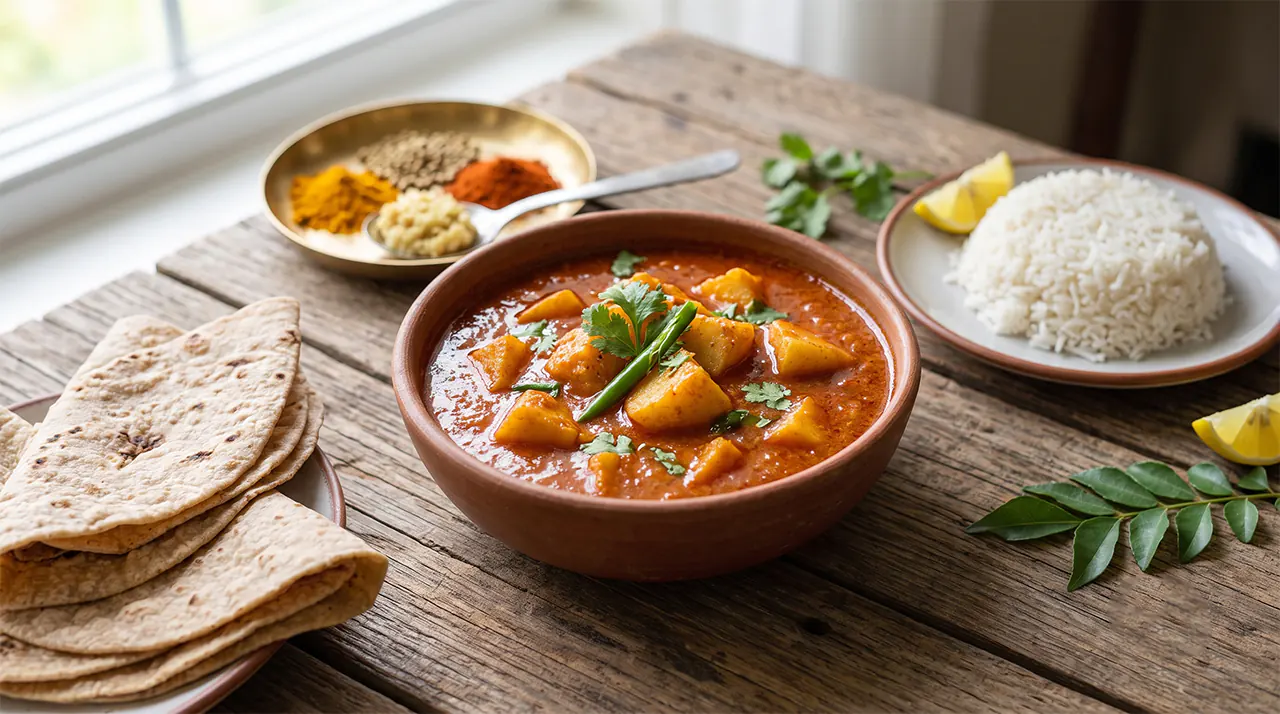
An authentic Andhra aloo curry is defined by tender, spice-permeated potato cubes suspended in a fragrant, clinging onion-tomato gravy with subtle heat. This 30-minute recipe achieves a rich, cohesive texture without cream or cashew paste by leveraging natural potato starch and a proper fat-bloomed spice base.
Why This Method Works: The Culinary Mechanics
A common flaw in everyday potato curries is a disconnected sauce—a watery puddle surrounding dense, unseasoned potato blocks. This recipe eliminates that issue through three core techniques:
- Starch Gelatinization for Body: Instead of relying on flour or heavy cream, lightly mashing roughly one-fifth of the cooked potato cubes directly into the simmering broth releases amylose starch. This binds the free water and fat into a glossy, clingy gravy.
- Proper Fat-Blooming (Bhuna): Raw ginger, garlic, and ground chili contain volatile, fat-soluble flavor compounds. Frying them in the oil before liquid is introduced eliminates raw sulfurous notes and extracts their true depth of color and flavor.
- Core-Seasoned Potatoes: Simmering the potatoes in salted water before adding them to the masala ensures the interior of each potato chunk carries balanced seasoning, rather than tasting flat beneath the gravy.
Key Ingredients and Smart Substitutions
| Ingredient | Role in the Dish | Kitchen Substitution |
| Yukon Gold or Russet Potatoes | Provides structure and natural starch to thicken the sauce. | Red skin potatoes hold their shape well; reduce cooking time by 2 minutes. |
| Yellow or Red Onions (Finely Diced) | Forms the savory, caramelized backbone of the gravy base. | Shallots yield a sweeter profile; use equal weight. |
| Roma Tomatoes (Finely Chopped) | Introduces acidity (malic and citric acids) to balance earthy spices. | 3 tablespoons canned tomato puree or 1/2 teaspoon amchur (dry mango powder). |
| Ginger-Garlic Paste (1:1 Ratio) | Delivers sharp aromatic pungency and rounds out the base. | Equal parts finely grated fresh ginger root and minced garlic. |
| Kashmiri or Andhra Red Chili Powder | Andhra chili gives assertive heat; Kashmiri delivers vibrant red color. | Paprika mixed with cayenne (3:1 ratio) for mild-to-medium heat. |
| Garam Masala | Adds warming floral and woody notes (clove, cardamom, cinnamon). | Freshly ground coriander-cumin powder (dhana-jeera) with a pinch of clove. |
Step-by-Step Aloo Curry Cooking Method:
1. Prep and Parboil the Potatoes: (Do not overcook; potatoes finish in the sauce.)
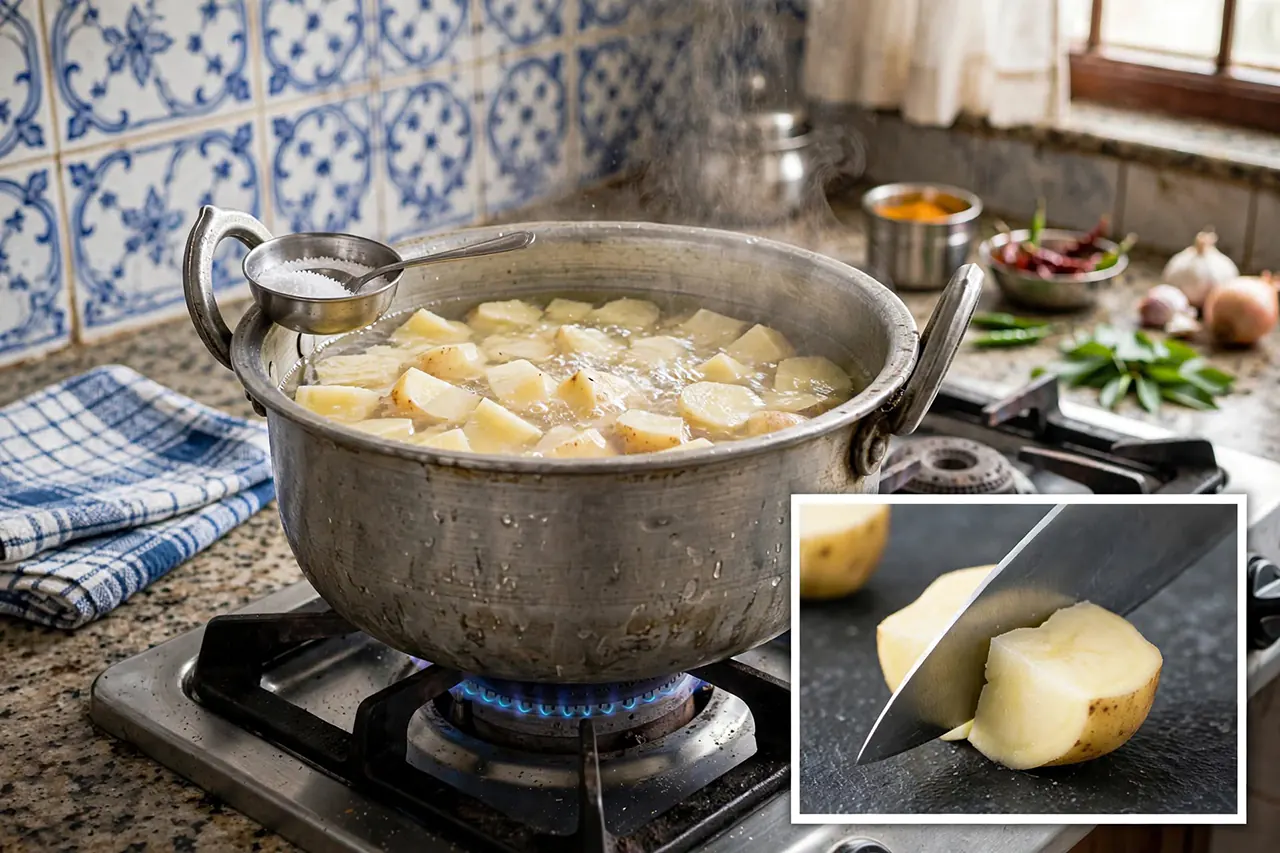
Peel 250g (about 2 medium) potatoes and dice into uniform 2-cm (3/4-inch) cubes. Place the cubes into a pot, submerge under cold water by at least 1 inch, and stir in 1/2 teaspoon of salt. Bring to a rolling boil over medium-high heat and cook for 8 to 10 minutes.
Visual doneness cue: A knife tip pierces the potato edge easily but meets firm resistance at the core. Drain and set aside immediately.
Mistake to avoid: Boiling until fully tender causes the cubes to disintegrate completely into mush once stirred into the gravy later.
2. Build the Onion Foundation: (High heat will scorch the alliums; keep it moderate.)
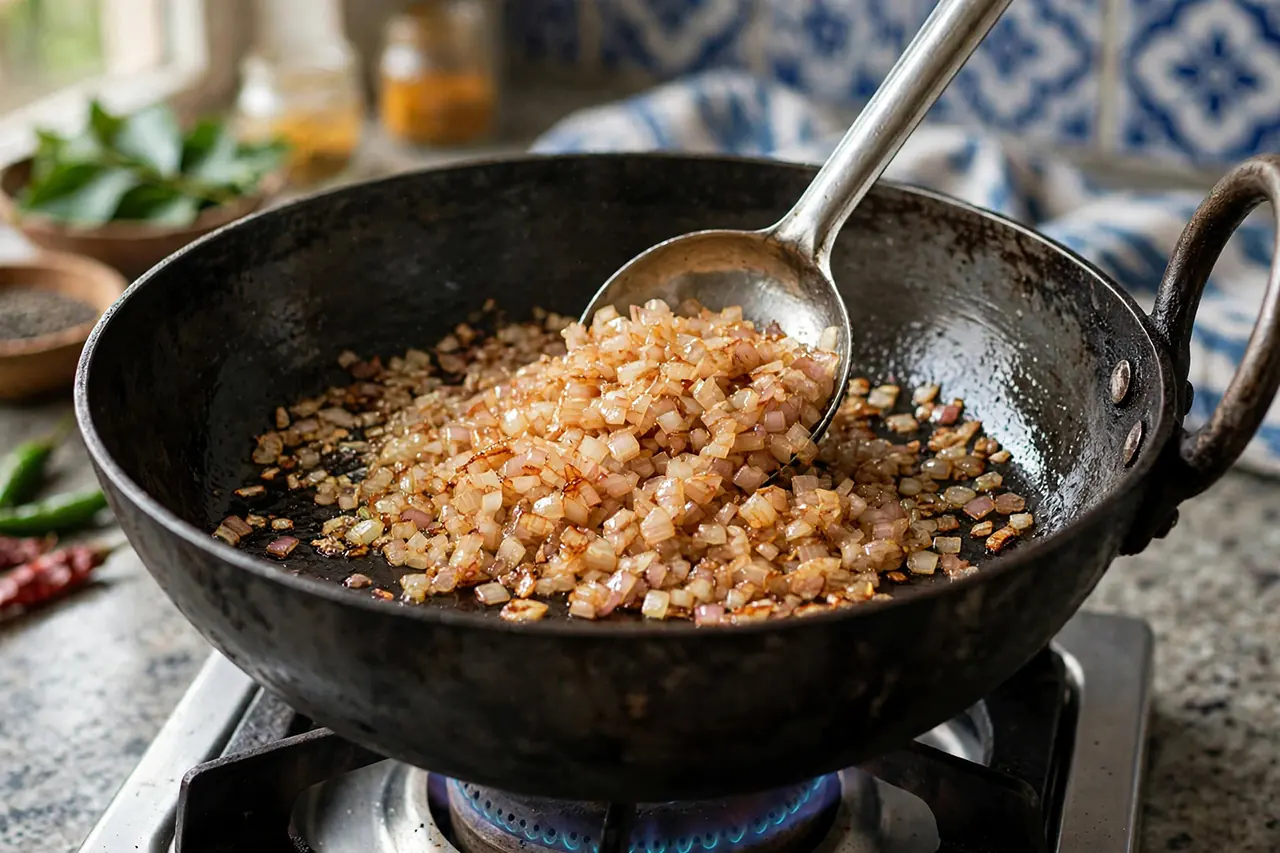
Heat 2 tablespoons of oil in a heavy-bottomed kadai or deep sauté pan over medium heat until the oil ripples. Add 1 cup of finely diced onions. Sauté for 6 to 8 minutes, stirring frequently.
Visual doneness cue: The onion edges shift from translucent white to an even, amber-golden brown with no blackened spots.
Mistake to avoid: Rushing this step leaves raw water in the onions, preventing the curry base from caramelizing properly.
3. Bloom the Aromatics and Spices: (Keep heat medium-low to prevent bitter burning.)
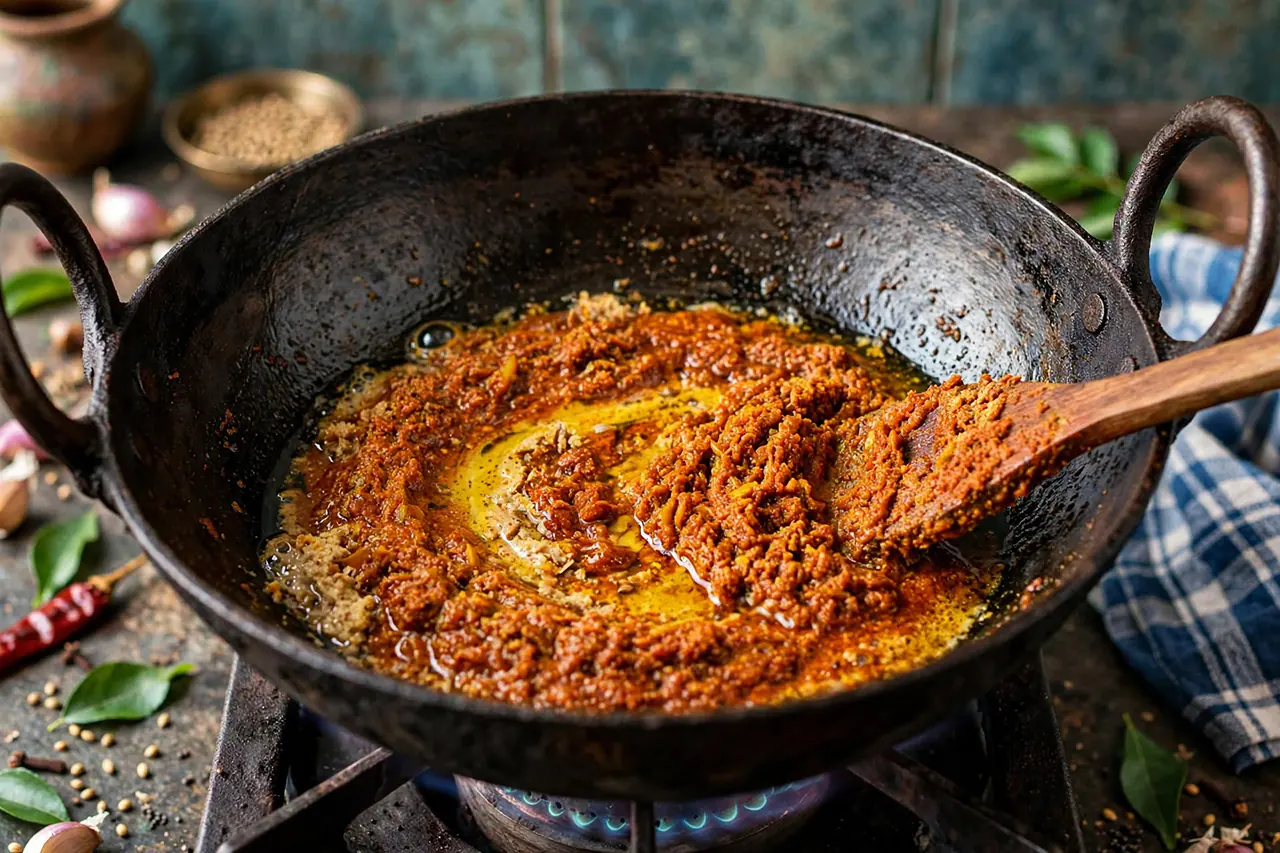
Lower the heat to medium-low. Add 1 teaspoon of ginger-garlic paste and sauté for 60 to 75 seconds until the harsh, raw smell dissipates and turns mellow. Add 1/2 teaspoon turmeric powder, 1 teaspoon red chili powder, 1 teaspoon coriander powder, and 1/2 teaspoon salt. Stir vigorously for 20 seconds.
Visual doneness cue: The spices foam gently in the oil, turn a deep brick-red, and release an intense toasted aroma.
Mistake to avoid: Adding ground spices to smoking-hot oil will scorch them in seconds, imparting an irreversible bitter taste.
4. Break Down the Tomatoes into a Masala Paste: (Cook until fat separates from the mass.)
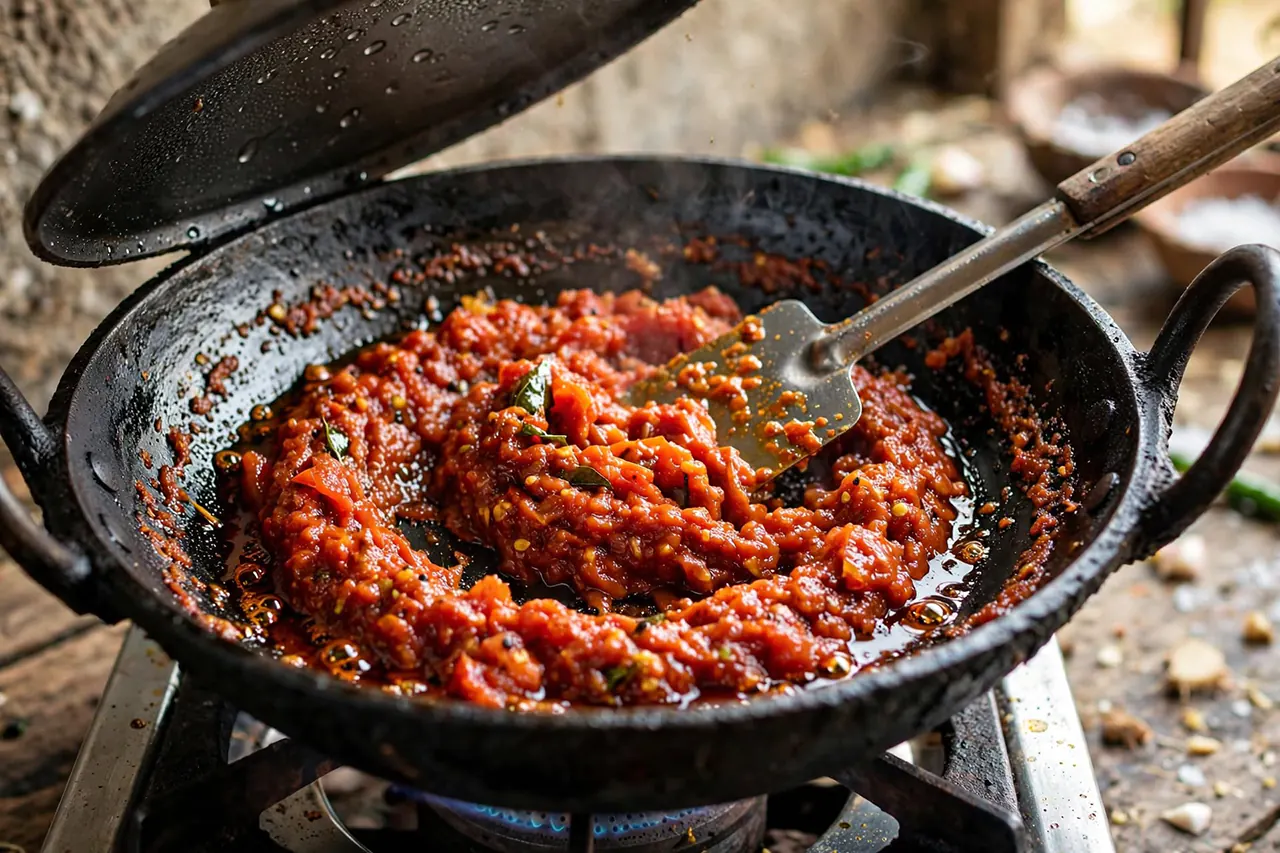
Add 1 cup of finely chopped tomatoes. Stir to deglaze any fond stuck to the bottom of the pan. Cover with a lid and cook on medium heat for 4 to 5 minutes, lifting the lid occasionally to crush the tomatoes with the back of your spatula.
Visual doneness cue: The tomatoes collapse into a jam-like paste, and small beads of glistening red oil separate around the perimeter of the mixture.
Mistake to avoid: Adding water before the tomatoes break down leaves tough tomato skins and an uneven, sour acidity.
5. Combine, Thicken, and Simmer: (The critical starch-emulsion phase.)
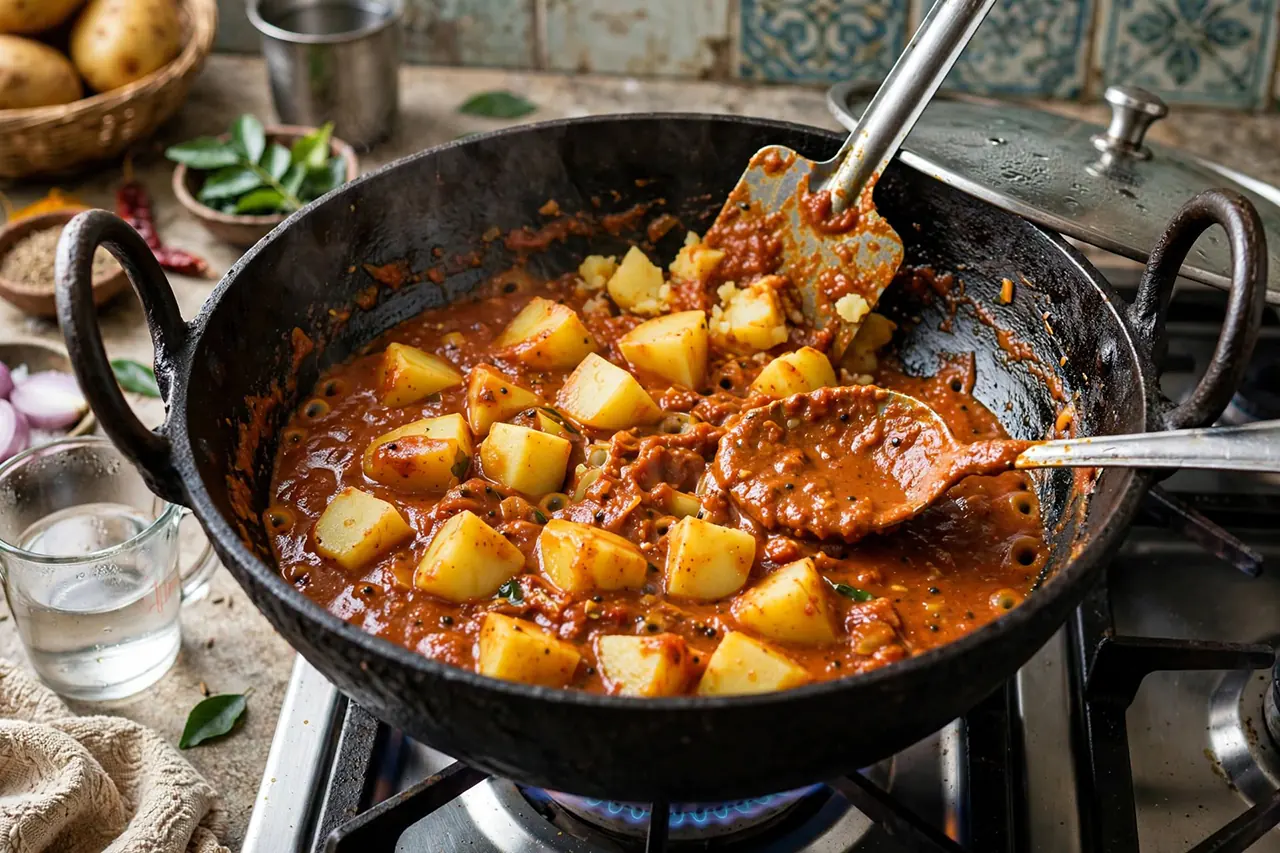
Add the parboiled potato cubes and 1 cup of warm water to the pan. Stir thoroughly to combine. Using your spatula, crush 4 to 5 potato cubes against the side of the pan and fold them back into the liquid. Bring the liquid to a simmer, cover, and cook over medium-low heat for 6 to 8 minutes.
Visual doneness cue: The sauce changes from watery to a velvety, cohesive gravy that coats the back of a spoon. Potatoes are fully tender when pierced with a fork.
Mistake to avoid: Leaving the heat on high evaporates the liquid before the potatoes have time to absorb the spiced broth.
6. Finish with Warm Aromatics: (Always finish off the heat for fresh herbal notes.)
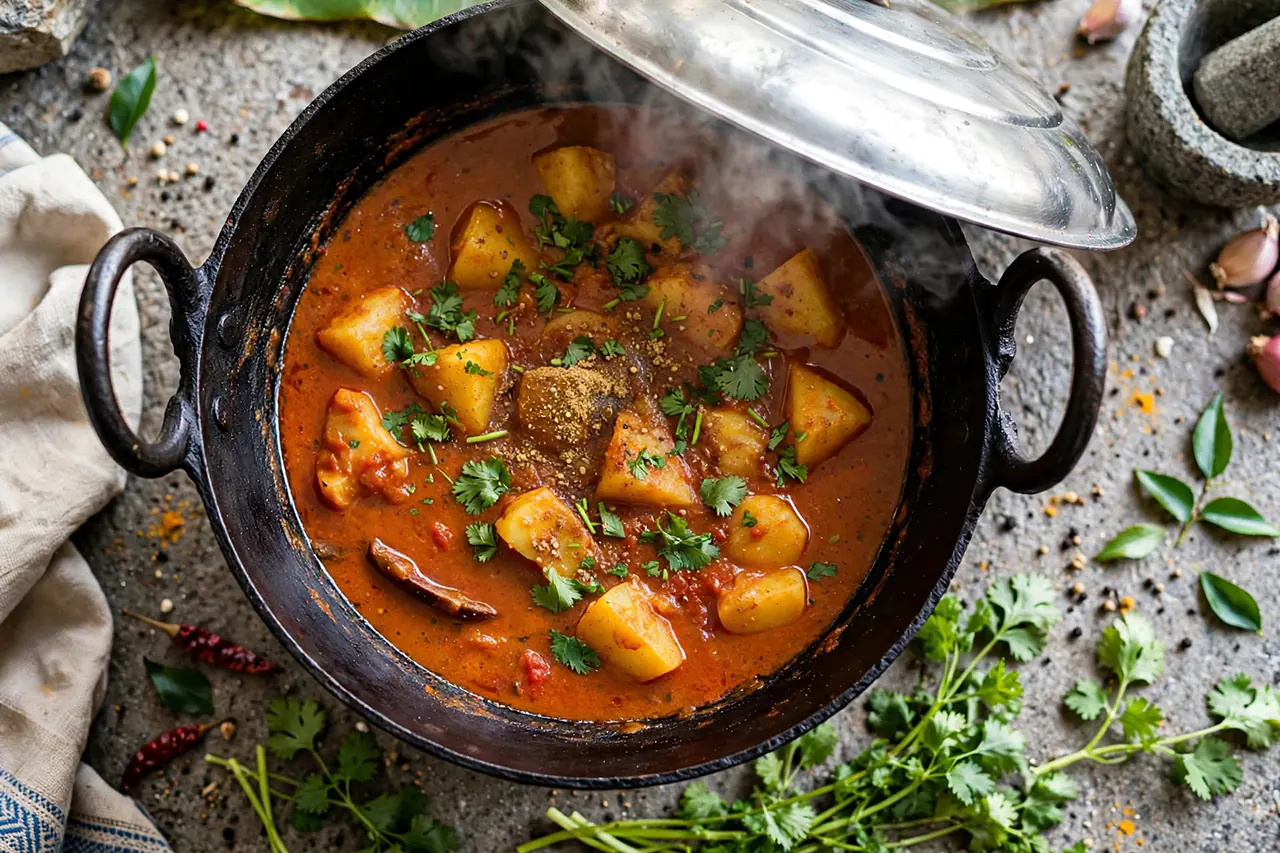
Turn off the heat. Sprinkle 1/2 teaspoon of garam masala and 2 tablespoons of finely chopped fresh coriander leaves over the curry. Stir gently once, then cover the pan with the lid and let it rest undisturbed for 3 minutes before serving.
Visual doneness cue: The residual steam locks the delicate floral aromatics of the garam masala into the sauce without burning off the essential oils.
Pro-Kitchen Tips for Texture and Flavor
- Rinse or Don’t Rinse: Rinse diced raw potatoes only if using high-starch Russets to wash away excess surface starch before boiling. If using Yukon Gold, skip the rinse—their balanced starch profile helps bind the sauce naturally.
- Water Temperature Matters: Always add warm or hot water to the pan during Step 5. Adding ice-cold water shocks the hot fat emulsion, halting the cooking process and muting the bloomed spice colors.
- The Resting Window: Potato curries taste significantly better after resting for 15 minutes off the flame. As the temperature drops from boiling to serving heat, potato starches settle and soak up the surrounding salted gravy.
Troubleshooting Common Curry Problems
Curry is too thin and watery?
Remove the lid, raise heat to medium, and firmly crush 3 to 4 more potato chunks against the pan wall. Stir thoroughly and simmer uncovered for 2 to 3 minutes. The liberated starch will bind the sauce without altering the flavor profile.
The gravy tastes sharp or overly sour?
This indicates the tomatoes had high acidity or were slightly undercooked. Stir in 1/4 teaspoon of jaggery (or brown sugar) and 1 teaspoon of ghee or butter. The fat and sweetness neutralize harsh acidity immediately.
Potatoes feel bland inside despite a flavorful gravy?
Next time, salt the potato boiling water adequately. For a quick fix right now, gently pierce each potato cube with a fork while simmering in Step 5 and let the curry rest covered for 10 minutes off heat so the spiced liquid penetrates the cores.
Storage, Make-Ahead, and Reheating
- Refrigeration: Store in an airtight glass container for up to 4 days. Because potatoes continue to absorb moisture and undergo starch retrogradation, the gravy will become notably thicker when chilled.
- Freezing: Freezing is not recommended. Freezing causes cooked potato cellular walls to collapse, resulting in a mealy, sponge-like texture and watery weeping upon thawing.
- Reheating: Transfer cold curry to a saucepan over medium-low heat. Add 3 to 4 tablespoons of hot water to loosen the starch-thickened gravy. Stir gently until steaming hot throughout (at least 74°C / 165°F). Avoid aggressive stirring to prevent turning the cubes into puree.
Flavor Variations and Serving Suggestions
- South Indian Tempering (Tadka): Elevate the base by sputtering 1/2 teaspoon mustard seeds, 1/2 teaspoon cumin seeds, a pinch of hing (asafoetida), and 8 fresh curry leaves in 1 teaspoon hot oil, pouring it over the finished curry just before serving.
- Creamy Coconut Potato Curry: Replace 1/2 cup of the cooking water with thick coconut milk, adding it during the final 3 minutes of simmering over low heat.
- Pairings: Serve hot alongside flaky parathas, soft whole-wheat chapathis, or over steamed Sona Masoori or Basmati rice accompanied by lemon pickle and cool cucumber raita.
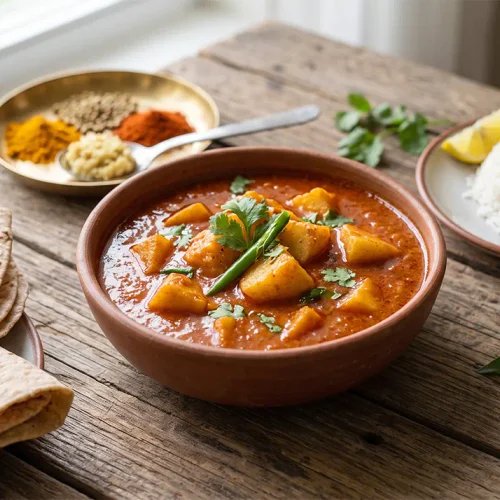
Authentic Andhra Aloo Curry (Quick Potato Gravy)
Ingredients
- – 250 g potatoes Yukon Gold or Russet, peeled and diced into 2-cm cubes
- – 2 tbsp neutral cooking oil groundnut or sunflower
- – 1 cup yellow onions finely diced (approx. 2 medium onions)
- – 1 tsp ginger-garlic paste freshly crushed
- – 1 cup Roma tomatoes finely chopped (approx. 2 medium tomatoes)
- – 1/2 tsp turmeric powder
- – 1 tsp red chili powder Kashmiri or Andhra style
- – 1 tsp coriander powder
- – 1 tsp fine sea salt divided: 1/2 tsp for boiling, 1/2 tsp for masala
- – 1 cup warm water
- – 1/2 tsp garam masala powder
- – 2 tbsp fresh coriander leaves finely chopped
Instructions
- Boil diced potatoes in salted water over medium-high heat for 8-10 minutes until parboiled (tender outside, slightly firm at core). Drain.
- Heat oil in a deep pan over medium heat. Sauté diced onions for 6-8 minutes until golden brown.
- Lower heat to medium-low. Add ginger-garlic paste; sauté 60-75 seconds until fragrant.
- Stir in turmeric, red chili powder, coriander powder, and salt. Bloom in oil for 20 seconds.
- Add chopped tomatoes, cover, and cook 4-5 minutes until completely softened and oil separates.
- Add parboiled potatoes and warm water. Crush 4-5 potato cubes to thicken the sauce.
- Cover and simmer on medium-low for 6-8 minutes until gravy is rich and potatoes are fork-tender.
- Turn off heat, stir in garam masala and fresh coriander, cover for 3 minutes, and serve warm.