Restaurant-Style Dum Aloo Recipe (North Indian Baby Potato Curry)
Dum Aloo is a classic North Indian potato curry where baby potatoes are steam-cooked (dum) in a richly spiced, slow-simmered onion, tomato, and yogurt gravy. Golden, fork-pricked potatoes absorb the savory, mildly tangy sauce deep into their centers, making this dish a dependable centerpiece for family dinners and festive spreads alongside hot rotis, garlic naan, or fragrant jeera rice.
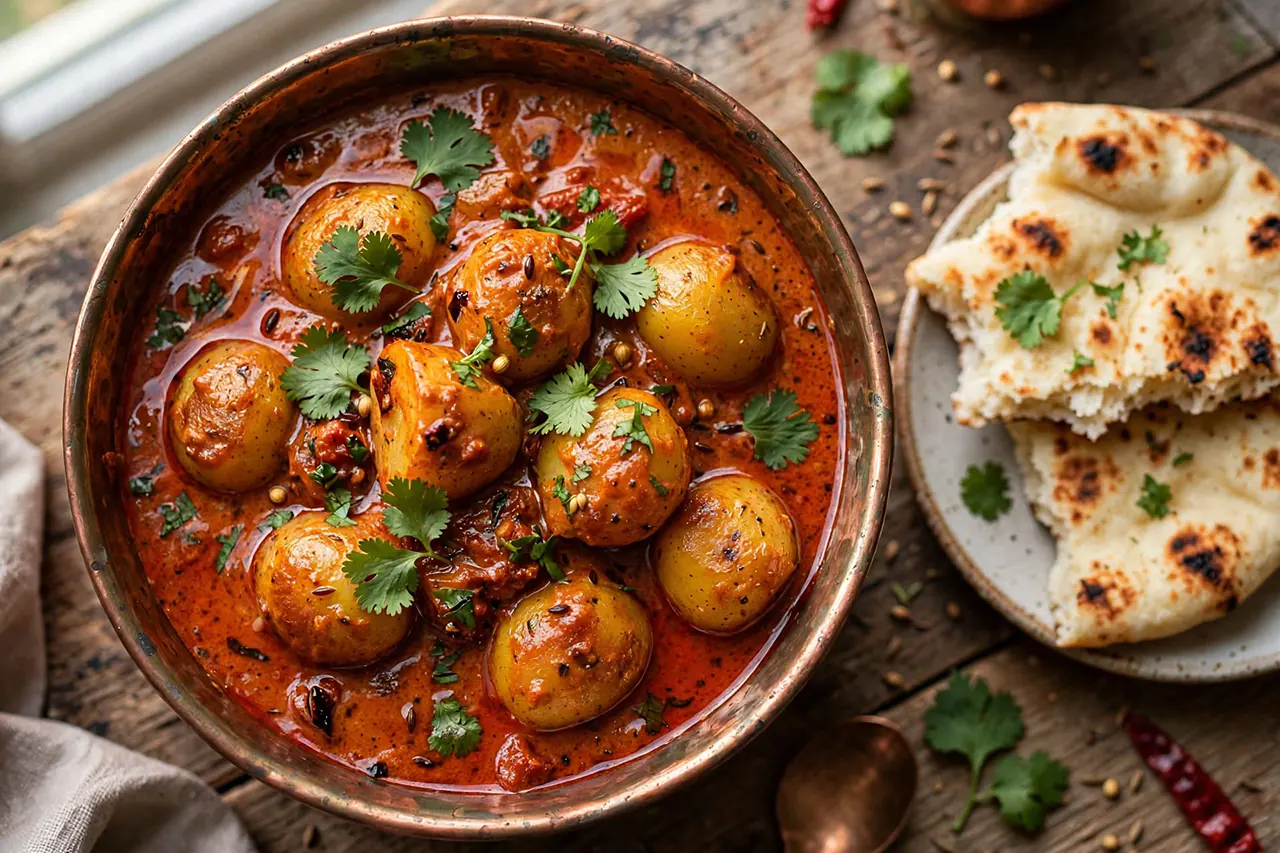
While Kashmiri Dum Aloo uses a no-onion, no-garlic yogurt gravy driven by fennel and dry ginger, this North Indian (Punjabi home-style) preparation balances sweet sautéed onions, ripe tomatoes, smooth curd, and lightly toasted spices. Follow this step-by-step method to prevent the potatoes from breaking and keep the yogurt gravy silky, velvety, and stable.
Why This Method Works
- Deep Flavor Penetration: Pricking the parboiled baby potatoes allows the spiced oil and savory gravy to soak directly into the starch core rather than coating only the outer skin.
- Stable, Silky Gravy: Whisking ground coriander and turmeric straight into room-temperature curd stabilizes the milk proteins, preventing the sauce from curdling or splitting when it meets the hot pan.
- Gentle Dum Infusion: Trapping the steam on low heat allows the parboiled potatoes to reach a melt-in-the-mouth texture without breaking apart into the sauce.
Ingredients You Will Need
For the Potatoes:
- Baby potatoes: 500 grams (approximately 18–20 small potatoes)
- Mustard oil or neutral cooking oil: 3 tablespoons (for shallow frying)
- Turmeric powder (haldi): ¼ teaspoon
- Kashmiri red chilli powder: ½ teaspoon
- Salt: ½ teaspoon (for the boiling water)
For the Gravy Base:
- Cooking oil or ghee: 2 tablespoons
- Cumin seeds (jeera): 1 teaspoon
- Bay leaf (tej patta): 1 small leaf
- Green cardamoms (elaichi): 2 pods, lightly crushed
- Cloves (laung): 3 pieces
- Cinnamon (dalchini): 1-inch stick
- Onions: 2 medium (about 150 grams), very finely chopped or grated
- Ginger-garlic paste: 1 tablespoon (freshly crushed preferred)
- Green chillies: 1–2, slit lengthwise (adjust to taste)
- Tomatoes: 3 medium (about 200 grams), pureed smooth in a blender
For the Spiced Yogurt Mixture:
- Fresh plain curd (dahi): ½ cup (120 ml), at room temperature
- Coriander powder (dhania): 1 tablespoon
- Cumin powder (jeera powder): ½ teaspoon
- Kashmiri red chilli powder: 1 tablespoon (provides vibrant color with mild heat)
- Turmeric powder: ¼ teaspoon
- Garam masala powder: ½ teaspoon
- Fennel seed powder (saunf powder): ½ teaspoon (adds distinct aroma)
For Finishing:
- Kasuri methi (dried fenugreek leaves): 1 teaspoon, lightly crushed between palms
- Salt: 1 teaspoon (adjust to taste)
- Water: 1 to 1.25 cups (warm)
- Fresh coriander leaves: 2 tablespoons, finely chopped
Practical Ingredient Notes
- Baby Potatoes: Select baby potatoes that are uniform in size (about 1 to 1.5 inches in diameter) so they cook at an even rate. If small potatoes are unavailable, cut regular medium-sized potatoes into uniform halves or quarters.
- Curd (Dahi): Use fresh curd that is smooth and only mildly sour. Excessively sour curd will throw off the flavor balance of the tomato base. Always bring it to room temperature before cooking.
- Kashmiri Red Chilli Powder: This is essential for the authentic crimson hue of restaurant gravies without making the dish uncomfortably fiery. If substituting with standard hot red chilli powder, reduce the quantity to 1 teaspoon.
- Mustard Oil vs. Neutral Oil: Frying baby potatoes in mustard oil yields a pungent, traditional aroma. If using mustard oil, heat it until it reaches its smoking point, then let it cool slightly before adding the potatoes. Otherwise, use standard sunflower, peanut, or canola oil.
How to Make Dum Aloo (Step-by-Step)
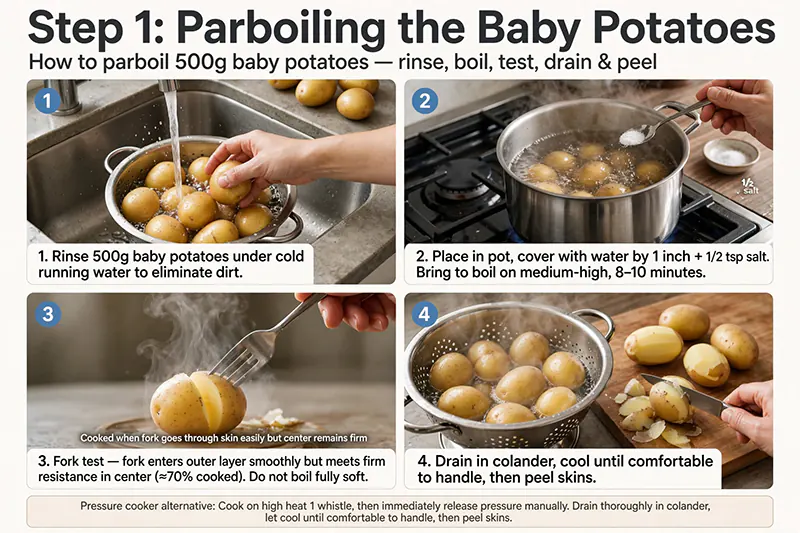
Step 1: Parboiling the Baby Potatoes
Rinse 500 grams of baby potatoes under cold running water to eliminate all dirt.
Place them in a medium pot, cover with water by at least an inch, and add ½ teaspoon of salt. Bring to a boil over medium-high heat. Cook for 8–10 minutes.
Visual Doneness Check: Insert a fork or toothpick into the center of a potato. It should enter the outer layer smoothly but meet firm resistance in the middle (roughly 70% cooked). Do not boil until fully soft, or they will break during peeling, frying, and simmering.
(Pressure cooker alternative: Cook on high heat for 1 whistle, then immediately release the pressure manually to halt cooking).
Drain the potatoes thoroughly in a colander. Let them cool until comfortable to handle, then peel off the skins.
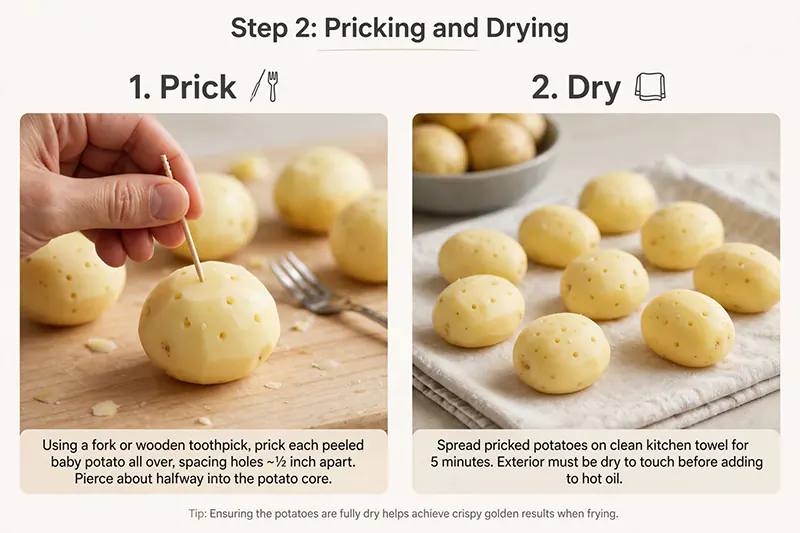
Step 2: Pricking and Drying
Using a fork or wooden toothpick, prick each peeled potato all over, spacing the holes roughly half an inch apart. Penetrate about halfway into the potato core.
Spread the pricked potatoes over a clean kitchen towel or plate for 5 minutes. The exterior must be dry to the touch before meeting the hot oil.
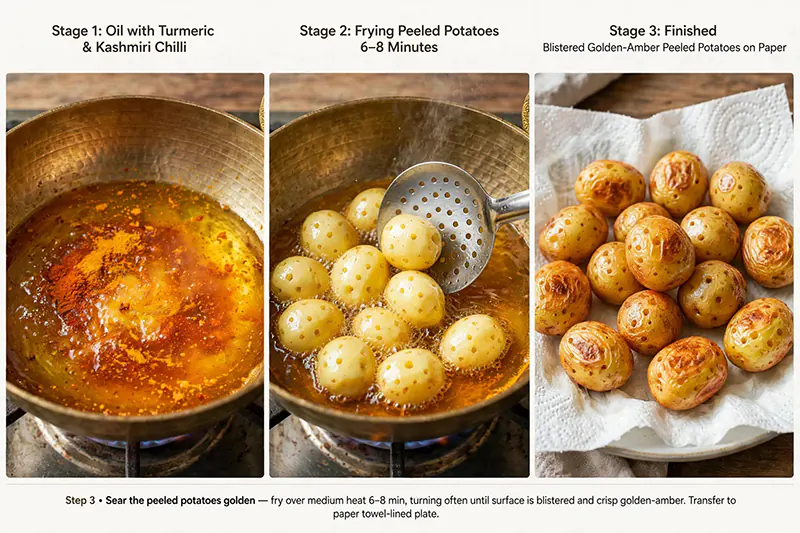
Step 3: Searing the Potatoes Golden
Heat 3 tablespoons of oil in a wide, heavy-bottomed kadai or deep pan over medium flame. Add ¼ teaspoon of turmeric powder and ½ teaspoon of Kashmiri red chilli powder into the oil.
Immediately tip in the pricked potatoes. Fry over medium heat for 6–8 minutes, turning them frequently with a slotted spoon.
Visual Doneness Check: The skins should blister lightly and turn a crisp, golden-amber color. Transfer the fried potatoes to a paper towel-lined plate and set aside.
Step 4: Tempering the Whole Spices and Aromatics
In the same pan (leaving roughly 2 tablespoons of oil; drain excess if needed), keep the flame on low-medium.
Add 1 teaspoon of cumin seeds, 1 bay leaf, 2 crushed green cardamoms, 3 cloves, and a 1-inch cinnamon stick. Let them sizzle for 20–30 seconds until aromatic.
Add the finely chopped onions. Sauté over medium heat for 7–9 minutes, stirring regularly.
Visual Doneness Check: The onions must transition past the translucent stage into a deep, rich golden brown. Deeply browned onions provide the natural sweetness and thick body of the gravy.
Add 1 tablespoon of freshly crushed ginger-garlic paste and the slit green chillies. Sauté for 1–2 minutes until the harsh, raw garlic aroma completely clears.
Step 5: Cooking Down the Tomato Base
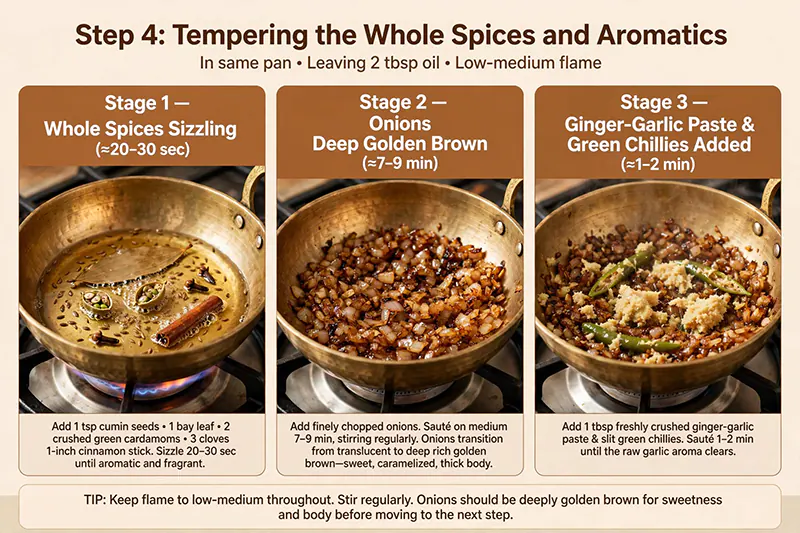
Pour in the 3 pureed tomatoes along with ½ teaspoon of salt. Stir thoroughly to combine with the onion base.
Cook over medium heat for 6–8 minutes, stirring every minute or two.
Visual Doneness Check: The puree will darken from bright red to deep terracotta, thicken into a cohesive paste, and small droplets of oil will visibly release along the edges of the masala.
Step 6: Preparing and Adding the Spiced Curd
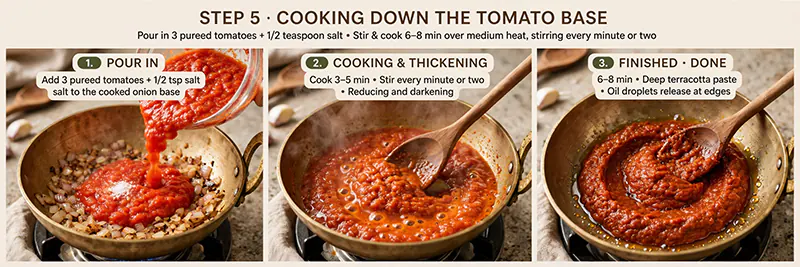
While the tomato paste cooks, prepare the yogurt stabilizer. In a small bowl, combine ½ cup of room-temperature curd with 1 tablespoon coriander powder, ½ teaspoon cumin powder, 1 tablespoon Kashmiri red chilli powder, ¼ teaspoon turmeric powder, ½ teaspoon fennel powder, and ½ teaspoon garam masala. Whisk vigorously with a fork until silky and lump-free.
Turn the stove flame to the absolute lowest setting (or slide the pan off the heat for 30 seconds).
Gradually pour the spiced curd into the tomato-onion base while whisking or stirring continuously with your other hand.
Keep stirring constantly for 2–3 minutes over low heat until the yogurt fully melds with the sauce and begins to bubble gently. This steady, low-temperature movement prevents curd proteins from breaking into grainy white flecks.
Step 7: Assembling the Gravy and the Dum Process
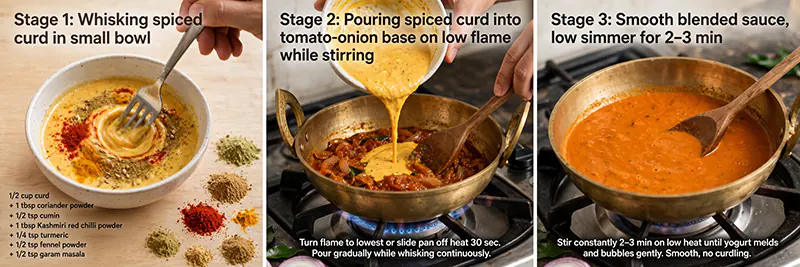
Add 1 to 1.25 cups of warm water to the pan. Stir well and bring the gravy to an active simmer over medium heat. Taste and adjust salt if necessary (roughly ½ teaspoon more is standard).
Add the golden fried baby potatoes to the simmering gravy. Stir once to coat every potato thoroughly.
Now apply the dum (steam seal):
- Cover the pan tightly with a heavy, well-fitting lid. (Optional: Place a sheet of aluminum foil across the rim before pressing the lid down, or seal the rim with a strip of wheat dough for a traditional seal).
- Reduce the flame to the lowest possible setting. If your burner flame is uneven or your pan base is thin, place a flat iron tawa underneath the kadai to act as a heat diffuser.
- Cook on low heat for 12–15 minutes undisturbed.
Visual Doneness Check: Remove the lid. The gravy will have thickened, a thin layer of spiced red oil (rogan) will float on the surface, and a knife inserted into the center of a potato will slide in effortlessly like soft butter.
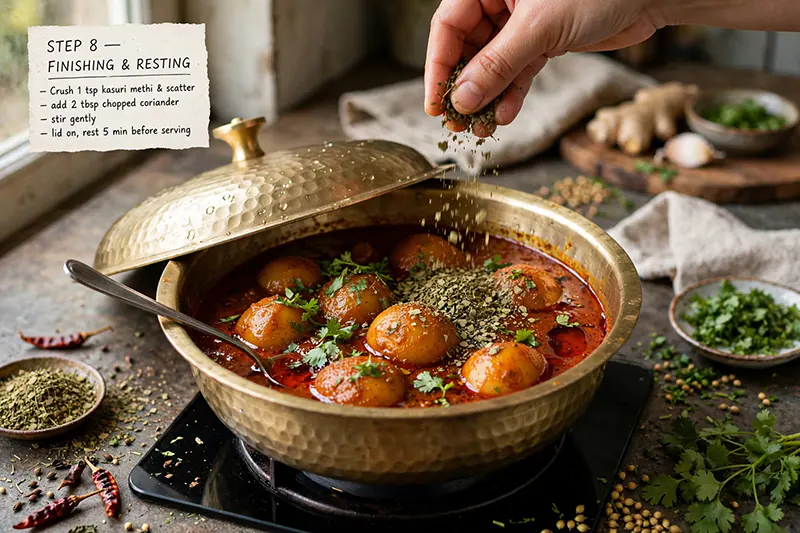
Step 8: Finishing and Resting
Crush 1 teaspoon of kasuri methi between your dry palms and scatter it across the curry. Add 2 tablespoons of freshly chopped coriander leaves.
Stir gently once from the bottom up to avoid bruising the tender potatoes.
Turn off the heat, place the lid back on, and let the curry rest for 5 minutes before serving. This rest period allows the starch to settle and pulls the aromatics deep into the potato flesh.
Pro-Tips for Perfect Dum Aloo
- Use Warm Water for the Gravy: Always add warm or hot water to the fried masala. Adding cold water abruptly drops the cooking temperature, dulls the vibrant color, and causes the fats to congeal.
- Keep the Yogurt at Room Temperature: Cold yogurt straight from the refrigerator will curdle almost instantly upon meeting hot oil and acidic tomatoes. Take the curd out of the fridge at least 30 minutes before cooking.
- Do Not Skip the Fennel Powder: A half-teaspoon of ground fennel seeds (saunf) cuts through the acidity of the tomatoes and the richness of the curd, giving the gravy an unmistakable North Indian wedding/restaurant aroma.
- Use Heavy Cookware: A heavy cast-iron skillet, heavy-bottomed aluminium kadai, or tri-ply stainless steel pan ensures steady heat distribution during the 15-minute dum phase, keeping the bottom layer from scorching.
Troubleshooting Common Issues
1. The Curd Curdled and Gravy Looks Grainy
- The Cause: The curd was too cold, the pan heat was too high, or the curd was not stirred immediately upon entry.
- The Fix: Don’t panic—the dish is still safe and flavorful. Remove the potatoes and blend the warm gravy with an immersion blender for 15 seconds, or pass it through a medium-mesh sieve with the back of a ladle. Return the silky gravy to the pan, reintroduce the potatoes, and simmer gently.
2. The Gravy is Too Sour
- The Cause: The tomatoes were overly acidic or the curd was excessively sour.
- The Fix: Stir in ½ teaspoon of jaggery or sugar, or blend in 1 tablespoon of cashew paste or fresh cream. The fat and subtle sweetness will neutralize excess acid instantly.
3. The Gravy is Too Thin and Watery
- The Cause: Too much water was added before the dum phase, or the lid trapped too much condensation.
- The Fix: Remove the potatoes with a slotted spoon so they don’t overcook. Boil the gravy uncovered over medium-high heat for 3–5 minutes until it reduces to your desired consistency. Return the potatoes, stir, and turn off the heat.
4. Potatoes Are Still Hard in the Center
- The Cause: The baby potatoes were under-boiled in Step 1 or pricked too shallowly.
- The Fix: Add ¼ cup of boiling water to the pan, cover tightly, and extend the low-heat dum simmer for an extra 6–8 minutes. Check tenderness with a toothpick.
Flavor and Regional Variations
- Rich Restaurant-Style (Shahi Style): Soak 10 cashews in hot water for 15 minutes, grind them into a velvety paste, and stir into the onion-tomato base just before adding the curd. Top with a tablespoon of heavy cream at the end.
- No-Onion, No-Garlic (Sattvic / Jain Friendly): Omit the onions and ginger-garlic paste. Double the quantity of pureed tomatoes, add ½ teaspoon of hing (asafoetida) to the initial whole spice tempering, and increase the curd to ¾ cup whisked with 1 teaspoon of besan (gram flour) for body.
- Kashmiri Dum Aloo Style: Omit onions, garlic, and tomatoes entirely. Whisk Kashmiri chilli powder, dry ginger powder (sonth), and fennel powder into 1 cup of curd. Fry whole baby potatoes deep-golden, prick them, and simmer in the mustard-oil-tempered spiced curd gravy.
What to Serve With Dum Aloo
- Flatbreads: Pairs exceptionally well with tandoori roti, layered lachha paratha, garlic butter naan, or simple homestyle phulkas. The rich gravy clings neatly to flaky breads.
- Rice Dishes: Serve alongside aromatic jeera rice, peas pulao, or plain steamed basmati rice with a side of crunchy onion rings, lemon wedges, and roasted papad.
Storage and Reheating Guidelines
- Refrigerator Storage: Store cooled leftovers in an airtight glass or stainless steel container in the refrigerator for up to 3 days. The potatoes will continue to absorb liquid as they sit, causing the gravy to thicken noticeably by the next day.
- Freezer Storage: Freezing is not recommended for this recipe. Cooked potatoes become grainy, spongy, and watery once frozen and thawed, fundamentally compromising the dish’s texture.
- Reheating Method: Transfer the cold Dum Aloo to a saucepan, add 2 to 3 tablespoons of hot water, and heat gently over medium-low flame for 4–5 minutes, stirring carefully. For microwave reheating, place in a microwave-safe bowl, sprinkle with a tablespoon of water, cover loosely with a plate, and heat in 60-second bursts until hot throughout.
Frequently Asked Questions
Can I make Dum Aloo using regular large potatoes?
Yes. If baby potatoes are unavailable, peel 3–4 large potatoes and cut them into even 1.5-inch cubes. Parboil them for 5–6 minutes (checking that the edges do not soften completely), drain, pat dry, prick lightly, and proceed with the searing and gravy steps as directed.
Why do baby potatoes break apart while cooking?
Potatoes break down when they are overcooked during the initial parboiling stage. They should only be cooked to roughly 70% doneness before searing. If a fork slides through the potato with zero resistance during the initial boil, the potato is overcooked and will disintegrate during the final 15-minute dum simmer.
Do I have to deep-fry the potatoes?
No. While traditional commercial kitchens deep-fry baby potatoes for speed, shallow frying them in 3 tablespoons of oil inside a wide kadai achieves the same blistered exterior, golden hue, and structural integrity while using significantly less oil. You can also air-fry the pricked, oil-brushed potatoes at 190°C (375°F) for 12–14 minutes.
Is Dum Aloo very spicy?
This recipe is medium-spiced and family-friendly. It relies primarily on Kashmiri red chilli powder, which imparts deep red color and flavor complexity with minimal heat. To reduce heat further, deseed the green chillies or omit them entirely.
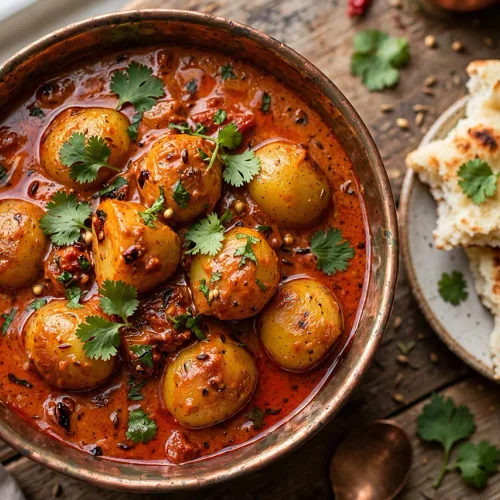
North Indian Dum Aloo (Restaurant-Style Baby Potato Curry)
Ingredients
- 500 g baby potatoes peeled, parboiled, and pricked
- 3 tbsp oil for shallow frying potatoes
- 2 tbsp oil or ghee for the gravy
- 1 tsp cumin seeds
- 1 bay leaf
- 2 green cardamom pods crushed
- 3 cloves
- 1- inch cinnamon stick
- 2 medium onions finely chopped, approx. 150g
- 1 tbsp ginger-garlic paste
- 2 green chillies slit
- 3 medium tomatoes pureed, approx. 200g
- ½ cup fresh plain curd dahi, room temperature
- 1 tbsp coriander powder
- ½ tsp cumin powder
- 1 tbsp Kashmiri red chilli powder
- ½ tsp turmeric powder divided
- ½ tsp garam masala powder
- ½ tsp fennel seed powder
- 1 tsp kasuri methi crushed
- 1 tsp salt adjust to taste
- 1 to 1.25 cups warm water
- 2 tbsp fresh coriander leaves finely chopped
Instructions
- Parboil Potatoes: Boil washed baby potatoes in salted water for 8–10 minutes until 70% tender (firm in the center). Drain, peel, prick thoroughly with a fork, and pat dry.
- Sear Potatoes: Heat 3 tbsp oil with ¼ tsp turmeric and ½ tsp Kashmiri chilli powder in a kadai. Shallow-fry potatoes over medium heat for 6–8 minutes until golden and blistered. Remove and set aside.
- Sauté Aromatics: In the same pan, heat 2 tbsp oil. Sizzle cumin seeds, bay leaf, cardamoms, cloves, and cinnamon stick for 20 seconds. Add chopped onions and sauté over medium heat for 7–9 minutes until rich golden brown. Stir in ginger-garlic paste and green chillies; sauté for 1 minute.
- Cook Tomatoes: Add pureed tomatoes and ½ tsp salt. Cook for 6–8 minutes until thick and oil droplets separate at the edges.
- Add Spiced Yogurt: Whisk curd with coriander powder, cumin powder, 1 tbsp Kashmiri chilli powder, ¼ tsp turmeric, garam masala, and fennel powder. Lower heat to minimum; pour the curd mixture in while stirring continuously for 2–3 minutes until integrated and bubbling.
- Dum Simmer: Add 1 to 1.25 cups warm water and remaining salt. Add fried potatoes. Cover tightly with a heavy lid (seal with foil if possible). Simmer on the lowest flame for 12–15 minutes until potatoes are fork-tender and oil rises to the top.
- Finish: Stir in crushed kasuri methi and chopped coriander. Rest covered for 5 minutes before serving.
Recipe Notes
Always bring curd to room temperature and whisk with dry spices before adding to hot gravy to prevent curdling.
Ensure parboiled potatoes are dried before frying to prevent oil splatters.
Storage
Refrigerate in an airtight container for up to 3 days. Reheat on the stovetop with a splash of hot water. Freezing is not recommended.


