Dhania Kheema Recipe (Mutton Keema with Fresh Coriander)
Dhania Kheema is a fragrant Indian minced meat curry where tender mutton keema is cooked with browned onions, warm spices, and a generous puree of fresh coriander leaves (kothimeera). This recipe yields a deeply savory, semi-dry dish packed with earthy spice and herbal freshness. It comes together in under 45 minutes and pairs naturally with warm rotis, flaky parathas, or steamed rice.
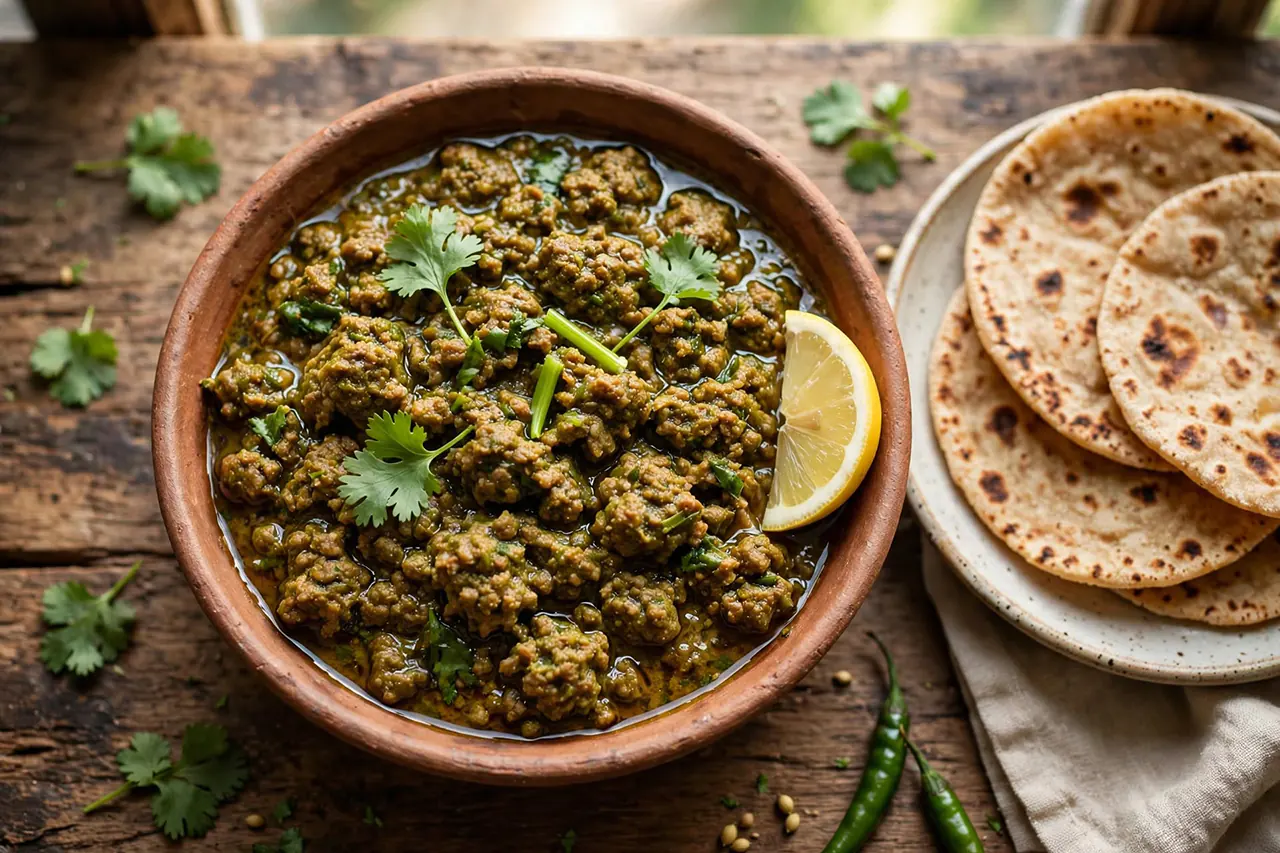
Below, you will find step-by-step instructions for both the traditional stovetop pan and a quick pressure cooker method, along with foolproof tips to keep your minced mutton tender and clump-free.
What Makes This Dhania Kheema Distinct?
Unlike standard keema matar or brown keema curry, Dhania Kheema derives its core flavor from fresh coriander greens rather than heavy tomato purees or cream.
- Herbaceous Gravy: A blend of fresh coriander leaves, ginger, garlic, and green chilies forms the aromatic backbone, lending the dish a mild green hue and a clean, peppery lift.
- Proper Bhunao Technique: The minced meat is sautéed until its natural moisture evaporates completely, allowing the meat to fry lightly in its own rendered fat before any liquid is introduced. This eliminates any gamey flavor.
- Semi-Dry (Masaledar) Texture: The curry clings tightly to the meat instead of swimming in excess water, making it easy to scoop with flatbreads.
Ingredients You Will Need
For the Coriander-Spice Paste:
- Fresh Coriander Leaves (Kothimeera): 2 packed cups (washed thoroughly, including tender upper stems; avoid thick, woody lower stems).
- Green Chilies: 3 to 4 medium (adjust to heat preference).
- Ginger: 1.5-inch piece, peeled and roughly chopped.
- Garlic Cloves: 7 to 8 medium cloves.
- Water: 2 to 3 tablespoons (only as needed to blend).
For the Keema Base:
- Minced Mutton (Goat or Lamb Keema): 500 grams (medium mince, preferably with 15–20% fat for moisture).
- Cooking Oil or Ghee: 3 tablespoons.
- Whole Spices:
- 1 Bay leaf (tejpatta)
- 1 inch Cinnamon stick (dalchini)
- 3 Green cardamoms (chhoti elaichi)
- 4 Cloves (laung)
- 1 teaspoon Cumin seeds (jeera)
- Onions: 2 large (finely chopped, approx. 1.5 cups).
- Tomato: 1 medium (finely chopped; keep acidic elements moderate so coriander remains the star).
- Ground Spices:
- 1/2 teaspoon Turmeric powder (haldi)
- 1 tablespoon Coriander powder (dhania powder)
- 1 teaspoon Red chili powder (Kashmiri or regular Indian chili powder)
- 1 teaspoon Roasted cumin powder (jeera powder)
- 1 teaspoon Garam masala powder
- Salt: 1.25 teaspoons (or to taste).
- Water: 1/2 to 3/4 cup (for stovetop) or 1/4 cup (for pressure cooker).
- Lemon Juice: 1 tablespoon (freshly squeezed).
- Fresh Coriander for Garnish: 2 tablespoons, finely chopped.
Ingredient Notes and Substitutions
- Minced Meat Choice: Goat mince (mutton) provides the most authentic regional flavor. Lamb mince works equally well but tends to render slightly more fat. Minced chicken can be substituted; reduce the cooking time to 12–15 minutes total.
- Coriander Stems: Do not discard the tender green stems of the coriander. The stems hold the highest concentration of essential oils and flavor. Only discard the thick, fibrous roots and lower woody portions.
- Tomatoes: Keep tomatoes minimal (just one medium). Excess tomato will overwhelm the delicate green notes of the fresh coriander and turn the gravy muddy reddish-brown.
Step-by-Step Instructions
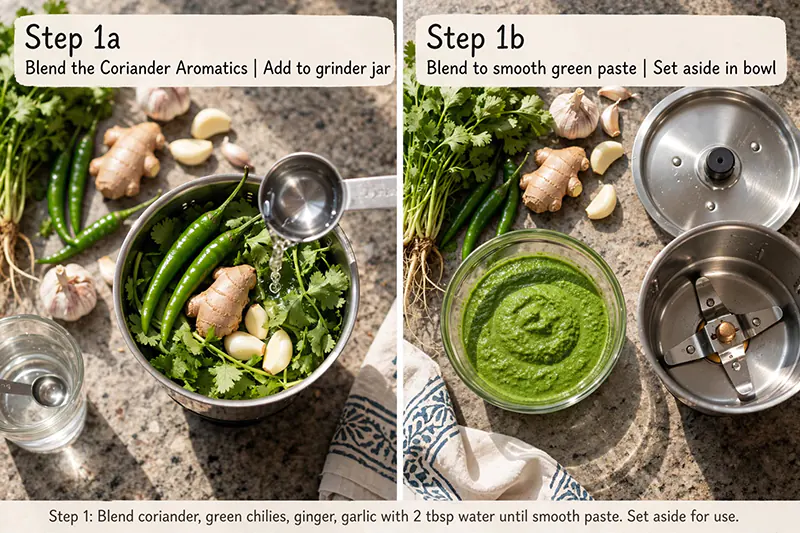
Step 1: Blend the Coriander Aromatics
In a small grinder jar, add 2 packed cups of washed fresh coriander leaves, 3–4 green chilies, 1.5 inches of ginger, and 7–8 garlic cloves. Add 2 tablespoons of water. Blend until smooth. Set the green paste aside.
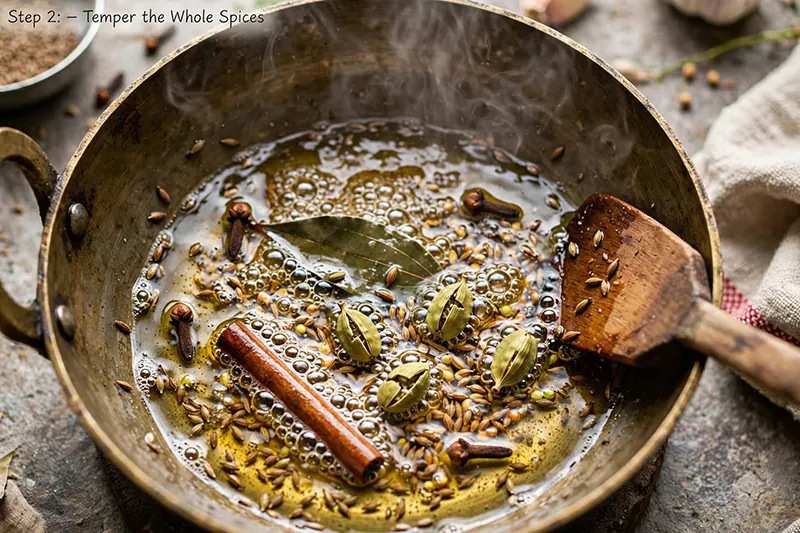
Step 2: Temper the Whole Spices
Heat 3 tablespoons of oil (or ghee) in a heavy-bottomed kadai, deep skillet, or pressure cooker over medium heat. Once hot, add 1 teaspoon cumin seeds, 1 bay leaf, 1-inch cinnamon stick, 3 cracked green cardamoms, and 4 cloves. Let them sizzle for 20 to 30 seconds until aromatic.
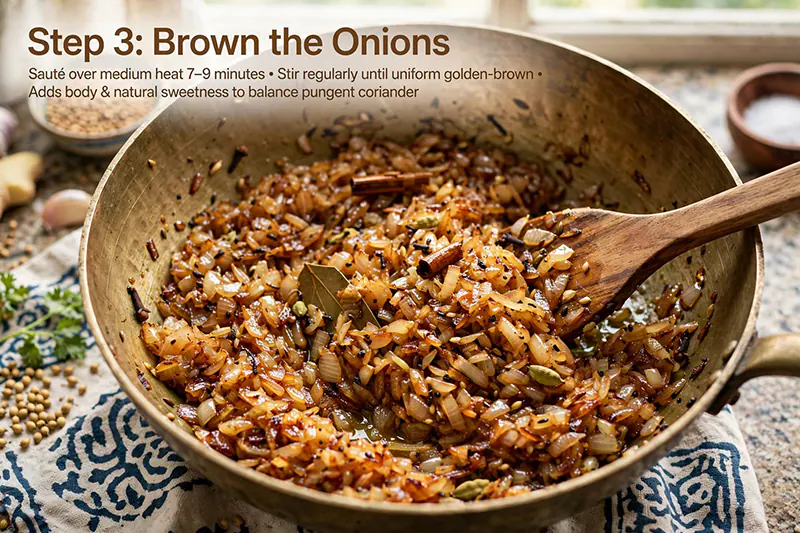
Step 3: Brown the Onions
Add the finely chopped onions. Sauté over medium heat for 7 to 9 minutes, stirring regularly. The onions must turn a uniform golden-brown—not just soft or translucent. Properly browned onions provide body and natural sweetness to balance the pungent coriander.
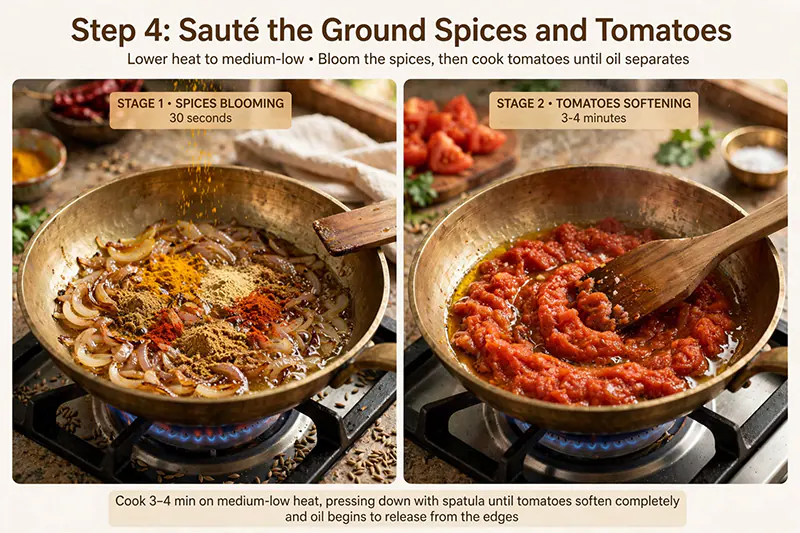
Step 4: Sauté the Ground Spices and Tomatoes
Lower the heat to medium-low. Add 1/2 teaspoon turmeric, 1 tablespoon coriander powder, 1 teaspoon red chili powder, and 1 teaspoon roasted cumin powder. Sauté for 30 seconds until the spices bloom in the oil. Add the chopped tomato and 1/2 teaspoon of salt. Cook for 3 to 4 minutes, pressing down with your spatula, until the tomatoes soften completely and oil begins releasing from the edges.
Step 5: Add the Keema and Break Up Clumps
Rinse the mutton mince briefly in a colander and drain thoroughly. Increase the heat to medium-high. Add the drained mince to the pan.
Immediately use a flat wooden spatula or masher to break apart the meat continuously for the first 3 to 4 minutes. Minced meat tends to contract and seize into large meatballs if left undisturbed in a hot pan.

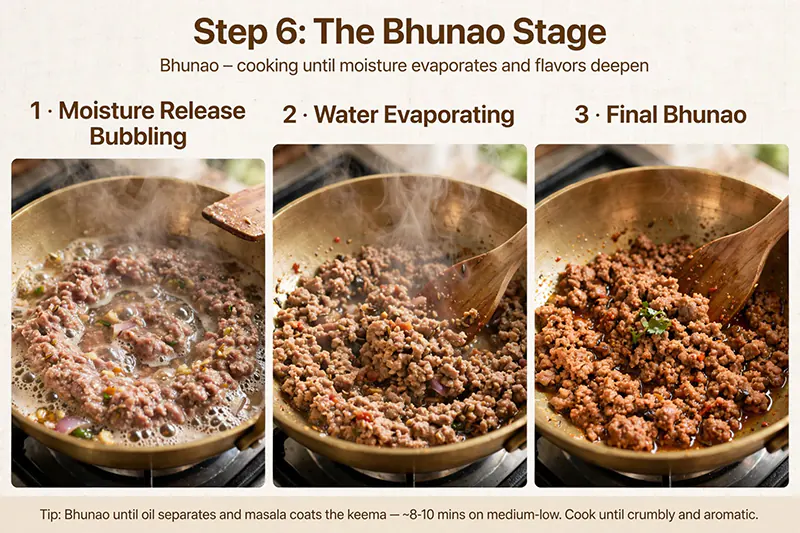
Step 6: The Bhunao Stage (Sautéing in Own Juices)
Continue cooking the mince over medium-high heat for 6 to 8 minutes without covering. The meat will first release a significant volume of moisture. Let that water bubble away and evaporate. Keep stirring until the liquid dries up and the mince begins to fry in its own rendered fat. You will notice the meat deepening in color and oil glistening on the surface.
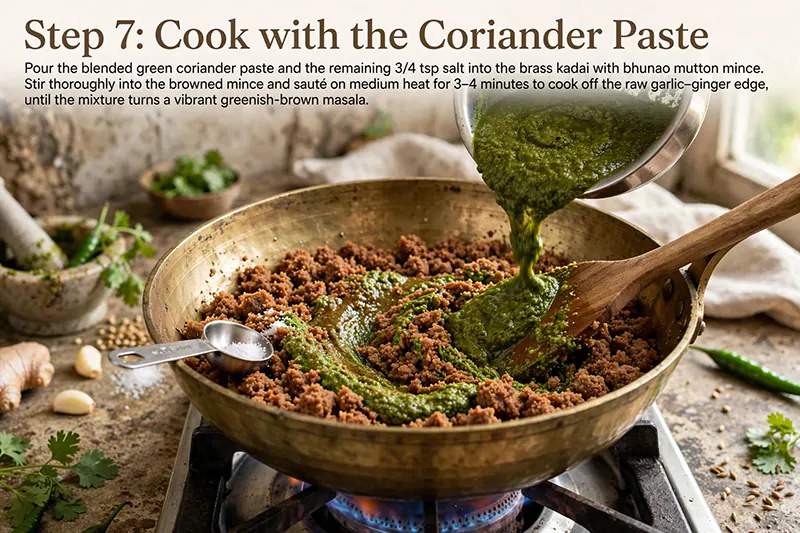
Step 7: Cook with the Coriander Paste
Pour the blended green coriander paste and the remaining 3/4 teaspoon of salt into the pan. Stir thoroughly into the browned mince. Sauté over medium heat for 3 to 4 minutes to cook off the raw garlic-ginger edge.
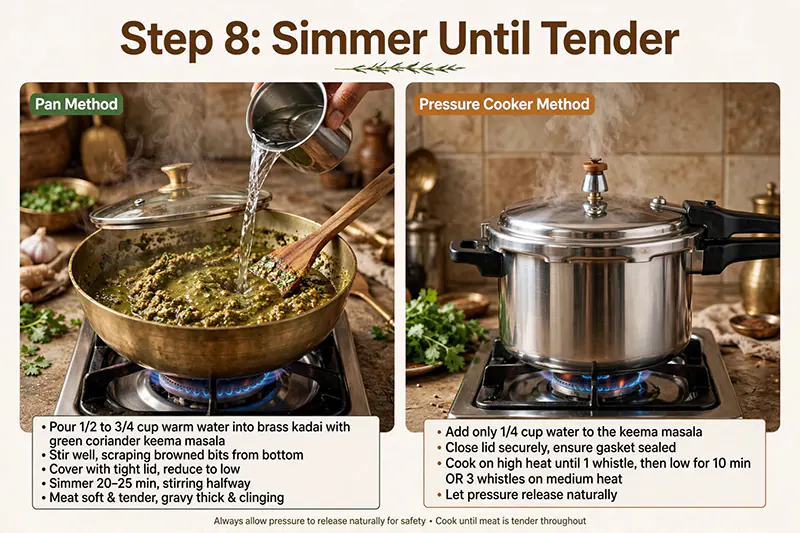
Step 8: Simmer Until Tender
- Pan Method: Pour in 1/2 to 3/4 cup of warm water. Stir well, scraping up any browned bits stuck to the bottom of the pan. Cover with a tight-fitting lid, reduce the heat to low, and simmer gently for 20 to 25 minutes, stirring once halfway through. The meat is done when it is soft, tender to the bite, and the gravy has reduced to a thick, clinging consistency.
- Pressure Cooker Method: Add only 1/4 cup of water (the cooker traps steam, so less liquid is required). Close the lid, cook over high heat for 1 whistle, then reduce to low heat and cook for 10 minutes (or 3 whistles on medium heat). Let the pressure release naturally before opening.
Step 9: Finish and Rest
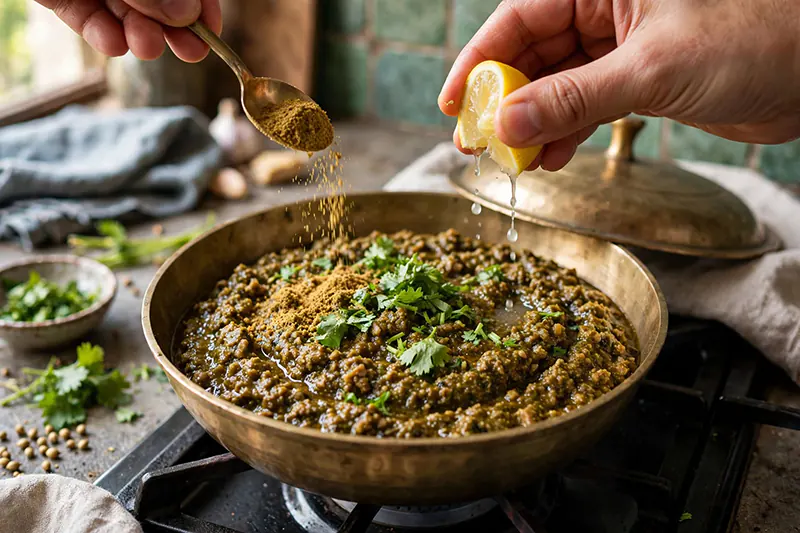
Remove the lid. If the gravy feels too wet, simmer uncovered over medium heat for 2 to 3 minutes until thickened. Sprinkle 1 teaspoon of garam masala, drizzle 1 tablespoon of freshly squeezed lemon juice, and fold in 2 tablespoons of chopped fresh coriander. Turn off the heat. Let the dish rest covered for 5 minutes before serving so the flavors settle.
Essential Cooking Tips for Best Results
- Never Boil the Keema Early: Sautéing the meat until all internal juices evaporate (Step 6) is crucial. Skipping this stage and pouring water over raw mince produces a grey, boiled texture and locks in a sharp meat smell.
- Add Lemon at the Very End: Always turn off the flame before stirring in lemon juice. Cooking lemon juice over high heat can introduce an unpleasant bitter aftertaste to delicate coriander gravy.
- Warm Water Over Cold: When adding liquid to the simmer, use warm or room-temperature water. Adding fridge-cold water abruptly drops the cooking temperature and hardens the meat proteins.
Troubleshooting Common Issues
| Problem | Cause | How to Fix It |
| Curry is watery or thin | Too much water added; lid kept on without reducing. | Remove the lid, raise heat to medium-high, and simmer vigorously for 4–6 minutes while stirring until excess water evaporates. |
| Keema formed hard clumps | Meat was added to hot oil and not stirred immediately. | Use the back of a flat spatula or a stainless steel potato masher to press firmly and break apart the clumps against the bottom of the pan while it simmers. |
| Gravy tastes bitter | Coriander was over-blended with tough woody stems, or lemon was boiled. | Stir in 1 tablespoon of whisked plain yogurt or a teaspoon of butter over low heat. The dairy fats neutralize harsh bitterness immediately. |
| Meat feels chewy or tough | Undercooked goat meat or lean mince without enough fat. | Add 1/4 cup of hot water, cover tightly, and simmer on low heat for an additional 8–10 minutes, or pressure cook for 1 additional whistle. |
Recipe Variations
- Dhania Keema Matar: Add 1/2 cup of fresh or thawed green peas along with the coriander paste in Step 7. The sweetness of the peas pairs naturally with the peppery coriander.
- Andhra-Style Kothimeera Kheema: Increase the green chilies to 6 and add 1/2 teaspoon of freshly crushed black pepper during Step 4 for a sharper, fiery kick.
- Dhania Keema Fry (Dry Snack): Skip the water in Step 8 entirely. Continue to sauté the keema over medium-low heat with an extra tablespoon of oil until completely dry and lightly crisp around the edges.
Serving Suggestions
- With Indian Flatbreads: Serve hot with warm tandoori roti, phulka, layered parathas, or soft pav buns lightly toasted in butter.
- With Rice: Pairs exceptionally well with plain steamed basmati rice, jeera rice, or mild bagara rice alongside sliced red onions and lemon wedges.
- Accompaniments: Serve with a cooling side of cucumber raita or sliced onion-tomato salad to balance the warm spices.
Storage and Reheating Instructions
- Refrigeration: Store leftover Dhania Kheema in an airtight glass or stainless steel container in the refrigerator for up to 3 days.
- Freezing: This curry freezes well. Cool completely, transfer to a freezer-safe container, and freeze for up to 1 month. Thaw overnight in the refrigerator before reheating.
- Reheating: Keema thickens as it chills because the natural fats solidify. Reheat in a pan over medium-low heat with 2 to 3 tablespoons of water to loosen the gravy. Stir gently until steaming hot. Avoid repeated microwaving, which can dry out the mince.
Frequently Asked Questions
Can I make Dhania Kheema with chicken mince?
Yes. Chicken mince cooks much faster and releases moisture quickly. Reduce the simmering time in Step 8 to 10–12 minutes on the stovetop. If using a pressure cooker, cook for just 1 whistle.
Why is my coriander gravy brown instead of vibrant green?
Fresh coriander naturally oxidizes and turns darker green or olive-brown as it cooks down with browned onions, turmeric, and chili powder. This is normal in traditional home cooking. To preserve a fresher green tint, stir in an extra handful of finely blended raw coriander paste during the final 3 minutes of simmering.
How do I ensure mutton keema is clean before cooking?
Place the minced meat in a fine-mesh colander and rinse very gently under cold running water for a few seconds. Press lightly with a spoon to drain completely. Do not soak mince in a bowl of water, or it will become waterlogged and lose its flavor.
Can I skip whole spices?
If you do not have whole spices (cinnamon, cloves, cardamom), skip Step 2 and increase the garam masala powder at the end to 1.5 teaspoons. Whole spices, however, add an authentic layered aroma to the rendered fat.
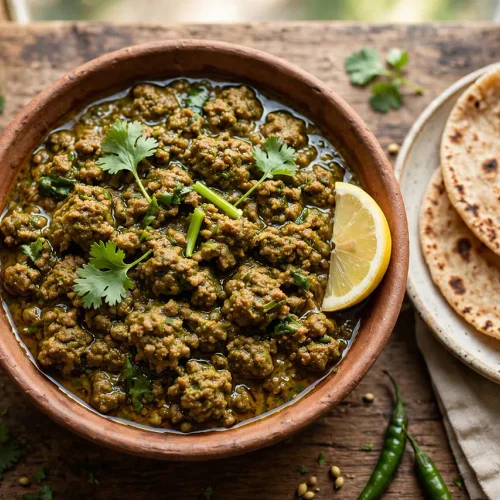
Dhania Kheema (Coriander Mutton Keema Curry)
Ingredients
- 500 g Minced Mutton Goat or Lamb Keema
- 2 cups Fresh Coriander Leaves packed, with tender stems
- 3 to 4 Green Chilies
- 1.5 inch Ginger peeled
- 7 to 8 Garlic Cloves
- 3 tbsp Cooking Oil or Ghee
- 1 tsp Cumin Seeds
- 1 Bay Leaf
- 1 inch Cinnamon Stick
- 3 Green Cardamoms
- 4 Cloves
- 2 large Onions finely chopped
- 1 medium Tomato finely chopped
- 1/2 tsp Turmeric Powder
- 1 tbsp Coriander Powder
- 1 tsp Red Chili Powder
- 1 tsp Roasted Cumin Powder
- 1 tsp Garam Masala Powder
- 1.25 tsp Salt divided, adjust to taste
- 3/4 cup Water use 1/4 cup if pressure cooking
- 1 tbsp Lemon Juice
- 2 tbsp Fresh Coriander chopped, for garnish
Instructions
- Blend coriander leaves, green chilies, ginger, garlic, and 2 tbsp water into a smooth paste. Set aside.
- Heat oil in a deep pan; add cumin seeds, bay leaf, cinnamon, cardamom, and cloves. Let sizzle for 30 seconds.
- Add chopped onions and sauté over medium heat for 7–9 minutes until golden-brown.
- Lower heat; add turmeric, coriander powder, red chili powder, cumin powder, chopped tomato, and 1/2 tsp salt. Cook for 3–4 minutes until tomatoes break down and oil begins to separate.
- Add drained mutton keema. Immediately stir and break apart meat clumps for 3–4 minutes over medium-high heat.
- Continue sautéing for 6–8 minutes until all released meat liquid evaporates completely and the mince glistens in rendered oil.
- Stir in the blended green coriander paste and remaining salt. Sauté for 3–4 minutes until raw aroma dissipates.
- Add 3/4 cup warm water (or 1/4 cup for pressure cooker). Cover and simmer on low for 20–25 minutes (or pressure cook for 1 whistle on high + 10 minutes on low) until meat is tender.
- Uncover, adjust gravy consistency, sprinkle garam masala, stir in lemon juice, and garnish with chopped coriander. Rest for 5 minutes before serving.
Recipe Notes
Ensure all released moisture from the mince evaporates before adding water; this step is vital to avoid a boiled or gamey taste.
Always turn off the heat before adding fresh lemon juice to prevent bitterness.
Storage
Refrigerate in an airtight container for up to 3 days or freeze for up to 1 month. Reheat over low heat with a splash of warm water.


