Authentic Hyderabadi Chicken Haleem Recipe (Pressure Cooker Method)
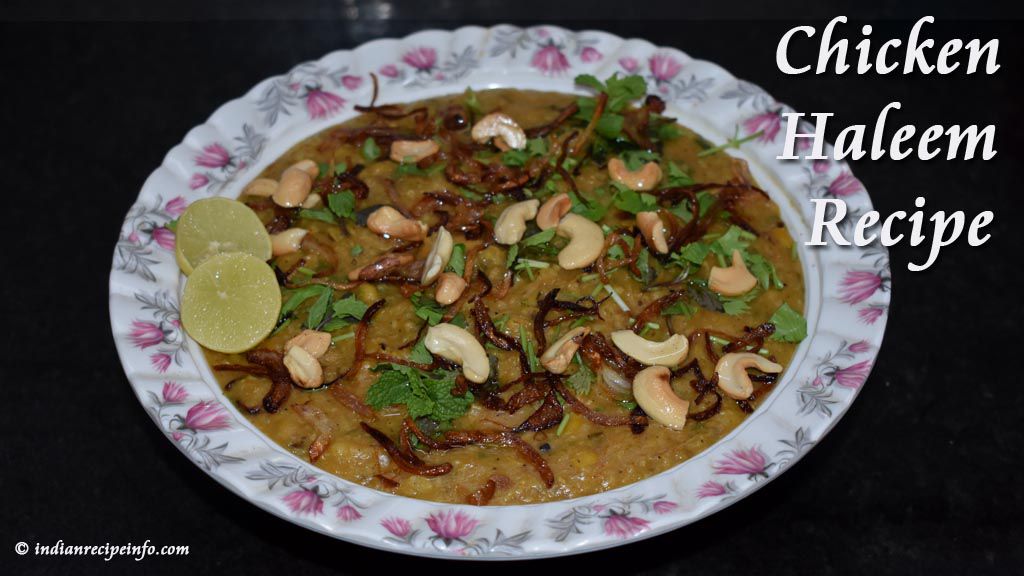
Hyderabadi chicken haleem recipe is a slow-cooked, savory porridge of shredded chicken, cracked wheat, and lentils, whipped with aromatics and ghee into a thick, stretchy emulsion. This kitchen-tested pressure cooker method reduces active cooking time to under 90 minutes while delivering the signature reshydar (fibrous) texture and warming spice profile of traditional Hyderabadi bhatis.
Culinary Science: Why This Recipe Works
Achieving authentic haleem texture at home requires managing three culinary reactions: starch gelatinization, collagen extraction, and manual protein shearing.
- Cracked Wheat (Dalia) vs. Whole Grains: Traditional preparations use whole husked wheat soaked overnight. For home cooks, cracked wheat (lapsi rava or dalia) exposes greater surface area. Its starches gelatinize rapidly at 180°F (82°C), forming a thick, smooth suspension without requiring 8 hours of simmering.
- The Four-Lentil Starch Matrix: A blend of chana dal (Bengal gram), split moong dal, masoor dal (red lentils), and urad dal (black gram) balances structure and viscosity. Chana dal provides nutty body; moong and masoor melt into a silky base; urad dal releases mucilage and amylose starches that create the signature “elastic pull” of genuine haleem.
- Meat Selection for Emulsion: Using exclusively boneless chicken breast yields a dry, chalky mash. The optimal combination is 70% boneless skinless chicken thighs (for resilient fibers) and 30% bone-in pieces or chicken wings (which release natural gelatin and collagen into the braising stock during pressure cooking).
- Ghee as a Heat Conductor & Binder: Ghee traps the fat-soluble volatile flavor compounds of fried onions (birista), shahi jeera, and garam masala, while creating a cohesive emulsion between the grain paste and shredded meat fibers.
Prefer a visual walkthrough? Watch our step-by-step chicken haleem recipe video on YouTube or play it directly below:
Equipment Needed
- 5 to 7-Liter Pressure Cooker (or 6-Quart Instant Pot)
- Heavy-Bottomed Stockpot or Kadai (minimum 4-quart capacity)
- Wooden Masher (Dal Ghootni) or Heavy-Duty Stainless Steel Wire Whisk / Potato Masher
- Fine-Mesh Strainer
How to Make Hyderabadi Chicken Haleem (Step-by-Step)
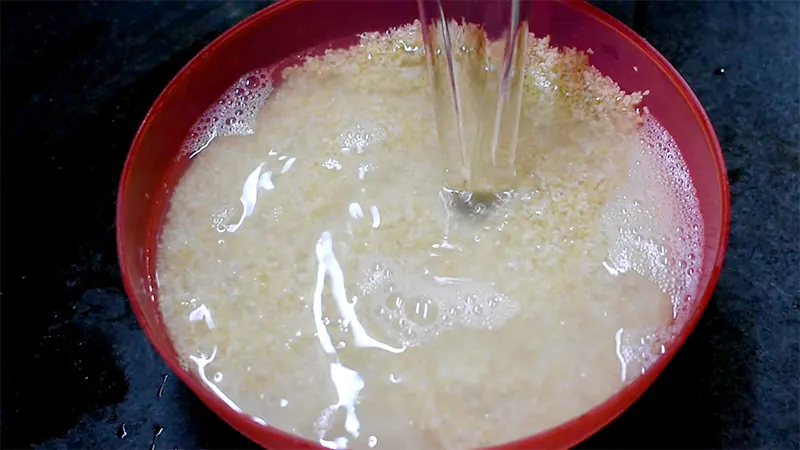
Step 1: Prep and Soak the Grains and Lentils
- Action: Rinse 1 cup cracked wheat (dalia) until the water runs clear. In a separate bowl, combine 2 tablespoons chana dal, 2 tablespoons split yellow moong dal, 2 tablespoons split urad dal, and 2 tablespoons masoor dal; rinse twice.
- Heat/Timing: Submerge both bowls in hot tap water for 45 minutes.
- Sensory Cue: Grains will swell by approximately 30% and split when pressed between your thumbnail and index finger.
- Mistake to Avoid: Do not skip the wash step; surface dust and excess unwashed grain starch make the final haleem gummy rather than velvety.
Step 2: Marinate the Chicken
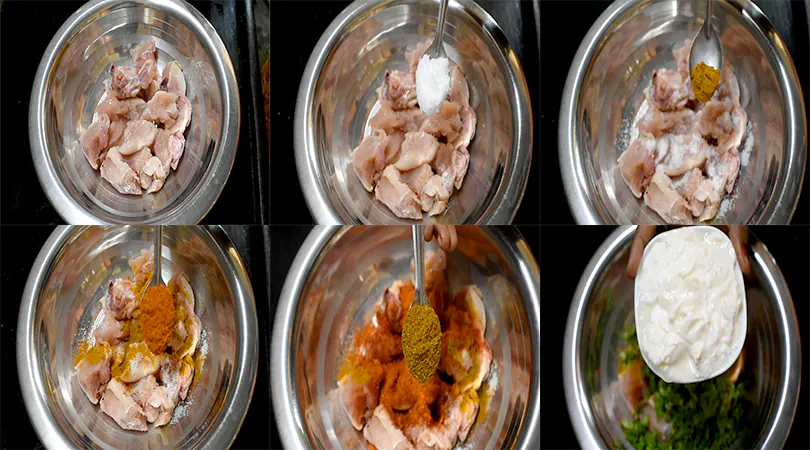
- Action: In a large bowl, mix 700g chicken (500g boneless thighs, 200g bone-in cuts) with ½ cup plain whole-milk yogurt, 1 tablespoon ginger-garlic paste, 1 teaspoon Kashmiri red chili powder, ½ teaspoon turmeric powder, 1 teaspoon garam masala, 1 teaspoon salt, and ¼ cup each of finely chopped mint and coriander.
- Heat/Timing: Rest at room temperature for 30 minutes, or refrigerate up to 4 hours.
- Sensory Cue: The yogurt turns a vibrant salmon-ochre color, and the meat surface looks evenly coated with no dry spice pockets.
- Mistake to Avoid: Never use cold, set yogurt directly without whisking; unwhisked curds can separate when exposed to high heat.
Step 3: Cook the Grains to a Mashable State
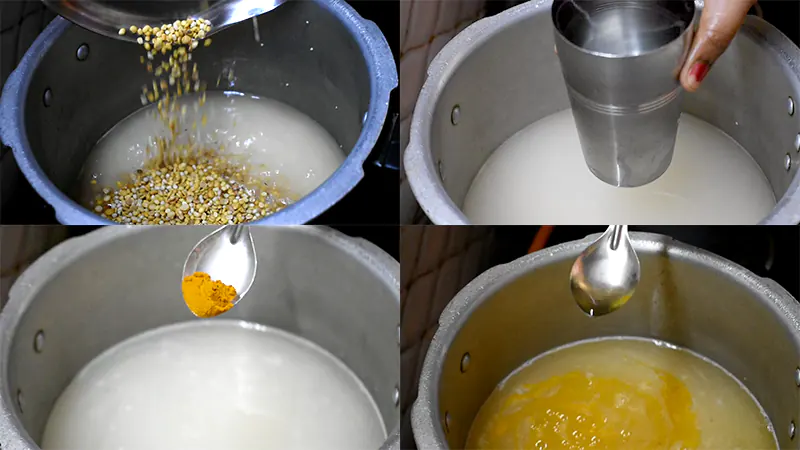
- Action: Drain the soaked wheat and lentils. Transfer them into the pressure cooker with 4 cups of water, ½ teaspoon salt, and ¼ teaspoon turmeric powder.
- Heat/Timing: Secure lid. Cook on medium-high heat for 5 whistles, then drop heat to low and simmer for 15 minutes. Allow the pressure to release naturally for 15 minutes before unsealing.
- Sensory Cue: Grains should completely collapse; when stirred with a wooden spoon, they should yield into a loose, porridge-like consistency with no crunchy kernels.
- Mistake to Avoid: Do not blend hot grains in an electric food processor on high speed. Pureeing cuts the starch molecules too fine, turning the haleem into paste. Use a potato masher or immersion blender on short, 2-second pulses.
Step 4: Sear the Aromatics and Braise the Chicken
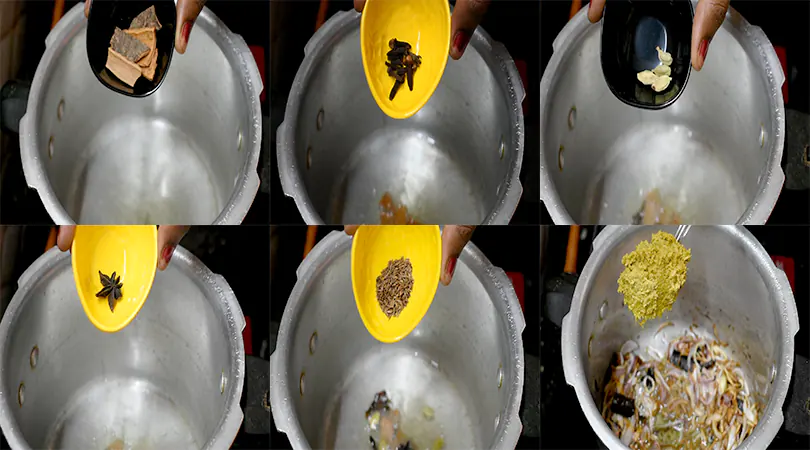
- Action: In a deep heavy-bottomed pot or a second pressure cooker, heat 3 tablespoons of ghee and 2 tablespoons of oil over medium heat. Add whole whole spices: 1 black cardamom, 4 green cardamoms, 4 cloves, 1 two-inch cinnamon stick, 1 star anise, and 1 teaspoon shahi jeera (caraway seeds). Sizzle for 30 seconds until fragrant.
- Heat/Timing: Add 1 cup thinly sliced onions. Cook over medium-high heat for 8 to 10 minutes until deep golden brown (birista stage). Add 1 tablespoon ginger-garlic paste and sauté for 60 seconds until the raw sulfur aroma dissipates.
- Add Chicken: Add the marinated chicken along with its juices. Sear over medium-high heat for 6 to 8 minutes until the chicken turns opaque and the oil begins separating at the margins of the pan.
- Braise: Pour in 1.5 cups of water. Cover and pressure-cook for 6 to 8 whistles on medium heat (or simmer covered on the stovetop for 35 minutes) until the meat is falling off the bone.
- Sensory Cue: A clear layer of reddish-amber spiced ghee (the roghan) floats to the surface, and a fork slides through the chicken thigh with zero resistance.
- Mistake to Avoid: Do not rush the onion browning. Under-browned onions make the haleem sweet and pale; pale onions lack the savory Maillard depth essential to authentic Hyderabadi flavor.
Step 5: Shred the Meat and Extract Collagen
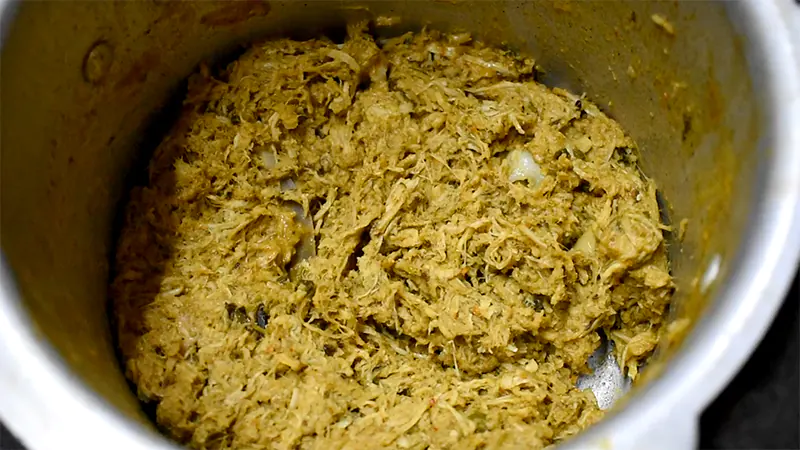
- Action: Turn off the heat. Skim 2 to 3 tablespoons of the floating red spiced ghee (roghan) from the chicken pot and set aside in a small bowl for garnish. Remove the bone-in pieces, strip off any remaining meat and cartilage, and discard the hard bones.
- Shredding: Using two forks or a heavy potato masher directly in the pan, vigorously crush and shred the chicken directly in its cooking juices until it breaks down into long, distinct strands.
- Sensory Cue: The mixture should resemble finely pulled chicken bathed in a thick, concentrated curry broth.
- Mistake to Avoid: Never run the cooked chicken through a food processor blade. High-speed blades chop meat fibers into uniform granules, destroying the long strands that give haleem its mouthfeel.
Step 6: The Union and “Ghootna” (Vigorous Emulsification)
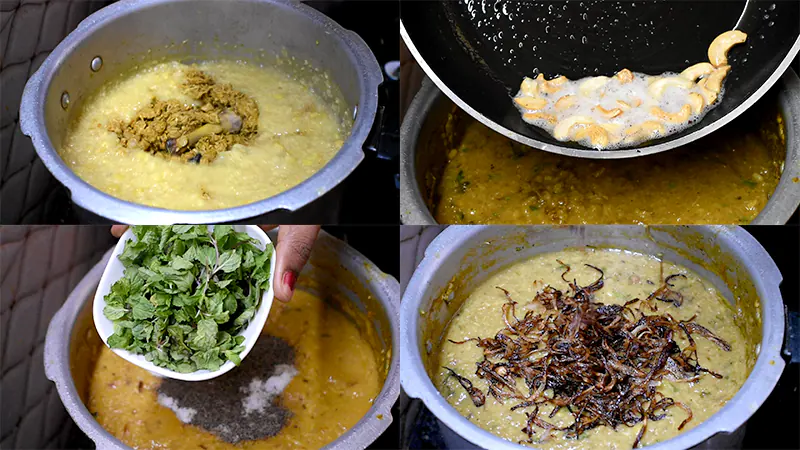
- Action: Pour the mashed wheat-dal mixture directly into the pot with the shredded chicken and braising liquid. Place over low heat.
- Heat/Timing: Cook over low heat for 20 to 25 minutes, stirring continuously with a sturdy wooden masher (ghootni) or the back of a flat wooden spatula in a circular, downward-mashing motion against the sides of the pot.
- Add Seasoning: Fold in 2 tablespoons of ghee, ½ teaspoon freshly cracked black pepper, ½ teaspoon roasted cumin powder, ½ teaspoon garam masala, 2 tablespoons lemon juice, and ½ cup crushed fried onions.
- Sensory Cue: The texture transitions from two separate components into a thick, glossy, unified porridge. When lifted with a wooden spoon, the mixture should fall slowly in heavy, ribbon-like sheets, revealing fine thread-like strands of chicken throughout.
- Mistake to Avoid: Do not walk away from the pot. The gelatinized starches sink to the base quickly; unmonitored haleem will scorch on the bottom within minutes on medium heat.
Pro-Kitchen Tips for Texture and Flavor
- Reserve the Roghan for Plating: Skimming the seasoned fat off the chicken gravy before combining it with the grains allows you to drizzle it back over the finished dish. This prevents the pale, flat look common to homemade versions.
- The “Salt at the End” Rule: Lentils take longer to soften when boiled in heavily salted liquid. Season the components moderately during cooking, and adjust final salt levels only after the starches have completely gelatinized and married with the meat.
- Double-Stage Ghee Addition: Add half the ghee during the initial aromatic saute and the remaining half in the final 5 minutes of beating. The late addition of raw, warm ghee adds a glossy sheen and rich aroma that high-heat cooking destroys.
- Use Lemon Juice to Cut Density: Haleem is extremely rich in fats and starches. Stiring fresh lemon juice directly into the pot right before serving brightens the heavy palate and balances the savory richness.



Troubleshooting Common Haleem Problems
- Problem: The texture is too thin or watery.
- Fix: Continue simmering uncovered on low heat while stirring continuously with a wooden spatula for 8 to 10 minutes. Alternatively, dissolve 1 tablespoon of roasted gram flour (besan) or cracked wheat flour in 3 tablespoons of warm water, stir it into the simmering pot, and cook for 5 minutes until tightened.
- Problem: The mixture feels dense, dry, or paste-like.
- Fix: Haleem thickens rapidly as it cools. Whisk in ½ cup to 1 cup of boiling water or hot chicken bone broth in small increments over low heat until the mixture flows smoothly off a spoon. Never use cold water, which causes the fats to seize and dulls the sheen.
- Problem: The chicken feels chunky instead of shredded.
- Fix: Use a stainless steel potato masher or the base of a heavy metal ladle to crush the mixture against the bottom and sides of the pot for 3 to 5 minutes over gentle heat.
- Problem: Scorched flavor from the pan base.
- Fix: If you notice sticking or burning, do not scrape the bottom. Immediately pour the top layer of haleem into a clean pot, leaving the burned layer behind. Stir in 1 tablespoon of fresh ghee, 1 tablespoon of plain yogurt, and a pinch of garam masala to mask any residual bitterness.
Make-Ahead, Storage & Reheating Instructions
- Refrigeration: Store cooled haleem in an airtight glass container for up to 4 days. The top will form a thin skin as the starches cool; this easily re-incorporates upon heating.
- Freezing: Transfer cooled haleem into portioned, freezer-safe zip bags or containers, leaving ½ inch of headspace for expansion. Freeze for up to 2 months. Thaw overnight in the refrigerator before reheating.
- Reheating on Stovetop (Recommended): Transfer haleem to a saucepan. Add 3 to 4 tablespoons of hot water or chicken stock per cup of haleem to counter starch thickening. Warm over medium-low heat, whisking constantly until steaming hot (165°F / 74°C).
- Reheating in Microwave: Place in a microwave-safe bowl, splash with 2 tablespoons of water, cover loosely with a paper towel, and heat on medium power in 60-second intervals, stirring between cycles to ensure even heat distribution.
Authentic Variations & Serving Recommendations
- Mutton/Lamb Haleem: Substitute equal weight of bone-in mutton shoulder. Increase pressure cooking time to 8 to 10 whistles (or 45 minutes on low heat) to ensure connective tissues break down thoroughly.
- Oats-Based Haleem (Quick Weeknight Version): Replace the cracked wheat with 1.5 cups of rolled oats. Oats do not require pre-soaking and will cook down completely in 10 minutes, cutting total prep time significantly.
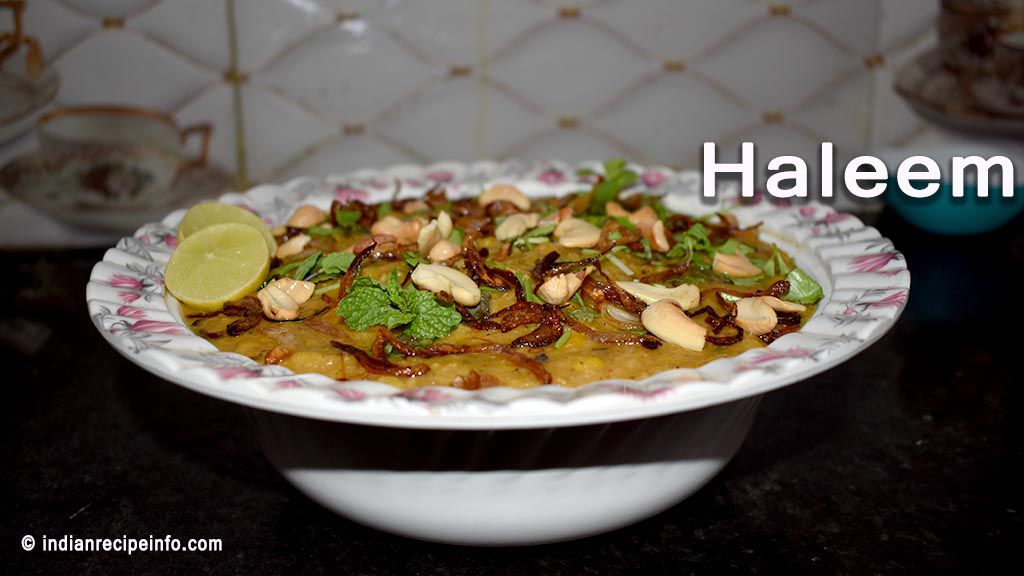
- Traditional Garnishes (Essential): Serve piping hot in shallow bowls, topped with:
- Crispy golden fried onions (birista)
- Fresh ginger cut into thin matchsticks (juliennes)
- Finely chopped fresh mint and cilantro leaves
- Cashews toasted in ghee until golden
- A drizzle of the reserved roghan or melted warm ghee
- Fresh lemon wedges for squeezing table-side
Tips for Making Perfect Hyderabadi Chicken Haleem Recipe
- Use Cracked Wheat (Dalia) Instead of Whole Berries: Soaking whole wheat grains requires overnight planning. Medium-grind cracked wheat hydrates in 45 minutes and releases starch evenly without turning into wallpaper paste.
- Never Blend Hot Meat in a High-Speed Processor: Using a standard blade purees poultry fibers into baby food. Mash with a traditional wooden ghootni or a sturdy potato masher directly in the braising liquor to preserve the signature fibrous strands (resha).
- Reserve the Roghan (Flavored Fat): Skim off 2–3 tablespoons of the spiced red oil that rises while braising the chicken before mixing in the lentils. Drizzle this back over the finished bowls right before serving for a rich, restaurant-style finish.
- Balance the Heavy Starches with Acid: Haleem is dense with wheat and ghee. Folding in 1 to 2 tablespoons of fresh lemon juice right at the end cuts the heaviness and sharpens the spice profile.
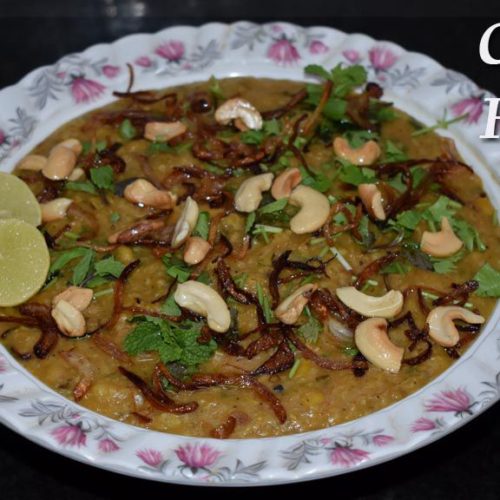
Hyderabadi Chicken Haleem
Chicken Haleem Recipe Hyderabadi Style is one of the most loved recipes during Ramzan festive season.
Ingredients
Grain & Lentil Base:
- 1 cup 160g cracked wheat (dalia / broken wheat)
- 2 tbsp 30g chana dal (split Bengal gram)
- 2 tbsp 30g split yellow moong dal
- 2 tbsp 30g split skinless urad dal (black gram)
- 2 tbsp 30g masoor dal (split red lentils)
- 4 cups 950ml water
- ½ tsp ground turmeric
- ½ tsp fine sea salt
Chicken & Marinade:
- 500 g boneless skinless chicken thighs cut into large chunks
- 200 g bone-in chicken pieces wings or drumsticks
- ½ cup 120g plain whole-milk yogurt, whisked
- 1 tbsp ginger-garlic paste
- 1 tsp Kashmiri red chili powder
- ½ tsp ground turmeric
- 1 tsp royal garam masala powder
- 1 tsp fine sea salt
- ¼ cup chopped fresh mint leaves
- ¼ cup chopped fresh cilantro coriander
Gravy & Emulsion:
- 3 tbsp ghee clarified butter, divided
- 2 tbsp neutral cooking oil
- 1 cup thinly sliced yellow onions approx. 2 medium onions
- 1 tbsp ginger-garlic paste
- 1 black cardamom pod
- 4 green cardamom pods
- 4 whole cloves
- 1 two-inch cinnamon stick
- 1 piece star anise
- 1 tsp shahi jeera caraway seeds
- 1.5 cups 360ml water
- ½ tsp freshly cracked black pepper
- ½ tsp roasted cumin powder
- 2 tbsp fresh lemon juice
Garnish & Plating:
- ½ cup crispy fried onions birista
- ¼ cup whole cashews fried in 1 tsp ghee until golden
- 2 tbsp fresh ginger cut into matchsticks
- 2 tbsp finely chopped mint and coriander
- 1 fresh lemon cut into wedges
- Reserved spiced oil roghan
Instructions
Soak Grains: Rinse cracked wheat and the four lentils thoroughly. Soak together in hot water for 45 minutes; drain.
Marinate Chicken: In a large bowl, mix chicken with yogurt, 1 tbsp ginger-garlic paste, red chili powder, ½ tsp turmeric, 1 tsp garam masala, 1 tsp salt, mint, and cilantro. Rest for 30 minutes.
Cook Grains: Combine drained grains, 4 cups water, ½ tsp salt, and ½ tsp turmeric in a pressure cooker. Seal and cook for 5 whistles on medium-high, then 15 minutes on low. Allow pressure to drop naturally. Mash with a potato masher into a coarse porridge.
Brown Onions: In a large heavy-bottomed pot or second pressure cooker, heat 2 tbsp ghee and 2 tbsp oil over medium heat. Sizzle black cardamom, green cardamoms, cloves, cinnamon, star anise, and shahi jeera for 30 seconds. Add sliced onions and cook for 8–10 minutes until deep amber-brown.
Cook Chicken: Add 1 tbsp ginger-garlic paste and sauté for 1 minute. Add marinated chicken; sear on high for 6 minutes until meat turns white on the outside. Add 1.5 cups water, cover, and pressure-cook for 6 to 8 whistles (or simmer covered 35 minutes) until fork-tender.
Shred Meat: Skim 2 tbsp spiced red fat (roghan) from top and reserve. Remove bone-in chicken pieces, discard bones, and return meat to pot. Mash chicken vigorously with a potato masher directly in the sauce until shredded into long, fibrous strands.
Combine and Beat (Ghootna): Add cooked grain puree into shredded chicken pot over low heat. Vigorously beat the mixture in a circular mashing motion with a wooden spoon or masher for 20 minutes, folding in remaining 1 tbsp ghee, black pepper, cumin, lemon juice, and half the fried onions.
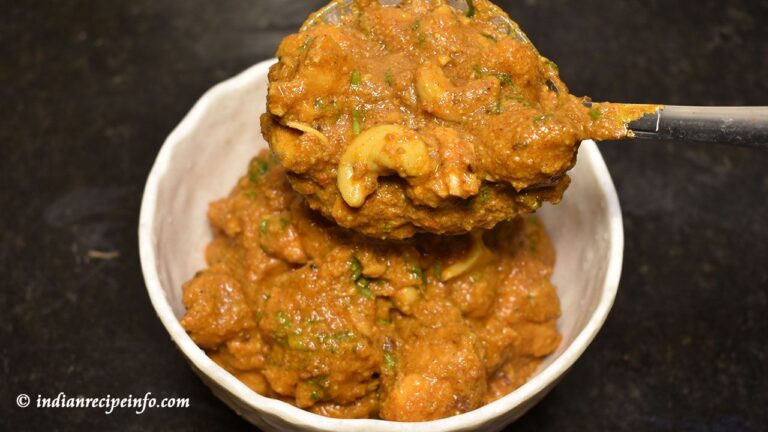
Garnish & Serve: Ladle steaming haleem into bowls. Top with reserved roghan, crispy fried onions, toasted cashews, ginger matchsticks, chopped herbs, and a squeeze of fresh lemon juice.
Frequently Asked Questions
Can I make Hyderabadi chicken haleem with oats instead of wheat?
Yes. Replace the 1 cup of cracked wheat with 1.5 cups of rolled oats. Oats do not require pre-soaking and break down in about 10 to 12 minutes of simmering, significantly cutting prep time while yielding a light, creamy texture.
Why is my haleem paste-like or gummy instead of stretchy?
Haleem turns gummy when cooked grains or meat are pureed in a high-speed blender. Blending shears the starch molecules too finely and obliterates the meat strands. For the authentic fibrous pull (resha), always use a potato masher, dal masher (ghootni), or brief, low-speed immersion pulses.
Which cut of chicken works best for haleem?
A combination of 70% boneless skinless chicken thighs and 30% bone-in pieces (such as wings or drumsticks) works best. Thigh meat yields long, resilient shredded fibers that don’t dry out, while bones release natural gelatin and collagen into the braise to create the signature glossy emulsion.
Can I make chicken haleem in an Instant Pot?
Yes. Pressure-cook the soaked wheat and lentils on High Pressure for 20 minutes with a natural pressure release. Cook the marinated chicken on High Pressure for 15 minutes, remove the bones, shred the meat, combine both components using the Sauté function (Low setting), and mash for 10 to 15 minutes until emulsified.
How do I fix haleem that is too thick?
Whisk in boiling water or hot chicken stock ½ cup at a time over low heat until the desired spoonable consistency is reached. Avoid adding cold water, which causes the fats to seize and dulls the glossy sheen.

One Comment