Crispy Onion Pakora Recipe (Street-Style Pyaz Ke Pakode)
Onion pakora Recipe—also known as pyaz ke pakode, kanda bhaji, or vengaya pakoda—are crisp, craggy Indian fritters made from thinly sliced onions, gram flour (besan), rice flour, fresh herbs, and warm spices.
The secret to street-vendor-style crispness is simple: do not make a runny batter, and do not add water right away. Instead, salt the sliced onions to release their natural moisture, coat them lightly in flour, and fry in well-regulated medium-hot oil. This foolproof guide walks you through the exact ingredient ratios, mixing technique, and frying cues so your pakoras turn out deeply golden, non-greasy, and crunch-packed every single time.
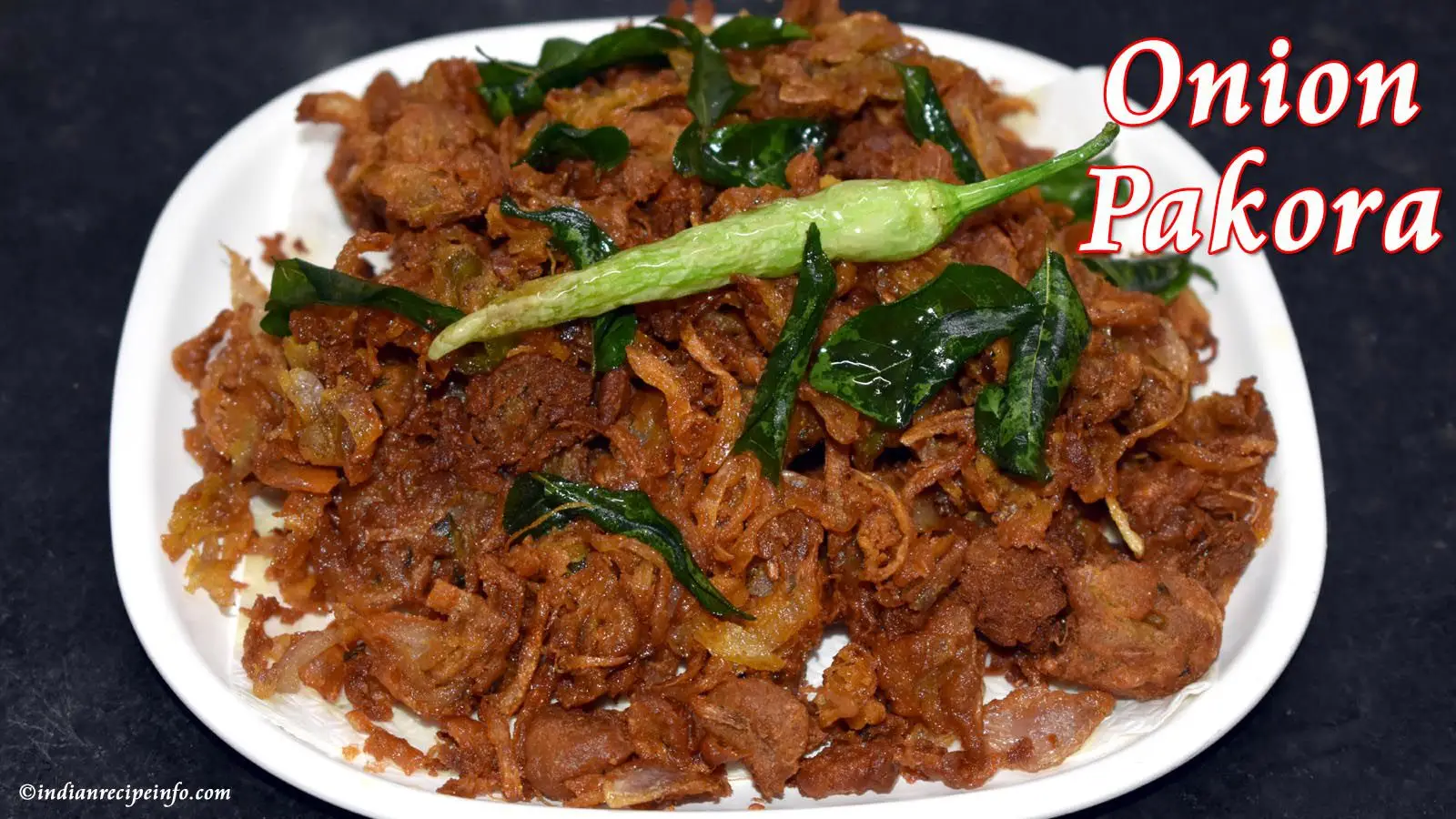
What Makes These Onion Pakoras Extra Crispy?
Traditional street-side pakoda stands out because of three specific cooking techniques:
- Moisture Extraction via Salting: Tossing thinly sliced onions with salt draws out their juices within minutes. This onion liquid hydrates the chickpea flour naturally, ensuring the batter clings tightly like a dry jacket rather than pooling into a heavy, doughy crust.
- The Besan-to-Rice Flour Ratio (4:1): While gram flour (besan) provides body, earthy flavor, and structural binding, rice flour prevents gluten development and keeps the crust shattering-crisp even after cooling slightly.
- The Hot Oil “Mohun” Trick: Pouring one tablespoon of hot frying oil directly over the dry-flour-coated onion mixture before dropping it into the kadai creates instant microscopic air pockets in the coating, yielding an exceptionally light, brittle texture.
Ingredients You Will Need
- Onions: 3 large red onions (about 300g), peeled, halved, and sliced thinly along the grain (approx. 2 mm thick).
- Gram Flour (Besan): 1 cup (approx. 100g), sifted to remove lumps.
- Rice Flour: ¼ cup (approx. 35g), for crispness.
- Green Chillies: 2, finely chopped (adjust to taste).
- Fresh Ginger: 1 tsp, grated or finely minced.
- Curry Leaves: 1 sprig (10–12 leaves), roughly torn or chopped.
- Fresh Coriander Leaves: 2 tbsp, finely chopped.
- Carom Seeds (Ajwain): ½ tsp, lightly crushed between your palms to release oils.
- Red Chilli Powder: ½ to 1 tsp (Kashmiri chilli powder works best for gentle heat and rich color).
- Turmeric Powder (Haldi): ¼ tsp.
- Asafoetida (Hing): 1 pinch (omit for strict gluten-free preparation if your hing contains wheat starch).
- Salt: ¾ to 1 tsp (adjust to taste).
- Cooking Oil: For deep frying (peanut oil, mustard oil, or sunflower oil), plus 1 tbsp hot oil for the flour mix.
- Water: 1 to 2 tbsp, strictly only if needed.
Ingredient Notes & Smart Substitutions
- Onion Variety: Firm Indian red onions are ideal. They have lower water content and a sharper, sweeter flavor that caramelizes beautifully during frying. If using sweet yellow onions, squeeze them well after salting, as they release significantly more water.
- Rice Flour Alternatives: If rice flour is unavailable, substitute equal parts cornstarch (cornflour) or fine semolina (rava). Rice flour gives the crispiest, longest-lasting crust, while semolina adds a slight granular crunch.
- Carom Seeds (Ajwain): Ajwain is essential in gram-flour snacks—not just for its warm, thyme-like aroma, but also because it aids digestion. Crush it between your palms before adding it to break open the outer shell.
Step-by-Step Instructions: How to Make Onion Pakora
Step 1: Slice and Separate the Onions
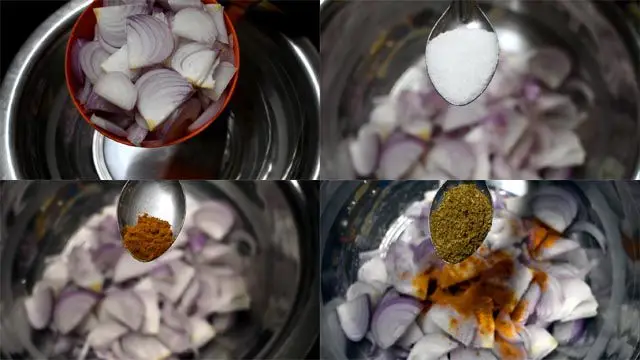
Slice the onions thinly and evenly (roughly 2 mm thick). Avoid slicing them too thin like paper, or they will scorch before the flour cooks; slicing them too thick prevents the inner layers from dehydrating into a crisp bite. Place the slices in a wide mixing bowl and use your fingers to separate the layers into loose ribbons.
Step 2: Season and Draw Out the Moisture
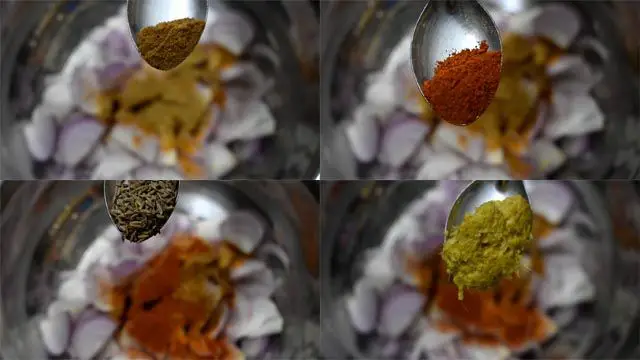
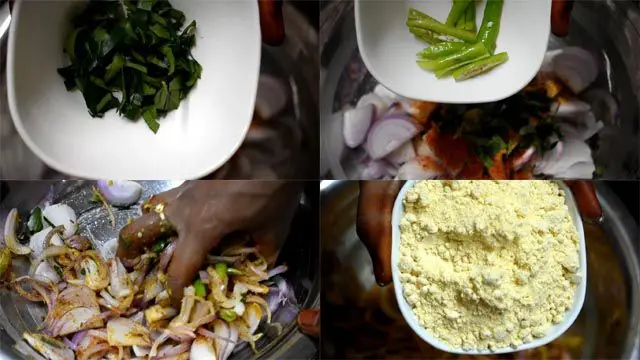
Add the salt, green chillies, grated ginger, torn curry leaves, chopped coriander, crushed ajwain, red chilli powder, turmeric, and hing to the onions. Mix thoroughly with your fingers, squeezing the onions gently for 30 to 45 seconds. Let the mixture sit undisturbed for 5 to 7 minutes.
Visual Cue: You will notice the onions turn glossy, limp, and sweat out a noticeable puddle of moisture at the bottom of the bowl.
Step 3: Coat with Flours and Add Hot Oil
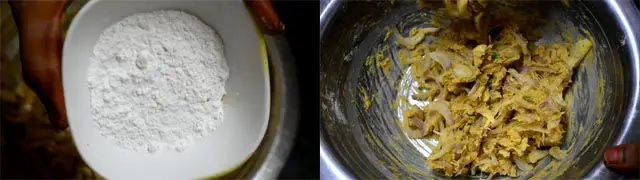
Sprinkle the sifted gram flour (besan) and rice flour evenly across the seasoned onions. Heat your cooking oil in a heavy-bottomed kadai or deep pan over medium heat. Carefully ladle 1 tablespoon of this hot oil directly over the dry flour-onion mix. It will sizzle lightly.
Step 4: Mix to a Craggy, Clinging Dough
Mix everything together using your fingertips. Do not knead like bread dough; simply toss and press so the flours absorb the extracted onion liquid.
The Texture Rule: The mixture should look like a tight, sticky, shaggy coating clinging directly to the onion shreds. You should see mostly onions held together by a thin layer of paste—not a dripping batter. If the mixture feels completely dry and loose flour remains at the bottom, sprinkle just 1 teaspoon of water at a time until it binds.
Step 5: Test the Oil Temperature
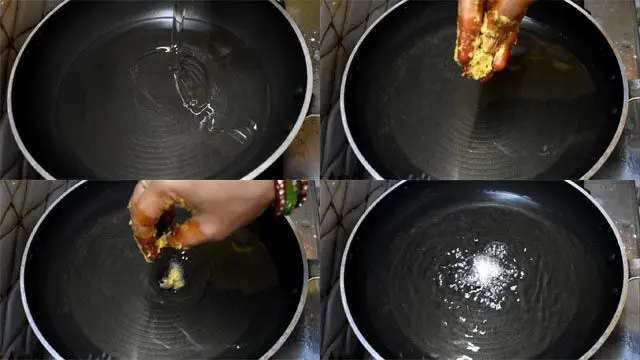
Ensure the oil is hot before dropping in your first batch.
The Readiness Test: Drop a small strand of coated onion into the oil. If it sinks to the bottom and stays there, the oil is too cold. If it turns dark immediately, the oil is smoking hot. If it sinks halfway and rises rapidly to the surface within 2 seconds with steady, lively bubbling, the oil is at the perfect temperature (approx. 175°C–180°C / 350°F).
Step 6: Drop and Fry in Batches
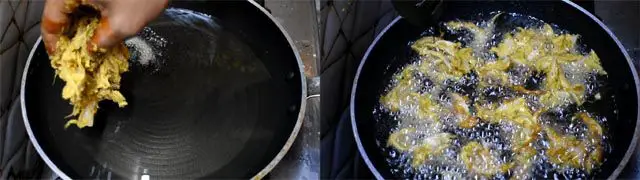
Take small, loose portions of the coated onions between your fingers (about 1.5 tablespoons each). Scatter them gently into the hot oil in loose, irregular shapes. Do not squeeze or shape them into compact balls or patties, or the centers will stay soft and raw.
Do not overcrowd the pan; leave enough room for each cluster to float freely without sticking together.
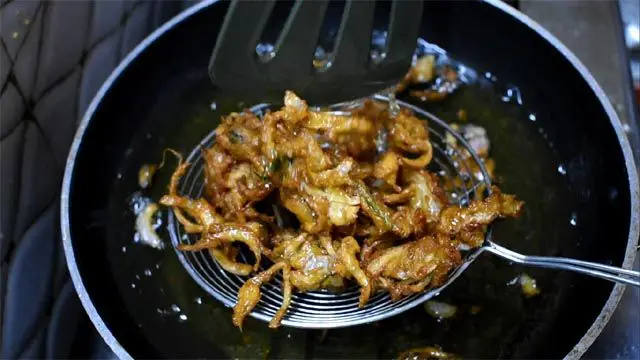
- They turn an even, deep golden-brown shade.
- The vigorous bubbling of the oil calms down noticeably (indicating the moisture in the onions has evaporated).
- The pakoras feel light, firm, and crisp against your slotted spoon.
Step 7: Fry to Golden Perfection
Fry undisturbed over medium heat for the first 60–90 seconds to allow the crust to set. Then, gently turn the pakoras with a slotted spoon (jhara). Continue frying for 3 to 4 minutes, turning occasionally so they brown evenly.
Visual and Sensory Cues: The pakoras are done when:
Step 8: Drain and Serve Immediately
Lift the pakoras out with the slotted spoon, shaking off excess oil back into the pan. Transfer them to a plate lined with paper towels or place them on a wire cooling rack set over a tray (a wire rack preserves crispness on all sides).
Serve piping hot.
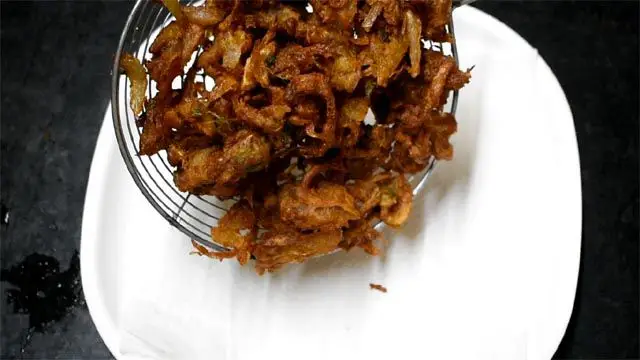
Prefer a visual walkthrough? Watch our step-by-step Crispy Onion Pakora Recipe video on YouTube or play it directly below:
Pro-Tips for Long-Lasting Crispness
- Avoid Overcrowding the Kadai: Adding too many cold pakoras at once drastically drops the oil temperature. This forces the gram flour to soak up excess oil, leaving you with heavy, greasy fritters.
- Keep Batches Loose and Shaggy: Jagged, protruding onion edges fry faster and create the signature crackly texture of street-style pakodi.
- Use a Wire Cooling Rack: Stacking hot pakoras on flat plates causes trapped steam to soften the underside. Spreading them across a wire mesh lets air circulate underneath, keeping every piece dry and crunchy.
- Regulate the Flame: If you notice subsequent batches browning too fast before the onions soften, lower the flame to medium-low for 30 seconds before adding the next batch.
Troubleshooting Common Pakora Mistakes
| Problem | Cause | How to Fix |
| Pakoras turn soft or soggy after 5 minutes | Too much water added to the mix, or cooled in a closed, steamy container. | Rely strictly on onion moisture. Cool fried pakoras on an open wire rack. |
| Pakoras absorb excessive oil | Oil was not hot enough when the mixture was dropped. | Increase heat until a test drop rises within 2 seconds before frying. |
| Burnt outside, raw/doughy inside | Oil was too hot, or pakora clusters were pressed into thick balls. | Lower heat to steady medium; drop loose, irregular clusters. |
| Pakoras are rock-hard rather than crisp | Too much rice flour used, or mixture was over-mixed/kneaded. | Maintain a 4:1 besan-to-rice flour ratio and mix lightly with fingers. |
| Coating separates from onions in the oil | Onions were too dry or insufficient besan to bind the moisture. | Squeeze onions lightly with salt and let rest to draw out enough binding juice. |
Flavor Variations
- Andhra Street-Style Pakodi: Add 8–10 crushed garlic cloves (with peel on) and 2 tablespoons of roasted split peanuts to the dry mix for an earthy, pungent kick.
- Mint & Ajwain Pakora: Fold in 2 tablespoons of finely chopped fresh mint leaves alongside the coriander.
- Cashew Onion Pakoda (Kaju Pakoda): Add ¼ cup of split raw cashews into the onion mix. As the cashews fry alongside the onions, they develop a rich, nutty crunch.
Serving Suggestions
Serve onion pakoras fresh from the pan alongside:
- Beverages: Hot ginger masala chai or South Indian filter coffee.
- Chutneys: Spicy green mint-coriander chutney, tangy tamarind-dates chutney, or raw garlic-chilli chutney.
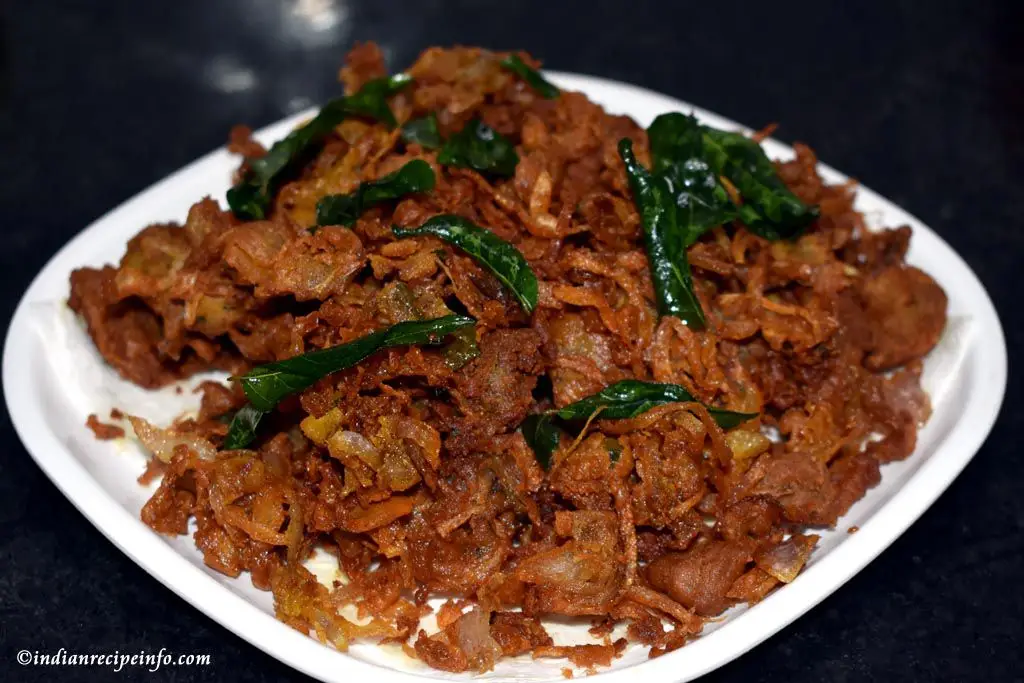
- Street-Style Garnish: Deep-fry 4–5 whole green chillies (slit lengthwise to prevent bursting) and a sprig of curry leaves for 15 seconds, dust with a pinch of chaat masala, and scatter over the hot pakoras.
If you are setting up an evening monsoon snack spread, onion pakoras pair naturally alongside other street-side favorites. You can serve them alongside a batch of crispy vegetable samosas or thinly sliced, batter-dipped crisp mushroom pakoras for variety.
Storage & Reheating Instructions
- Room Temperature: Best enjoyed within 1 to 2 hours of frying. Keep uncovered or loosely covered with a clean kitchen towel to prevent condensation.
- Refrigeration: Store completely cooled leftovers in an airtight container lined with a paper towel for up to 2 days.
- How to Reheat for Maximum Crispness:
- Oven/Toaster Oven: Spread pakoras on a baking sheet and bake at 190°C (375°F) for 5–7 minutes until sizzling.
- Air Fryer: Air fry at 180°C (350°F) for 3–4 minutes.
- Do Not Microwave: Microwaving steams the gram flour from within, turning the onions chewy and the exterior completely limp.
Frequently Asked Questions
Can I make onion pakora without rice flour?
Yes. You can make delicious pakoras using only gram flour (besan). However, adding rice flour (or cornstarch) creates a distinct, long-lasting crunch. If using only besan, ensure you add the 1 tablespoon of hot oil to the dry mix to maintain lightness.
Why do my pakoras turn out doughy inside?
Doughy interiors occur when too much water is added to the batter, when the pakoras are rolled into tight balls instead of loose clusters, or when fried at high heat where the outer layer browns before heat penetrates the core.
Can I bake or air-fry this recipe?
Yes. To air-fry: preheat your air fryer to 180°C (350°F). Toss the coated onion mixture with 1 to 2 tablespoons of cooking oil. Place loose clusters in a single layer in the air fryer basket (do not overcrowd) and air-fry for 12–15 minutes, shaking the basket halfway through, until crisp and golden. Note that air-fried pakoras will have a drier exterior compared to traditional deep-fried pakoras.
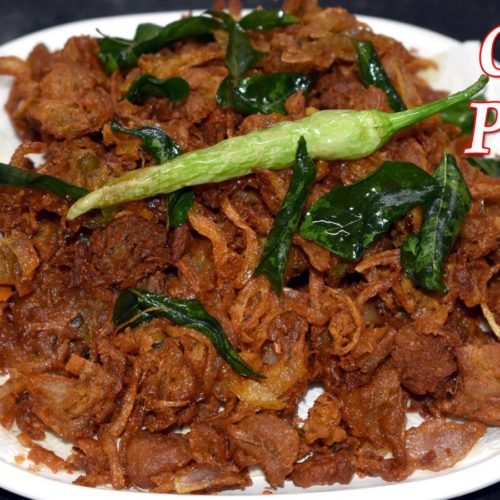
Crispy Onion Pakora (Street-Style Pyaz Ke Pakode)
OnionPakora is one of the famous tea time snack made with besan flour and onions as main ingredients. They are crisp from outside and soft from inside.
Ingredients
- 3 large Red Onions approx. 300g, thinly sliced (2 mm)
- 1 cup Gram Flour Besan (100g)
- ¼ cup Rice Flour 35g
- 2 Green Chillies finely chopped
- 1 tsp Fresh Ginger grated
- 1 sprig Curry Leaves 10–12 leaves, torn
- 2 tbsp Fresh Coriander Leaves chopped
- ½ tsp Carom Seeds Ajwain, crushed
- 1 tsp Kashmiri Red Chilli Powder
- ¼ tsp Turmeric Powder
- 1 pinch Asafoetida Hing
- 1 tsp Salt or to taste
- 1 tbsp Hot Oil for mixing into flour
- Cooking Oil for deep frying
- 1 –2 tbsp Water only if strictly necessary
Instructions
- Prep Onions: Place sliced onions in a wide bowl and separate the layers with your fingers into individual ribbons.
- Sweat Onions: Add salt, chillies, ginger, curry leaves, coriander, ajwain, red chilli powder, turmeric, and hing. Massage gently for 30–45 seconds. Let rest for 5–7 minutes until onions release water and turn glossy.
- Flour & Hot Oil: Heat oil for deep frying in a kadai over medium heat. Sprinkle besan and rice flour over the onions. Ladle 1 tbsp of the hot oil directly over the dry flour.
- Mix to Cling: Toss ingredients using fingertips until a shaggy, sticky coating clings tightly around each onion slice. Add water in 1-teaspoon increments only if dry flour remains.
- Test Oil: Drop a small piece of coated onion into the oil; it should rise to the surface in 2 seconds with active bubbles.
- Drop & Fry: Drop small, loose clusters (approx. 1.5 tbsp each) into the hot oil without shaping or compacting.
- Cook Evenly: Fry over medium heat for 3–5 minutes, turning occasionally with a slotted spoon, until deep golden brown and oil bubbles subside.
- Drain: Remove with a slotted spoon, drain excess oil, and transfer to a wire cooling rack. Repeat for remaining batches and serve hot.
Recipe Notes
Slice onions evenly along their vertical length for consistent frying.
Never press the mixture into patties when dropping into oil; jagged edges ensure maximum crunch.
To keep batches crisp while frying the rest, arrange them on a wire rack rather than a flat plate.
Storage & Reheating
Store leftovers in an airtight container lined with paper towels in the refrigerator for up to 2 days.
Reheat in an oven or air fryer at 180°C (350°F) for 3–5 minutes. Avoid the microwave.

5 Comments